
Thornapple Press
Publisher of bestselling and award-winning books including Polysecure, More Than Two and Love’s Not Color Blind.
View Rights Portal
Publisher of bestselling and award-winning books including Polysecure, More Than Two and Love’s Not Color Blind.
View Rights Portal

Design Thinking: Solve problems together, user-centered and iterative, develop innovations and have fun doing so! - Practical cards for innovation project work with change of perspective- Consistently customer-oriented and iterative- Targeted use of the maps in project planning and implementation with Design Thinking- Pragmatic, compact and wonderfully descriptive- Suitable for the most diverse questions or problems- With folding poster for targeted use of maps in project planning and decorative at the workplace- From the authors "Design Thinking Quick Start

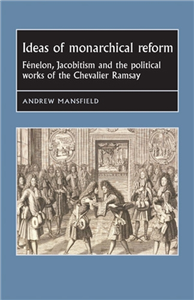
This book examines the political works of Andrew Michael Ramsay (1683-1743) within the context of early eighteenth-century British and French political thought. In the first monograph on Ramsay in English for over sixty years, the author uses Ramsay to engage in a broader evaluation of the political theory in the two countries and the exchange between them. At the beginning of the eighteenth century, Britain and France were on divergent political paths. Yet in the first three decades of that century, the growing impetus of mixed government in Britain influenced the political theory of its long-standing enemy. Shaped by experiences and ideologies of the seventeenth century, thinkers in both states exhibited a desire to produce great change by integrating past wisdom with modern knowledge.
 Trusted Partner

A compilation of case studies illustrating the use of arts, culture and other community assets individuals and communities used to cope and develop resilience during the Covid-19 pandemic, demonstrating valuable lessons that might help us develop resilience in similar future crises.
Trusted Partner
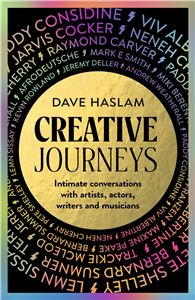
Dave Haslam presents conversations with creative trailblazers. Over forty years, DJ, writer and broadcaster Dave Haslam has interviewed some of the most fascinating figures in music, literature, film and art. Creative journeys gathers revelatory conversations with creative characters including Neneh Cherry, Maxine Peake, Lemn Sissay, Andrew Weatherall, Raymond Carver and Jeremy Deller. From politics and performance to art, fame and addiction, Haslam's interviewees speak with honesty about their creative journeys. Viv Albertine discusses 'Typical Girls' and Paddy Considine recalls Dead Man's Shoes. Jarvis Cocker goes deep into 'This is Hardcore'. Terry Hall and Miki Berenyi speak about childhood trauma. Bernard Sumner recalls the loss of Ian Curtis. Jonathan Franzen talks about torturing his characters. There's darkness but much humour too. The interviews provide fascinating stories of unorthodox, creative artists navigating negativity and personal setbacks to become celebrated cultural icons.
Trusted Partner


■ How many omega-3 fatty acids does salmon contain? ■ Which dairy product contains the most calcium? ■ How iron-rich is spinach, really? Whether calories, vitamins or amino acids – whether in field beans, bananas, eggs, chicken, parmesan cheese or onion – it is all here. The compact edition of the time-tested „large SFK [Souci/Fachmann/Kraut]“ offers tested data on over 70 ingredients in more than 360 foods, systematically structured according to food groups. This edition with thousands of values has been completely revised and updated by the Leibniz Institute of Food Systems Biology at the Technical University of Munich. Extra: 32 summary tables cover more than 300 other, less common foods and allow for targeted, clear comparisons. 16 orientation tables provide information about foods with particularly high or low amounts of ingredients. Nutritional values, energy content, main components and ingredients displayed in uniform systematics and a practical format – just look it up!
Trusted Partner
 Trusted Partner

An archaeology of innovation is the first monograph-length investigation of innovation and the innovation process from an archaeological perspective. It interrogates the idea of innovation that permeates our popular media and our political and scientific discourse, setting this against the long-term perspective that only archaeology can offer. Case studies span the entire breadth of human history, from our earliest hominin ancestors to the contemporary world. The book argues that the present narrow focus on pushing the adoption of technical innovations ignores the complex interplay of social, technological and environmental systems that underlies truly innovative societies; the inherent connections between new technologies, technologists and social structure that give them meaning and make them valuable; and the significance and value of conservative social practices that lead to the frequent rejection of innovations.
Trusted Partner

Egypt and the rise of fluid authoritarianism focuses on the struggle of the post-2013 political authorities for internal political legitimacy after the crisis following the 2013 coup d'état. It explores the microstructural and macro-systemic dynamics of leadership, power, protests and the authority-making process in political systems. These cannot simply be defined as structural, political, social and economic projections of the authoritarianism of the past, but rather as a rupture with that past. The book offers a complex, ground-breaking socio-political and economic analysis into how the forging of an internal political legitimacy claim has eventually modified the regime in Egypt along the authoritarian spectrum, turning into a fluid autocracy closer to a non-exclusivist personalist regime. This shift had implications that resonated both politically and economically.
Trusted Partner

This book provides a careful and systematic analysis of Anthony Ascham's career and writings for the first time in English. During the crucial period between the Second Civil War and the establishment of the English Republic, when he served as official pamphleteer of the Parliament and the republican government, Ascham put forward a complex argument in support of Parliament's claims for obedience which drew on the political thought of Grotius, Hobbes, Selden, Filmer and Machiavelli. He combined ideas taken from these authors and turned them into a powerful instrument of propaganda to be deployed in the service of the political agenda of his Independent patrons in Parliament. This investigation of Ascham's works brings together an intellectual analysis of his political thought and an exploration of the interaction between politics, propaganda and political ideas.
Trusted Partner

 Trusted Partner


The human brain is a wondrous thing, highly complex and highly functional. However, the control centre of our feelings, thoughts and actions can sometimes go out of sync. Some reasons for this are known, such as genetic factors, hormonal effects or trauma. In other cases, we are still in the dark. In an extreme case scenario, the brain may create bizarre delusions – masterful narrations that the people affected fi nd completely conclusive and reasonable. Monika Niehaus has compiled 36 such disorders ranging from love madness and the gourmand syndrome – where gourmet food becomes the purpose of life – to people who desire nothing more than to have their limbs amputated. She tells gripping tales of famous and not so famous cases. With sensitivity and a considerable dose of humour she takes us into the history of art and literature, and presents scientifi c explanations. This fascinating book shows that our brain is a genius – and madness is quite often NOT inexplicable.
Trusted Partner
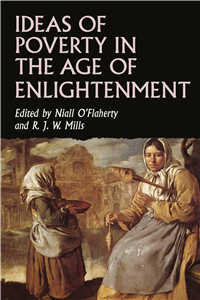
This collection of essays examines the ways in which poverty was conceptualised in the social, political, and religious discourses of eighteenth-century Europe. It brings together experts with a wide range of expertise to offer pathbreaking discussions of how eighteenth-century thinkers thought about the poor. Because the theme of poverty played important roles in many critical issues in European history, it was central to some of the key debates in Enlightenment political thought throughout the period, including the controversies about sovereignty and representation, public and private charity, as well as questions relating to crime and punishment. The book examines some of the most important contributions to these debates, while also ranging beyond the canonical Enlightenment thinkers, to investigate how poverty was conceptualised in the wider intellectual culture, as politicians, administrators and pamphlet writers grappled with the issue.
Trusted Partner

 Trusted Partner
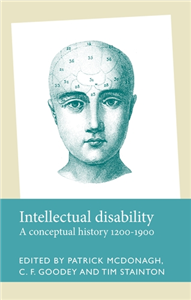
This collection explores the historical origins of our modern concepts of intellectual or learning disability. The essays, from some of the leading historians of ideas of intellectual disability, focus on British and European material from the Middle Ages to the late-nineteenth century and extend across legal, educational, literary, religious, philosophical and psychiatric histories. They investigate how precursor concepts and discourses were shaped by and interacted with their particular social, cultural and intellectual environments, eventually giving rise to contemporary ideas. Intellectual disability is essential reading for scholars interested in the history of intelligence, intellectual disability and related concepts, as well as in disability history generally.
Trusted Partner


They hear you thinking. But you can’t understand them. Not yet! After a terrifying experience on a school trip to the forest, Noomi isn’t the same anymore. Fragments of memories that are as thrilling as they are disturbing continually lead her back to this same day in the forest. Something has happened to her since then and she has to find out what went on there. Why can’t she remember? Why does she now feel so close to animals? One secret experiment. Four young offenders. Animals acting like humans in the forest. Evolution at a turning point - FEEL NATURE! Atmospheric, enigmatic and disturbing – the new novel from the prize-winning author duo Ella Blix, consisting of Antje Wagner and Tania Witte. 2019 literary awards: the Mannheim Feuergriffel (Fire Pen) for Tania Witte and the town of Wetzlar’s Fantasy Prize. Printed on recycled paper and certified with the Blue Angel.
Trusted Partner


This book is a clear and compact guide on how to succeed by means of goal-oriented negotiation and cooperative persuasion. Readers learn models to understand and describe what takes place during negotiations, while numerous figures, charts, and checklists clearly summarize effective strategies for analyzing context, processes, competencies, and the impact of our own behavior. Real-life case examples vividly illustrate the specific measures individuals and teams can take to systematically improve their powers of persuasion and bargaining strength. The book also describes a modern approach to raising negotiation competencies as part of personnel development, making it suitable for use in training courses as well as for anyone who wants to be a more persuasive and successful negotiator. Target Group: For work and organizational psychologists, HR professionals, coaches, management trainers and trainees.
Trusted Partner
This book shows that Max Horkheimer's program of critical theory and his research throughout his career as a university professor and thinker are rooted in the cogency of philosophical questions and an in-depth knowledge of the historical development of philosophical problems in their close correlation with the socio-economic framework which shaped the 'bourgeois society' and the Modern Era. Indeed, his analyses of modern philosophers allows us to understand how the bourgeoisie seeks legitimisation and consolidation of its position, partly through the voices of its thinkers. In this way, in his investigation of early modern philosophy problems, and through constant dialogue with his colleagues Adorno, Marcuse, Pollock and Fromm, Horkheimer expresses a profound awareness of the critical force inherent in thought which, admittedly, is ever vulnerable to crisis and weakening, but which can always be reactivated.
Trusted Partner
In this book, the complexity and the significance of the foods we eat are analysed from a variety of perspectives, by sociologists, economists, geographers and anthropologists. Chapters address a number of intriguing questions: how do people make judgments about taste? How do such judgments come to be shared by groups of people?; what social and organisational processes result in foods being certified as of decent or proper quality? How has dissatisfaction with the food system been expressed? What alternatives are thought to be possible? The multi-disciplinary analysis of this book explores many different answers to such questions. The first part of the book focuses on theoretical and conceptual issues, the second part considers processes of formal and informal regulation, while the third part examines social and political responses to industrialised food production and mass consumption. Qualities of food will be of interest to researchers and students in all the social science disciplines that are concerned with food, whether marketing, sociology, cultural studies, anthropology, human nutrition or economics.
Trusted Partner
After the fall of the Ben Ali regime in 2011, Tunisia swiftly began dealing with its authoritarian past and initiated a comprehensive transitional justice process, with the Truth and Dignity Commission as its central institution. However, instead of bringing about peace and justice, transitional justice soon became an arena of contention. Through a process lens, the book explores why and how the process evolved, and explains how it relates to the country's political transition. Based on extensive field research in Tunisia and the US, and interviews with a broad range of international stakeholders and decision-makers, this is the first book to comprehensively study the Tunisian transitional justice process. It provides an in-depth analysis of a crucial period, examining the role of justice professionals in different stages, as well as the alliances and frictions between different actor groups that cut across the often-assumed local-international divide.
Trusted Partner


Fast nichts ist uns Menschen so wichtig wie unser subjektives, bewußtes Innenleben – und doch wissen wir relativ wenig über seine Genese.Benjamin Libet gehört zu den Pionieren auf dem Gebiet der Bewußtseinsforschung und hat zahlreiche Experimente durchgeführt, die gezeigt haben, wie das Gehirn Bewußtsein produziert. In seinem 2004 erschienenen und jetzt auf deutsch vorliegenden Buch Mind Time präsentiert er erstmals eine eigene Deutung seiner berühmten »Libet-Experimente«, die die aktuelle Debatte über die Bedeutung der Hirnforschung für unser Menschenbild überhaupt erst angestoßen haben.Im Zentrum der Experimente steht der Nachweis, daß jedem bewußten Prozeß ein unbewußter, jedoch meßbarer Prozeß zeitlich vorausgeht. Diese zeitliche Differenz – die Mind Time – läßt den Schluß zu, daß unbewußte Prozesse in unserem Gehirn unser Bewußtsein steuern und nicht umgekehrt das Bewußtsein »Herr im Haus« ist. Die vermeintlichen freien Willensakte etwa sind längst initiiert, bevor uns ein Handlungswunsch überhaupt gegenwärtig ist. Libet behandelt die weitreichenden Folgen seiner Entdeckung nicht nur für die Willensfreiheit, sondern auch für die Identität der Person und die Beziehung zwischen Geist und Gehirn. Klar und verständlich dargestellt, ermöglichen Libets Experimente und Theorien es sowohl Spezialisten als auch interessierten Laien, an einem der spannendsten Forschungsprogramme dieser Tage teilzuhaben – der Erforschung des menschlichen Bewußtseins.


