Your Search Results

      • Trusted Partner
        Science & Mathematics
        August 2025

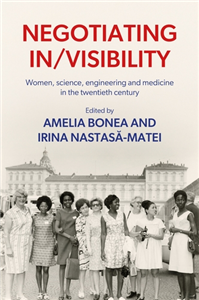
        Negotiating in/visibility

        Women, science, engineering and medicine in the twentieth century

        by Amelia Bonea, Irina Nastasa-Matei

        This volume brings together scholars from different disciplinary backgrounds to discuss how women contributed to the making, pedagogy, institutionalisation and communication of scientific knowledge in the twentieth century, and to reflect on the theoretical and methodological challenges of documenting such hidden contributions. Featuring examples from China, former Czechoslovakia, Greece, Hungary, India, Japan, Romania, the United Kingdom and the United States, the contributors discuss women's engagement with science across different institutional and non-institutional sites, ranging from the laboratory and the school to the clinic, the home and the media. The volume moves beyond the professional scientist model to enlarge our understanding of women's participation in twentieth-century science and document the complex combination of factors that rendered such contributions (in)visible to contemporaries and future generations.

      • Trusted Partner
        Humanities & Social Sciences
        July 2013

        The 1989 Revolutions in Central and Eastern Europe

        From Communism to Pluralism

        by Kevin McDermott, Matthew Stibbe

        This important book reassesses a defining historical, political and ideological moment in contemporary history: the 1989 revolutions in central and eastern Europe. Adopting a multi-disciplinary approach, the authors reconsider such crucial themes as the broader historical significance of the 1989 events, the complex interaction between external and internal factors in the origins and outcomes of the revolutions, the impact of the 'Gorbachev phenomenon', the West and the end of the Cold War, the political and socio-economic determinants of the revolutionary processes in Poland, Hungary, the German Democratic Republic, Czechoslovakia, Romania and Bulgaria, and the competing academic, cultural and ideological perceptions of the year 1989 as communism gave way to post-communist pluralism in the 1990s and beyond. Concluding that the contentious term 'revolution' is indeed apt for the momentous developments in eastern Europe in 1989, this book will be essential reading for undergraduates, postgraduates and specialists alike. ;

      • Trusted Partner
        Humanities & Social Sciences
        June 2005

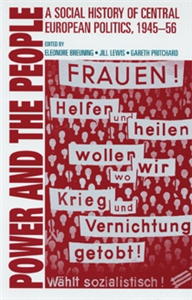
        Power and the people

        A social history of central European politics, 1945–56

        by Eleonore Breuning, Jill Lewis, Gareth Pritchard

        This book covers various aspects of the social history of politics on both sides of the Iron Curtain in the period 1945 to 1956. The contributors come from a range of countries (Austria, Germany, Hungary, Slovakia and the United Kingdom) and comprise a mixture of established historians and younger scholars engaged in pioneering research. The individual chapters are organised into four sections dealing with workers, ethnic and linguistic minorities, youth, and women. In order to enhance the comparative character of the volume, the four chapters contained in each section consider the position of these social groups in, respectively, West Germany, East Germany, Austria, and either Czechoslovakia or Hungary. Major themes include the absence of popular revolutions in the aftermath of World War Two, the re-imposition of social control by post-war elites, the attempt to restore pre-war gender relations, and the failure of Communist parties to win popular support. The chosen time-frame saw most of the decisive developments which set the pattern for the remaining Cold War period and is therefore of key importance for any student of this topic. ;

      • Trusted Partner
        The Arts
        November 2013

        Popular television in authoritarian Europe

        by Peter Goddard

        This lively and ground-breaking collection brings together work on forms of popular television within the authoritarian regimes of Europe after World War Two. Ten chapters based on new and original research examine approaches to programming and individual programmes in Spain, Greece, Czechoslovakia, Romania, the USSR and the GDR at a time when they were governed as dictatorships or one-party states. Drawing on surviving archives, scripts and production records, contemporary publications, YouTube clips and interviews with producers and performers, its chapters recover examples of television programming history unknown beyond national borders and often preserved largely in the memories of the audiences who lived with them. The introduction examines how television can be considered 'popular' in circumstances where audience appeal is often secondary to the need for state control. Published in English, Popular television in authoritarian Europe represents a significant intervention in transnational television studies, making these histories available to scholars for the first time, encouraging comparative enquiry and extending the reach - intellectually and geographically - of European television history. There is a foreword by John Corner and an informative timeline of events in the history of television in the countries covered. ;

      • Trusted Partner
        April 2022

        Fritz, the Gorilla

        Biography of a Fascinating Ape

        by Jenny von Sperber

        When Jenny von Sperber first met Fritz, the gorilla didn’t let her out of his sight. He was already over 50 years old then, but he was still extremely charismatic. One thing matters for the journalist: she wants to find out everything about Fritz’s life. Born in 1963, he was captured in the wild and came from Cameroon to Germany in 1966. At that time, apes were still regarded as a curiosity in zoos. When a ban was declared on the wild gorilla trade, Fritz was already a father of many youngsters. This fascinating gorilla-family saga not only recounts the eventful life of Fritz, but also shows the development in European zoos in handling wild animals. Nowadays, things have certainly improved. But there are still questions, for example, what does it do to us when we marvel at our closest relatives behind glass? And is it even still current to confine apes ... was it ever?

      Subscribe to our

      newsletter