Your Search Results

      • Kawmiah distributing company

        The National Company for Distribution (Kawmiah distributing company) is one of the national press institutions working in the field of publishing, distribution, printing and journalism, and it has many cultural and intellectual publications through Dar Al Shaab and Dar Al Taawon, and it is of great importance in the paper book market in Egypt and the Arab world with its capabilities in the fields of publishing, distribution and printing And from promising cadres capable of presenting the best publications in various cultural and intellectual fields.

        View Rights Portal
      • Hudhud Publishing & Distribution

        Founded on the steadfast belief that a good book has a positive and lasting impact on the development of children, families and socities, Al Hudhud is a pioneering Emirati publishing and distribution

        View Rights Portal
      • Trusted Partner
        Business, Economics & Law
        June 2024

        The labour movement in Lebanon

        Power on hold

        by Lea Bou Khater

        The labour movement in Lebanon: Power on hold narrates the history of the Lebanese labour movement from the early twentieth century to today. Bou Khater demonstrates that trade unionism in the country has largely been a failure, for reasons including state interference, tactical co-optation, and the strategic use of sectarianism by an oligarchic elite, together with the structural weakness of a service-based laissez-faire economy. Drawing on a vast body of Arabic-language primary sources and difficult-to-access archives, the book's conclusions are significant not only for trade unionism, but also for new forms of workers' organisations and social movements in Lebanon and beyond. The Lebanese case study presented here holds significant implications for the wider Arab world and for comparative studies of labour. This authoritative history of the labour movement in Lebanon is vital reading for scholars of trade unionism, Lebanese politics, and political economy.

      • Trusted Partner
        The Arts
        May 2026

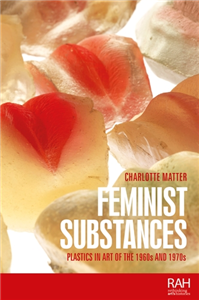
        Feminist substances

        Plastics in art of the 1960s and 1970s

        by Charlotte Matter

        Numerous women artists engaged with industrial materials such as plastics in the 1960s and 1970s, contrary to what the discourse of the time would have us believe. As Feminist substances shows, their works offered unique approaches to plastics in art, introducing new material meanings through a feminist lens. With a focus on Europe and Latin America, the book discusses the practices of Carla Accardi, Lea Lublin and Alina Szapocznikow, combining close readings of selected artworks with broader considerations of their social contexts. It explores their use of Sicofoil, plexiglass, plastic inflatables, polyester resin and polyurethane foam to address key concerns of feminist thought in relation to social reproduction, motherhood, memory, desire and illness. Beyond commonplaces of plastics as generic bad materials, Feminist substances considers more complex ways of engaging with synthetic matter, taking into account our messy relationships with these controversial materials.

      • Trusted Partner
        Literature & Literary Studies
        March 2017

        Asia in Western fiction

        by Robin Winks

        Any reader who has ever visited Asia knows that the great bulk of Western-language fiction about Asian cultures turns on stereotypes. This book, a collection of essays, explores the problem of entering Asian societies through Western fiction, since this is the major port of entry for most school children, university students and most adults. In the thirteenth century, serious attempts were made to understand Asian literature for its own sake. Hau Kioou Choaan, a typical Chinese novel, was quite different from the wild and magical pseudo-Oriental tales. European perceptions of the Muslim world are centuries old, originating in medieval Christendom's encounter with Islam in the age of the Crusades. There is explicit and sustained criticism of medieval mores and values in Scott's novels set in the Middle Ages, and this is to be true of much English-language historical fiction of the nineteenth and early twentieth centuries. Even mediocre novels take on momentary importance because of the pervasive power of India. The awesome, remote and inaccessible Himalayas inevitably became for Western writers an idealised setting for novels of magic, romance and high adventure, and for travellers' tales that read like fiction. Chinese fictions flourish in many guises. Most contemporary Hong Kong fiction reinforced corrupt mandarins, barbaric punishments and heathens. Of the novels about Japan published after 1945, two may serve to frame a discussion of Japanese behaviour as it could be observed (or imagined) by prisoners of war: Black Fountains and Three Bamboos.

      • Trusted Partner
        Business, Economics & Law
        October 1999

        The Spanish Armada

        by Martin Parker

        At the end of July 1588, Philip II's Armada of 130 ships set sail against England. Within a month they were condemned to defeat. The authors spent 13 years reassessing the profusion of untapped documents, diaries and private papers lying forgotten in Spanish and Dutch archives. This material has been augmented by underwater discoveries from the Armada wrecks. ;

      • Trusted Partner
        Humanities & Social Sciences
        April 2025

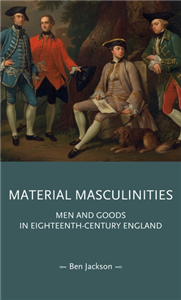
        Material masculinities

        Men and goods in eighteenth-century England

        by Ben Jackson

        Material Masculinities examines the material and consumer practices of over 1000 men from the middling and upper ranks of eighteenth-century society, c.1650-1850. It draws upon evidence from over 35 archives and museum collections to detail how material objects were integral for men in forming identities and shaping experiences. For men of all social ranks, ages, and geographic locations, material knowledge was imperative for masculine social identities to operate in a commercial society. Before the centralised factory and widespread mass-produced goods, men personalised and repaired their goods; products were shaped by men's attitudes and concerns. Objects were tools in men's identity formation and the exercise of social and gendered power. There was a reciprocal relationship between men and goods in this period; men were active agents of material and commercial change driving product and aesthetic innovation.

      • Trusted Partner
        The Arts
        July 2021

        Cue and Cut

        A practical approach to working in multi-camera studios

        by Roger Singleton-Turner

        Cue & Cut is a 'practical approach to working in television studios' for anyone who might want to work in that medium. It's full of useful information about kit, and how you would use it to create multi-camera content. Written by a multi-camera producer-director with years of drama and teaching experience, it presents both a way of handling studios and a source of information about how things have changed from the days of monochrome to HD tapeless modes - with some thoughts on 3D HDTV The book is firmly based in first-hand teaching experience and experience of producing, direction, floor managing (and so on) and on working with top flight Actors, Writers, Musicians, Designers of all disciplines and Sound and Camera crews, both at the BBC and in ITV. The book will certainly cover multi-camera aspects of Undergraduate, HND and B.Tech courses and should be useful to those on short courses, whether practical or post-graduate.

      • Trusted Partner
        The Arts
        July 2021

        Cue and Cut

        A practical approach to working in multi-camera studios

        by Roger Singleton-Turner

        Cue & Cut is a 'practical approach to working in television studios' for anyone who might want to work in that medium. It's full of useful information about kit, and how you would use it to create multi-camera content. Written by a multi-camera producer-director with years of drama and teaching experience, it presents both a way of handling studios and a source of information about how things have changed from the days of monochrome to HD tapeless modes - with some thoughts on 3D HDTV The book is firmly based in first-hand teaching experience and experience of producing, direction, floor managing (and so on) and on working with top flight Actors, Writers, Musicians, Designers of all disciplines and Sound and Camera crews, both at the BBC and in ITV. The book will certainly cover multi-camera aspects of Undergraduate, HND and B.Tech courses and should be useful to those on short courses, whether practical or post-graduate.

      • Trusted Partner
        Literature & Literary Studies
        July 2025

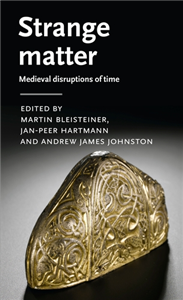
        Strange matter

        Medieval disruptions of time

        by Martin Bleisteiner, Jan-Peer Hartmann, Andrew James Johnston

        Medieval and early modern texts reflect a fascination with material objects, from ancient heirlooms to ingenious automata. Often imbued with power or beauty, these objects carry an uncanny sense of otherness, their mysterious origins evoking wonder and suggesting temporal and spatial distance. Acting as repositories of temporal alterity, such artefacts bridge the past and present in profound ways. This volume, featuring contributions from experts in literature and art history, explores how texts from these periods use material objects to engage with temporal otherness. From everyday items to marvellous creations, objects challenge distinctions between human and material, natural and cultural. Whether examining the hybrid status of Hector's body in Lydgate's Troy Book or the temporal agency of humble bubbles, the chapters illuminate the vibrant networks connecting people and objects. By highlighting the 'hybridity' of matter, the book offers fresh insights into Bruno Latour's critique of nature-culture divides.

      • The Arts
        March 1905

        Concerning the Spiritual in Art

        by Wassily Kandinsky

        A pioneering work in the movement to free art from its traditional bonds to material reality, this book is one of the most important documents in the history of modern art. Written by the famous nonobjective painter Wassily Kandinsky (1866–1944), it explains Kandinsky's own theory of painting and crystallizes the ideas that were influencing many other modern artists of the period. Along with his own groundbreaking paintings, this book had a tremendous impact on the development of modern art. Kandinsky's ideas are presented in two parts. The first part, called "About General Aesthetic," issues a call for a spiritual revolution in painting that will let artists express their own inner lives in abstract, non-material terms. Just as musicians do not depend upon the material world for their music, so artists should not have to depend upon the material world for their art. In the second part, "About Painting," Kandinsky discusses the psychology of colors, the language of form and color, and the responsibilities of the artist. An Introduction by the translator, Michael T. H. Sadler, offers additional explanation of Kandinsky's art and theories, while a new Preface by Richard Stratton discusses Kandinsky's career as a whole and the impact of the book. Making the book even more valuable are nine woodcuts by Kandinsky himself that appear at the chapter headings. This English translation of Über das Geistige in der Kunst was a significant contribution to the understanding of nonobjectivism in art. It continues to be a stimulating and necessary reading experience for every artist, art student, and art patron concerned with the direction of 20th-century painting.


      • Trusted Partner
        Literature & Literary Studies
        October 2023

        The penny politics of Victorian popular fiction

        by Rob Breton

        Penny politics offers a new way to read early Victorian popular fiction such as Jack Sheppard, Sweeney Todd, and The Mysteries of London. It locates forms of radical discourse in the popular literature that emerged simultaneously with Brittan's longest and most significant people's movement. It listens for echoes of Chartist fiction in popular fiction. The book rethinks the relationship between the popular and political, understanding that radical politics had popular appeal and that the lines separating a genuine radicalism from commercial success are complicated and never absolute. With archival work into Newgate calendars and Chartist periodicals, as well as media history and culture, it brings together histories of the popular and political so as to rewrite the radical canon.

      • Trusted Partner
        Literature & Literary Studies
        March 2025

        Through the fiction of Phebe Gibbes (1764–90)

        Women, alienation, and prodigality in the long eighteenth century

        by Kathryn Freeman

        Through the Fiction of Phebe Gibbes places this prolific, newly recovered English writer at the centre of the revolutionary period. Gibbes's novels mark the struggles of women for agency in an expanding British empire, from the Seven Years' War to revolutions in American, Haiti and France. With Gibbes as a nexus in a lineage of women writers from Aphra Behn to Jane Austen, Kathryn S. Freeman offers a valuable perspective on the 'long eighteenth century', with Gibbes' own evolution mirroring that of the larger period. The study traces the development of Gibbes' authorial voice from satire to irony through a range of female characters subverting patriarchal oppression. Freeman guides the reader through patterns of narrative voice, concerns with gender and sexuality, and elements of wordplay through detailed discussion of five novels representing Gibbes' evolving representation of a subversive female subjectivity.

      • Trusted Partner
        The Arts
        October 2025

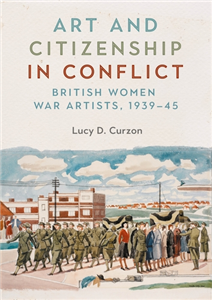
        Art and citizenship in conflict

        British women war artists, 1939–45

        by Lucy Curzon

        Art and Citizenship in Conflict examines the work of women war artists in order to highlight the complexity of citizenship and gender in Britain during the Second World War. Evelyn Dunbar, Mary Kessell, Ethel Gabain, Stella Schmolle, and Laura Knight, among others, were commissioned by the War Artists' Advisory Committee (WAAC) to document the millions of women who took up sometimes unconventional roles-in agriculture, the auxiliary services, and manufacturing, among others-to support the British war effort. Indeed, their prints, drawings, and paintings were part of a broader scheme to uphold morale and promote much-needed citizen involvement on the home front. While there is growing interest, the importance of their remit in the history of the Second World War and the quality of their artistry have nonetheless not yet secured them a significant place in scholarship. Art and Citizenship in Conflict seeks to amend this gap while also broadening approaches to the study of war itself.

      • Trusted Partner
        Biography & True Stories
        February 2026

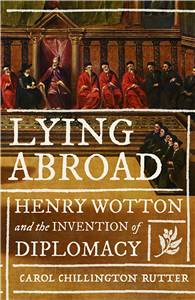
        Lying abroad

        Henry Wotton and the invention of diplomacy

        by Carol Chillington Rutter

        Student, traveller, secretary, scoundrel, spy: introducing the maverick whose diplomacy saved Europe from war. Henry Wotton had already exhausted several lives when he arrived in Venice as England's ambassador in 1604. Yet the most remarkable phase of his career was yet to come. In Lying abroad, Carol Chillington Rutter tells Wotton's extraordinary story. She reveals how this one-time exile, who fled England after his employer was convicted of treason, gained the favour of King James, securing a knighthood and a diplomatic posting. Charged with restoring relations with Venice after a fifty-year hiatus, he drew criticism for his breaches of protocol. But when a dispute brought Europe to the brink of war, Wotton took a risk - one that changed European history. This engrossing biography recounts a life that was tumultuous, tarnished and endlessly theatrical. The man King James called his 'honest dissembler' was a maverick who fashioned diplomacy in ways that still inform international relations today.

      • Trusted Partner
        Humanities & Social Sciences
        June 2010

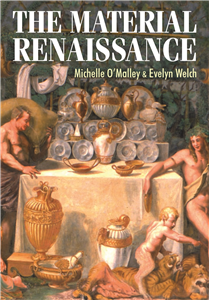
        The Material Renaissance

        None

        by Michelle O'Malley, Christopher Breward, Evelyn Welch, Bill Sherman

        Despite the recent interests of economic and art historians in the workings of the market, we still know remarkably little about the everyday context for the exchange of objects and the meaning of demand in the lives of individuals in the Renaissance. Nor do we have much sense of the relationship between the creation and purchase of works of art and the production, buying and selling of other types of objects in Italy in the period. The material Renaissance addresses these issues of economic and social life. It develops the analysis of demand, supply and exchange first proposed by Richard Goldthwaite in his ground-breaking Wealth and the demand for art in Renaissance Italy, and expands our understanding of the particularities of exchange in this consumer-led period. Considering food, clothing and every-day furnishings, as well as books, goldsmiths' work, altarpieces and other luxury goods, the book draws on contemporary archival material to explore pricing, to investigate production from the point of view of demand, and to look at networks of exchange that relied not only on money but also on credit, payment in kind and gift giving. The material Renaissance establishes the dynamic social character of exchange. It demonstrates that the cost of goods, including the price of the most basic items, was largely contingent upon on the relationship between buyer and seller, shows that communities actively sought new goods and novel means of production long before Colbert encouraged such industrial enterprise in France and reveals the wide ownership of objects, even among the economically disadvantaged. ;

      • Trusted Partner
        Literature & Literary Studies
        March 2024

        Borrowed objects and the art of poetry

        Spolia in Old English verse

        by Denis Ferhatovic

        This study examines Exeter riddles, Anglo-Saxon biblical poems (Exodus, Andreas, Judith) and Beowulf in order to uncover the poetics of spolia, an imaginative use of recycled fictional artefacts to create sites of metatextual reflection. Old English poetry famously lacks an explicit ars poetica. This book argues that attention to particularly charged moments within texts - especially those concerned with translation, transformation and the layering of various pasts - yields a previously unrecognised means for theorising Anglo-Saxon poetic creativity. Borrowed objects and the art of poetry works at the intersections of materiality and poetics, balancing insights from thing theory and related approaches with close readings of passages from Old English texts.

      • Trusted Partner
      • Trusted Partner
      • Trusted Partner
        Children's & YA

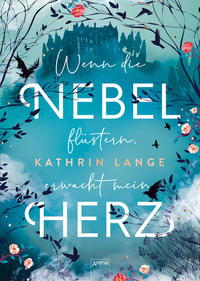
        Heart of Mist

        by Katrin Lange

        A girl torn between two brothers. Regardless of which one she falls in love with it will be disastrous for the other. Christopher and Adrian have sworn that no girl will ever come between them again, because there is a sleeping monster inside Adrian, just waiting to hurt his brother. But then Jessa comes to High Moor Grange… Jessa would do anything to find her sister Alice, who has been registered as missing for five years. High Moor Grange is the first clue she has been given after all this time – but apart from a ruin shrouded in mist, all she finds there are the owners of this dilapidated manor house. Jessa suspects that they both know more about Alice’s disappearance than they admit. Christopher wants nothing more than to be rid of her, and constantly gets on her nerves with his arrogance – and even his warm-hearted brother Adrian seems to be harbouring some secrets. Jessica knows that she ought to stay away from the twin brothers, because instead of finding answers at High Moor Grange, she finds herself in danger of losing her heart in a battle against a 200-year-old curse. Dark, irresistible and deeply romantic – a modern Beauty and the Beast story by the queen of emotions!

      Subscribe to our

      newsletter