Your Search Results

      • Ampersand (Esperluette SRL)

        Independent publishing house born in 2012 with the intention of bringing to paper texts on art, fashion and culture written in a careful and elegant format, after an exhaustive work of edition, correction and design.

        View Rights Portal
      • Trusted Partner
        2024

        The second half of your life - a manual

        Tips and strategies for successful ageing

        by Dr. Petra Kiedaisch

        In the middle of our lives, the cards are reshuffled: marriages are divorced, careers are questioned, friendships are ended, questions of meaning are asked, bodies change - and not just hormonally. At the same time, children leave home and parents become carers. From the age of 45, the majority of our population is at the centre of a second upheaval that affects all facets of our lives and leaves us at a loss in many ways. Not only in our daily lives, but also when it comes to planning for our own old age. This guide is designed to help us find our way. It presents the most important information from all areas relevant to a good life after 45. Leading experts from the fields of medicine, nutrition, philosophy, theology, psychology, care, law and finance give recommendations on what to look out for and what tools are needed to get through these challenging years unscathed. Useful checklists round off the articles. The book shows us the unique opportunity to see these challenges not as a crisis but as a source of strength. Not only can we come through this period of our lives healthy and happy, but we can also shape it so that the next age threshold is no longer frightening. During the second phase of adolescence, we lay the foundations for whether and how we will grow older. Be it in terms of health or living together with family and friends. With contributions from: Prof. Dr. Martin Gessmann (philosophy), Dipl. Psych. Claudia Kühner (psychology), Dr Suso Lederle (medicine), Dr Petra Forster (nutrition), Christian Hald, Anja Heine (law), Prof Dr Philipp Schreiber (finance), Prof Dr Thomas Klie (nursing care insurance), Georg Eberhardt (religion).

      • Trusted Partner
        Fiction
        September 2017

        A Vision of Battlements

        by Anthony Burgess

        by Andrew Biswell, Paul Wake

        A Vision of Battlements is the first novel by the writer and composer Anthony Burgess, who was born in Manchester in 1917. Set in Gibraltar during the Second World War, the book follows the fortunes of Richard Ennis, an army sergeant and incipient composer who dreams of composing great music and building a new cultural world after the end of the war. Following the example of his literary hero, James Joyce, Burgess takes the structure of his book from Virgil's Aeneid. The result is, like Joyce's Ulysses, a comic rewriting of a classical epic, whose critique of the Army and the postwar settlement is sharp and assured. The Irwell Edition is the first publication of Burgess's forgotten masterpiece since 1965. This new edition includes an introduction and notes by Andrew Biswell, author of a prize-winning biography of Anthony Burgess.

      • Trusted Partner
        Literary studies: c 1800 to c 1900
        January 2013

        Second sight

        by Catherine Maxwell

      • Trusted Partner
      • Trusted Partner
        March 2020

        No Place for Taste

        Food Myths and the Rapid Change of Food Culture

        by Manfred Kriener

        This book is not a manual but provides an information kit so we can find our way intelligently and make decisions. Nutrition is a constant talking point, but often there is a lack of knowledge and judgement. Amidst this confusion of facts, Manfred Kriener clarifies the rapid change of our food culture. He covers the entire range from the vegan trend to insect food, from aquaculture to cultured meat. Kriener also focuses on the various obscure quality seals, chaotic labelling on the wine rack and our inconsistency as consumers. The new world of food in eleven chapters, spicy at times, but plenty of food for thought and to whet the appetite.

      • Trusted Partner
        The Arts
        November 2022

        In good taste

        How Britain’s middle classes found their style

        by Ben Highmore, Christopher Breward

        In postwar Britain, journalists and politicians prophesised that the class system would not survive a consumer culture where everyone had TVs and washing machines, and where more and more people owned their own homes. They were to be proved entirely wrong. In good taste charts how class culture, rather than being destroyed by mass consumption, was remade from flat-pack furniture, Mediterranean cuisine and lifestyle magazines. Novelists, cartoonists and playwrights satirised the tastes of the emerging middle classes, and sociologists claimed that an entire population was suffering from status anxiety, but underneath it all, a world was being constructed out of duvets, quiches and mayonnaise, easy chairs from Habitat, white emulsion paint and ubiquitous well-scrubbed, second-hand pine kitchen tables. This was less a world of symbolic goods and more an intimate environment alive with new feelings and attitudes.

      • Trusted Partner
      • Trusted Partner
        Humanities & Social Sciences
        January 2023

        The supernatural in early modern Scotland

        by Julian Goodare, Martha McGill

        This book is about other worlds and the supernatural beings, from angels to fairies, that inhabited them. It is about divination, prophecy, visions and trances. And it is about the cultural, religious, political and social uses to which people in Scotland put these supernatural themes between 1500 and 1800. The supernatural consistently provided Scots with a way of understanding topics such as the natural environment, physical and emotional wellbeing, political events and visions of past and future. In exploring the early modern supernatural, the book has much to reveal about how men and women in this period thought about, debated and experienced the world around them. Comprising twelve chapters by an international range of scholars, The supernatural in early modern Scotland discusses both popular and elite understandings of the supernatural.

      • Trusted Partner
        Health & Personal Development
        May 2016

        How to Deal with Anxiety and Panic

        by Michael Rufer, Heike Alsleben, Angela Weiss

        Are you or a loved one suffering from anxiety and panic and you are wondering what you can do? To whom you can turn? What the options for treatment are? And how relatives can help? This self-help book gives affected people and their relatives: • clear and comprehensive information based on up-to-date research findings • concrete self-help strategies and exercises with worksheets • descriptions of recognized treatment methods • instructions on coping with stress and using relaxation techniques • detailed answers to frequently asked questions • a helpful list of useful contacts and websites • an idea of how mindfulness can be incorporated. The authors have first-hand knowledge of these problems from their extensive experience of counseling and treating people with anxiety disorders and their relatives. This book summarizes their knowledge in clear and comprehensible form. It is ideal both for self-help and to complement ongoing treatment. Target Group: affected people and their relatives and friends; psychologists, therapists, doctors, counseling centers.

      • Trusted Partner
        Humanities & Social Sciences
        January 2012

        The Second Labour Government

        A reappraisal

        by John Shepherd

        This new edited collection of essays focuses on the history of Labour's second period in office during the 1929-1931 global financial crisis. Contributions by leading historians and younger academics bring fresh perspectives to Labour's domestic problems, electoral and party matters, relations with the Soviet Union and ideological questions. An important range of new historical research provides a much-needed reappraisal of Ramsay MacDonald's second Labour government, which impressed few with its conventional policies for tackling mass unemployment. Oswald Mosley, John Maynard Keynes and Ernest Bevin's alternative economic strategies are critically studied in key essays. A more positive side of the government's policies is also adeptly revealed on consumerism and agriculture. Significant new light is adroitly shed on the 1929 general election, the first fought on a universal franchise. The intricate politics of the Parliamentary Labour Party and the disaffiliation of the Independent Labour Party are convincingly explored. The influence of the Soviet Union on Labour's thoughts and actions is analysed in valuable accounts of Labour's foreign policy and Labour's turn to socialism after 1931. An important fresh account of opposition politics breaks new ground on the reaction of Tory politicians, including Harold Macmillan, to MacDonald's government. The volume concludes with an absorbing analysis of the myths surrounding '1931' in Labour history. This timely volume makes accessible a major reassessment of existing knowledge and new scholarship that will appeal to students and teachers of British political and social history. It is essential reading for sixth form and university courses on twentieth-century history. ;

      • Trusted Partner
        Business, Economics & Law
        October 2004

        Qualities of food

        by Mark Harvey, Andrew McMeekin, Alan Warde

        In this book, the complexity and the significance of the foods we eat are analysed from a variety of perspectives, by sociologists, economists, geographers and anthropologists. Chapters address a number of intriguing questions: how do people make judgments about taste? How do such judgments come to be shared by groups of people?; what social and organisational processes result in foods being certified as of decent or proper quality? How has dissatisfaction with the food system been expressed? What alternatives are thought to be possible? The multi-disciplinary analysis of this book explores many different answers to such questions. The first part of the book focuses on theoretical and conceptual issues, the second part considers processes of formal and informal regulation, while the third part examines social and political responses to industrialised food production and mass consumption. Qualities of food will be of interest to researchers and students in all the social science disciplines that are concerned with food, whether marketing, sociology, cultural studies, anthropology, human nutrition or economics.

      • Trusted Partner
        Society & culture: general
        May 2017

        Human remains and mass violence

        Methodological approaches

        by Edited by Jean-Marc Dreyfus, Élisabeth Anstett

        This book outlines for the first time in a single volume the theoretical and methodological tools for a study of human remains resulting from episodes of mass violence and genocide. Despite the highly innovative and contemporary research into both mass violence and the body, the most significant consequence of conflict - the corpse - remains absent from the scope of existing research. Why have human remains hitherto remained absent from our investigation, and how do historians, anthropologists and legal scholars, including specialists in criminology and political science, confront these difficult issues? By drawing on international case studies including genocides in Rwanda, the Khmer Rouge, Argentina, Russia and the context of post-World War II Europe, this ground-breaking edited collection opens new avenues of research. Multidisciplinary in scope, this volume will appeal to readers interested in an understanding of mass violence's aftermath, including researchers in history, anthropology, sociology, law, politics and modern warfare. The research program leading to this publication has received funding from the European Research Council under the European Union's Seventh Framework Programme (FP/2007-2013) / ERC Grant Agreement n° 283-617.

      • Trusted Partner
        Humanities & Social Sciences
        December 2014

        Human remains and mass violence

        Methodological approaches

        by Jean-Marc Dreyfus, Élisabeth Anstett, Jean-Marc Dreyfus, Élisabeth Anstett

        This book outlines for the first time in a single volume the theoretical and methodological tools for a study of human remains resulting from episodes of mass violence and genocide. Despite the highly innovative and contemporary research into both mass violence and the body, the most significant consequence of conflict - the corpse - remains absent from the scope of existing research. Why have human remains hitherto remained absent from our investigation, and how do historians, anthropologists and legal scholars, including specialists in criminology and political science, confront these difficult issues? By drawing on international case studies including genocides in Rwanda, the Khmer Rouge, Argentina, Russia and the context of post-World War II Europe, this ground-breaking edited collection opens new avenues of research. Multidisciplinary in scope, this volume will appeal to readers interested in an understanding of mass violence's aftermath, including researchers in history, anthropology, sociology, law, politics and modern warfare. ;

      • Trusted Partner
        Humanities & Social Sciences
        January 2020

        The life–cycle in Western Europe, c.1300–c.1500

        by S. H. Rigby, Deborah Youngs

        This is the first study to examine the entire life cycle in the Middle Ages. Drawing on a wide range of secondary and primary material, the book explores the timing and experiences of infancy, childhood, adolescence and youth, adulthood, old age and, finally, death. It discusses attitudes towards ageing, rites of passage, age stereotypes in operation, and the means by which age was used as a form of social control, compelling individuals to work, govern, marry and pay taxes. The wide scope of the study allows contrasts and comparisons to be made across gender, social status and geographical location. It considers whether men and women experienced the ageing process in the same way, and examines the differences that can be discerned between northern and southern Europe. The fourteenth and fifteenth centuries suffered famine, warfare, plague and population collapse. This fascinating consideration of the life cycle adds a new dimension to the debate over continuity and change in a period of social and demographic upheaval.

      • Trusted Partner
        Humanities & Social Sciences
        March 2017

        Human remains and mass violence

        Methodological approaches

        by Jean-Marc Dreyfus, Jean-Marc Dreyfus, Élisabeth Anstett, Élisabeth Anstett

        This book outlines for the first time in a single volume the theoretical and methodological tools for a study of human remains resulting from episodes of mass violence and genocide. Despite the highly innovative and contemporary research into both mass violence and the body, the most significant consequence of conflict - the corpse - remains absent from the scope of existing research. Why have human remains hitherto remained absent from our investigation, and how do historians, anthropologists and legal scholars, including specialists in criminology and political science, confront these difficult issues? By drawing on international case studies including genocides in Rwanda, the Khmer Rouge, Argentina, Russia and the context of post-World War II Europe, this ground-breaking edited collection opens new avenues of research. Multidisciplinary in scope, this volume will appeal to readers interested in an understanding of mass violence's aftermath, including researchers in history, anthropology, sociology, law, politics and modern warfare. The research program leading to this publication has received funding from the European Research Council under the European Union's Seventh Framework Programme (FP/2007-2013) / ERC Grant Agreement n° 283-617.

      • Trusted Partner
        Gender studies: men
        November 2007

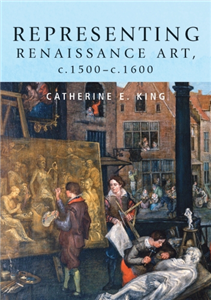
        Representing Renaissance art, c.1500–c.1600

        by Catherine E. King

        Representing Renaissance art, c.1500-c.1600 is a study of change and continuity in the iconographies of art and the visual representation of artists during the sixteenth century, especially in Italy and the Netherlands. The issue of how, and how far, artists obtained higher status for their profession during the Renaissance is a key question for the study of the early modern period. This book considers the maintenance of well-established traditions for the visual representation of artists, and also examines the new iconographies that emerged in the sixteenth century. By highlighting art and architecture that artists designed for their personal use, including the decoration of their houses, this study provides insight into the tastes and 'ways of looking' specific to artists. By examining the visual evidence we see the opinions both of artists who expressed their views in literary texts, and additionally those of artists who did not publish their ideas in written form.

      • Trusted Partner
        February 2016

        Mo und die Arier

        Allein unter Rassisten und Neonazis

        by Asumang, Mo

      • Trusted Partner

      Subscribe to our

      newsletter