Your Search Results

      • 华东师范大学出版社 East China Normal University Press

        East China Normal University Press Ltd. (ECNUP), established in 1957, is one of the two oldest publishers in China specializing in education publicationsas well as the top-ranking publisher in education. ECNUP is the top publishing house in Shanghai, and ranks among China's top 100 presses.

        View Rights Portal
      • Deutsches Kulturforum östliches Europa e.V.

        The German Cultural Forum for Central and Eastern Europe publishes richly illustrated non-fiction books about the cultural history of those areas of Central and Eastern Europe where Germans used to, or still do live. The carefully edited titles with elaborated appendices are written by well-known experts who are able to present information about Central and Eastern Europe in an attractive way by cultural travel guides or historical overview books. The Cultural Forum also edits an annual and a bimonthly magazine, Blickwechsel ("Change of perspective") and Kulturkorrespondenz östliches Europa ("Cultural Correspondence Central and Eastern Europe"). Furthermore, the Forum organizes popular lectures, discussions, readings, exhibitions, concerts, journalist trips, writer residencies and prize-givings.

        View Rights Portal
      • Trusted Partner
        Humanities & Social Sciences
        November 2025

        Humanitarian mobilisation in Central and Eastern Europe

        Local, national, and international perspectives

        by Doina Anca Cretu, Michal Frankl

        By focusing on aid Central and Eastern Europe, the volume adds to the existent scholarly explorations of modern humanitarianism, its actors and practices. In the twentieth century, aid workers assisted victims of war and earthquakes, delivered food, supported health care, provided childcare, or sheltered refugees. The contributors not only reconstruct these diverse histories and their protagonists, but also bring international, national, and local actors together: from grassroots activists to private associations to state-driven "socialist humanitarians" to large Western aid organizations. In doing so, they challenge the often unidirectional, from West-to-East, and asymmetrical perspective on donor-recipient relationships in humanitarian processes.

      • Trusted Partner
        The Arts
        June 2026

        Borderline bodies in art and visual culture

        Unsettling identity and place since 1800

        by Keren Hammerschlag, Natasha Ruiz-Gómez, Tania Anne Cleaves

        Borderline bodies offers original interpretations of visual representations of human bodies as bounded and unbounded, fortified and permeable, mobile and static-subject to borders and able to traverse and challenge them. It also takes as its focus images and objects that might be considered 'borderline' because they sit at the intersection of disciplines or sit outside accepted notions of what constitutes serious 'art.' By mapping the ways human bodies traverse borders and straddle-even dismantle-categories, this volume's essays approach afresh the relationship of bodies to traditional modes of representation, especially in art and medicine, and encourage us to think anew about how we understand the relationship between human corporeality, identity and place. Critical transdisciplinary and transnational analyses of objects and images from a range of geographies shed new light on the themes of: bodies and identity; typologies of the body; racialised bodies; 'normal' and 'abnormal' bodies; encounters between bodies; bodies in transition; bodies and mobility; and the bounded and unbounded human body. The outcome is a fresh approach to depictions of the human body produced for the purposes of artistic and medical education, aesthetic edification, and scientific and professional advancement, which disrupts assumptions about the normative human body perpetuated through Western image-making traditions.

      • Trusted Partner
        The Arts
        December 2022

        "I am Jugoslovenka!"

        by Jasmina Tumbas

      • Trusted Partner
        The Arts
        February 2026

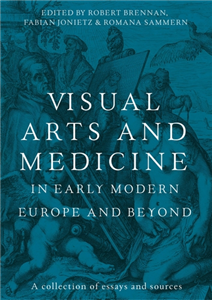
        Visual arts and medicine in early modern Europe and beyond

        A collection of essays and sources

        by Robert Brennan, Fabian Jonietz, Romana Sammern

        This book opens up new perspectives on the relationship between art, medicine, and science in late-medieval and early modern Europe. Looking beyond the traditional nexus of art, anatomy, and optics, the volume sheds light on a broader array of connections between artists and physicians: collaborations between painters and doctors on colour charts, handwork skills common to sculptors and surgeons, the transmission of art theory through medical texts long before the emergence of art writing itself as an independent genre, and the kinship of medical diagnosis with early modes of connoisseurship. Reconfiguring the histories of art, medicine, and science, the book also traverses conventional boundaries between physical and mental health, religious and medical modes of healing, menial and exalted forms of knowledge and labour, as well as vernacular and scientific understandings of human difference, including gender, race, and neurodiversity.

      • Trusted Partner
        Humanities & Social Sciences
        July 2025

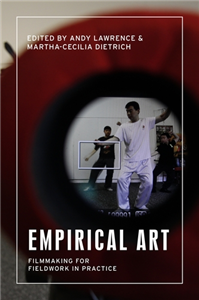
        Empirical art

        Filmmaking for fieldwork in practice

        by Andy Lawrence, Martha-Cecilia Dietrich

        Empirical art: Filmmaking for fieldwork in practice is an insightful exploration of what the craft of filmmaking brings to social science research. Providing creative avenues on how to narrate encounters, relationships, and experiences during fieldwork, this comprehensive volume offers a rich tapestry of theoretical explorations and explorative methodologies. Skilfully connecting the worlds of ethnography, art and cinema, the contributors in this book act as a compass for filmmakers and researchers venturing to use a camera and microphone to relate and narrate their research collaborations and fieldsites. Drawing from the authors' extensive experience in disciplines like social anthropology, environmental humanities, and political science, "Empirical Art" breaks down the intricate process of crafting ethnographic films that departs from the researcher's subjectivity. Covering aspects of filmmaking from conceptualisation to production and distribution, readers are equipped with a treasure trove of collaborative techniques, innovative approaches, and ethical considerations necessary to generate and examine storytelling practices in contemporary fields of study. The authors discuss the significance of the multiple roles that technologies of filmmaking play in reflecting on cultural practices, social dynamics, and (beyond) human storytelling and their transformative potentials. Whether a seasoned filmmaker, an aspiring ethnographer, or an academic seeking new dimensions for their research, Empirical Art serves as a guide to integrating visual storytelling, cinema craft and empirical research.

      • Trusted Partner
        Literature & Literary Studies
        June 2025

        Contemporary Slavic horror across media

        Cursed zones

        by Agnieszka Jezyk

        In the Western cultural production that puts individual or collective fear at its center, East/Central Europe has been portrayed as an othered space of horror - lawless, frightening zones where anything can happen. Incorporating articles on literature, film, visual arts, video games, music videos, and music festivals, Contemporary Slavic horror across media: Cursed zones is a pioneering anthology of academic essays devoted to Slavic horror fiction. The book focuses on works from the mid-20th century through the present, particularly the post-Soviet period. Assessing current trends in Czech, Polish, Russian, Slovak, Ukrainian, and East/Central European horror media, the book looks at similarities and idiosyncrasies of the genre in its Slavic variant. With this anthology we hope to tame 'the Easterner Other' and start exorcising 'monstrous' East/Central Europe.

      • Trusted Partner
        Humanities & Social Sciences
        July 2025

        International Relations in a multipolar Middle East

        by Francesco Belcastro, Edward Wastnidge

        This volume explores the international relations of today's Middle East, a region that has become increasingly multi-polar. The tumult following the Arab Uprisings has expanded the arenas competed over by regional powers, global actors and non-state players. The United States, once seemingly intent on a hegemonic 'Pax Americana' has stepped back, leaving powers such as Russia, China, India and the EU, with opportunities to increase their reach and expand their influence. Meanwhile, regional rivalries and alliances have continued to shape conflict and cooperation in the Middle East. As global politics moves towards a new, multipolar era, this volume sheds important light on how this transition will impact on the region. Comprised of two macro sections that offer theoretical reflections and empirical case studies, this volume is essential reading for scholars of the politics and international relations of the Middle East.

      • Trusted Partner
        Humanities & Social Sciences
        May 2023

        Defending Eastern Europe

        by Jacek Lubecki, James W. Peterson

      • Trusted Partner
        Humanities & Social Sciences
        October 2020

        The European Union and its eastern neighbourhood

        Europeanisation and its twenty-first-century contradictions

        by Mike Mannin, Paul Flenley

        This volume is timely in that it explores key issues which are currently at the forefront of the EU's relations with its eastern neighbours. It considers the impact of a more assertive Russia, the significance of Turkey, the limitations of the Eastern Partnership with Belarus and Moldova, the position of a Ukraine in crisis and pulled between Russia and the EU, security and democracy in the South Caucasus. It looks at the contested nature of European identity in areas such as the Balkans. In addition it looks at ways in which the EU's interests and values can be tested in sectors such as trade and migration. The interplay between values, identity and interests and their effect on the interpretation of europeanisation between the EU and its neighbours is a core theme of the volume.

      • Trusted Partner
        The Arts
        January 2012

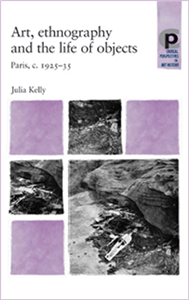
        Art, ethnography and the life of objects

        Paris, c.1925–35

        by Julia Kelly, Marsha Meskimmon, Shearer West, Tim Barringer

        In the 1920s and 1930s, anthropology and ethnography provided new and striking ways of rethinking what art could be and the forms which it could take. This book examines the impact of these emergent disciplines on the artistic avant-garde in Paris. The reception by European artists of objects arriving from colonial territories in the first half of the twentieth century is generally understood through the artistic appropriation of the forms of African or Oceanic sculpture. The author reveals how anthropological approaches to this intriguing material began to affect the ways in which artists, theorists, critics and curators thought about three-dimensional objects and their changing status as 'art', 'artefacts' or 'ethnographic evidence'. This book analyses texts, photographs and art works that cross disciplinary boundaries, through case studies including the Dakar to Djibouti expedition of 1931-33, the Trocadéro Ethnographic Museum, and the two art periodicals Documents and Minotaure. Through its interdisciplinary and contextual approach, it provides an important corrective to histories of modern art and the European avant-garde. ;

      • The Arts
        March 1905

        Concerning the Spiritual in Art

        by Wassily Kandinsky

        A pioneering work in the movement to free art from its traditional bonds to material reality, this book is one of the most important documents in the history of modern art. Written by the famous nonobjective painter Wassily Kandinsky (1866–1944), it explains Kandinsky's own theory of painting and crystallizes the ideas that were influencing many other modern artists of the period. Along with his own groundbreaking paintings, this book had a tremendous impact on the development of modern art. Kandinsky's ideas are presented in two parts. The first part, called "About General Aesthetic," issues a call for a spiritual revolution in painting that will let artists express their own inner lives in abstract, non-material terms. Just as musicians do not depend upon the material world for their music, so artists should not have to depend upon the material world for their art. In the second part, "About Painting," Kandinsky discusses the psychology of colors, the language of form and color, and the responsibilities of the artist. An Introduction by the translator, Michael T. H. Sadler, offers additional explanation of Kandinsky's art and theories, while a new Preface by Richard Stratton discusses Kandinsky's career as a whole and the impact of the book. Making the book even more valuable are nine woodcuts by Kandinsky himself that appear at the chapter headings. This English translation of Über das Geistige in der Kunst was a significant contribution to the understanding of nonobjectivism in art. It continues to be a stimulating and necessary reading experience for every artist, art student, and art patron concerned with the direction of 20th-century painting.

      • Trusted Partner
      • Trusted Partner
      • Trusted Partner
        Humanities & Social Sciences
        September 2025

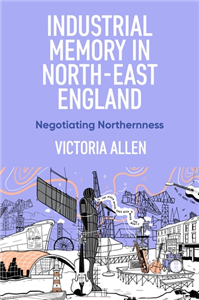
        Industrial memory in North East England

        Negotiating northernness

        by Victoria Allen

        Industrial memory in North East England examines how the region's industrial myth and memory have been articulated in the renegotiation of northernness. The book offers a critical contextualisation of the concept of northernness and the English North, and an introduction to the concept of the PopCultural Portfolio, a mixed-methods approach to conjunctural analysis in cultural and memory studies. The book provides six richly illustrated case studies to demonstrate the practical application of cultural studies' expansive and inclusive understanding of texts, bringing together materials from North East football, folk, indie and exhibition culture to establish how the North East's industrial past continues to be remembered and functionalised as industrial memory. In turn, the conjunctural analysis demonstrates how industrial memory is articulated and mythologised as north(east)ernes in contemporary popular culture.

      • Trusted Partner
      • Trusted Partner
      • Trusted Partner
        The Arts
        December 2007

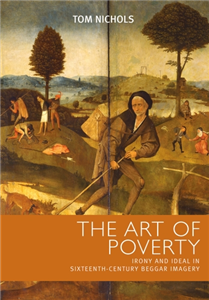
        The art of poverty

        Irony and ideal in sixteenth-century beggar imagery

        by Tom Nichols

        The art of poverty is the first book in English to analyse depictions of beggars in sixteenth-century European art. Featuring works from Germany, the Low Countries, Britain, France and Italy, it discusses a diverse body of imagery in many different media, from crude woodcuts to monumental church altarpieces. It develops a striking thesis, arguing that these works largely conformed to two paradoxical, though mutually supportive, representational approaches. The earlier chapters follow the emergence of a trenchantly negative approach in Northern art, in which beggars are shown as vagabonds, whose idleness and thievery threatened the values of sixteenth-century society (especially its growing emphasis on the need to work). In the other predominant visual mode, beggars are exalted as examples of sacred purity. In many Italian religious paintings, beggars are morally exalted with reference to sacred texts, and made formally beautiful with reference to revered artistic models. Though these approaches reflect the impact of religious reform, it is shown that, by the end of the century, they happily co-existed within Protestant and Catholic cultures. The final part of the book is concerned with the issue of artistic style and with the growing tendency of the beggar image to mediate and dissolve the didactic traditions through which it had originally been defined. The art of poverty will be of special interest to scholars and students of Renaissance art history, and its progressive approach and cross-disciplinary theme and perspective will also make it vital reading for those concerned with the development of early modern European culture. ;

      • Trusted Partner
        The Arts
        March 2017

        Images of the army

        The military in British art, 1815-1914

        by J. W. M. Hichberger

        In an age when engraving and photography were making artistic images available to a much wider public, artists were able to influence public attitudes more powerfully than ever before. This book examines works of art on military themes in relation to ruling-class ideologies about the army, war and the empire. The first part of the book is devoted to a chronological survey of battle painting, integrated with a study of contemporary military and political history. The chapters link the debate over the status and importance of battle painting to contemporary debates over the role of the army and its function at home and abroad. The second part discusses the intersection of ideologies about the army and military art, but is concerned with an examination of genre representations of soldiers. Another important theme which runs through the book is the relation of English to French military art. During the first eighty years of the period under review France was the cynosure of military artists, the school against which British critics measured their own, and the place from which innovations were imported and modified. In every generation after Waterloo battle painters visited France and often trained there. The book shows that military art, or the 'absence' of it, was one of the ways in which nationalist commentators articulated Britain's moral superiority. The final theme which underlies much of the book is the shifts which took place in the perception of heroes and hero-worship.

      Subscribe to our

      newsletter