Your Search Results

      • 华东师范大学出版社 East China Normal University Press

        East China Normal University Press Ltd. (ECNUP), established in 1957, is one of the two oldest publishers in China specializing in education publicationsas well as the top-ranking publisher in education. ECNUP is the top publishing house in Shanghai, and ranks among China's top 100 presses.

        View Rights Portal
      • Deutsches Kulturforum östliches Europa e.V.

        The German Cultural Forum for Central and Eastern Europe publishes richly illustrated non-fiction books about the cultural history of those areas of Central and Eastern Europe where Germans used to, or still do live. The carefully edited titles with elaborated appendices are written by well-known experts who are able to present information about Central and Eastern Europe in an attractive way by cultural travel guides or historical overview books. The Cultural Forum also edits an annual and a bimonthly magazine, Blickwechsel ("Change of perspective") and Kulturkorrespondenz östliches Europa ("Cultural Correspondence Central and Eastern Europe"). Furthermore, the Forum organizes popular lectures, discussions, readings, exhibitions, concerts, journalist trips, writer residencies and prize-givings.

        View Rights Portal
      • Trusted Partner
        Humanities & Social Sciences
        October 2023

        Towards a just Europe

        A theory of distributive justice for the European Union

        by João Labareda

        This highly original book constitutes one of the first attempts to examine the problem of distributive justice in the European Union in a systematic manner. João Labareda argues that the set of shared political institutions at EU level, including the European Parliament and the Court of Justice of the EU, generate democratic duties of redistribution among EU citizens. Furthermore, the economic structure of the EU, comprising a common market, a common currency and a free-movement area, triggers duties of reciprocity among member states. The responsibilities to fulfil these duties, Labareda argues, should be shared by the local, national and supranational levels of government. Not only should the EU act as a safety net to the national welfare systems, applying the principle of subsidiarity, but common market and Eurozone regulations should balance their efficiency targets with fair cooperation terms. The concrete policy proposals presented in this book include a threshold of basic goods for all EU citizens, an EU labour code, a minimum EU corporate tax rate and an EU fund for competitiveness. Labarada argues that his proposals match the political culture of the member states, are economically feasible, can be translated into functioning institutions and policies and are consistent with the limited degree of social solidarity in Europe. This book is a major contribution to the understanding of what a just Europe would look like and what it might take to get us there. This book is relevant to United Nations Sustainable Development Goal 10, Reduced inequalities

      • Trusted Partner
        Literature & Literary Studies
        January 2013

        Popular protest in late-medieval Europe

        Italy, France and Flanders

        by Samuel Kline Cohn

        The documents in this stimulating volume span from 1245 to 1424 but focus on the 'contagion of rebellion' from 1355 to 1382 that followed in the wake of the plague. They comprise a diversity of sources and cover a variety of forms of popular protest in different social, political and economic settings. Their authors range across a wide political and intellectual horizon and include revolutionaries, the artistocracy, merchants and representatives from the church. They tell gripping and often gruesome stories of personal and collective violence, anguish, anger, terror, bravery, and foolishness. Of over 200 documents presented here, most have been translated into English for the first time, providing students and scholars with a new opportunity to compare social movements across Europe over two centuries, allowing a re-evaluation of pre-industrial revolts, the Black Death and its consequences for political culture and action. This book will be essential reading for those seeking to better understand popular attitudes and protest in medieval Europe.

      • Trusted Partner
        Humanities & Social Sciences
        October 2020

        The European Union and its eastern neighbourhood

        Europeanisation and its twenty-first-century contradictions

        by Mike Mannin, Paul Flenley

        This volume is timely in that it explores key issues which are currently at the forefront of the EU's relations with its eastern neighbours. It considers the impact of a more assertive Russia, the significance of Turkey, the limitations of the Eastern Partnership with Belarus and Moldova, the position of a Ukraine in crisis and pulled between Russia and the EU, security and democracy in the South Caucasus. It looks at the contested nature of European identity in areas such as the Balkans. In addition it looks at ways in which the EU's interests and values can be tested in sectors such as trade and migration. The interplay between values, identity and interests and their effect on the interpretation of europeanisation between the EU and its neighbours is a core theme of the volume.

      • Trusted Partner
        Humanities & Social Sciences
        May 2024

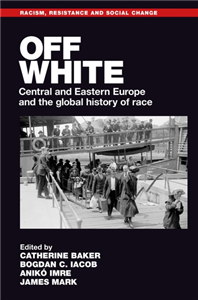
        Off white

        Central and Eastern Europe and the global history of race

        by Catherine Baker, Bogdan C. Iacob, Anikó Imre, James Mark

        This volume foregrounds racial difference as a key to an alternative history of the Central and Eastern European region, which revolves around the role of whiteness as the unacknowledged foundation of semi-peripheral nation-states and national identities, and of the region's current status as a global stronghold of unapologetic white, Christian nationalisms. Contributions address the pivotal role of whiteness in international diplomacy, geographical exploration, media cultures, music, intellectual discourses, academic theories, everyday language and banal nationalism's many avenues of expressions. The book offers new paradigms for understanding the relationships among racial capitalism, populism, economic peripherality and race.

      • Trusted Partner
        Humanities & Social Sciences
        April 2026

        Visions for Europe

        Debating the future of the European Union with great political thinkers

        by João Labareda

        This book offers a fresh look at some of the most challenging dilemmas of European integration and proposes innovative solutions to them by building on perspectives and insights from twelve classical authors in the history of political thought. The book simultaneously offers an original introduction to critical debates in EU studies and makes key political thinkers more accessible to contemporary readers by presenting present-day policy applications of their doctrines. While each chapter discusses a specific challenge for the EU, five key themes appear recurrently throughout the book: (i) the prospects for peace in Europe; (ii) the conditions for an inclusive EU democracy; (iii) socioeconomic inequalities in the EU; (iv) strategies to promote political change in Europe; and (v) the requisites for a fully-fledged EU citizenship. The authors discussed are Plato, Aristotle, Augustine, Machiavelli, Hobbes, Rousseau, Kant, Wollstonecraft, Marx, Arendt, Rawls and hooks.

      • Trusted Partner
        Literature & Literary Studies
        June 2025

        Contemporary Slavic horror across media

        Cursed zones

        by Agnieszka Jezyk

        In the Western cultural production that puts individual or collective fear at its center, East/Central Europe has been portrayed as an othered space of horror - lawless, frightening zones where anything can happen. Incorporating articles on literature, film, visual arts, video games, music videos, and music festivals, Contemporary Slavic horror across media: Cursed zones is a pioneering anthology of academic essays devoted to Slavic horror fiction. The book focuses on works from the mid-20th century through the present, particularly the post-Soviet period. Assessing current trends in Czech, Polish, Russian, Slovak, Ukrainian, and East/Central European horror media, the book looks at similarities and idiosyncrasies of the genre in its Slavic variant. With this anthology we hope to tame 'the Easterner Other' and start exorcising 'monstrous' East/Central Europe.

      • Trusted Partner
        Humanities & Social Sciences
        July 2013

        The 1989 Revolutions in Central and Eastern Europe

        From Communism to Pluralism

        by Kevin McDermott, Matthew Stibbe

        This important book reassesses a defining historical, political and ideological moment in contemporary history: the 1989 revolutions in central and eastern Europe. Adopting a multi-disciplinary approach, the authors reconsider such crucial themes as the broader historical significance of the 1989 events, the complex interaction between external and internal factors in the origins and outcomes of the revolutions, the impact of the 'Gorbachev phenomenon', the West and the end of the Cold War, the political and socio-economic determinants of the revolutionary processes in Poland, Hungary, the German Democratic Republic, Czechoslovakia, Romania and Bulgaria, and the competing academic, cultural and ideological perceptions of the year 1989 as communism gave way to post-communist pluralism in the 1990s and beyond. Concluding that the contentious term 'revolution' is indeed apt for the momentous developments in eastern Europe in 1989, this book will be essential reading for undergraduates, postgraduates and specialists alike. ;

      • Trusted Partner
      • Trusted Partner
        Business, Economics & Law
        February 2025

        The political economy of Turkey’s integration to Europe

        Uneven development and hegemony

        by Elif Uzgören

        This book examines Turkey's integration with Europe within structural dynamics of globalisation from a critical political economy perspective. Critical approaches have been sidelined within European Studies. Turkish enlargement is not an exemption. The analyses are based on original data generated by 109 interviews conducted in 2010, 2017 and 2023 with five categories of actors: representatives of capital and labour, political parties, state officials, and struggles around ecology, patriarchy and migration. It argues that the pro-membership was hegemonic in the 2000s which was contested by two rival class strategies, Ha-vet and neo-mercantilism. In the 2010s, pro-membership is no longer hegemonic within rising critical tone of social forces supporting rival class strategies. Unevenness of Turkey's trajectory of integration to Europe is likely to be consolidated through market integration and management of migration through transactional approach.

      • Trusted Partner
        Humanities & Social Sciences
        June 2025

        Debating medieval Europe

        by Stephen Mossman

      • Trusted Partner
      • Trusted Partner
        Humanities & Social Sciences
        April 2020

        The British political elite and Europe, 1959-1984

        A higher loyalty

        by Bob Nicholls

        This book offers an original interpretation of Britain's relationship with Europe over a 25 year period: 1959-84 and advances the argument that the current problems over EU membership resulted from much earlier political machinations. This evidence based account of the seminal period analyses the applications for EEC membership, the 1975 referendum, and the role of the press. Was the British public misled over the true aims of the European project? How significant was the role of the press in changing public opinion from anti, to pro Common Market membership? Why, after over 40 years since Britain became a member of the European community, does the issue continue to deeply divide not only the political elite, but also the British public? These, and other pertinent questions are answered in this timely book on a subject that remains topical and highly controversial.

      • Trusted Partner
      • Trusted Partner
        Literature & Literary Studies
        January 2013

        The Normans in Europe

        by Elisabeth Van Houts

      • Trusted Partner
        Humanities & Social Sciences
        January 2019

        The British political elite and Europe 1959-1984

        by Bob Nicholls

      • Trusted Partner
        July 2021

        The World of the North

        Between Ragnarok and welfare utopia: A cultural-historical deconstruction

        by Bernd Henningsen

        — Analysis of how we view Europe's North and how this image emerged — An outsider's perspective on Nordic societies and their self image — Serves as an introduction into Northern European culture and society Our image of Northern Europe has been shaped by projections and desires in the long history of encounters: berserkers and war atrocities, bad weather, beautiful nature, stable political systems, social welfare, equality and prosperity, peacefulness, low corruption, hygge and Bullerby – all this is part of the Nordic narrative. But what about the religious, linguistic and ethnic homogeneity, what about the muchvaunted Nordic cooperation? How do politics "work" in the North? Why are Northern Europeans the happiest people?

      • Trusted Partner
        Humanities & Social Sciences
        September 2025

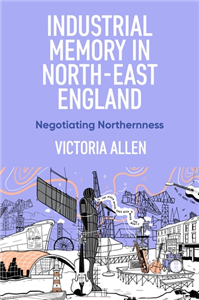
        Industrial memory in North East England

        Negotiating northernness

        by Victoria Allen

        Industrial memory in North East England examines how the region's industrial myth and memory have been articulated in the renegotiation of northernness. The book offers a critical contextualisation of the concept of northernness and the English North, and an introduction to the concept of the PopCultural Portfolio, a mixed-methods approach to conjunctural analysis in cultural and memory studies. The book provides six richly illustrated case studies to demonstrate the practical application of cultural studies' expansive and inclusive understanding of texts, bringing together materials from North East football, folk, indie and exhibition culture to establish how the North East's industrial past continues to be remembered and functionalised as industrial memory. In turn, the conjunctural analysis demonstrates how industrial memory is articulated and mythologised as north(east)ernes in contemporary popular culture.

      • Trusted Partner
        Humanities & Social Sciences
        May 2022

        Memory and the future of Europe

        by Peter J. Verovšek

      Subscribe to our

      newsletter