Ethir Veliyeedu
Contemporary Authors In Tamil Literature
View Rights Portal


Culture and diversity are both challenge and opportunity. This volume looks at what psychologists are and can be doing to help society meet the challenges and grasp the opportunities in education, at work, and in clinical practice. The increasingly international and globalized nature of modern societies means that psychologists in particular face new challenges and have new opportunities in all areas of practice and research. The contributions from leading European experts cover relevant intercultural issues and topics in areas as diverse as personality, education and training, work and organizational psychology, clinical and counselling psychology, migration and international youth exchanges. As well as looking at the new challenges and opportunities that psychologists face in dealing with people from increasingly varied cultural backgrounds, perhaps more importantly they also explain and discuss how psychologists can deepen and acquire the intercultural competencies that are now needed in our professional lives. Target Group: psychotherapists / clinical psychologists / mental health professionals
 Trusted Partner

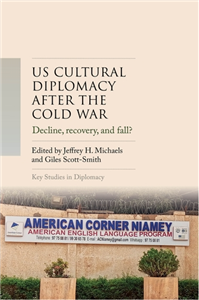
In the decades following the USSR's collapse, the US has gone from unrivalled hegemon to a position of relative decline. With America 'triumphant' after 1991, its culture, like its diplomatic, military and economic power, remained unmatched. Such favourable circumstances seemed to undercut the need for cultural diplomacy. Why should the US government sell a product that was already selling so well? After 9/11, however, it was apparent the US image was less popular than previously assumed. To reverse this negative image, cultural diplomacy was revived. Despite being beset by internal and external challenges, US officials supported various cultural initiatives and partnerships to promote the American brand globally. Along the way, cultural diplomacy has made use of new forms of expression to promote American culture and build positive foreign relations. The arrival of the second Trump administration in 2025 has clearly signalled an end to using cultural diplomacy to further causes of empowerment and diversity, making the future uncertain for this field of activity.
Trusted Partner
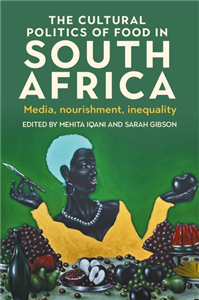
Food is both a material system of nourishment, necessary for human survival, and a communicative system that signifies multiple meanings across human cultures. This book explores the cultural politics of food in the South African context, bringing together a range of disciplinary perspectives on the links between media, nourishment, and inequality. The chapters all highlight the multiplicity of meanings that food has in South African society. These include historical perspectives on the impact of colonialism, migration and apartheid had on food and foodways in South Africa; sociological interventions on food and society; aesthetic practices in relation to food; and mediated food cultures in South Africa. Taken together, the book critically explores the multiple ways in which food is never just food, and always linked to complex and shifting modalities of meaning and knowledge in the South African context.
Trusted Partner
 Trusted Partner
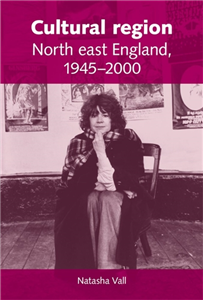
This book is the first historical assessment of English regional cultural policy. With its dialect and striking modern icons such as the Angel of the North, the north east has been described as England's most distinctive region. This study reveals the impact of the new cultural institutions that emerged after 1945 upon a region with deeply rooted vernacular traditions. The creation of the regional arts board and the development of regional broadcasting as well as the national efforts to manage the northern economic problems presented challenges for vernacular culture. In the ensuing battle between provincial and metropolitan values the north east as a modern cultural region took shape. The concluding chapters detail the cultural regeneration of the urban riversides, a much vaunted example of successful culture-led regeneration. This volume is essential for anyone with an interest in the formation of cultural identities, the development of regional government arts policies, urban regeneration and cultural and social history. ;
Trusted Partner

Since the late 1960s, American literature has been revitalised by the work of writers such as Toni Morrison, Sherman Alexie, Sandra Cisneros and Maxine Hong Kingston. An introduction to the study of ethnic American fictions organised into four sections, each written by a specialist in the fields of African American, Asian American, Chicano/a and native American literature. Writers are discussed in their cultural/political contexts and literary traditions (rather than as exceptions or as individuals, or on a generic basis). The book highlights common themes in ethnic writing as well as specificities, and has extensive suggestions for further reading as well as a critical introduction regarding the concept of 'ethnic writing'. No competing titles - there are no textbooks, no beginners' books nor any systematised combination of ethnic fictions such as this - only edited collections on each area. ;
Trusted Partner

This is the first book to situate the territories and collective identities of former Yugoslavia within the politics of race - not just ethnicity - and the history of how ideas of racialised difference have been translated globally. The book connects critical race scholarship, global historical sociologies of 'race in translation' and south-east European cultural critique to show that the Yugoslav region is deeply embedded in global formations of race. In doing this, it considers the everyday geopolitical imagination of popular culture; the history of ethnicity, nationhood and migration; transnational formations of race before and during state socialism, including the Non-Aligned Movement; and post-Yugoslav discourses of security, migration, terrorism and international intervention, including the War on Terror and the present refugee crisis.
Trusted Partner

Learn to understand how you see others with this no-nonsense,practical guide• Teaches cultural humility• Provides practical guidance• Addresses internalized racismIn today’s society, anti-racist cultural competence is an essentialskill and not something meant only to be addressedby some. Issues tied to resolving racism and understandingand including diverse cultural points of view remain highlyconflictual – and the ability to deal with these issues effectivelyis often hindered by fear, anxiety, and a misunderstandingof what it means to be culturally competent withoutmaking people feel like outsiders. While many other modelsof cultural competence approach the issue as though lookinginto a fishbowl, this book views the issue as everyoneswimming in the water together, as part of a common ecosystemand community.
Trusted Partner
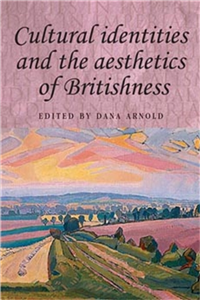
Considers how notions of Britishness were constructed and promoted through architecture, landscape, painting, sculpture and literature. Maps important moments in the self-conscious evolution of the idea of 'nation' against a broad cultural historical framework. An important addition to the field of postcolonial studies as it looks at how British identity creation affected those living in England - most study in this area has thus far focused on the effect of such identity creation upon the colonial subject. Broad appeal due to wide subject matter covered. Examines just how 'constructed' a national identity is - past and present. ;
Trusted Partner

Considers how notions of Britishness were constructed and promoted through architecture, landscape, painting, sculpture and literature. Maps important moments in the self-conscious evolution of the idea of 'nation' against a broad cultural historical framework. An important addition to the field of postcolonial studies as it looks at how British identity creation affected those living in England - most study in this area has thus far focused on the effect of such identity creation upon the colonial subject. Broad appeal due to wide subject matter covered. Examines just how 'constructed' a national identity is - past and present.
Trusted Partner

Cultural warfare and trust: fighting the Mafia in Palermo concentrates on a central issue in research on democratic processes: the development of generalised trust. The existence of generalised trust and confidence in a society is decisive for economic development and an effective democracy. Is it possible to fight persistent values of distrust and non-cooperation? Is it possible to support the development of generalised trust through public action and education? The book addresses these questions by examining political efforts to combat Palermo's Mafia-controlled heritage and to turn a tradition of non-cooperation and distrust into cooperation and trust. In particular, it focuses on the school program launched in Palermo during the mid-1990s, which was designed to break the Mafia's territorial and mental control. Combining theories on social capital and civic education, the author presents and analyses new quantitative and qualitative research carried out in seven public schools in Palermo. This book will be valuable to students, academics and researchers interested in social capital and trust, Italian politics, civic education, organised crime, local government and democratic practice. ;
Trusted Partner
 Trusted Partner
 Trusted Partner
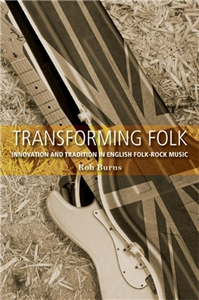
English folk-rock, a former progressive rock music style, remains a stimulus for further change in folk music and has enabled English folk-rock to become regarded as popular music by a new audience with diverse musical tastes. From musicological and historical perspectives, this book maintains that folk music performance continues to be influenced by rock and other popular music styles. From a cultural studies perspective, this book also demonstrates how the popularity of folk music presented at world music festivals has stimulated significant growth in folk music audiences since the mid-1990s and consequently the UK is experiencing a new phase of revivalism - the third folk revival. The book contains contributions from Martin Carthy (The Imagined Village), Simon Nicol (Fairport Convention), Ashley Hutchings (The Albion Band), Gerry Conway (Fairport Convention) and Rick Kemp (Steeleye Span). ;
Trusted Partner
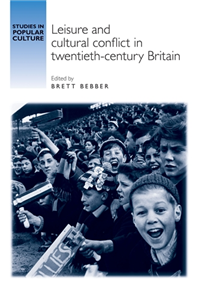
This collection of essays addresses research trends in the history of British leisure while also presenting a wide range of articles on cultural conflict and leisure in the twentieth century. It includes innovative research on a number of topics, including television, cinema, the circus, women's leisure, dance, football and drug culture. It provides an excellent entry to leisure studies and history, while addressing the contributions of other disciplines and exploring key historiographical trends. Three broad topics structure the collection; cultural contestation and social conflict in leisure; regulation and standardisation; and national identity embodied in leisure and popular culture. The book will be useful to students and educators of twentieth-century and British history, as it offers accessible and topical studies that pique historical curiosity. In addition, historians, sociologists and cultural analysts of the twentieth century will find it essential for understanding pleasure and recreation in twentieth-century British society. ;
Trusted Partner
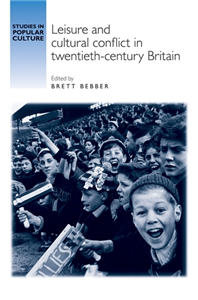
This collection of essays addresses research trends in the history of British leisure while also presenting a wide range of articles on cultural conflict and leisure in the twentieth century. It includes innovative research on a number of topics, including television, cinema, the circus, women's leisure, dance, football and drug culture. It provides an excellent entry to leisure studies and history, while addressing the contributions of other disciplines and exploring key historiographical trends. Three broad topics structure the collection; cultural contestation and social conflict in leisure; regulation and standardisation; and national identity embodied in leisure and popular culture. The book will be useful to students and educators of twentieth-century and British history, as it offers accessible and topical studies that pique historical curiosity. In addition, historians, sociologists and cultural analysts of the twentieth century will find it essential for understanding pleasure and recreation in twentieth-century British society.
Trusted Partner
 Trusted Partner

This book offers the first examination of extremist Heathenry and occultism in the UK and how anti-racist Heathens act to counter this discourse. It explores the spectrum of Heathen practice today and the historical origins of racist Heathenry in nineteenth century Germanic romanticism and twentieth century folkish nationalism. Treating each of the three main extremist Heathen organisations, the book extends the analysis to the neo-Nazi occult organization the Order of the Nine Angles (O9A), and the wider racist Heathen cultural scene in Black Metal and Dark Folk music. The authors balance this with discussion of how inclusivist Heathens are countering this discourse, from visible protests at far-right rallies to inter-faith forums and an active presence on social media platforms. The book makes an important contribution to the intersecting fields of new religious movements, nationalist history and racist politics.
Trusted Partner

First documentary history of immigration into postwar Britain. Looks at all aspects of immigration into postwar Britain. Uses a wide range of official and unofficial sources. ;