
Your Search Results


-
Promoted Content

 Humanities & Social SciencesMarch 2017
Imperial cities
Landscape, display and identity
by Felix Driver, David Gilbert
Imperial cities explores the influence of imperialism in the landscapes of modern European cities including London, Paris, Rome, Vienna, Marseilles, Glasgow and Seville. Examines large-scale architectural schemes and monuments, including the Queen Victoria Memorial in London and the Vittoriano in Rome. Focuses on imperial display throughout the city, from spectacular exhibitions and ceremonies, to more private displays of empire in suburban gardens. Cconsiders the changing cultural and political identities in the imperial city, looking particularly at nationalism, masculinity and anti-imperialism.
-
Promoted Content
 Humanities & Social SciencesFebruary 2017
Conquering nature in Spain and its empire, 1750–1850
by Helen Cowie, Andrew Thompson, John M. MacKenzie
This book examines the study of natural history in the Spanish empire in the years 1750-1850. During this period, Spain made strenuous efforts to survey, inventory and exploit the natural productions of her overseas possessions, orchestrating a serries of scientific expeditions and cultivating and displaying American fauna and flora in metropolitan gardens and museums. This book assesses the cultural significance of natural history, emphasising the figurative and utilitarian value with which eighteenth-century Spaniards invested natural objects, from globetrotting elephants to three-legged chickens. It considers how the creation, legitimisation and dissemination of scientific knowledge reflected broader questions of imperial power and national identity. This book will be of particular interest to scholars and students of Spanish and Latin American History, the History of Science and Imperial Culture
-
 Trusted Partner

 2020
2020History of the German Language
A textbook for German studies; Part 1: Introduction, prehistory and history; Part 2: Old High German, Middle High German and Early New High German
by Wilhelm Schmidt, Edited by Dr. Elisabeth Berner and Prof. Dr. Dr. h.c. Dr. h.c. Norbert Richard Wolf
The 12th revised and updated version of the History of the German language – long regarded as an indispensable standard work for German Studies, has just been published. From now on, this comprehensive textbook on the history of the language is divided into two volumes. In addition to introducing questions about historical linguistics, the first volume provides a detailed account of the prehistory and history of German right up to the present day. Based on extensive source analyses, the focus is on aspects of culture and social history; only the chapters on the Indo-Germanic and Germanic language include key information about structural history. The second part contains concise, but readily understandable accounts of Old, Middle and Early New High German in terms of phonology, graphemics, morphology and syntax. Not only are synchronous descriptions given of the particular language period, but also the development of German language construction at all structural levels is explained. The association of grammatical synchrony and structural diachrony is a particular characteristic of this second part of Schmidt’s work on the history of language.
-
Trusted Partner
 Humanities & Social SciencesJune 2021
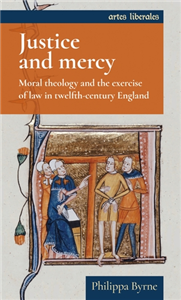
Justice and mercy
Moral theology and the exercise of law in twelfth-century England
by Philippa Byrne
This book examines one of the most fundamental issues in twelfth-century English politics: justice. It demonstrates that during the foundational period for the common law, the question of judgement and judicial ethics was a topic of heated debate - a common problem with multiple different answers. How to be a judge, and how to judge well, was a concern shared by humble and high, keeping both kings and parish priests awake at night. Using theological texts, sermons, legal treatises and letter collections, the book explores how moralists attempted to provide guidance for uncertain judges. It argues that mercy was always the most difficult challenge for a judge, fitting uncomfortably within the law and of disputed value. Shining a new light on English legal history, Justice and mercy reveals the moral dilemmas created by the establishment of the common law.
-
Trusted Partner
 Humanities & Social SciencesJanuary 2013
Crime, Law and Society in the Later Middle Ages
by Anthony Musson, Edward Powell
This book provides an accessible collection of translated legal sources through which the exploits of criminals and developments in the English criminal justice system (c.1215-1485) can be studied. Drawing on the wealth of archival material and an array of contemporary literary texts, it guides readers towards an understanding of prevailing notions of law and justice and expectations of the law and legal institutions. Tensions are shown emerging between theoretical ideals of justice and the practical realities of administering the law during an era profoundly affected by periodic bouts of war, political in-fighting, social dislocation and economic disaster. Introductions and notes provide both the specific and wider legal, social and political contexts in addition to offering an overview of the existing secondary literature and historiographical trends. This collection affords a valuable insight into the character of medieval governance as well as revealing the complex nexus of interests, attitudes and relationships prevailing in society during the later Middle Ages.
-
Trusted Partner
 Business, Economics & LawJanuary 2026
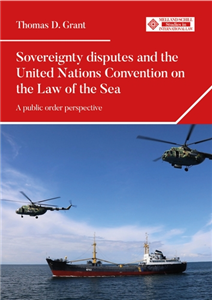
Sovereignty disputes and the United Nations Convention on the Law of the Sea
A public order perspective
by Thomas D. Grant
Because maritime questions are often admixed with territorial sovereignty questions, parties sometimes seek to settle them together. Jurisdiction under the United Nations Convention on the Law of the Sea-UNCLOS-according to the received view does not encompass disputes concerning territorial sovereignty. In this book, international law scholar and practitioner Thomas D. Grant argues that the received view overstates the exclusion of sovereignty disputes. In Coastal State Rights, UNCLOS Annex VII arbitrators overstated the scope of the term 'sovereignty dispute' as well, an error of definition compounded when they ignored evidence probative as to whether a sovereignty dispute exists. Examining UNCLOS, its drafting history, and decades of decided cases, Sovereignty Disputes and the United Nations Convention on the Law of the Sea relates an important problem of international dispute settlement to the public order of which UNCLOS forms part.
-
Trusted Partner
Business, Economics & LawJanuary 2026
Latin America and international investment law
A mosaic of resistance
by Sufyan Droubi, Cecilia Juliana Flores Elizondo
Latin America has been a complex laboratory for the development of international investment law. While some governments and non-state actors have remained true to the Latin American tradition of resistance towards the international investment law regime, other governments and actors have sought to accommodate said regime in the region. Consequently, a profusion of theories and doctrines, too often embedded in clashing narratives, has emerged. In Latin America, the practice of international investment law is the vivid amalgamation of the practice of governments sometimes resisting and sometimes welcoming mainstream approaches; the practice of lawyers assisting foreign investors from outside and within the region; and the practice of civil society, indigenous peoples and other actors in their struggle for human rights and sustainable development. Latin America and international investment law describes the complex roles that governments have played vis-à-vis foreign investors and investments; the refreshing but clashing forces that international organizations, corporations, civil society, and indigenous peoples have brought to the field; and the contribution that Latin America has made to the development of the theory and practice of international investment law, notably in fields in which the Latin American experience has been traumatic: human rights and sustainable development. Latin American scholars have been contributing to the theory of international investment law for over a century; resting on the shoulders of true giants, this volume aims at pushing this contribution a little further.
-
Trusted Partner
 Humanities & Social SciencesApril 2022
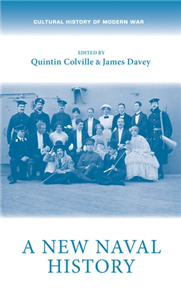
A new naval history
by Quintin Colville, James Davey, Katherine Parker, Elaine Chalus, Evan Wilson, Barbara Korte, Cicely Robinson, Cindy McCreery, Ellie Miles, Mary A. Conley, Jonathan Rayner, Daniel Spence, Emma Hanna, Ulrike Zimmerman, Max Jones, Jan Rüger
A New Naval History brings together the most significant and interdisciplinary approaches to contemporary naval history. The last few decades have witnessed a transformation in how this field is researched and understood and this volume captures the state of a field that continues to develop apace. It examines - through the prism of naval affairs - issues of nationhood and imperialism; the legacy of Nelson; the socio-cultural realities of life in ships and naval bases; and the processes of commemoration, journalism and stage-managed pageantry that plotted the interrelationship of ship and shore. This bold and original publication will be essential for undergraduate and postgraduate students of naval and maritime history. Beyond that, though, it marks an important intervention into wider historiographies that will be read by scholars from across the spectrum of social history, cultural studies and the analysis of national identity.
-
Trusted Partner
 Humanities & Social SciencesAugust 2006
History matters
Patriarchy and the challenge of Feminism
by Judith Bennett
Written for everyone interested in women's and gender history, History matters reaffirms the importance to feminist theory and activism of long-term historical perspectives. Judith M. Bennett takes as her central problem the growing chasm between feminism and history which, although closely allied in the 1970s, have now moved away from one another. Seeking to narrow this gap, Bennett proposes that feminist historians turn their attention to the intellectual challenges posed by the persistence of patriarchy. She posits a 'patriarchal equilibrium' whereby, despite many changes in women's experiences over past centuries, women's status vis-à-vis men has remained remarkably unchanged. Bennett argues that the theoretical challenge posed by this 'patriarchal equilibrium' will be best met by long-term historical perspectives that reach back well before the modern era. A new manifesto, History matters engages forthrightly with the challenges faced by feminist historians today. It argues for the radical potential of a history that is focused on feminist issues, aware of the distant past, attentive to continuities over time, and alert to the workings of patriarchal power. ;
-
Trusted Partner
 Humanities & Social SciencesAugust 2023
Critical theory and legal autopoiesis
The case for societal constitutionalism
by Gunther Teubner, Diana Göbel
This volume collects and revises the key essays of Gunther Teubner, one of the world's leading sociologists of law. Written over the past twenty years, these essays examine the 'dark side' of functional differentiation and the prospects of societal constitutionalism as a possible remedy. Teubner's claim is that critical accounts of law and society require reformulation in the light of the sophisticated diagnoses of late modernity in the writings of Niklas Luhmann, Jacques Derrida and select examples of modernist literature. Autopoiesis, deconstruction and other post-foundational epistemological and political realities compel us to confront the fact that fundamental democratic concepts such as law and justice can no longer be based on theories of stringent argumentation or analytical philosophy. We must now approach law in terms of contingency and self-subversion rather than in terms of logical consistency and rational coherence.
-
Trusted Partner
-
Trusted Partner
 Business, Economics & LawOctober 2023
The Island Book of Records Volume I
1959-68
by Neil Storey
The Island Book of Records brings the early years of this iconic record label to life. A fifteen-year labour of love, the volumes will fully document the analogue era of Island. Offering a comprehensive archive of album cover design and photography, together with the voices of the musicians, designers, photographers, producers, studio engineers and record company personnel that worked on each project, the volumes show in unique depth the workings of the label, covering every LP. Featuring material from recent interviews and from media interviews of the time, and each including a comprehensive discography of 45s, the books are lavishly illustrated with gig adverts (very many at venues which no longer exist), concert tickets, flyers, international LP variants, labels, LP and 45 adverts and other ephemera. These LP-sized editions are a collector's dream, offering a truly unparalleled resource for those interested in music history and a perfect gift for any music lover.
-
Trusted Partner
Humanities & Social SciencesMay 2023
Medieval women and urban justice
Commerce, crime and community in England, 1300–1500
by Teresa Phipps
This book provides a detailed analysis of women's involvement in litigation and other legal actions within their local communities in late-medieval England. It draws upon the rich records of three English towns - Nottingham, Chester and Winchester - and their courts to bring to life the experiences of hundreds of women within the systems of local justice. Through comparison of the records of three towns, and of women's roles in different types of legal action, the book reveals the complex ways in which individual women's legal status could vary according to their marital status, different types of plea and the town that they lived in. At this lowest level of medieval law, women's status was malleable, making each woman's experience of justice unique.
-
Trusted Partner
 Humanities & Social SciencesDecember 2023
Transitional justice in process
Plans and politics in Tunisia
by Mariam Salehi
After the fall of the Ben Ali regime in 2011, Tunisia swiftly began dealing with its authoritarian past and initiated a comprehensive transitional justice process, with the Truth and Dignity Commission as its central institution. However, instead of bringing about peace and justice, transitional justice soon became an arena of contention. Through a process lens, the book explores why and how the process evolved, and explains how it relates to the country's political transition. Based on extensive field research in Tunisia and the US, and interviews with a broad range of international stakeholders and decision-makers, this is the first book to comprehensively study the Tunisian transitional justice process. It provides an in-depth analysis of a crucial period, examining the role of justice professionals in different stages, as well as the alliances and frictions between different actor groups that cut across the often-assumed local-international divide.
-
Trusted Partner
 Humanities & Social SciencesNovember 2018
Justice and mercy
by Philippa Byrne, T. J. H. McCarthy, Carrie Beneš, Stephen Mossman, Jochen Schenk
-
Trusted Partner
 Literature & Literary StudiesJanuary 2023
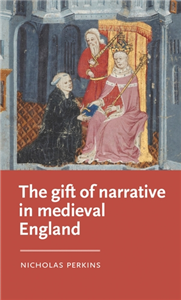
The gift of narrative in medieval England
by Nicholas Perkins
This invigorating study places medieval romance narrative in dialogue with theories and practices of gift and exchange, opening new approaches to questions of storytelling, agency, gender and materiality in some of the most engaging literature from the Middle Ages. It argues that the dynamics of the gift are powerfully at work in romances: through exchanges of objects and people; repeated patterns of love, loyalty and revenge; promises made or broken; and the complex effects that time works on such objects, exchanges and promises. Ranging from the twelfth century to the fifteenth, and including close discussions of poetry by Chaucer, the Gawain-Poet and romances in the Auchinleck Manuscript, this book will prompt new ideas and debate amongst students and scholars of medieval literature, as well as anyone curious about the pleasures that romance narratives bring.
-
Trusted Partner
-
Trusted Partner
 Business, Economics & LawOctober 2026
The Island Book of Records Volume III
1971-72
by Neil Storey
The third in the acclaimed Island Book of Records series chronicles 1971-72, two years that saw the label secure a position at the forefront of contemporary music around the world. Major albums from Cat Stevens, Emerson, Lake & Palmer and Jethro Tull brought international success. Traffic released their era-defining The Low Spark of High Heeled Boys and Island returned to its roots with the soundtrack to the most important Jamaican film of all time, The Harder They Come. Nick Drake's masterpieces Bryter Layter and Pink Moon were yet to find their audience, but a new sensation emerged as Roxy Music released their first LP. Meanwhile, Bob Marley & The Wailers were beginning to record Catch A Fire - the album that will be the first to be detailed in IBoR IV. Featuring material from recent interviews and comment of the time, and including a comprehensive discography of 45s, The Island Book of Records Volume III is lavishly illustrated with album art, gig adverts, tickets, flyers, international LP variants, rare photos, LP and 45 adverts and exclusive ephemera.
-
Trusted Partner
 Humanities & Social SciencesJuly 1997
The new woman
by Sally Ledger
Sexually transgressive, politically astute and determined to claim educational and employment rights equal to those enjoyed by men, the new woman took centre stage in the cultural landscape of late-Victorian Britain. By comparing the fictional representations with the lived experience of the new woman, Ledger's book makes a major contribution to an understanding of the 'woman question' at the fin de siecle. She alights on such disparate figures as Eleanor Marx, Gertrude Dix, Dracula, Oscar Wilde, Olive Schreiner and Radclyffe Hall. Focusing mainly on the last two decades of the nineteenth century, the book's later chapters project forward into the twentieth century, considering the relationship between new woman fiction and early modernism as well as the socio-sexual inheritance of the 'second generation' new woman writers. ;
-
Trusted Partner
 Humanities & Social SciencesOctober 2021
Higher education in a globalising world
Community engagement and lifelong learning
by Peter Mayo
This book focuses on current policy discourse in Higher Education, with special reference to Europe. It discusses globalisation, Lifelong Learning, the EU's Higher Education discourse, this discourse's regional ramifications and alternative practices in Higher Education from both the minority and majority worlds with their different learning traditions and epistemologies. It argues that these alternative practices could well provide the germs for the shape of a public good oriented Higher Education for the future. It theoretically expounds on important elements to consider when engaging Higher Education and communities, discussing the nature of the term 'community' itself. Special reference is accorded to the difference that lies at the core of these ever-changing communities. It then provides an analysis of an 'on the ground project' in University community engagement, before suggesting signposts for further action at the level of policy and provision. This book is relevant to United Nations Sustainable Development Goal 4, Quality education



