
Association des éditeurs des Hauts de France
High quality titles from a selection of French independent publishers
View Rights Portal
High quality titles from a selection of French independent publishers
View Rights Portal
Publishing House specialized in Graphic Novels and cinema books. We've Biographies set in WWII and Spanish Civil War, Fantasy graphic novels and humour
View Rights Portal

Hilfe! Die Olchis sind geschrumpft! Als Professor Brausewein ein besonders starkes Putzpulver entwickelt, ahnt er nicht, welch schreckliche Nebenwirkung es hat: Alles, was mit dem Pulver in Berührung kommt, wird klein geschrumpft! Eines Nachts erwischt es auch die Olchis. Als sie am Morgen aufwachen, sind sie zu Winzlingen geworden! Muffelfurzteufel, nun ist guter Rat teuer, denn der Besitzer des Flohzirkus wittert seine Chance auf ein großes Geschäft … Hörspiel mit den beliebten Olchi-Sprechern


Design Thinking: Solve problems together, user-centered and iterative, develop innovations and have fun doing so! - Practical cards for innovation project work with change of perspective- Consistently customer-oriented and iterative- Targeted use of the maps in project planning and implementation with Design Thinking- Pragmatic, compact and wonderfully descriptive- Suitable for the most diverse questions or problems- With folding poster for targeted use of maps in project planning and decorative at the workplace- From the authors "Design Thinking Quick Start
 Trusted Partner
Trusted Partner
Trusted Partner


Der Versuch über Kafka Beschreibung einer Form ist Martin Walsers Dissertation, sie erschien erstmals 1961 und ist eine bemerkenswerte Einführung in das Werk Franz Kafkas, das eine so tiefe und nicht nachlassende Wirkung ausübt.
Trusted Partner

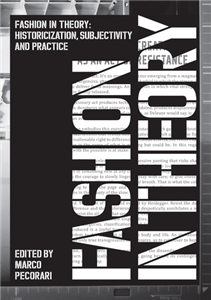
For Spring Summer 2020, Gucci showed a collection questioning identity politics and capitalism. Rather than the usual explanation of the material, shapes or inspirations behind the collection, the press release handed out at the show quoted the philosopher Michel Foucault and questioned the very nature of fashion itself. Gucci's press release reflects the popularization of critical theory in public discourse and fashion in particular. Philosophers, activists and academics are increasingly recruited to collaborate with luxury brands, and main-stream fashion brands have begun to adopt a discourse about politics and critical thinking using, in their communication, concepts such as "resistance", "gender fluidity", "national identity" or "cultural heritage" without accompanying these discourses with any form of political engagement or activism. Based on this intellectualization of the fashion industry and the recent proliferation of critical theory in fashion education, this book stresses the importance of rethinking the relationship between fashion and theory. Drawing together eleven chapters and four conversations by and with philosophers, cultural theorists, historians, anthropologists, activists, performers and designers, the book investigates both the theorization of fashion and the ways in which fashion offers a useful landscape in understanding the current state of critical theory today.
Trusted Partner

Design and the Modern Magazine provides a thematically arranged set of essays that examine the changing character of the magazine as an important aspect of cultural life from the late nineteenth century until today. In doing so it offers some of the first detailed case-studies of individual titles and analyses how design decisions are made alongside editorial, commercial and technical considerations. The book suggests ways to understand the magazine as a designed object. Among the more significant titles considered are Woman's Home Companion, Design, Woman and Vogue. While largely drawing from British and American sources, the book also covers the impact of modern design ideas from Europe on such publications. The essays present new and original scholarship on the subject and will be of use to students and teachers working on a wide range of art and design history, and literature studies courses. ;
Trusted Partner
Trusted Partner
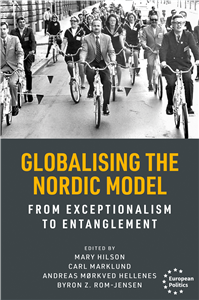
The five Nordic countries - Denmark, Finland, Iceland, Norway and Sweden - frequently attract attention as examples of a 'Nordic model'. The meanings of the term vary, but especially since the global financial crisis of 2008-9 the Nordic countries have often been portrayed positively, as examples of economic dynamism, innovation and social equality. Studies of these images of the Nordic countries and Nordic region and their international circulations are now a well-established field of research. This volume explores how the Nordic model has been shaped by global entanglements, in exchange not only with Western Europe and North America, but also with the Global South. Drawing on selected case studies, the volume offers new perspectives on the meanings of the Nordic model and Nordic exceptionalism in a global context during the half century since c. 1970.
Trusted Partner
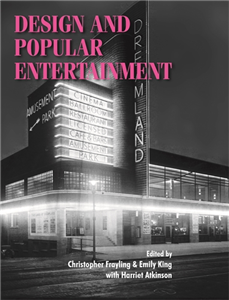
Design and Popular Entertainment offers a selection of nine essays that examine the range of design for popular entertainment, from theatre and film, to television and radio. Investigating entertainment design from the late nineteenth century to the 1960s, the book is divided into two sections. The first addresses the 'hardware' of popular entertainment, in other words the objects through which images, sound and performance are transmitted. The second explores the construction of cinematic and televisual imagery and the design of objects for the screen, the 'software' of entertainment. In so doing it offers important insights into this little explored aspect of design. Topics covered by the collection include the design of theatrical lighting and stage sets, cinema and radio design, the representation of designers within film, and the relationship between design and television. The book's concentration on the 1950s and 1960s reflects the profound changes in modes of entertainment that took place during that period, in particular the spread of television, which not only attracted a huge popular audience but also stimulated experimental designing approaches and thinking. With particular focus on the way that both the objects and the construction of entertainment have altered audience's experience, the essays present a novel approach to the subject. This book will be of particular interest to students and teachers working in design and cultural history as well as film and theatre studies. ;
Trusted Partner
Trusted Partner

 Trusted Partner
 Trusted Partner
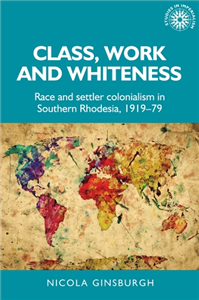
This book offers the first comprehensive history of white workers from the end of the First World War to Zimbabwean independence in 1980. It reveals how white worker identity was constituted, examines the white labouring class as an ethnically and nationally heterogeneous formation comprised of both men and women, and emphasises the active participation of white workers in the ongoing and contested production of race. White wage labourers' experiences, both as exploited workers and as part of the privileged white minority, offer insight into how race and class co-produced one another and how boundaries fundamental to settler colonialism were regulated and policed. Based on original research conducted in Zimbabwe, South Africa and the UK, this book offers a unique theoretical synthesis of work on gender, whiteness studies, labour histories, settler colonialism, Marxism, emotions and the New African Economic History.
Trusted Partner
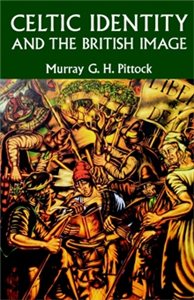
This work explores the idea of the Celt and the definition of the so-called "Celtic Fringe" over the last 300 years. It is an in-depth study of the literary and cultural representation of Ireland, Scotland and Wales over this period, and is based on a wide-ranging grasp of issues of national identity and state formation. The idea of the Celt and Celticism is once again highly fashionable. Is there such a common Celtic heritage? What is the place of the "Celtic Fringe" in British identity? Pittock begins by assessing the term "Celtic" itself, by questioning its validity, going on to examine its historic uses and heroic notions of Scotland's past. The Celtic Revival of the late 19th century is examined in detail together with its impact on Irish nationalism. Pittock asks how far the "Celtic" experience in Britain can be described as a colonial one, and examines the importance of the Celtic languages in preserving a sense of identity. Contemporary issues such as the literary language of the Troubles in Northern Ireland and the growth of modern Scottish nationalism are also considered. ;
Trusted Partner

Touting informal settlements or informality in general as illegal, crime-ridden, unsafe, filthy, chaotic, and formal developments as legal, orderly or safe, and so forth has not solved anything and informality as a way of life or an economic reality lingers and grows. Demystifying informal urban design and planning delves deeper into this conundrum and seeks to debunk some common misguided perceptions about it. Borrowing popular philosophical and political analogies from Isaiah Berlin and Gregory Treverton and others, it encourages urban designers and planners to become multitaskers like foxes rather than hedgehogs who can do one thing right. The book ends with some general takeaways on assuming more proactive roles in informal urban design issues and avoiding two potential pitfalls while interacting with them.
Trusted Partner

Mörderische Machtspiele im Elite-Internat. Back to "Night School" Wenn du an einen der sichersten Orte der Welt gebracht wirst und sie dich trotzdem finden… Gray, die Tochter der Premierministerin, wird zu ihrem Schutz nach Cimmeria, einem Eliteinternat, gebracht. Es dauert jedoch nicht lange, bis ihre Feinde sie aufgespürt haben. Wird Gray fliehen oder sich der Gefahr stellen? Ungekürzt gelesen von Leonie Landa
Trusted Partner
Trusted Partner
Trusted Partner
Trusted Partner




