
Your Search Results
-

-

A Walk through History
A Walk Through History is a Russian publishing house specializing in children’s nonfiction. Since 2011 it has created and designed about 50 titles on various periods of history and other subjects such as mathematics, sport, plants and animals.
View Rights Portal
-
Promoted Content

 The ArtsMay 2026
Feminist substances
Plastics in art of the 1960s and 1970s
by Charlotte Matter
Numerous women artists engaged with industrial materials such as plastics in the 1960s and 1970s, contrary to what the discourse of the time would have us believe. As Feminist substances shows, their works offered unique approaches to plastics in art, introducing new material meanings through a feminist lens. With a focus on Europe and Latin America, the book discusses the practices of Carla Accardi, Lea Lublin and Alina Szapocznikow, combining close readings of selected artworks with broader considerations of their social contexts. It explores their use of Sicofoil, plexiglass, plastic inflatables, polyester resin and polyurethane foam to address key concerns of feminist thought in relation to social reproduction, motherhood, memory, desire and illness. Beyond commonplaces of plastics as generic bad materials, Feminist substances considers more complex ways of engaging with synthetic matter, taking into account our messy relationships with these controversial materials.
-
Promoted Content
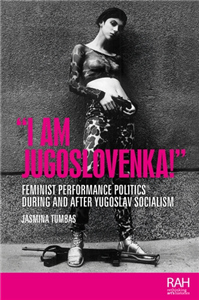 The ArtsFebruary 2022
"I am Jugoslovenka!"
Feminist performance politics during and after Yugoslav Socialism
by Jasmina Tumbas, Amelia Jones, Marsha Meskimmon
"I am Jugoslovenka" argues that queer-feminist artistic and political resistance were paradoxically enabled by socialist Yugoslavia's unique history of patriarchy and women's emancipation. Spanning performance and conceptual art, video works, film and pop music, lesbian activism and press photos of female snipers in the Yugoslav wars, the book analyses feminist resistance in a range of performative actions that manifest the radical embodiment of Yugoslavia's anti-fascist, transnational and feminist legacies. It covers celebrated and lesser-known artists from the 1970s to today, including Marina Abramovic, Sanja Ivekovic, Vlasta Delimar, Tanja Ostojic, Selma Selman and Helena Janecic, along with music legends Lepa Brena and Esma Redzepova. "I am Jugoslovenka" tells a unique story of women's resistance through the intersection of feminism, socialism and nationalism in East European visual culture.
-
 Trusted Partner
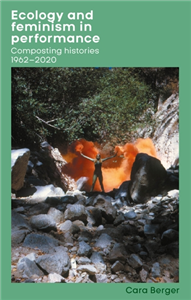 The ArtsMay 2026
Ecology and feminism in performance
Composting histories 1962–2020
by Cara Berger
This book provides a vital new history of feminist performance through an ecological lens. It argues that from the 1960s to the present, artists have used performance to challenge the linked oppression of women and nature. Proposing 'composting' as a new method for writing feminist history, the study moves beyond linear narratives to trace regenerative connections between generations of practitioners. It provides sustained analysis of genres from land art to postdramatic theatre, re-evaluating the work of canonical figures while examining how contemporary artists continue to address these urgent themes. By placing ecofeminism in dialogue with feminist new materialism, queer ecology, and transecological thought, this study demonstrates how performance has been a crucial site for imagining more just and sustainable futures in an age of environmental crisis.
-
Trusted Partner
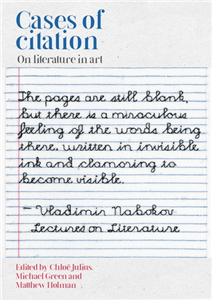 The ArtsSeptember 2024
Cases of citation
On literature in art
by Chloe Julius, Michael Green, Matthew Holman
Cases of citation presents a history of artists who incorporated literary references into their work from the 1960s onwards. Through a series of object-focused chapters that each take up a singular 'case of citation', the collection considers how literary citation emerged as a viable and urgent strategy for artists during this period. It surveys eleven artworks by a diverse group of artists - including David Wojnarowicz, Lis Rhodes, Romare Bearden and Silvia Kolbowski - whose citations draw on works as varied as Karl Marx's Das Kapital and Mary Shelley's Frankenstein. The book also features an interview with pioneering feminist artist Elaine Reichek that discusses her career-long commitment to working with text. Together, the artworks and cited texts are approached from various critical angles, with each author questioning and complicating the ways in which we can 'read' textual citations in art.
-
Trusted Partner
 The ArtsJune 2026
Cases of citation
On literature in art
by Chloë Julius, Michael Green, Matthew Holman
Cases of citation presents a history of artists who incorporated literary references into their work from the 1960s onwards. Through a series of object-focused chapters that each take up a singular 'case of citation', the collection considers how literary citation emerged as a viable and urgent strategy for artists during this period. It surveys nine artworks by a diverse group of artists - including David Wojnarowicz, Lis Rhodes, Romare Bearden and Silvia Kolbowski - whose citations draw on literary works with authors ranging from Gertrude Stein to Jean Genet. The book also features an interview with pioneering feminist artist Elaine Reichek that discusses her career-long commitment to working with text. Together, the artworks and cited texts are approached from various critical angles, with each author questioning and complicating the ways in which we can 'read' textual citations in art.
-
Trusted Partner
-
Trusted Partner
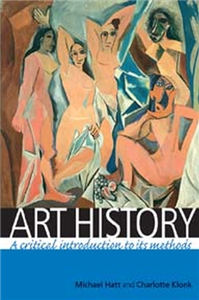 The ArtsMarch 2006
Art history
A critical introduction to its methods
by Michael Hatt, Charlotte Klonk
Art History: A critical introduction to its methods provides a lively and stimulating introduction to methodological debates within art history. Offering a lucid account of approaches from Hegel to post-colonialism, the book provides a sense of art history's own history as a discipline from its emergence in the late-eighteenth century to contemporary debates. By explaining the underlying philosophical and political assumptions behind each method, along with clear examples of how these are brought to bear on visual and historical analysis, the authors show that an adherence to a certain method is, in effect, a commitment to a set of beliefs and values. The book makes a strong case for the vitality of the discipline and its methodological centrality to new fields such as visual culture. This book will be of enormous value to undergraduate and graduate students, and also makes its own contributions to ongoing scholarly debates about theory and method. ;
-
Trusted Partner
-
Trusted Partner
-
Trusted Partner
The ArtsDecember 2024
Engendering an avant-garde
The unsettled landscapes of Vancouver photo-conceptualism
by Leah Modigliani
Engendering an avant-garde is the first book to comprehensively examine the origins of Vancouver photo-conceptualism in its regional context between 1968 and 1990. Employing discourse analysis of texts written by and about artists, feminist critique and settler-colonial theory, the book discusses the historical transition from artists' creation of 'defeatured landscapes' between 1968-71 to their cinematographic photographs of the late 1970s and the backlash against such work by other artists in the late 1980s. It is the first study to provide a structural account for why the group remains all-male. It accomplishes this by demonstrating that the importation of a European discourse of avant-garde activity, which assumed masculine social privilege and public activity, effectively excluded women artists from membership.
-
Trusted Partner
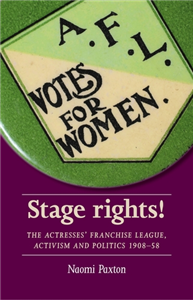 The ArtsNovember 2020
Stage rights!
The Actresses’ Franchise League, activism and politics 1908–58
by Naomi Paxton
Stage rights! explores the work and legacy of the first feminist political theatre group of the twentieth century, the Actresses' Franchise League. Formed in 1908 to support the suffrage movement through theatre, the League and its membership opened up new roles for women on stage and off, challenged stereotypes of suffragists and actresses, created new work inspired by the movement and was an integral part of the performative propaganda of the campaign. Introducing new archival material to both suffrage and theatre histories, this book is the first to focus in detail on the Actresses' Franchise League, its membership and its work. The volume is formulated as a historiographically innovative critical biography of the organisation over the fifty years of its activities, and invites a total reassessment of the League within the accepted narratives of the development of political theatre in the UK.
-
Trusted Partner
-
Trusted Partner
-
Trusted Partner
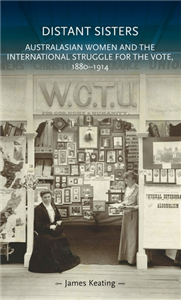 Humanities & Social SciencesDecember 2022
Distant sisters
Australasian women and the international struggle for the vote, 1880–1914
by James Keating
In the 1890s Australian and New Zealand women became the first in the world to win the vote. Buoyed by their victories, they promised to lead a global struggle for the expansion of women's electoral rights. Charting the common trajectory of the colonial suffrage campaigns, Distant Sisters uncovers the personal and material networks that transformed feminist organising. Considering intimate and institutional connections, well-connected elites and ordinary women, this book argues developments in Auckland, Sydney, and Adelaide-long considered the peripheries of the feminist world-cannot be separated from its glamourous metropoles. Focusing on Antipodean women, simultaneously insiders and outsiders in the emerging international women's movement, and documenting the failures of their expansive vision alongside its successes, this book reveals a more contingent history of international organising and challenges celebratory accounts of fin-de-siècle global connection.
-
Trusted Partner
 Teaching, Language & ReferenceApril 2025
Anti-colonial research praxis
Methods for knowledge justice
by Caroline Lenette
How can anti-colonial research methodologies be transformative and achieve knowledge justice? This book brings together an eclectic group of leading scholars from around the world to share methodological knowledge grounded in First Nations and majority-world expertise and wisdom. The authors challenge western-centric and colonial approaches to knowledge production and redefine the possibilities of what we can achieve through social research. First Nations and majority-world perspectives are contextual and unique. They share a common aim of disrupting established beliefs on research methodologies and the unquestioned norms that dictate whose knowledge the academy values. The ten chapters in this edited collection describe how the authors draw on Indigenous knowledge systems, feminist frameworks, and creative methodologies as anti-colonial research praxis. The examples span several disciplines such as development studies, geography, education, sexual and reproductive health, humanitarian studies, and social work. Authors use a reflexive approach to discuss specific factors that shape how they engage in research ethically, to lead readers through a reflection on their own practices and values. The book reimagines social research using an anti-colonial lens and concludes with a collaboratively developed and co-written set of provocations for anti-colonial research praxis that situate this important work in the context of ongoing colonial violence and institutional constraints. This book is an essential guide for researchers and scholars within and beyond the academy on how anti-colonial research praxis can produce meaningful outcomes, especially in violent and troubled times. Cover art courtesy of Tawny Chatmon
-
Trusted Partner
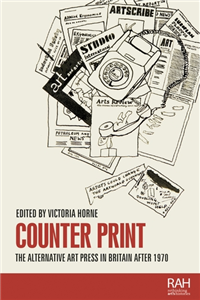 The ArtsSeptember 2025
Counter print
The alternative art press in Britain after 1970
by Victoria Horne
The history of contemporary art is also a history of its newsletters, manifestos, magazines, pamphlets, and journals. Those periodical publications do not simply communicate or record ideas but have worked in exciting ways to shape art's practices, histories and communities. As a new generation of artists, activists and scholars seek to uncover the histories of alternative publishing and artistic networks, this book gathers original archival discoveries while offering methodologies for studying and thinking with those artefacts. As the first essay collection to focus on the periodical art press and the ways we study it, Counter print offers readers an alternative route into the past fifty years of contemporary art, one that is defiantly collaborative, border crossing and disruptive.
-
Trusted Partner
-
Trusted Partner
-
Trusted Partner
The ArtsDecember 2024
Beyond the Happening
Performance art and the politics of communication
by Catherine Spencer
Beyond the Happening uncovers the heterogeneous, uniquely interdisciplinary performance-based works that emerged in the aftermath of the early Happenings. By the mid-1960s Happenings were widely declared outmoded or even 'dead', but this book reveals how many practitioners continued to work with the form during the late 1960s and 1970s, developing it into a vehicle for studying interpersonal communication that simultaneously deployed and questioned contemporary sociology and psychology. Focussing on the artists Allan Kaprow, Marta Minujín, Carolee Schneemann and Lea Lublin, it charts how they revised and retooled the premises of the Happening within a wider network of dynamic international activity. The resulting performances directly intervened in the wider discourse of communication studies, as it manifested in the politics of countercultural dropout, soft power and cultural diplomacy, alternative pedagogies, sociological art and feminist consciousness-raising.
-
Trusted Partner
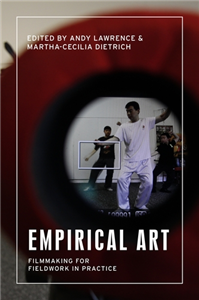 Humanities & Social SciencesJuly 2025
Empirical art
Filmmaking for fieldwork in practice
by Andy Lawrence, Martha-Cecilia Dietrich
Empirical art: Filmmaking for fieldwork in practice is an insightful exploration of what the craft of filmmaking brings to social science research. Providing creative avenues on how to narrate encounters, relationships, and experiences during fieldwork, this comprehensive volume offers a rich tapestry of theoretical explorations and explorative methodologies. Skilfully connecting the worlds of ethnography, art and cinema, the contributors in this book act as a compass for filmmakers and researchers venturing to use a camera and microphone to relate and narrate their research collaborations and fieldsites. Drawing from the authors' extensive experience in disciplines like social anthropology, environmental humanities, and political science, "Empirical Art" breaks down the intricate process of crafting ethnographic films that departs from the researcher's subjectivity. Covering aspects of filmmaking from conceptualisation to production and distribution, readers are equipped with a treasure trove of collaborative techniques, innovative approaches, and ethical considerations necessary to generate and examine storytelling practices in contemporary fields of study. The authors discuss the significance of the multiple roles that technologies of filmmaking play in reflecting on cultural practices, social dynamics, and (beyond) human storytelling and their transformative potentials. Whether a seasoned filmmaker, an aspiring ethnographer, or an academic seeking new dimensions for their research, Empirical Art serves as a guide to integrating visual storytelling, cinema craft and empirical research.



