Your Search Results

      • Global Collective Publishers

        Global Collective Publishers, based in Philadelphia, Pennsylvania, is an independent publisher whose mission is to provide a platform for voices from around the world, crossing the borders of language, culture, religion, and gender, and to create a space where diverse communities can share and exchange stories that express their individual and shared sense of humanity through a variety of literary genres in fiction and non-fiction. In a world that feels increasingly more alienating, it is our aim to work towards dispelling the fear of the other and stand against literature of hatred, embracing the shared human experience in its myriad textures and voices through a curiosity-driven life. Global Collective is committed to publishing across a diverse landscape of fiction and non-fiction, in the areas of religion and spirituality, personal growth and self-transformation, gender and LGBT+ studies, social awareness, art and cinema. Global Collective takes to heart Booker Prize winner Ben Okri’s assertion that “stories can conquer fear… they can make the heart bigger.”Global Collective Publishers seeks unique and extraordinary literature that satiates our desire to gain a deeper understanding of the world around us and to discover points of commonality amongst our differences where words have no borders.

        View Rights Portal
      • Carrot Global Inc.

        We are a dynamic and practical learning solutions provider, satisfying a wide array of professional development, learning and consulting needs of domestically and internationally renown clients. Our mission is to achieve customers’ success through the enhancement of corporate and personal global competence. - Selected as the global partner by more than 500 enterprises such as Samsung, LG, Hyundai, GM, GE, SIMENS, etc.- Opened branches in the USA, Canada, China, Vietnam, the Philippines.- Operating 28 virtual classes in 28 countries.- Sponsoring a number of international volunteer organizations.- Hosting workshops by inviting worldly scholars such as Michael Sandel, Gary Hamel, Paul Krugman.- Hosting Global Competency HRD Conference for 13 consecutive years.

        View Rights Portal
      • Trusted Partner
        Humanities & Social Sciences
        July 2018

        Globalisation contested

        by Louise Amoore

      • Trusted Partner
      • Trusted Partner
        Humanities & Social Sciences
        November 2010

        Globalisation, Integration and the Future of European Welfare States

        by Theodora-Ismene Gizelis, Emil Kirchner, Thomas Christiansen

        This book argues that the welfare state cannot be understood purely as a set of social policy arrangements, but must be seen as a political institution, intended to achieve certain political objectives. The political dimension of the welfare state is essential for understanding its initial emergence as well as assessing its ability to deal with contemporary challenges. Governments use welfare transfers to decrease the risk of political instability that may be politically disruptive and threaten to undermine social cohesion. The success of welfare institutions stems from their ability to foster a redistribution of resources and political consensus that has enabled long-term political stability and economic development. The book develops a general model that looks at the interactive effects between welfare transfers, political instability and state capacity. It provides a unique theoretical contribution to the study of welfare spending in the context of globalisation and integration, analyses the key politial rationale for welfare programmes, namely their role in preserving social cohesion and governance and demonstrates clearly that welfare policies can be successfully adopted to meet new challenges and that retrenchment of the welfare state is not inevitable, using Scandinavia as a leading example of modern thinking policies. ;

      • Trusted Partner
      • Trusted Partner
        Humanities & Social Sciences
        October 2021

        Higher education in a globalising world

        Community engagement and lifelong learning

        by Peter Mayo

        This book focuses on current policy discourse in Higher Education, with special reference to Europe. It discusses globalisation, Lifelong Learning, the EU's Higher Education discourse, this discourse's regional ramifications and alternative practices in Higher Education from both the minority and majority worlds with their different learning traditions and epistemologies. It argues that these alternative practices could well provide the germs for the shape of a public good oriented Higher Education for the future. It theoretically expounds on important elements to consider when engaging Higher Education and communities, discussing the nature of the term 'community' itself. Special reference is accorded to the difference that lies at the core of these ever-changing communities. It then provides an analysis of an 'on the ground project' in University community engagement, before suggesting signposts for further action at the level of policy and provision. This book is relevant to United Nations Sustainable Development Goal 4, Quality education

      • Trusted Partner
        The Arts
        April 2026

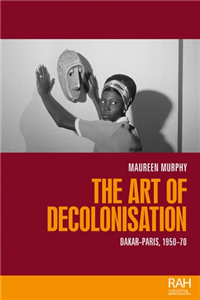
        The art of decolonisation

        Dakar-Paris, 1950-70

        by Maureen Murphy

        The art of decolonisation examines how artists challenged colonial legacies and reconfigured power through transnational networks of art and diplomacy. Adopting a global and transhistorical perspective, it explores artistic, political, and institutional relations between France and Senegal during decolonisation and the Cold War. From the emergence of a national modern art in Senegal to contested cultural policies and high-profile exhibitions-such as those featuring Picasso and Soulages in Dakar, or contemporary Senegalese art in Paris-this book traces the circulation of artworks, ideas, and influence across borders. It reveals how visual artists and filmmakers shaped a new artistic geopolitics between 1950 and 1970. Reconsidering the accepted chronology of the 'global turn', The art of decolonisation shows that the roots of global art discourse run deeper than the 1990s, and were already forming during the era of independence struggles.

      • Trusted Partner
        Humanities & Social Sciences
        March 2026

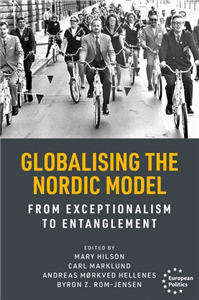
        Globalising the Nordic Model

        From exceptionalism to entanglement

        by Mary Hilson

        The five Nordic countries - Denmark, Finland, Iceland, Norway and Sweden - frequently attract attention as examples of a 'Nordic model'. The meanings of the term vary, but especially since the global financial crisis of 2008-9 the Nordic countries have often been portrayed positively, as examples of economic dynamism, innovation and social equality. Studies of these images of the Nordic countries and Nordic region and their international circulations are now a well-established field of research. This volume explores how the Nordic model has been shaped by global entanglements, in exchange not only with Western Europe and North America, but also with the Global South. Drawing on selected case studies, the volume offers new perspectives on the meanings of the Nordic model and Nordic exceptionalism in a global context during the half century since c. 1970.

      • Trusted Partner
        January 1983

        Der Naturgarten

        Mehr Platz für einheimische Pflanzen und Tiere

        by Schwarz, Urs / Vorwort von Stern, Horst; Herausgegeben von World Wildlife Fund

      • Trusted Partner
        Politics & government
        July 2013

        Globalisation and Ideology in Britain

        by Craig Berry

      • Trusted Partner
      • Trusted Partner
        The Arts
        October 2023

        Windows for the world

        Nineteenth-century stained glass and the international exhibitions, 1851–1900

        by Jasmine Allen

        Windows for the world explores the display and reception of nineteenth-century British stained glass in a secular exhibition context. International in scope, the book focuses on the global development of stained glass in this period as showcased at, and influenced by, these exhibitions. It recognises those who made and exhibited stained glass and demonstrates the long-lasting impact of the classification and modes of display at these events. A number of exhibits are illustrated in colour and are analysed in relation to stylistic developments, techniques and material innovations, as well as the broader iconographies of nation and empire in the nineteenth century.

      • Trusted Partner
        Humanities & Social Sciences
        February 2025

        Global counter-terrorism

        by Tahir Abbas, Sylvia I. Bergh, Sagnik Dutta

        This collection aims to inaugurate a new direction in research on counterterrorism by exploring global connections - both in terms of practices and discourses, as well as shared ideas and epistemes - that animate counterterrorism practices. The chapters - grouped under the themes of postcoloniality and coloniality, and entanglements of the transnational and the local, and counterterrorism and right-wing extremism - are attentive to global connections and are mindful of the complexities of global historical processes that constitute the politics of counterterrorism. This book aims to bring together scholars studying counterterrorism in the global North and the global South to explore convergence and divergence in how counterterrorism policies function in a range of national and local contexts.

      • Trusted Partner
      • Trusted Partner
        Medicine
        February 2025

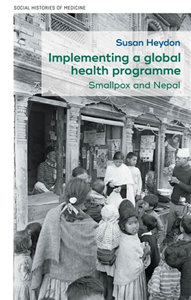
        Implementing a global health programme

        Smallpox and Nepal

        by Susan Heydon

        Worldwide eradication of the devastating viral disease of smallpox was devised as a distant global policy, but success depended on implementing a global vaccination programme within nation states. How this was achieved remains relevant and topical for responding to today's global communicable disease challenges. The small and poor Himalayan kingdom of Nepal faced enormous geographical and infrastructure challenges if it was going to succeed in a nationwide vaccination programme. This book acknowledges the key role of the WHO but disrupts the top-down, centre-led standard narrative. Against a background of widespread internal political and social change, Nepal's programme was expanded, effectively decentralised and a vaccination strategy introduced that aligned with people's beliefs. Few foreign personnel were involved.

      • Trusted Partner
        Business, Economics & Law
        June 2025

        Decolonisation in the age of globalisation

        by Chi-kwan Mark

      • Trusted Partner
      • Trusted Partner
        The Arts
        January 2018

        Art after empire

        by Warren Carter

      • Trusted Partner

      Subscribe to our

      newsletter