
Hotel de las Ideas
Hotel de las ideas is a cooperative, with 10 co-founders.
View Rights Portal

La Pollera's catalog includes narrative, essay, and chronicle of contemporary and classic authors.
View Rights Portal

Questions of identity trigger controversial and highly emotional discussions in the political and social debate. The positions range from radically emancipatory perspectives to authoritarian and restorative efforts on the far right wing of politics. Liberal democracies are now opening up – slowly – as identity- and gender-sensitive forums. Opposite them are the 'new ethics' of illiberal democracies and totalitarian states that are aimed at ethnic homogeneity and gender uniformity. But that's not to say that there is unity in the liberal settings on the necessary degree of identity politics. Both language and gender politics are deeply controversial. Do we need an 'identity' and, if so, which one or how many? Can the identity debate be extended by means of other concepts?


This book probes the causes of and conditions for the preference of the members of the British-Bangladeshi community for a religion-based identity vis-à-vis ethnicity-based identity, and the influence of Islamists in shaping the discourse. The first book-length study to examine identity politics among the Bangladeshi diaspora delves into the micro-level dynamics, the internal and external factors and the role of the state and locates these within the broad framework of Muslim identity and Islamism, citizenship and the future of multiculturalism in Europe. Empirically grounded but enriched with in-depth analysis, and written in an accessible language this study is an invaluable reference for academics, policy makers and community activists. Students and researchers of British politics, ethnic/migration/diaspora studies, cultural studies, and political Islam will find the book extremely useful. ;
 Trusted Partner
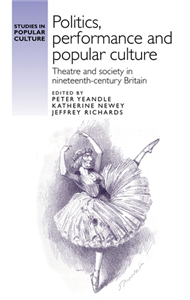
This collection brings together studies of popular performance and politics across the nineteenth century, offering a fresh perspective from an archivally grounded research base. It works with the concept that politics is performative and performance is political. The book is organised into three parts in dialogue regarding specific approaches to popular performance and politics. Part I offers a series of conceptual studies using popular culture as an analytical category for social and political history. Part II explores the ways that performance represents and constructs contemporary ideologies of race, nation and empire. Part III investigates the performance techniques of specific politicians - including Robert Peel, Keir Hardie and Henry Hyndman - and analyses the performative elements of collective movements.
Trusted Partner

This book examines Turkey's integration with Europe within structural dynamics of globalisation from a critical political economy perspective. Critical approaches have been sidelined within European Studies. Turkish enlargement is not an exemption. The analyses are based on original data generated by 109 interviews conducted in 2010, 2017 and 2023 with five categories of actors: representatives of capital and labour, political parties, state officials, and struggles around ecology, patriarchy and migration. It argues that the pro-membership was hegemonic in the 2000s which was contested by two rival class strategies, Ha-vet and neo-mercantilism. In the 2010s, pro-membership is no longer hegemonic within rising critical tone of social forces supporting rival class strategies. Unevenness of Turkey's trajectory of integration to Europe is likely to be consolidated through market integration and management of migration through transactional approach.
Trusted Partner

Socialist republic is a timely account of 1980s left-wing politics in South Yorkshire. It explores how Sheffield City Council set out to renew the British Left. Through careful analysis of the Council's agenda and how it interacted with trade unions, women's groups, lesbian and gay rights groups and acted on issues such as peace, environmentalism, anti-apartheid and anti-racism, the book draws out the complexities involved in building a broad-based politics which aimed unite class and identity politics. Running counter to 1980s narratives dominated by Thatcherism, the book examines the persistence of social democracy locally, demonstrating how grassroots local histories can enrich our understanding of political developments on a national and international level. The book is essential reading for students, scholars, and activists with an interest in left-wing politics and history.
Trusted Partner

This study compares the making and remaking of the political identities of the miners' movements in Britain and Germany. Taking the south Wales and Ruhr coalfields as case studies, it focuses on the public discourse of the trade unions and political parties as it was disseminated in local newspapers, trade union publications, pamphlets and election leaflets. It reveals how the miners' movements used ideas such as class, religion, the 'people' or Volk, socialization and nationalization to construct organizational identities during the turbulent period between 1890 and 1926. These concepts were crucial not only in the formation and self-identity of the miners' trade unions, but also in the way they interacted with employers and the state. They adapted and changed over time as the miners' movements reacted to war, economic depression and increasing industrial conflict. The book contends that these identities were not simply the result of structural factors, but were formed at the juncture where cultural, political and sociological forces intersect. Examining this intersection through discourse analysis and the concept of the 'lifeworld', the book brings together the social world of the miners and the realm of organized politics to advance historical understanding of two of the most important elements in the most powerful labour movements in Europe. ;
Trusted Partner
 Trusted Partner
 Trusted Partner

This important book provides new understandings of how the politics of memory impacts peace in societies transitioning from a violent past. It does so by developing a theoretical approach focusing on the intersection of sites, agency, narratives, and events in memory-making. Drawing on rich empirical studies of mnemonic formations in Cyprus, Bosnia and Herzegovina, Rwanda, South Africa and Cambodia, the book speaks to a broad audience. The in-depth, cross-case analysis shows that inclusivity, pluralism, and dignity in memory politics are key to the construction of a just peace. The book contributes crucial and timely knowledge about societies that grapple with the painful legacies of the past and advances the study of memory and peace.
Trusted Partner
Trusted Partner

The politics of Middle English parables examines the dynamic intersection of fiction, theology and social practice in late-medieval England. Parables occupy a prominent place in Middle English literature, appearing in dream visions and story collections as well as in lives of Christ and devotional treatises. While most scholarship approaches the translated stories as stable vehicles of Christian teaching, this book highlights the many variations and points of conflict across Middle English renditions of the same story. In parables related to labour, social inequality, charity and penance, the book locates a creative theological discourse through which writers attempted to re-construct Christian belief and practice. Analysis of these diverse retellings reveals not what a given parable meant in a definitive sense but rather how Middle English parables inscribe the ideologies, power structures and cultural debates of late-medieval Christianity.
Trusted Partner
Trusted Partner

A short but comprehensive textbook for students of British politics which interprets changes over the last thirty years and analyses institutions within the context of British society and economics. ;
Trusted Partner
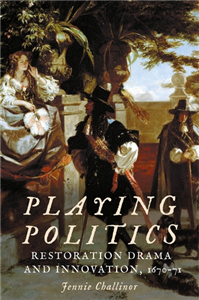
This study focuses on the 1670-71 season in the Restoration playhouses, an exciting and formative moment in theatrical and political history. The year proved to be difficult and damaging to King Charles II, as political, religious, and personal matters provoked controversy and disquiet, and the country teetered on the brink of major constitutional problems. My research sets drama against this backdrop. Theatrical records for this period are patchy and, for the most part, frustratingly incomplete: this book does not attempt to reconstruct the day-to-day operations of the playhouses, but rather it uses the available evidence of the extant new and revived plays we know (or believe) to have been performed in the 1670-71 theatrical season, and argues that this was the period in which serious and far-reaching political and dramatic questions began to be seriously asked and (tentatively) answered.
Trusted Partner

This electronic version has been made available under a Creative Commons (BY-NC-ND) open access license. This book is about science in theatre and performance. It explores how theatre and performance engage with emerging scientific themes from artificial intelligence to genetics and climate change. The book covers a wide range of performance forms from Broadway musicals to educational theatre, from Somali drama to grime videos. It features work by pioneering companies including Gob Squad, Headlong Theatre and Theatre of Debate as well as offering fresh analysis of global blockbusters such as Wicked and Urinetown. The book offers detailed description and analysis of theatre and performance practices as well as broader commentary on the politics of theatre as public engagement with science. Science in performance is essential reading for researchers, students and practitioners working between science and the arts within fields such as theatre and performance studies, science communication, interdisciplinary arts and health humanities.
Trusted Partner

Why adopt a poststructural lens for the reading of the military strategy of national missile defence (NMD)? No doubt, when contemplating an attack on US territory by intercontinental ballistic missiles, consulting Michel Foucault and critical international relations theory scholars may not seem the obvious route to take. The answer to this lies in another question: why has there been so much interest and continuous investment in NMD deployment when there is such ambiguity surrounding the status of threat to which it responds, controversy over its technological feasibility and concern about its cost? Posed in this manner, the question cannot be answered on its own terms - the terms given in official accounts of NMD that justify the system's significance on the basis of strategic feasibility studies and conventional threat predictions guided by worst-case scenarios. Instead, this book argues that the preferences leading to NMD deployment must be understood as satisfying requirements beyond strategic approaches and issues. In turning towards the interpretative modes of inquiry provided by critical social theory and poststructuralism, this book contests the conventional wisdom about NMD and suggests reading the strategy in terms of US identity. Presented as an analysis of discourses on threats to national security, around which the need for NMD deployment is predominantly framed, this book is an effort to let the two fields of critical international relations theory and US foreign policy speak directly to each other. It seeks to do so by showing how the concept of identity can be harnessed to an analysis of a contemporary military-strategic practice. ;
Trusted Partner
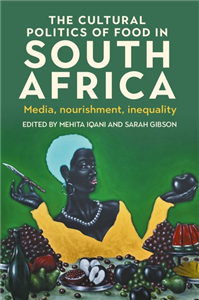
Food is both a material system of nourishment, necessary for human survival, and a communicative system that signifies multiple meanings across human cultures. This book explores the cultural politics of food in the South African context, bringing together a range of disciplinary perspectives on the links between media, nourishment, and inequality. The chapters all highlight the multiplicity of meanings that food has in South African society. These include historical perspectives on the impact of colonialism, migration and apartheid had on food and foodways in South Africa; sociological interventions on food and society; aesthetic practices in relation to food; and mediated food cultures in South Africa. Taken together, the book critically explores the multiple ways in which food is never just food, and always linked to complex and shifting modalities of meaning and knowledge in the South African context.
Trusted Partner

Provides a comprehensive introduction to the political system and processes of western Europe. Demonstrates clearly that political decisions are made in the context of specific historical developments, geographical constraints and social demands. Fully updated to take account of the recent French, British and Italian general elections as well as the momentous changes that have taken place in global politics as a result of the September 11 terrorist attacks, and the preparations for EU enlargement. Chapters on the European Union and democracy in western Europe have been substantially revised to take account of globalisation and recent political corruption issues. ;
Trusted Partner
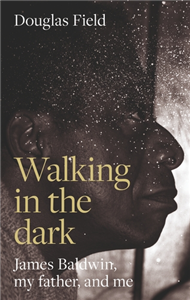
A moving exploration of the life and work of the celebrated American writer, blending biography and memoir with literary criticism. Since James Baldwin's death in 1987, his writing - including The Fire Next Time, one of the manifestoes of the Civil Rights Movement, and Giovanni's Room, a pioneering work of gay fiction - has only grown in relevance. Douglas Field was introduced to Baldwin's essays and novels by his father, who witnessed the writer's debate with William F. Buckley at Cambridge University in 1965. In Walking in the dark, he embarks on a journey to unravel his life-long fascination and to understand why Baldwin continues to enthral us decades after his death. Tracing Baldwin's footsteps in France, the US and Switzerland, and digging into archives, Field paints an intimate portrait of the writer's life and influence. At the same time, he offers a poignant account of coming to terms with his father's Alzheimer's disease. Interweaving Baldwin's writings on family, illness, memory and place, Walking in the dark is an eloquent testament to the enduring power of great literature to illuminate our paths.
Trusted Partner



