
Your Search Results
-

-

Guangdong Economy Publishing House Co., Ltd.
Guangdong Economics Publishing House Co., Ltd. is a leading professional publisher in China who aims at deliver engaging and adaptive solutions to readers in the fields of business management, investment, marketing & advertising, personal finance,military and scholarly monography in print and electrically. Located in Guangzhou, the capital city of Guangdong Province, the publishing house takes editing, publishing and distributing books, magazines, digital publication as well as copyright trading as its major business.Founded in 1995, we now publish over 500 books annually and provide our diversified products to readers all over China as well as overseas customers in Asia and Europe,. We joined the Guangdong Publishing Group in 1999 and now as a member of the Southern Publishing and Media Company Ltd., which went to the market in 2016, we look to a brighter future and greater marker globally.
View Rights Portal
-
Promoted Content

 Humanities & Social SciencesDecember 2025
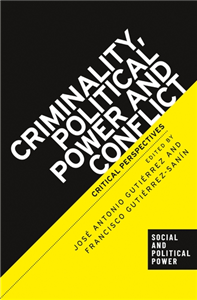
Criminality, political power and conflict
Critical perspectives
by José Antonio Gutiérrez Danton, Francisco Gutiérrez Sanín
In the aftermath of the greed vs. grievance debate and the new wars paradigm, the focus of conflict studies shifted decisively to understanding "predatory" behaviours as the raison d'etre of contemporary conflict. Conflict was viewed as a continuum in which the more you engage in criminal behaviour, the less political you are.This approach has been robustly criticised over the past 15 years; however, in the process, we have been left with unsuitable concepts to handle the complex interactions between civil war, political power and criminality. The departure point here is the understanding of politics and criminality as two historically differentiated domains of human activity. Different, but interrelated, often co-constitutive and overlapping. Here, we empirically and theoretically explore their interactions, connections, and convergences, not focusing solely on irregular actors, thus bringing back the State and elites into this debate.
-
Promoted Content
 Literature & Literary StudiesMay 2009
Illegitimate Power
Bastards in Renaissance Drama
by Alison Findlay
In Renaissance Drama, the bastard is an extraordinarily powerful and disruptive figure. We have only to think of Caliban or of Edmund to realise the challenge presented by the illegitimate child. Drawing on a wide rage of play texts, Alison Findlay shows how illegitimacy encoded and threatened to deconstruct some of the basic tenets of patriarchal rule. She considers bastards as indicators and instigators of crises in early modern England, reading them in relation to witch craft, spiritual insecurities and social unrest in family and State. The characters discussed range from demi-devils, unnatural villains and clowns to outstanding heroic or virtuous types who challenge officially sanctioned ideas of illegitimacy. The final chapter of the book considers bastards in performance; their relationship with theatre spaces and audiences. Illegitimate voices, Findlay argues, can bring about the death of the author/father and open the text as a piece of theatre, challenging accepted notions of authority. ;
-
 Trusted Partner
 Business, Economics & LawMarch 2025
Tadeusz Kowalik and Poland’s return from socialism to capitalism
Full circle
by Gavin Rae
Tadeusz Kowalik lived through ten decades and three economic and political systems in Poland. He combined his academic study of economic ideas with his socialist ideals of building a fairer and more just society. This book covers the intellectual and political work of Kowalik, within the context of modern Polish history. Kowalik was part of a Polish School of critical left-wing political economists, that included Michal Kalecki and Oskar Lange. Kowalik contributed to the body of work produced by this group, which included his interpretation of their work. Kowalik participated in some of the most momentous events in post-war Polish history, helping to organise a group of intellectuals to advise the shipyard workers at the Gdansk shipyards in 1980. He became a vehement opponent of Poland's neoliberal form of capitalism and left a body of work that illuminates our understanding of capitalism and socialism today.
-
Trusted Partner
 Business, Economics & LawJune 2025
Foundations of social ecological economics
The fight for revolutionary change in economic thought
by Clive L Spash
This book explores radical dissent from orthodox mainstream economics, and sets out a theoretically grounded vision for the emerging paradigm of social ecological economics. At the heart of this paradigmatic shift lies an acknowledgement of the inextricable embeddedness of economies in biophysical reality and social structure. The struggle for this transformative vision unfolds through a critical examination of mainstream environmental thought, followed by a nuanced evaluation of contributions from Marxists, socialists, critical institutionalists, feminists and Post-Keynesians grappling with the urgent environmental crisis. Synthesising insights from these diverse and heterodox schools, the book navigates the philosophical underpinnings of science, embracing a critical realist approach that challenges not only mainstream economic thought but also eclectic pluralism, relativism and strong constructionism. The question of what constitutes revolutionary science is explored in light of works by Kuhn, Schumpeter and Neurath, emphasising the pivotal role of values and ideology in works from Marx to Gramsci. Building on these radical and philosophical foundations, the book articulates a preanalytic vision of social ecological economics, dismantling entrenched notions of growth and efficiency in favour of a framework centered on social provisioning and needs embedded in ethics. In a thought-provoking conclusion, the book applies its analytical lens to the multiple crises of modernity within industrialised capital-accumulating economies. An agenda for social ecological transformation toward diverse alternative economies emerges, providing a compelling call to action in the face of contemporary challenges.
-
Trusted Partner
 Humanities & Social SciencesApril 2026
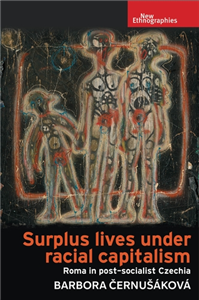
Surplus lives under racial capitalism
Roma in post-socialist Czechia
by Barbora Cernušáková
Surplus lives under racial capitalism is a critical contribution to the study of racial capitalism. It theorises the link between political economy, anti-Roma racism and modern forms of white supremacy in East Central Europe. The book shows how the introduction of capitalism in the 1990s overlapped with the rise of racialised disposability of Roma workers. Since then, their surplusing recurrently comes into sharp relief during the time of crisis. Surplus lives under racial capitalism is built on an investigation of how race and class structure the Czech labour regime and how they form a single site of struggle. One which binds workers across racialised divisions as surplusing continuously expands.
-
Trusted Partner
 Business, Economics & LawJanuary 2009
Understanding criminal law
by Stephen Buckley, Caroline Buckley
A complete understanding of criminal law is essential to pass the A2 in law, and this book provides that - for the first time linking all the elements of criminal law together to form a coherent whole. Written by two practising teachers, the book is accessible and user-friendly, featuring summary boxes and tables, clear introductions and references to key cases, as well as study skills and sample examination questions. The book provides a complete overview of criminal law and skilfully links all the elements together. It stresses the practical application of modern criminal law as it is currently used in the English judicial system and establishes the key roles of prosecution, the Crown Prosecution Service, the defence and the judiciary. It goes on to examine how the prosecution build up a case, looking in depth at the offences of murder and manslaughter and how they interrelate, and examining theft, assault and regulatory offences in detail, before looking at the role and nature of the defence. A vitally important final chapter concentrates on study skills relevant to criminal law, including note-taking, file organisation, essay and problem questions, revision strategy and the use of legal sources.
-
Trusted Partner
 Literature & Literary StudiesApril 2025
Speculative endeavors
Cultures of knowledge and capital in the long nineteenth century
by Selina Foltinek, Karin Hoepker, Katrin Horn
Speculative endeavours contributes to an emerging field of scholarship that focuses on alternative forms of knowledge production and speculation in nineteenth century US-American society. It sheds light on unofficial knowledges such as insider information, rumour, gossip, slander, emphasising how knowledges excluded by institutional discourses and authorities form a core part of the developing market economy. Ranging from the Early Republic to the Gilded Age, contributions analyse entanglements of financial, cultural, and social capital. They focus on social actors who differ from the newly minted ideal of the (free, white, male) entrepreneurial individual. The speculative endeavours discussed include illicit communications located in slave quarters and domestic spaces, communal interventions into a commercialised print market, debates on immigrant fiduciary and legal competency, and disciplinary techniques of pecuniary pedagogy. Taken together they offer unprecedented interdisciplinary insights into an emerging age of capital.
-
Trusted Partner
 Humanities & Social SciencesMarch 2026
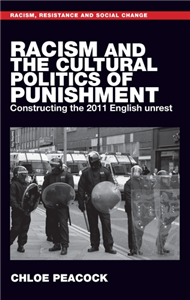
Justifying (in)justice
Discourses of crime and punishment in the wake of the 2011 English riots
by Chloe Peacock
Justifying (in)justice reveals how processes of ignorance are vital to legitimising punitive and discriminatory criminal justice policy and practices. Focusing on the state's startlingly harsh response to the English 'riots' of 2011, the book draws together unique insights from interviews with prosecutors, sentencers, defence lawyers and policymakers at the heart of the response, alongside analysis of media and political debates. Peacock explores the forms of unknowing that were mobilised to justify and normalise the harsh and inequitable punishment of the 'rioters', from amnesia about police racism and Britain's long history of unrest, to widespread denial about the violence of the prison system. Looking to recent events in Britain and beyond, the book offers timely insight into the cultural processes underpinning the punitive systems that disproportionately harm marginalised and racially minoritised communities.
-
Trusted Partner
 Humanities & Social SciencesMay 2026
Sexual violence in racial capitalism
by Alison Phipps
Most texts on sexual violence treat capitalism as backdrop or afterthought. In contrast, political economy is the core of this book. Phipps explores the centrality of sexual violence to racial capitalist processes: the enclosure of bodies, the extraction of labour, the expropriation of land and resources, and the disposal of unwanted populations. Importantly, she argues that both sexual violence and sexual fear create social control and surplus value. Through a framework called the coloniality of sexual violence, Phipps conjoins acts of sexual violence and ideas of sexual threat in an analysis of gendered and raced property relations and the split colonial/modern psyche. She argues that fantasies of sexual danger represent the infolded violence of racial capitalism, which is why fear of revolution is often fear of rape. Revolution, however, is always imminent: violence is necessary because power is incomplete.
-
Trusted Partner
 International lawSeptember 2009
War crimes and crimes against humanity in the Rome Statute of the International Criminal Court
by Christine Byron
This book provides a critical analysis of the definitions of war crimes and crimes against humanity as construed in the Rome Statute of the International Criminal Court. Each crime is discussed from its origins in treaty or customary international law, through developments as a result of the jurisprudence of modern ad hoc or internationalised tribunals, to modifications introduced by the Rome Statute and the Elements of Crimes. The influence of human rights law upon the definition of crimes is discussed, as is the possible impact of State reservations to the underlying treaties which form the basis for the conduct covered by the offences in the Rome Statute. Examples are also given from recent conflicts to aid a 'real life' discussion of the type of conduct over which the International Criminal Court may take jurisdiction. This will be relevant to postgraduates, academics and professionals with an interest in the International Criminal Court and the normative basis for the crimes over which the Court may take jurisdiction.
-
Trusted Partner
 Humanities & Social SciencesJanuary 2013
Crime, Law and Society in the Later Middle Ages
by Anthony Musson, Edward Powell
This book provides an accessible collection of translated legal sources through which the exploits of criminals and developments in the English criminal justice system (c.1215-1485) can be studied. Drawing on the wealth of archival material and an array of contemporary literary texts, it guides readers towards an understanding of prevailing notions of law and justice and expectations of the law and legal institutions. Tensions are shown emerging between theoretical ideals of justice and the practical realities of administering the law during an era profoundly affected by periodic bouts of war, political in-fighting, social dislocation and economic disaster. Introductions and notes provide both the specific and wider legal, social and political contexts in addition to offering an overview of the existing secondary literature and historiographical trends. This collection affords a valuable insight into the character of medieval governance as well as revealing the complex nexus of interests, attitudes and relationships prevailing in society during the later Middle Ages.
-
Trusted Partner
 Business, Economics & LawFebruary 2025
The political economy of Turkey’s integration to Europe
Uneven development and hegemony
by Elif Uzgören
This book examines Turkey's integration with Europe within structural dynamics of globalisation from a critical political economy perspective. Critical approaches have been sidelined within European Studies. Turkish enlargement is not an exemption. The analyses are based on original data generated by 109 interviews conducted in 2010, 2017 and 2023 with five categories of actors: representatives of capital and labour, political parties, state officials, and struggles around ecology, patriarchy and migration. It argues that the pro-membership was hegemonic in the 2000s which was contested by two rival class strategies, Ha-vet and neo-mercantilism. In the 2010s, pro-membership is no longer hegemonic within rising critical tone of social forces supporting rival class strategies. Unevenness of Turkey's trajectory of integration to Europe is likely to be consolidated through market integration and management of migration through transactional approach.
-
Trusted Partner
 The ArtsFebruary 2022
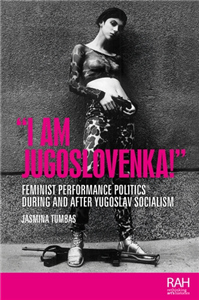
"I am Jugoslovenka!"
Feminist performance politics during and after Yugoslav Socialism
by Jasmina Tumbas, Amelia Jones, Marsha Meskimmon
"I am Jugoslovenka" argues that queer-feminist artistic and political resistance were paradoxically enabled by socialist Yugoslavia's unique history of patriarchy and women's emancipation. Spanning performance and conceptual art, video works, film and pop music, lesbian activism and press photos of female snipers in the Yugoslav wars, the book analyses feminist resistance in a range of performative actions that manifest the radical embodiment of Yugoslavia's anti-fascist, transnational and feminist legacies. It covers celebrated and lesser-known artists from the 1970s to today, including Marina Abramovic, Sanja Ivekovic, Vlasta Delimar, Tanja Ostojic, Selma Selman and Helena Janecic, along with music legends Lepa Brena and Esma Redzepova. "I am Jugoslovenka" tells a unique story of women's resistance through the intersection of feminism, socialism and nationalism in East European visual culture.
-
Trusted Partner
-
Trusted Partner
 Business, Economics & LawJanuary 2022
Reclaiming economics for future generations
by Lucy Ambler, Joe Earle, Nicola Scott, Julie Froud
-
Trusted Partner
 August 1996
Integration and Adjustment of Global Economies.
Direct Investment, Financial Institutions, and International Business Policies.
by Herausgegeben von Matsugi, Takashi; Herausgegeben von Oberhauser, Alois; Herausgegeben von Schober, Franz
-
Trusted Partner
-
Trusted Partner
 Humanities & Social SciencesJuly 2025
Unhappy mothers
Women, motherhood and social change in postwar Britain
by Sarah Crook
In the decades following the Second World War, mothers' experiences of loneliness, boredom and unhappiness were increasingly widely acknowledged. The language of postnatal depression came to be attached to this, but mothers organised around their own discontent in ways that challenged the medical model. Unhappy mothers draws attention to the social, political, and professional contexts within which knowledge about unhappy mothering developed. Drawing upon an extensive range of archival material, the book addresses themes around expertise, feminism, and the value given to lived experience.
-
Trusted Partner
-
Trusted Partner

 Children's & YA
The Barefoot Crew and the Stolen Granny
by Jörg Steinleitner/ Daniela Kohl
Something smells of adventure: summer holidays in the country can be like a whodunnit – where else can you find a missing Granny together with a real treasure and eight bare feet? Jörg Steinleitner brings his readers a true sense of well-being, in a world full of adventure. With varied and powerful illustrations by bestselling illustrator Daniela Kohl. Whoever thinks that summer holidays in the village are boring is mistaken: on the very first day of the holidays, Tanne’s Granny Schnitzel disappears without trace. It’s a good job that Corvin (9), Kiki (10), Ben (10) and Tanne (11) were just about to form a gang: the Barefoot Crew. And soon they have more than just bare feet and a kidnapped Granny to contend with – there’s also a real treasure! A hugely exciting criminal case with a breathtaking natural backdrop, together with varied feel-good factors that prompt readers to dream, discover and share in the story’s thrills. Best-suited for boys and girls aged 8+.


