
Your Search Results
-

-

Aelurus Publishing / Impress Books
An independent publishing house with a small but passionate team, newly focused on the voices of the marginalised.
View Rights Portal
-
Promoted Content

 Humanities & Social SciencesMarch 2017
Imperial cities
Landscape, display and identity
by Felix Driver, David Gilbert
Imperial cities explores the influence of imperialism in the landscapes of modern European cities including London, Paris, Rome, Vienna, Marseilles, Glasgow and Seville. Examines large-scale architectural schemes and monuments, including the Queen Victoria Memorial in London and the Vittoriano in Rome. Focuses on imperial display throughout the city, from spectacular exhibitions and ceremonies, to more private displays of empire in suburban gardens. Cconsiders the changing cultural and political identities in the imperial city, looking particularly at nationalism, masculinity and anti-imperialism.
-
Promoted Content
 Humanities & Social SciencesFebruary 2017
Cultures and caricatures of British imperial aviation
Passengers, pilots, publicity
by Gordon Pirie, Andrew Thompson, John M. MacKenzie
The new activity of trans-continental civil flying in the 1930s is a useful vantage point for viewing the extension of British imperial attitudes and practices. Cultures and caricatures of British imperial aviation examines the experiences of those (mostly men) who flew solo or with a companion (racing or for leisure), who were airline passengers (doing colonial administration, business or research), or who flew as civilian air and ground crews. For airborne elites, flying was a modern and often enviable way of managing, using and experiencing empire. On the ground, aviation was a device for asserting old empire: adventure and modernity were accompanied by supremacism. At the time, however, British civil imperial flying was presented romantically in books, magazines and exhibitions. Eighty years on, imperial flying is still remembered, reproduced and re-enacted in caricature.
-
 Trusted Partner
-
Trusted Partner
 Humanities & Social SciencesJuly 2023
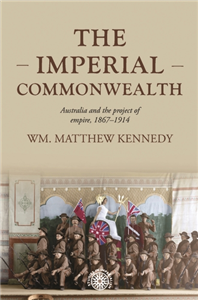
The imperial Commonwealth
Australia and the project of empire, 1867-1914
by Wm. Matthew Kennedy
From the late 1800s to the early 1900s, Australian settler colonists mobilised their unique settler experiences to develop their own vision of what 'empire' was and could be. Reinterpreting their histories and attempting to divine their futures with a much heavier concentration on racialized visions of humanity, white Australian settlers came to believe that their whiteness as well as their Britishness qualified them for an equal voice in the running of Britain's imperial project. Through asserting their case, many soon claimed that, as newly minted citizens of a progressive and exemplary Australian Commonwealth, white settlers such as themselves were actually better suited to the modern task of empire. Such a settler political cosmology with empire at its center ultimately led Australians to claim an empire of their own in the Pacific Islands, complete with its own, unique imperial governmentality.
-
Trusted Partner
 Humanities & Social SciencesMarch 2017
Gender and imperialism
by Clare Midgley
This book marks an important new intervention into a vibrant area of scholarship, creating a dialogue between the histories of imperialism and of women and gender. By engaging critically with both traditional British imperial history and colonial discourse analysis, the essays demonstrate how feminist historians can play a central role in creating new histories of British imperialism. Chronologically, the focus is on the late eighteenth to early twentieth centuries, while geographically the essays range from the Caribbean to Australia and span India, Africa, Ireland and Britain itself. Topics explored include the question of female agency in imperial contexts, the relationships between feminism and nationalism, and questions of sexuality, masculinity and imperial power.
-
Trusted Partner
 Humanities & Social SciencesMarch 2017
The harem, slavery and British imperial culture
Anglo-Muslim relations in the late nineteenth century
by Diane Robinson-Dunn
This book focuses on British efforts to suppress the traffic in female slaves destined for Egyptian harems during the late-nineteenth century. It considers this campaign in relation to gender debates in England, and examines the ways in which the assumptions and dominant imperialist discourses of these abolitionists were challenged by the newly-established Muslim communities in England, as well as by English people who converted to or were sympathetic with Islam. While previous scholars have treated antislavery activity in Egypt first and foremost as an extension of earlier efforts to abolish plantation slavery in the New World, this book considers it in terms of encounters with Islam during a period which it argues marked a new departure in Anglo-Muslim relations. This approach illuminates the role of Islam in the creation of English national identities within the global cultural system of the British Empire. This book would appeal to those with an interest in British imperial history; Islam; gender, feminism, and women's studies; slavery and race; the formation of national identities; global processes; Orientalism; and Middle Eastern studies.
-
Trusted Partner
 Colonialism & imperialismJuly 2003
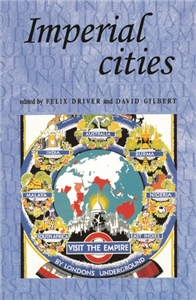
Imperial cities
Landscape, display and identity
by Edited by Felix Driver and David Gilbert
Imperial cities explores the influence of imperialism in the landscapes of modern European cities including London, Paris, Rome, Vienna, Marseilles, Glasgow and Seville. Examines large-scale architectural schemes and monuments, including the Queen Victoria Memorial in London and the Vittoriano in Rome. Focuses on imperial display throughout the city, from spectacular exhibitions and ceremonies, to more private displays of empire in suburban gardens. Cconsiders the changing cultural and political identities in the imperial city, looking particularly at nationalism, masculinity and anti-imperialism.
-
Trusted Partner
 Humanities & Social SciencesFebruary 2017
Welsh missionaries and British imperialism
The Empire of Clouds in north-east India
by Andrew May
In 1841, the Welsh sent their first missionary, Thomas Jones, to evangelise the tribal peoples of the Khasi Hills of north-east India. This book follows Jones from rural Wales to Cherrapunji, the wettest place on earth and now one of the most Christianised parts of India. As colonised colonisers, the Welsh were to have a profound impact on the culture and beliefs of the Khasis. The book also foregrounds broader political, scientific, racial and military ideologies that mobilised the Khasi Hills into an interconnected network of imperial control. Its themes are universal: crises of authority, the loneliness of geographical isolation, sexual scandal, greed and exploitation, personal and institutional dogma, individual and group morality. Written by a direct descendant of Thomas Jones, it makes a significant contribution in orienting the scholarship of imperialism to a much-neglected corner of India, and will appeal to students of the British imperial experience more broadly.
-
Trusted Partner
Humanities & Social SciencesMarch 2017
Imperialism and the natural world
by John M. MacKenzie
Imperial power, both formal and informal, and research in the natural sciences were closely dependent in the nineteenth century. This book examines a portion of the mass-produced juvenile literature, focusing on the cluster of ideas connected with Britain's role in the maintenance of order and the spread of civilization. It discusses the political economy of Western ecological systems, and the consequences of their extension to the colonial periphery, particularly in forms of forest conservation. Progress and consumerism were major constituents of the consensus that helped stabilise the late Victorian society, but consumerism only works if it can deliver the goods. From 1842 onwards, almost all major episodes of coordinated popular resistance to colonial rule in India were preceded by phases of vigorous resistance to colonial forest control. By the late 1840s, a limited number of professional positions were available for geologists in British imperial service, but imperial geology had a longer pedigree. Modern imperialism or 'municipal imperialism' offers a broader framework for understanding the origins, long duration and persistent support for overseas expansion which transcended the rise and fall of cabinets or international realignments in the 1800s. Although medical scientists began to discern and control the microbiological causes of tropical ills after the mid-nineteenth century, the claims for climatic causation did not undergo a corresponding decline. Arthur Pearson's Pearson's Magazine was patriotic, militaristic and devoted to royalty. The book explores how science emerged as an important feature of the development policies of the Colonial Office (CO) of the colonial empire.
-
Trusted Partner
-
Trusted Partner
 Humanities & Social SciencesOctober 2025
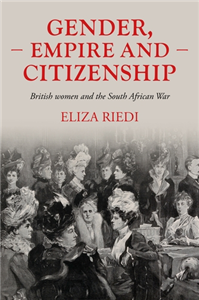
Gender, empire and citizenship
British women and the South African War
by Eliza Riedi
When the South African War broke out in 1899 British middle-class women, already well-integrated into party politics and public life, were quick to respond. Women across a wide political spectrum, from jingo imperialists to 'pro-Boers', actively engaged in public debates over the war through meetings, speeches, petitions, electioneering, and the press. From the start pacifist women made important contributions to the anti-war movement, later providing vital backing for Emily Hobhouse's campaign to reform the concentration camps. Women imperialists supported the war effort through military philanthropy and imperial propaganda. Under Millicent Garrett Fawcett the government-appointed Ladies' Committee transformed the camps, while hundreds of British women were recruited as camps teachers and nurses. Fundamentally shaped by ideologies of gender and race, women's responses to this imperial war continued to influence women's public action and discourses of citizenship into the First World War.
-
Trusted Partner
 Humanities & Social SciencesJune 2012
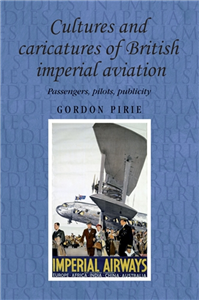
Cultures and caricatures of British imperial aviation
Passengers, pilots, publicity
by Gordon Pirie, Andrew Thompson, John Mackenzie
The new activity of trans-continental civil flying in the 1930s is a useful vantage point for viewing the extension of British imperial attitudes and practices. Cultures and caricatures of British imperial aviation examines the experiences of those (mostly men) who flew solo or with a companion (racing or for leisure), who were airline passengers (doing colonial administration, business or research), or who flew as civilian air and ground crews. For airborne elites, flying was a modern and often enviable way of managing, using and experiencing empire. On the ground, aviation was a device for asserting old empire: adventure and modernity were accompanied by supremacism. At the time, however, British civil imperial flying was presented romantically in books, magazines and exhibitions. Eighty years on, imperial flying is still remembered, reproduced and re-enacted in caricature. ;
-
Trusted Partner
 Colonialism & imperialismSeptember 2015
Imperial expectations and realities
El Dorados, utopias and dystopias
by Edited by Andrekos Varnava
This volume explores how imperial powers established and expanded their empires through decisions that were often based on exaggerated expectations and wishful thinking, rather than on reasoned and scientific policies. It explores these exaggerations through the concepts of El Dorado, utopias and dystopias - undertakings based on irrational perceived values - in case studies from across the sixteenth to the twentieth centuries, and incorporates imperial traditions including Scottish, British, French, German, Italian and American. Various colonial spaces are considered, from the Mediterranean, Middle East, Africa, Australia, Asia and the Americas, and in doing so, the contributors offer new insights into the nature of imperialism and colonial settlement.
-
Trusted Partner
 Humanities & Social SciencesJuly 2005
Late Imperial Russia
Problems and prospects
by Ian Thatcher
This volume offers a detailed examination of the stability of the late imperial regime in Russia. Students and scholars will appreciate the lively summaries of the latest scholarship in political, economic, social, cultural, and international history. Accessible yet insightful, contributions cover the historiography of complex topics such as peasants, workers, revolutionaries, foreign relations, and Nicholas II. In addition, there are original studies of some of the leading intellectuals of the time. The late imperial economy is examined through the writings of Tugan-Baranovsky. There is an account of M. N. Pokrovskii's radical interpretation of late imperial Russia's historical path of development. The state of the Russian theatre is studied through the lives of theatrical impresarios. Each chapter also highlights a unique interpretation, suggesting new lines of inquiry and research. This book will be compulsory reading for students of Russian and European history of the late nineteenth and early twentieth centuries seeking to better understand why Tsarism collapsed in 1917. ;
-
Trusted Partner
Humanities & Social SciencesMarch 2017
Popular imperialism and the military, 1850-1950
by John M. MacKenzie
Colonial war played a vital part in transforming the reputation of the military and placing it on a standing equal to that of the navy. The book is concerned with the interactive culture of colonial warfare, with the representation of the military in popular media at home, and how these images affected attitudes towards war itself and wider intellectual and institutional forces. It sets out to relate the changing image of the military to these fundamental facts. For the dominant people they were an atavistic form of war, shorn of guilt by Social Darwinian and racial ideas, and rendered less dangerous by the increasing technological gap between Europe and the world. Attempts to justify and understand war were naturally important to dominant people, for the extension of imperial power was seldom a peaceful process. The entertainment value of war in the British imperial experience does seem to have taken new and more intensive forms from roughly the middle of the nineteenth century. Themes such as the delusive seduction of martial music, the sketch of the music hall song, powerful mythic texts of popular imperialism, and heroic myths of empire are discussed extensively. The first important British war correspondent was William Howard Russell (1820-1907) of The Times, in the Crimea. The 1870s saw a dramatic change in the representation of the officer in British battle painting. Up to that point it was the officer's courage, tactical wisdom and social prestige that were put on display.
-
Trusted Partner
Literature & Literary StudiesMarch 2017
Imperialism and juvenile literature
by Jeffrey Richards
Popular culture is invariably a vehicle for the dominant ideas of its age. Never was this truer than in the late-nineteenth and early twentieth centuries, when it reflected the nationalist and imperialist ideologies current throughout Europe. It both reflects popular attitudes, ideas and preconceptions and it generates support for selected views and opinions. This book examines the various media through which nationalist ideas were conveyed in late-Victorian and Edwardian times: in the theatre, "ethnic" shows, juvenile literature, education and the iconography of popular art. It seeks to examine in detail the articulation and diffusion of imperialism in the field of juvenile literature by stressing its pervasiveness across boundaries of class, nation and gender. It analyses the production, distribution and marketing of imperially-charged juvenile fiction, stressing the significance of the Victorians' discovery of adolescence, technological advance and educational reforms as the context of the great expansion of such literature. An overview of the phenomenon of Robinson Crusoe follows, tracing the process of its transformation into a classic text of imperialism and imperial masculinity for boys. The imperial commitment took to the air in the form of the heroic airmen of inter-war fiction. The book highlights that athleticism, imperialism and militarism become enmeshed at the public schools. It also explores the promotion of imperialism and imperialist role models in fiction for girls, particularly Girl Guide stories.
-
Trusted Partner
 Humanities & Social SciencesMay 2026
India and imperial vulnerability
Knowledge, aesthetics and subjects in British discourses of disaster, 1763-1939
by Pramod K Nayar
This study of famines, earthquakes and cyclones in British India, 1770-1934, moves from the aesthetics of representation through the knowledge cultures that sprang up around the disasters and finally the construction of the helpless native and the labouring Englishman. It studies the creation of imperial networks of knowledge acquisition, codification and training, as well as the employment of certain aesthetic modes when speaking of the land's disasters. It pays attention to the categorization of the disaster victims and the work of the Englishman in understanding and helping the native. The study shows how the disasters were shaped and were shaped by imperial discourses of knowledge and learning, aesthetics of fright and horror and the labouring English.
-
Trusted Partner
 Humanities & Social SciencesMarch 2017
Britain in China
by Robert Bickers
This is a study of Britain's presence in China both at its peak, and during its inter-war dissolution in the face of assertive Chinese nationalism and declining British diplomatic support. Using archival materials from China and records in Britain and the United States, the author paints a portrait of the traders, missionaries, businessmen, diplomats and settlers who constituted "Britain-in-China", challenging our understanding of British imperialism there. Bickers argues that the British presence in China was dominated by urban settlers whose primary allegiance lay not with any grand imperial design, but with their own communities and precarious livelihoods. This brought them into conflict not only with the Chinese population, but with the British imperial government. The book also analyzes the formation and maintenance of settler identities, and then investigates how the British state and its allies brought an end to the reign of freelance, settler imperialism on the China coast. At the same time, other British sectors, missionary and business, renegotiated their own relationship with their Chinese markets and the Chinese state and distanced themselves from the settler British.
-
Trusted Partner
-
Trusted Partner
 Humanities & Social SciencesFebruary 2017
Visions of empire
Patriotism, popular culture and the city, 1870–1939
by Brad Beaven
The emergence of a vibrant imperial culture in British society from the 1890s both fascinated and appalled contemporaries. It has also consistently provoked controversy among historians. This book offers a ground-breaking perspective on how imperial culture was disseminated. It identifies the important synergies that grew between a new civic culture and the wider imperial project. Beaven shows that the ebb and flow of imperial enthusiasm was shaped through a fusion of local patriotism and a broader imperial identity. Imperial culture was neither generic nor unimportant but was instead multi-layered and recast to capture the concerns of a locality. The book draws on a rich seam of primary sources from three representative English cities. These case studies are considered against an extensive analysis of seminal and current historiography. This renders the book invaluable to those interested in the fields of imperialism, social and cultural history, popular culture, historical geography and urban history.



