Your Search Results

      • Infinity Books

        Infinity Books is the publishing division of Infinity Education.  We currently publish over 85 titles across a range of subject areas – covering specialised admissions tests, examination techniques, personal statement guides, plus everything else you need to improve your chances of getting on to competitive courses such as medicine and law, as well as into universities such as Oxford and Cambridge. Our books are currently all written by authors who have been through the admissions process and have scored within the top ten per cent of applicants.  We have put together fully worked answers to thousands of questions across many subjects, as well as providing hints and tips on essays and time-saving techniques, and an exhaustive collection of past papers.   Outside of publishing we also operate a highly successful tuition division, UniAdmissions.  This company was founded in 2013 by Dr Rohan Agarwal and Dr David Salt, both Cambridge Medical graduates with several years of tutoring experience.  Since then, every year, hundreds of applicants and schools work with us on our programmes. Through the programmes we offer, we deliver expert tuition, exclusive course places, online courses, best-selling textbooks and much more. With a team of over 1,000 Oxbridge tutors and a proven track record, UniAdmissions have quickly become the UK’s number one admissions company. Visit and engage with us at: Books website: www.infinitybooks.co.uk Books Twitter: @infinitybooks7   Programmes website: www.uniadmissions.co.uk

        View Rights Portal
      • Infobase Publishing

        For 80 years, Infobase has created and curated exceptional through Imprints such as from Facts on File, Bloom's, Chelsea House, Fergusons and Omnigraphics.

        View Rights Portal

      • Trusted Partner
        Humanities & Social Sciences
        May 2026

        Sexual violence in racial capitalism

        by Alison Phipps

        Most texts on sexual violence treat capitalism as backdrop or afterthought. In contrast, political economy is the core of this book. Phipps explores the centrality of sexual violence to racial capitalist processes: the enclosure of bodies, the extraction of labour, the expropriation of land and resources, and the disposal of unwanted populations. Importantly, she argues that both sexual violence and sexual fear create social control and surplus value. Through a framework called the coloniality of sexual violence, Phipps conjoins acts of sexual violence and ideas of sexual threat in an analysis of gendered and raced property relations and the split colonial/modern psyche. She argues that fantasies of sexual danger represent the infolded violence of racial capitalism, which is why fear of revolution is often fear of rape. Revolution, however, is always imminent: violence is necessary because power is incomplete.

      • Trusted Partner
        Humanities & Social Sciences
        July 2026

        The promise of violence

        Collective memory and the making of revolutionaries in Iran

        by Younes Saramifar

        Revolutionaries in Iran choose to identify memories of the Iran-Iraq War as their 'collective' memory to mark the war era as the temporal reference in history - the time of times, or sometimes even a time beyond time. Can a sole event and its violence truly become - for some - the all-encompassing, constituting element of history and memory? This book pursues this question and follows revolutionaries in the maze of 'collective' memory to offer a temporal account of the breakdown of happenings - as well as the mending of happenings through the force of remembrance.

      • Trusted Partner
        Humanities & Social Sciences
        November 2025

        The lure of violence

        The Right and the Edwardian crisis in Britain, 1901–14

        by Alessandro Saluppo

        This book provides a comprehensive examination of conservative and right-wing responses to the Edwardian crisis in Britain (1901-1914). It stresses how the upsurge of right-wing extremism within and outside the Conservative party was accompanied by the crystallization of a culture of violence. The preparation, instigation or threatening of violent acts against all those who appeared to threaten the organic nature and vigour of the national community found expression in a myriad of ultra-nationalist organisations, citizen policing groups, private military associations, and paramilitary formations. The book innovatively reconstructs the belief system and the practices of those right-wing actors, which pursued the goals of military preparedness, "racial regeneration" and imperial unity, while defending the amorphous goals of authority, order and 'national efficiency' against the forces of radicalism and socialism. The book helps to cast light on the bellicose and authoritarian reflexes that traversed British conservatism in the turbulent prewar years.

      • Trusted Partner
      • Trusted Partner
        Humanities & Social Sciences
        November 2022

        The violence of colonial photography

        by Daniel Foliard

      • Trusted Partner
      • Trusted Partner
        Humanities & Social Sciences
        December 2014

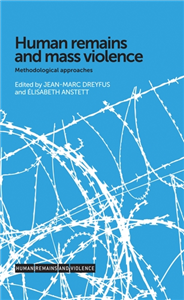
        Human remains and mass violence

        Methodological approaches

        by Jean-Marc Dreyfus, Élisabeth Anstett, Jean-Marc Dreyfus, Élisabeth Anstett

        This book outlines for the first time in a single volume the theoretical and methodological tools for a study of human remains resulting from episodes of mass violence and genocide. Despite the highly innovative and contemporary research into both mass violence and the body, the most significant consequence of conflict - the corpse - remains absent from the scope of existing research. Why have human remains hitherto remained absent from our investigation, and how do historians, anthropologists and legal scholars, including specialists in criminology and political science, confront these difficult issues? By drawing on international case studies including genocides in Rwanda, the Khmer Rouge, Argentina, Russia and the context of post-World War II Europe, this ground-breaking edited collection opens new avenues of research. Multidisciplinary in scope, this volume will appeal to readers interested in an understanding of mass violence's aftermath, including researchers in history, anthropology, sociology, law, politics and modern warfare. ;

      • Trusted Partner
        Society & culture: general
        May 2017

        Human remains and mass violence

        Methodological approaches

        by Edited by Jean-Marc Dreyfus, Élisabeth Anstett

        This book outlines for the first time in a single volume the theoretical and methodological tools for a study of human remains resulting from episodes of mass violence and genocide. Despite the highly innovative and contemporary research into both mass violence and the body, the most significant consequence of conflict - the corpse - remains absent from the scope of existing research. Why have human remains hitherto remained absent from our investigation, and how do historians, anthropologists and legal scholars, including specialists in criminology and political science, confront these difficult issues? By drawing on international case studies including genocides in Rwanda, the Khmer Rouge, Argentina, Russia and the context of post-World War II Europe, this ground-breaking edited collection opens new avenues of research. Multidisciplinary in scope, this volume will appeal to readers interested in an understanding of mass violence's aftermath, including researchers in history, anthropology, sociology, law, politics and modern warfare. The research program leading to this publication has received funding from the European Research Council under the European Union's Seventh Framework Programme (FP/2007-2013) / ERC Grant Agreement n° 283-617.

      • Trusted Partner
      • Trusted Partner
        Humanities & Social Sciences
        March 2017

        Human remains and mass violence

        Methodological approaches

        by Jean-Marc Dreyfus, Jean-Marc Dreyfus, Élisabeth Anstett, Élisabeth Anstett

        This book outlines for the first time in a single volume the theoretical and methodological tools for a study of human remains resulting from episodes of mass violence and genocide. Despite the highly innovative and contemporary research into both mass violence and the body, the most significant consequence of conflict - the corpse - remains absent from the scope of existing research. Why have human remains hitherto remained absent from our investigation, and how do historians, anthropologists and legal scholars, including specialists in criminology and political science, confront these difficult issues? By drawing on international case studies including genocides in Rwanda, the Khmer Rouge, Argentina, Russia and the context of post-World War II Europe, this ground-breaking edited collection opens new avenues of research. Multidisciplinary in scope, this volume will appeal to readers interested in an understanding of mass violence's aftermath, including researchers in history, anthropology, sociology, law, politics and modern warfare. The research program leading to this publication has received funding from the European Research Council under the European Union's Seventh Framework Programme (FP/2007-2013) / ERC Grant Agreement n° 283-617.

      • Trusted Partner
        Humanities & Social Sciences
        January 2018

        Law and violence

        by Christoph Menke, David Owen

      • Trusted Partner
        Humanities & Social Sciences
        March 2021

        African cities and collaborative futures

        Urban platforms and metropolitan logistics

        by Michael Keith, Andreza Aruska de Souza Santos, Susan Parnell

        This groundbreaking volume brings together scholars from across the globe to discuss the infrastructure, energy, housing, safety and sustainability of African cities, as seen through local narratives of residents. Drawing on a variety of fields and extensive first-hand research, the contributions offer a fresh perspective on some of the most pressing issues confronting urban Africa in the twenty-first century. At a time when the future of the region as a whole will be determined in large part by its cities, the implications of these developments are profound. With case studies from cities in Ethiopia, Kenya, Malawi, Niger, Nigeria, South Africa and Tanzania, this volume explores how the rapid growth of African cities is reconfiguring the relationship between urban social life and its built forms. While the most visible transformations in cities today can be seen as infrastructural, these manifestations are cultural as well as material, reflecting the different ways in which the city is rationalised, economised and governed. How can we 'see like a city' in twenty-first-century Africa, understanding the urban present to shape its future? This is the central question posed throughout this volume, with a practical focus on how academics, local decision makers and international practitioners can collaborate to meet the challenge of rapid growth, environmental pressures and resource gaps.

      • Trusted Partner
      • Trusted Partner
        Humanities & Social Sciences
        August 2012

        Justifying violence

        Communicative ethics and the use of force in Kosovo

        by Naomi Head, Peter Lawler, Emmanuel Pierre Guittet

        When is the use of force for humanitarian purposes legitimate? The book examines this question through one of the most controversial examples of humanitarian intervention in the post Cold War period: the 1999 NATO intervention in Kosovo. Justifying Violence applies a critical theoretical approach to an interrogation of the communicative practices which underpin claims to legitimacy for the use of force by actors in international politics. Drawing on the theory of communicative ethics, the book develops an innovative conceptual framework which contributes a critical communicative dimension to the question of legitimacy that extends beyond the moral and legal approaches so often applied to the intervention in Kosovo. The empirical application of communicative ethics offers a provocative and nuanced account which contests conventional interpretations of the legitimacy of NATO's intervention. ;

      • Trusted Partner
        Humanities & Social Sciences
        January 2025

        England’s military heartland

        Preparing for war on Salisbury Plain

        by Vron Ware, Antonia Lucia Dawes, Mitra Pariyar, Alice Cree

        What is it like to live next door to a British Army base? England's military heartland provides an eye-opening account of the sprawling military presence on Salisbury Plain, drawing on a wide range of voices from both sides of the divide. Targeted for expansion under government plans to reorganise the UK's global defence estate, the Salisbury 'super garrison' offers a unique opportunity to explore the impact of the military footprint in a particular place. But this is no ordinary environment: as well as being the world-famous site of Stonehenge, the grasslands of Salisbury Plain are home to rare plants and wildlife. How does the army take responsibility for conserving this unique landscape as it trains young men and women to use lethal weapons? Are its claims that its presence is a positive for the environment anything more than propaganda? This book investigates these questions against the backdrop of a historic landscape inscribed with the legacy of perpetual war.

      • Trusted Partner
        Humanities & Social Sciences
        March 2024

        A savage song

        Racist violence and armed resistance in the early twentieth-century U.S.–Mexico Borderlands

        by Margarita Aragon

        This book examines key moments in which collective and state violence invigorated racialized social boundaries around Mexican and African Americans in the United States, and in which they violently contested them. Bringing anti-Mexican violence into a common analytical framework with anti-black violence, A savage song examines several focal points in this oft-ignored history, including the 1915 rebellion of ethnic Mexicans in South Texas, and its brutal repression by the Texas Rangers and the 1917 mutiny of black soldiers of the 24th Infantry Regiment in Houston, Texas, in response to police brutality. Aragon considers both the continuities and stark contrasts across these different moments: how were racialized constructions of masculinity differently employed? How did African and Mexican American men, including those in uniform, respond to the violence of racism? And how was their resistance, including their claims to manhood and nation, understood by law enforcement, politicians, and the press? Building on extensive archival research, the book examines how African and Mexican American men have been constructed as 'racial problems', investigating, in particular, their relationship with law enforcement and ideas about black and Mexican criminality.

      • Trusted Partner
        Humanities & Social Sciences
        June 2023

        Collective emotions and political violence

        by Maéva Clément

      • Trusted Partner
        Humanities & Social Sciences
        January 2025

        England’s military heartland

        Preparing for war on Salisbury Plain

        by Vron Ware, Antonia Dawes, Mitra Pariyar, Alice Cree

        A considered investigation of a long-standing army base's impact on the British countryside. What is it like to live next door to a British Army base? Beyond the barracks provides an eye-opening account of the sprawling military presence on Salisbury Plain, drawing on a wide range of voices from both sides of the divide. Targeted for expansion under government plans to reorganise the UK's global defence estate, the Salisbury 'super garrison' offers a unique opportunity to explore the impact of the military footprint in a particular place. But this is no ordinary environment: as well as being the world-famous site of Stonehenge, the grasslands of Salisbury Plain are home to rare plants and wildlife. How does the army take responsibility for conserving this unique landscape as it trains young men and women to use lethal weapons? Are its claims that its presence is a positive for the environment anything more than propaganda? Beyond the barracks investigates these questions against the backdrop of a historic landscape inscribed with the legacy of perpetual war.

      Subscribe to our

      newsletter