
Your Search Results

-
Promoted Content

 Humanities & Social SciencesJanuary 2026
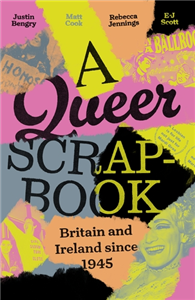
A queer scrapbook
Britain and Ireland since 1945
by Justin Bengry, Matt Cook, Rebecca Jennings, E-J Scott
A beautifully illustrated compendium of LGBTIQ+ life. A queer scrapbook offers a treasure trove of LGBTIQ+ histories from across Britain and Ireland. Packed with materials, from interviews and newspaper articles to photographs and flyers, the book explores urban, rural and regional queer life since 1945. Commentaries and short essays introduce a changing queer landscape, spotlighting four broad themes: home and family, sex and socialising, arts and culture and politics and activism. The book delves into the meaning and experiences of domesticity and parenting and explores the sometimes unexpected places LGBTIQ+ people met to have fun. It examines the importance of creative work in forming community and identity and shows how people fought injustice and advocated for equal rights. Collecting has been a way for the marginalised to explore and assert identity and community. A queer scrapbook vividly illustrates the diversity of queer and trans lives across the British and Irish isles since the Second World War.
-
Promoted Content
 Humanities & Social SciencesJune 2025
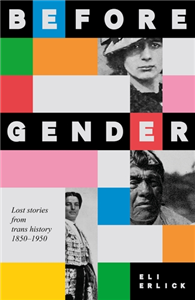
Before Gender
Lost stories from trans history 1850-1950
by Eli Erlick
Discover the trailblazing lives of thirty trans people who will radically change everything you've been told about transgender history. Highlighting influential individuals from 1850 to 1950 who are all but unknown today, Eli Erlick shares thirty remarkable stories from romance to rebellion and mystery to murder. These narratives chronicle the grit, joy and survival of trans people long before gender became an everyday term. Organised into four parts, paralleling today's controversies over gender identity - kids, activists, workers and athletes - Before Gender introduces figures whose forgotten stories transform the discussion. These ground-breaking histories include two of the first teens to access gender-affirming medical treatment, a countess who instigated an LGBTQ+ riot forty years before Stonewall and the greatest female billiards player of the 1910s. Bold and visionary, Erlick's debut uncovers these lost stories from the depths of the archives to narrate trans lives in a way that has never been attempted before.
-
 Trusted Partner
 Business, Economics & LawJanuary 2024
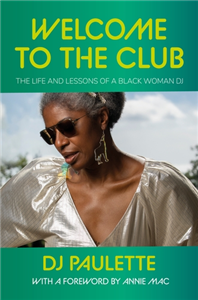
Welcome to the club
The life and lessons of a Black woman DJ
by DJ Paulette
In Welcome to the club, Manchester legend DJ Paulette shares the highs, lows and lessons of a thirty-year music career, with help from some famous friends. One of the Haçienda's first female DJs, Paulette has scaled the heights of the music industry, playing to crowds of thousands all around the world, and descended to the lows of being unceremoniously benched by COVID-19, with no chance of furlough and little support from the government. Here she tells her story, offering a remarkable view of the music industry from a Black woman's perspective. Behind the core values of peace, love, unity and respect, dance music is a world of exclusion, misogyny, racism and classism. But, as Paulette reveals, it is also a space bursting at the seams with powerful women. Part personal account, part call to arms, Welcome to the club exposes the exclusivity of the music industry while seeking to do justice to the often invisible women who keep the beat going.
-

 Business, Economics & LawApril 1905
The Acquisitive Society
by R.H. Tawney
This 1926 survey, written by a distinguished social and economic historian, examines the role of religion in the rise of capitalism. Arguing that material acquisitiveness is morally wrong and a corrupting social influence, the author draws upon his profound knowledge of labor and politics to show how concentrated wealth distorts economic policies. Colorful but credible, this study offers a timeless vision of alternative means toward a just economic, social, and intellectual order.
-
Trusted Partner

 2019
2019History of the Throw-Away Society
The drawback of consumption
by Wolfgang König
Sooner or later everything is thrown away. In the consumer society, however, usable and serviceable products that may be as good as new are also thrown away. Such behaviour is the result of a long-term process that has developed over a period of one-and-a-half centuries. The change was led by the USA, and the Federal Republic of Germany followed. It started at the turn of the last century with personal hygiene: articles such as toilet paper, sanitary towels, nappies and paper handkerchiefs. After the Second World War, a large number of other disposable articles were soon added, such as paper cups and plastic dishes, nylon stockings and pens, razor blades, beverage cans and much more besides. Wolfgang König shows how business and consumers have together made throwing things away perfectly normal – and discusses how the throwaway society may be overcome.
-
Trusted Partner
 Humanities & Social SciencesJanuary 2013
Crime, Law and Society in the Later Middle Ages
by Anthony Musson, Edward Powell
This book provides an accessible collection of translated legal sources through which the exploits of criminals and developments in the English criminal justice system (c.1215-1485) can be studied. Drawing on the wealth of archival material and an array of contemporary literary texts, it guides readers towards an understanding of prevailing notions of law and justice and expectations of the law and legal institutions. Tensions are shown emerging between theoretical ideals of justice and the practical realities of administering the law during an era profoundly affected by periodic bouts of war, political in-fighting, social dislocation and economic disaster. Introductions and notes provide both the specific and wider legal, social and political contexts in addition to offering an overview of the existing secondary literature and historiographical trends. This collection affords a valuable insight into the character of medieval governance as well as revealing the complex nexus of interests, attitudes and relationships prevailing in society during the later Middle Ages.
-
Trusted Partner
 Humanities & Social SciencesApril 2026
Elites in civil society
A comparative perspective
by Niklas Altermark, Malin Arvidson, Jayeon Lee, Roberto Scaramuzzino
Where civil society is often seen as a driving force for equality, this book addresses a challenging topic: civil society elites. Drawing on a comprehensive study of Italy, Poland, Sweden, and the UK, this ground-breaking research investigates the often-overlooked power structures within civil society. By combining elite studies with civil society research, the book uncovers how a distinct civil society elite emerges and how it interacts with leaders in politics and business. The findings reveal a fascinating paradox. While this elite may be a powerful engine for social change, its integration into wider power circles risks reproducing the very inequalities it seeks to dismantle. By exploring how this elite can become disconnected from its grassroots, the book provides essential insights into the future of civil society and its democratic promise.
-
Trusted Partner
 Humanities & Social SciencesJanuary 2018
Noble society
Five lives from twelfth-century Germany
by Jonathan R. Lyon
This book provides scholars and students alike with a set of texts that can deepen their understanding of the culture and society of the twelfth-century German kingdom. The sources translated here bring to life the activities of five noblemen and noblewomen from Rome to the Baltic coast and from the Rhine River to the Alpine valleys of Austria. To read these five sources together is to appreciate how interconnected political, military, economic, religious and spiritual interests could be for some of the leading members of medieval German society-and for the authors who wrote about them. Whether fighting for the emperor in Italy, bringing Christianity to pagans in what is today northern Poland, or founding, reforming and governing monastic communities in the heartland of the German kingdom, the subjects of these texts call attention to some of the many ways that noble life shaped the world of central medieval Europe.
-
Trusted Partner
 Literature & Literary StudiesOctober 2012
Lesbian Inscriptions in Francophone Society and Culture
by Edited by Renante Güntner and Wendy Michallat
This book represents the first comprehensive collection of essays in English dedicated entirely to the study of lesbian inscriptions in francophone society and culture. Spanning the period from the early nineteenth to the twenty-first century, the volume offers a range of interdisciplinary perspectives on ways in which lesbianism has been represented and represented itself, with essays on poetry and the novel, contemporary film and television, photography and architecture. These essays will appeal to students and scholars of gender studies and French literature and culture. ;
-
Trusted Partner
-
Trusted Partner
 Humanities & Social SciencesMarch 2017
Science and society in southern Africa
by Saul Dubow
This collection, dealing with case studies drawn from South Africa, Zimbabwe, Mozambique and Mauritius, examines the relationship between scientific claims and practices, and the exercise of colonial power. It challenges conventional views that portray science as a detached mode of reasoning with the capacity to confer benefits in a more or less even-handed manner. That science has the potential to further the collective good is not fundamentally at issue, but science can also be seen as complicit in processes of colonial domination. Not only did science assist in bolstering aspects of colonial power and exploitation, it also possessed a significant ideological component: it offered a means of legitimating colonial authority by counter-poising Western rationality to native superstition and it served to enhance the self-image of colonial or settler elites in important respects. This innovative volume ranges broadly through topics such as statistics, medicine, eugenics, agriculture, entomology and botany.
-
Trusted Partner
 Humanities & Social SciencesSeptember 2021
Counter-terrorism and civil society
by Scott N. Romaniuk, Emeka Thaddues Njoku
-
Trusted Partner

 Children's & YA
The Candy Guild (1). The Magic Pact
by Tanja Voosen/ Viktoria Gavrilenko
The most magical adventure since the discovery of chocolate! Do you believe in magic and miracles? Everyone in the little town of Belony takes magic and miracles for granted – everyone except Elina, who thinks it’s all a load of nonsense. That is, until her nervous neighbour Charlie happens to get hold of a bar of chocolate that has a very strange effect on her. Suddenly Elina is convinced that Charlie has fallen under a spell. Of all people, it’s shy Robin who comes to the girl’s rescue. He is a member of a Candy Guild family – people who have the ability to create magic sweets that will help others. This is how he knows that only the mysterious Candy Guild can lift the curse on Charlie. With a suitcase full of magic sweets, the three of them set out on a dangerous quest. Because not everyone keeps to the pact that magic sweets should only be used to do good… The Candy Guild. The Magic Pact is the first in a new series of magic-fantasy books for children of 9+ - as enchanting as chocolate and as wild as a Christmas cracker!
-
Trusted Partner
 Children's & YA
The Candy Guild (2). The Lost Recipe
by Tanja Voosen/ Viktoria Gavrilenko
Magical sweets and real miracles? Elina has experienced them both in Belony, and now she can hardly wait to dip deeper into the world of the candy crafters. But it’s not long before a new problem arises, because just before Robin’s first candy crafting examination, his magic tool goes bust. Old Mr Snotty knows where they can get help, and he takes Elina and her friends to Bittersweet Avenue. It quickly becomes clear, though, that not all candy crafters are well disposed towards “ungifted” people. There are also rumours about the return of the mysterious Otherwise Society, which has tried once before to bring down the mighty Candy Guild. When Mr Snotty suddenly disappears without a trace, it’s up to Elina, Charlie and Robin to follow the clues he has left behind for them. They soon realize that there is a reason for his disappearance, because the Otherwise Society is looking for something in particular – and Elina, Charlie and Robin have the key to this something in their hands…
-
Trusted Partner
 Humanities & Social SciencesNovember 2013
The Nine Years' War and the British army 1688–97
The operations in the low countries
by John Childs
Between 1689 and 1697 the British army fought as a member of the Grand Alliance against Louis XIV. Despite the military and political significance of the European conflict, this book is the first historical investigation for over a century dealing with the operations of the principal campaigns in the Low Countries. John Childs begins his comprehensive study by exploring the diplomatic origins of the Nine Years' War. Leading on from this political background, the author then focuses on the detailed organisation of the British, Dutch and other allied armies and the conduct of the operations. The specific campaigns are also examined and in particular the author looks at the strategic and tactical role played by the British. This campaign and operational study of the British army will be of interest to both specialist and general military historians, as well as to political historians. ;
-
Trusted Partner
 Literature & Literary StudiesJanuary 2014
Court and civic society in the Burgundian Low Countries c.1420–1530
by Andrew Brown, Graeme Small
This volume is the first ever attempt to unite and translate some of the key texts which informed Johan Huizinga's famous study of the Burgundian court, The Waning of the Middle Ages, a work which has never gone out of print. It combines these texts with sources that Huizinga did not consider, those that illuminate the wider civic world that the Burgundian court inhabited and the dynamic interaction between court and city. Through these sources, and an introduction offering new perspectives on recent historiography, the book tests whether Huizinga's controversial vision of the period still stands. Covering subjects including ceremonial events, such as the spectacles and gargantuan banquets that made the Burgundian dukes the talk of Europe, the workings of the court, and jousting, archery and rhetoric competitions, the book will appeal to students of late medieval and early modern Europe and to those with wider interests in court culture, ritual and ceremony.
-
Trusted Partner


Kein Bock Club
Warum wir auch mal keine Lust auf Sex haben
by Popov, Maria
Sexuelle Lust gilt als Maßstab für Intimität, Beziehungsqualität und persönliche Erfüllung. Doch was passiert, wenn sie ausbleibt? Wenn wir keinen Bock auf Sex haben, obwohl »eigentlich alles stimmt«? Wenn »Ich bin müde« nur eine Umschreibung für etwas ist, das wir selbst kaum benennen können? Schon in ihrer Jugend hatte Maria Popov nie richtig Bock auf Sex mit Männern und stößt auf ein Wort, das ihr Gefühl zum ersten Mal beschreibt: Asexualität. Aber was heißt das eigentlich genau? In »Kein Bock Club« erzählt die Moderatorin von ihrer ersten Periode, missglückten Flirtversuchen, aufregenden Ohrmassagen – und von der Erleichterung, wenn man merkt: Ich bin mit all diesen Gefühlen nicht allein. Dieses Buch ist für dich, wenn du dich fragst: Warum wird sexuelle Unlust oft als Problem gesehen? Wie beeinflussen gesellschaftliche Erwartungen unser Sexleben? Wieso fühlen sich viele Menschen gezwungen, bestimmten Normen zu entsprechen? Müssen wir wirklich alle feministische Sexgöttinnen sein? Mit Scharfsinn und Humor deckt Maria Popov Mythen rund um Libido, Beziehungen und Sexualität auf. Sie erklärt, wie Lust funktioniert, warum sexuelle Vielfalt mehr ist als nur eine Identitätsfrage ist und was passiert, wenn wir aufhören, Lustlosigkeit als Defizit zu betrachten. »Kein Bock Club« ist eine Einladung, Begehren neu zu denken – zärtlicher, ehrlicher, mutiger.
-
Trusted Partner

 August 2006
Culture Club II
Klassiker der Kulturtheorie
by Martin Ludwig Hofmann, Tobias F. Korta, Sibylle Niekisch
Was heißt »Kultur«? Kaum ein anderer Begriff durchzieht die theoretische Debatte der letzten Jahrzehnte mit solch einer Wucht.Kulturtheorie ist nicht nur zu einem interdisziplinären, sondern auch zu einem internationalen intellektuellen Abenteuer geworden.Auch der zweite Band des Culture Club bietet eine Orientierung in diesem schwer überschaubaren Feld, indem er einen überblick über das jeweilige Werk und Denken zentraler Kulturtheoretiker gibt.Vorgestellt werden Max Weber, Siegfried Kracauer, Martin Heidegger, Helmuth Plessner, Margaret Mead, Hannah Arendt, Marshall McLuhan, Richard Hoggart, Vilém Flusser, Raymond Williams, Paul Feyerabend, Jean-François Lyotard, Ivan Illich, Clifford Geertz, Jacques Derrida und Stuart Hall.
-
Trusted Partner
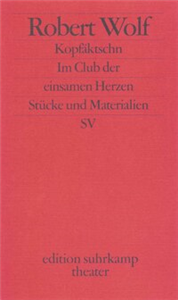 March 2001
Kopfäktschn. Im Club der einsamen Herzen
Stücke und Materialien
by Robert Wolf, Nurith Wagner-Strauss, Robert Wolf
Kopfäktschn: Der Wissenschaftler Carlsson hat zur Rettung der Menschen vor dem Verlust der Sprache einen Kopf vom Rest des Körpers getrennt und versucht nun, ihn zu psychosozialisieren. Was aber sagt der Kopf dazu? Im Club der einsamen Herzen: Eine Frau erlebt die Nacht vor ihrer Hinrichtung in einem Club der einsamen Herzen. Ein Barkeeper und eine Schauspielerin sind ihr letztes Geleit. Ein wenig wünschen darf sie sich noch und ein wenig ausleben.
-
Trusted Partner
 Humanities & Social SciencesJune 2011
Democratic Participation and Civil Society in the European Union
by Dawid Friedrich, Emil Kirchner, Thomas Christiansen
Can the participation of civil society organisations democratise policy making in the European Union? This book challenges the widespread optimism about civil society participation in European governance and offers a nuanced and realistic evaluation of its democratic potential. Friedrich argues that the participation of these groups is only of democratic value if participatory patterns are democratised through appropriate institutional means. This book systematically brings together insights from normative democratic theory with an empirical evaluation of concrete policy-processes. It demonstrates that the participation of civil society organisation cannot be conceived as a panacea for the European Union's democratic deficit, because the participatory pattern of EU policy-making violates the key democratic value of political equality. This book will be of interest to all of those concerned about the future of European democracy, those studying and teaching European politics, the European Union, international relations and democratic theory. ;


