
Narrative Landscape Press Ltd
Narrative Landscape Press is an independent publisher and a provider of publishing services and independent authors in Nigeria.
View Rights Portal
Narrative Landscape Press is an independent publisher and a provider of publishing services and independent authors in Nigeria.
View Rights Portal
We are a boutique publishing house producing quality books on Asian subjects. We also provide publishing services and consultancy.
View Rights Portal
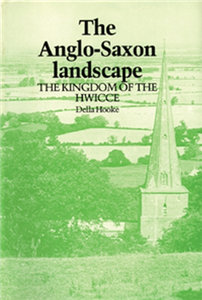
The landscape of pre-Conquest England can often be reconstructed in minute detail. Yet this is one of the first attempts at such a project. Here the evidence is examined for the West Midlands - the counties of Worcestershire, Warwickshire and Gloucestershire, much of which formed the Anglo-Saxon kingdom of the Hwicce. Della Hooke reveals the intimate local landscape through the medium of place names, contemporary documents and archaeological evidence. Her detailed picture brings the Anglo-Saxon countryside very much to life. The patterns which emerge in this period go far to explain the nature of later medieval patterns of settlement and field systems, and provide the key to understanding territorial organisation in the region. ;

Southern Africa played a varied but vital role in Britain's maritime and imperial stories: it was one of the most intricate pieces in the British imperial strategic jigsaw, and representations of southern African landscape and maritime spaces reflect its multifaceted position. Representing Africa examines the ways in which British travellers, explorers and artists viewed southern Africa in a period of evolving and expanding British interest in the region. Drawing on a wide range of archival sources, contemporary travelogues and visual images, many of which have not previously been published in this context, this book posits landscape as a useful prism through which to view changing British attitudes towards Africa. Richly illustrated, this book will be essential reading for scholars and students interested in British, African, imperial and exploration history, art history, and landscape and environment studies.
 Trusted Partner
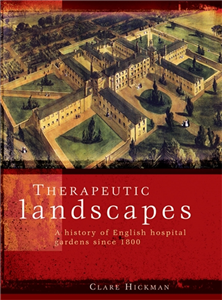
Therapeutic landscapes uniquely brings together historical and contemporary debates on the use of the garden as a therapeutic space. Hickman narrates the story of the landscapes associated with psychiatric, general and specialist medical institutions and asks what did they look like, how were they used and how did this relate to medical concepts? It traces the history of these gardens from the grottos, Chinese galleries and summer houses of elite nineteenth-century lunatic asylums, through Florence Nightingale's championing of the Victorian pavilion hospital design with its courtyard gardens, and the open-air institutions of the Edwardian period with their revolving chalets. It concludes with a discussion of new hospital gardens being created by designers such as Dan Pearson in the twenty-first century. This book will be essential reading for those interested in the histories of place, space and material culture, and in particular medical historians, garden historians and historical geographers. ;
Trusted Partner

British rural landscapes on film offers insights into how rural areas in Britain have been represented on film, from the silent era, through both world wars, and on into the twenty-first century. It is the first book to exclusively deal with representations of the British countryside on film. The contributors demonstrate that the countryside has provided Britain (and its constituent nations and regions) with a dense range of spaces in which cultural identities have been (and continue to be) worked through. British rural landscapes on film demonstrates that British cinema provides numerous examples of how national identity and the identity of the countryside have been partly constructed through filmic representation, and how British rural films can allow us to further understand the relationship between the cultural identities of specific areas of Britain and the landscapes they inhabit.
Trusted Partner
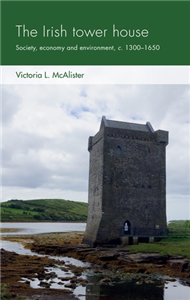
The Irish tower house examines the social role of castles in late-medieval and early modern Ireland. It uses a multidisciplinary methodology to uncover the lived experience of this historic culture, demonstrating the interconnectedness of society, economics and the environment. Of particular interest is the revelation of how concerned pre-modern people were with participation in the economy and the exploitation of the natural environment for economic gain. Material culture can shed light on how individuals shaped spaces around themselves, and tower houses, thanks to their pervasiveness in medieval and modern landscapes, represent a unique resource. Castles are the definitive building of the European Middle Ages, meaning that this book will be of great interest to scholars of both history and archaeology.
Trusted Partner

Engendering an avant-garde is the first book to comprehensively examine the origins of Vancouver photo-conceptualism in its regional context between 1968 and 1990. Employing discourse analysis of texts written by and about artists, feminist critique and settler-colonial theory, the book discusses the historical transition from artists' creation of 'defeatured landscapes' between 1968-71 to their cinematographic photographs of the late 1970s and the backlash against such work by other artists in the late 1980s. It is the first study to provide a structural account for why the group remains all-male. It accomplishes this by demonstrating that the importation of a European discourse of avant-garde activity, which assumed masculine social privilege and public activity, effectively excluded women artists from membership.
Trusted Partner
Dundee had an interesting role to play in the jute trade, but the main player in the story of jute was Calcutta. This book follows the relationship of jute to empire, and discusses the rivalry between the Scottish and Indian cities from the 1840s to the 1950s and reveals the architecture of jute's place in the British Empire. The book adopts significant fresh approaches to imperial history, and explores the economic and cultural landscapes of the British Empire. Jute had been grown, spun and woven in Bengal for centuries before it made its appearance as a factory-manufactured product in world markets in the late 1830s. The book discusses the profits made in Calcutta during the rise of jute between the 1880s and 1920s; the profits reached extraordinary levels during and after World War I. The Calcutta jute industry entered a crisis period even before it was pummelled by the depression of the 1930s. The looming crisis stemmed from the potential of the Calcutta mills to outproduce world demand many times over. The St Andrew's Day rituals in Calcutta, begun three years before the founding of the Indian Jute Mills Association. The ceremonial occasion helps the reader to understand what the jute wallahs meant when they said they were in Calcutta for 'the greater glory of Scotland'. The book sheds some light on the contentious issues surrounding the problematic, if ever-intriguing, phenomenon of British Empire. The jute wallahs were inextricably bound up in the cultural self-images generated by British imperial ideology.
Trusted Partner
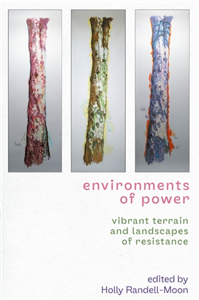
Environments of power provides unique case studies of environmental inclusion and exclusion across the Americas, Africa, Japan, India, and the South-Pacific. Using more-than-human and Indigenist approaches, chapters focus on Indigenous environmental resistance, marginalisation across social and physical environments, ecology as art, and how local communities are caught up in and resist development and infrastructure projects. The book demonstrates how environments influence which bodies and other matter belong (or not) in certain places.
Trusted Partner
 Trusted Partner


Where do we go when Nowhere is the only destination left? Kerrybrook is Jana‘s favourite virtual escape. An idyllic fishing village with beautiful nature and, every now and then, a breeze of fresh air from the nearby sea. Jana, is this world‘s designer and person in power, she’s satisfied with her masterpiece. Best job so far. Until one day, a dead body is found, in both, ’Virtual Reality‘ and the real world. In times of climate change, VR is the only safe place for humankind. That‘s why Jana needs to solve the crime, she’s responsible for stopping the destruction. • CliFi Thriller (Climate Fiction): Climate change & virtual reality • For fans of Black Mirror (Netflix) • All age readers • Strong, female protagonist • Highly relevant topic WHITE RAVENS recommendation (2021): "In the not too distant future, the world is an inhospitable place: droughts, storms, floods. That’s why world designers construct »alternative realities«, such as landscapes populated by dinosaurs, life at court in the Middle Ages, and surfing and chilling out on a beach. People can switch between these worlds at will and, when they die there, they are not truly dead; instead, they merely return to the »real world« – same as at night when they sleep. Then they are reunited with their body, which is lying inside a capsule. In »Cryptos«, Ursula Poznanski pulls out all the stops of storytelling: She embeds numerous references to human and intellectual history in an action-packed and extremely suspenseful thriller plot. In the process, she raises central existential and ontological questions that result from the interplay between the real and the virtual worlds. This complex dystopian novel is narrated in such an enjoyable way that readers will hardly notice their brains going into overdrive as they devour it."
Trusted Partner
 Trusted Partner
 Trusted Partner
Trusted Partner
Trusted Partner
Trusted Partner
Trusted Partner

This book examines human disappearances anthropologically in various contexts, ranging from enforced disappearances under oppressive governments and during armed conflicts to disappearing undocumented migrants and, finally, to people who go missing under more everyday circumstances. Two focuses run through the book: the relationship between the state and disappearances, and the consequences of disappearances for the families and communities of missing persons. The book analyses both the circumstances that make some people disappear and the variety of responses that disappearances give rise to; the latter include projects focused on searching for the missing and identifying human remains, as well as political projects that call for accountability for disappearances. While providing empirical examples from a variety of places, with Bosnia-Herzegovina as they key empirical site, the book develops an analytic grip on the slippery category of the 'disappeared'.
Trusted Partner
 Trusted Partner
Trusted Partner
Trusted Partner
Trusted Partner
Trusted Partner
Trusted Partner
Trusted Partner



