Limonero
Limonero is an independent Argentine imprint committed on publishing illustrated books. Founded in 2014, Limonero publishes works that are imaginative and innovative both visually and textually.
View Rights Portal
Limonero is an independent Argentine imprint committed on publishing illustrated books. Founded in 2014, Limonero publishes works that are imaginative and innovative both visually and textually.
View Rights Portal
Founded in 2014 by Lulu Kirschenbaum and Manuel Rud, Limonero publishes works that are imaginative and innovative both visually and textually. The drive behind Limonero has always been to build a catalog of titles that we consider indispensible to readers little and large, to bring the illustrated book to readers of all ages. Among other awards and mentions, Limonero received the prestigious BOP Prize, the award for Best Latin American Publisher, at the 2019 Bologna Children’s Book Fair.
View Rights Portal Trusted Partner

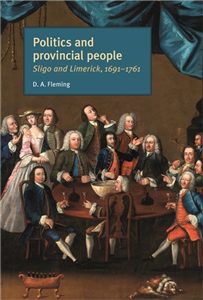
This ground-breaking study is the first to systematically examine the politics and political culture of provincial Ireland. The book compares two distinct localities that provide differing perspectives on how politics and power manifested itself in provincial Ireland: Sligo in the north west and Limerick in the south west. Drawing on a wealth of previously unknown and under-utilised contemporary material, David Fleming focuses on individuals who were determined to shape the political landscape and those who were affected by their actions. The book challenges many accepted models of how Ireland and the Irish were governed. While the propertied élite dominated many aspects of the political process, individuals and groups from the professional, mercantile, rural and other sections of society - the 'middling orders' - were also active in local institutions and office-holding. Their story, recounted here, reveals a far more complex set of relationships. Politics and provincial people is a carefully constructed story of people's motivations, ideas, and actions, and offers new insights into the complexity of their lives and the Irish political landscape. ;
Trusted Partner
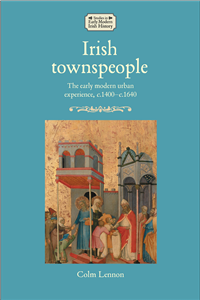
Through a series of innovative perspectives, this book examines how early modern Irish townspeople experienced the urban world through a range of family and associational ties. Migrants inducted through town citizenship and marriage bonded more closely as sisters or brothers of confraternities and guilds, consolidating parish membership. Civic religion saw the integration of religion with town politics and councils, and monastic charity of the friars' hospitals preceded the era of modern municipal welfare. In circumstances of the alienation of the long-settled Catholic townspeople from the state's religious and political Reformation in the seventeenth century, they drew sustenance from the continuity of institutions such as colleges, fraternities and hospitals and forms of coexistence with Protestant fellow-citizens.