
Humanities & Social Sciences
Description
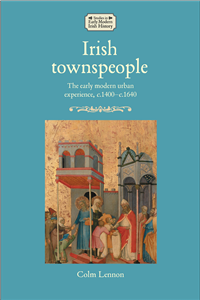
Through a series of innovative perspectives, this book examines how early modern Irish townspeople experienced the urban world through a range of family and associational ties. Migrants inducted through town citizenship and marriage bonded more closely as sisters or brothers of confraternities and guilds, consolidating parish membership. Civic religion saw the integration of religion with town politics and councils, and monastic charity of the friars' hospitals preceded the era of modern municipal welfare. In circumstances of the alienation of the long-settled Catholic townspeople from the state's religious and political Reformation in the seventeenth century, they drew sustenance from the continuity of institutions such as colleges, fraternities and hospitals and forms of coexistence with Protestant fellow-citizens.
More Information
Rights Information
Albania, Algeria, Angola, Argentina, Armenia, Australia, Austria, Bahrain, Belgium, Belize, Benin, Bolivia, Bosnia and Herzegovina, Botswana, Brazil, Bulgaria, Burkina Faso, Burundi, Cameroon, Canada, Cape Verde, Central African Republic, Chad, Chile, China, Colombia, Comoros, Congo [DRC], Congo, Republic of the, Costa Rica, Ivory Coast, Croatia, Czech Republic, Denmark, Djibouti, Ecuador, Egypt, El Salvador, Equatorial Guinea, Eritrea, Estonia, Ethiopia, Faroe Islands, Finland, France, French Guiana, Gabon, Gambia, Georgia, Germany, Ghana, Greece, Guatemala, Guinea, Guinea-Bissau, Guyana, Honduras, Hongkong, Hungary, Iceland, India, Indonesia, Iran, Iraq, Ireland, Israel, Italy, Japan, Jordan, Kazakhstan, Kenya, Kuwait, Latvia, Lebanon, Lesotho, Liberia, Libya, Lithuania, Luxembourg, Macau, China, Macedonia [FYROM], Madagascar, Malawi, Malaysia, Mali, Malta, Mauritania, Mauritius, Mayotte, Mexico, Mongolia, Montenegro, Morocco, Mozambique, Namibia, Netherlands, New Zealand, Nicaragua, Niger, Nigeria, Norway, Oman, Pakistan, Panama, Paraguay, Peru, Philippines, Poland, Portugal, Puerto Rico, Qatar, Reunion, Romania, Russia, Rwanda, Saint Helena, Sao Tome and Principe, Saudi Arabia, Senegal, Serbia, Seychelles, Sierra Leone, Singapore, Slovakia, Slovenia, Somalia, South Africa, South Korea, Spain, Sri Lanka, Sudan, Suriname, Swaziland, Sweden, Switzerland, Syria, Taiwan, Tanzania, Thailand, Timor-Leste, Togo, Tokelau, Tunisia, Turkey, Uganda, Ukraine, United Arab Emirates, United Kingdom, United States, Uruguay, Venezuela, Vietnam, Western Sahara, Yemen, Zambia, Zimbabwe, South Sudan, Cyprus, Palestine, Bangladesh, Cambodia, Liechtenstein, Azerbaijan, Jamaica, Kyrgyzstan, Dominican Republic, Myanmar, Monaco
Endorsements
This ground-breaking work of social history examines the culture and lived experience of Irish townspeople during an extended period of profound change. Spanning the years c.1400 - c.1640, it explores how Irish towns and cities recovered from the crisis of the Black Death to become a potent force during the early modern period. The book explores how urban communities built strong institutions and communities and fostered a lively associational culture comparable to that found in Renaissance Europe. Through their civic rulers, the secular and religious spheres of the towns were increasingly fused, creating a pronounced corporativeness in guild, fraternity, parish and neighbourhood. This informed the towns' resistance to the religious and political reforms of the centralising English state following the Reformation and its aftermath. Ranging extensively in time and place, the book considers how Irish townspeople drew upon strong communal bonds and sensitivity to the urban past to foster inclusiveness of ethnicity, gender and the urban poor.
Reviews
This ground-breaking work of social history examines the culture and lived experience of Irish townspeople during an extended period of profound change. Spanning the years c.1400 - c.1640, it explores how Irish towns and cities recovered from the crisis of the Black Death to become a potent force during the early modern period. The book explores how urban communities built strong institutions and communities and fostered a lively associational culture comparable to that found in Renaissance Europe. Through their civic rulers, the secular and religious spheres of the towns were increasingly fused, creating a pronounced corporativeness in guild, fraternity, parish and neighbourhood. This informed the towns' resistance to the religious and political reforms of the centralising English state following the Reformation and its aftermath. Ranging extensively in time and place, the book considers how Irish townspeople drew upon strong communal bonds and sensitivity to the urban past to foster inclusiveness of ethnicity, gender and the urban poor.
Author Biography
Colm Lennon is Emeritus Professor of History at Maynooth University
 Trusted Partner

Manchester University Press
Manchester University Press is a leading UK publisher known for excellent research in the humanities and social sciences.
View all titlesBibliographic Information
- Publisher Manchester University Press
- Publication Date May 2026
- Orginal LanguageEnglish
- ISBN/Identifier 9781526193421 / 1526193426
- Publication Country or regionUnited Kingdom
- FormatPrint PDF
- Pages336
- ReadershipGeneral/trade
- Publish StatusPublished
- Dimensions234 X 156 mm
- Biblio NotesDerived from Proprietary 6613
- SeriesStudies in Early Modern Irish History
- Reference Code18025
Thank you for proceeding with this offer.
Manchester University Press has chosen to review this offer before it proceeds.
You will receive an email update that will bring you back to complete the process.
You can also check the status in the My Offers area
Manchester University Press has chosen to review this offer before it proceeds.
You will receive an email update that will bring you back to complete the process.
You can also check the status in the My Offers area

Please wait while the payment is being prepared.
Do not close this window.

(c) Copyright 2026 - Frankfurter Buchmesse GmbH. All Right Reserved