
Teacher Created Materials
Teacher Created Materials publishes innovative, imaginative, and award-winning resources for teachers, parents, and students in all subjects for ages 4-18 worldwide.
View Rights Portal
Teacher Created Materials publishes innovative, imaginative, and award-winning resources for teachers, parents, and students in all subjects for ages 4-18 worldwide.
View Rights Portal
For over 40 years, Teacher Created Materials (TCM) has published innovative and imaginative resources for teachers and students, bringing exceptional curriculum content to classrooms worldwide. Our award-winning resources are sold and licensed in 89 countries. Everything we publish is created and approved by teachers. All our leveled reading books and curriculum kits are designed to engage students, improve literacy and reading comprehension, build content knowledge, and develop critical-thinking skills.
View Rights Portal

 Trusted Partner
Trusted Partner
Trusted Partner

 Trusted Partner
Trusted Partner
Trusted Partner
 Trusted Partner

 Trusted Partner
Trusted Partner
Trusted Partner


Duschen, Radio an, Espressokanne auf den Herd, Kinder in die Kita, ab in die U-Bahn: Alle diese Handlungen, die wir für selbstverständlich halten, wären ohne komplexe Infrastruktur nicht möglich. Ähnliches gilt für Gesundheitsversorgung und Bildung, die ohne staatliche Investitionen in Gebäude und Personal nicht funktionieren würden. Doch in den vergangenen Jahrzehnten wurden in ganz Europa immer mehr Krankenhäuser, Schulen, Bahnstrecken oder gleich ganze Verkehrsnetze privatisiert und so der Profitlogik unterworfen – mit bisweilen dramatischen Folgen. Inzwischen wächst der Widerstand; in vielen Ländern formieren sich Bewegungen für eine Rekommunalisierung z. B. der Wasserversorgung. Was wir brauchen, so die Autorinnen und Autoren, ist eine neue, progressive Infrastrukturpolitik. Wir müssen die Ökonomie wieder als etwas begreifen, das zuallererst dem guten Leben der Bürgerinnen und Bürger verpflichtet ist.
Trusted Partner

Writing power radically rethinks the place of the canon and canonicity as objects and concepts in contemporary academia and the everyday intellectual practices of academics. It is distinctive in its demonstration of how academics' engagements with canons shape their writing practices but also how scholars' writing practices, spaces, proclivities, and desires shape the canon and changing ideas of value in canonicity. The book thinks through frequently discussed problems of legitimacy and knowledge production from fresh perspectives of lived experience and the everyday to offer new insights into the politics of knowledge in contemporary social sciences.
Trusted Partner
Trusted Partner

 Trusted Partner
Trusted Partner
Trusted Partner
Trusted Partner
Trusted Partner
Trusted Partner
Trusted Partner
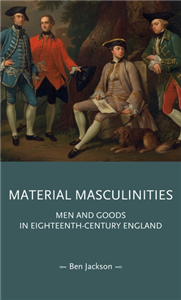
Material Masculinities examines the material and consumer practices of over 1000 men from the middling and upper ranks of eighteenth-century society, c.1650-1850. It draws upon evidence from over 35 archives and museum collections to detail how material objects were integral for men in forming identities and shaping experiences. For men of all social ranks, ages, and geographic locations, material knowledge was imperative for masculine social identities to operate in a commercial society. Before the centralised factory and widespread mass-produced goods, men personalised and repaired their goods; products were shaped by men's attitudes and concerns. Objects were tools in men's identity formation and the exercise of social and gendered power. There was a reciprocal relationship between men and goods in this period; men were active agents of material and commercial change driving product and aesthetic innovation.
Trusted Partner

 Trusted Partner
 Trusted Partner
 Trusted Partner

Der Versuch über Kafka Beschreibung einer Form ist Martin Walsers Dissertation, sie erschien erstmals 1961 und ist eine bemerkenswerte Einführung in das Werk Franz Kafkas, das eine so tiefe und nicht nachlassende Wirkung ausübt.



