
Teacher Created Materials
Teacher Created Materials publishes innovative, imaginative, and award-winning resources for teachers, parents, and students in all subjects for ages 4-18 worldwide.
View Rights Portal
Teacher Created Materials publishes innovative, imaginative, and award-winning resources for teachers, parents, and students in all subjects for ages 4-18 worldwide.
View Rights Portal
For over 40 years, Teacher Created Materials (TCM) has published innovative and imaginative resources for teachers and students, bringing exceptional curriculum content to classrooms worldwide. Our award-winning resources are sold and licensed in 89 countries. Everything we publish is created and approved by teachers. All our leveled reading books and curriculum kits are designed to engage students, improve literacy and reading comprehension, build content knowledge, and develop critical-thinking skills.
View Rights Portal
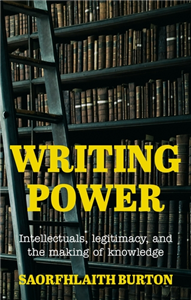
Writing power radically rethinks the place of the canon and canonicity as objects and concepts in contemporary academia and the everyday intellectual practices of academics. It is distinctive in its demonstration of how academics' engagements with canons shape their writing practices but also how scholars' writing practices, spaces, proclivities, and desires shape the canon and changing ideas of value in canonicity. The book thinks through frequently discussed problems of legitimacy and knowledge production from fresh perspectives of lived experience and the everyday to offer new insights into the politics of knowledge in contemporary social sciences.
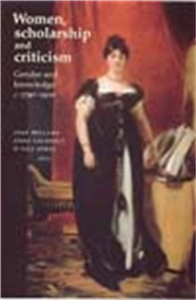
Brings together the varied artistic, critical and cultural productions by women scholars, critics and artists between 1790-1900, many of whom are little known in the canonical histories of the period. Questions the concepts of 'scholarship', 'criticism' and 'artist' across the different disciplines. Women discussed include authors (Mary Wollstonecraft Shelley, Sydney Morgan and Anna Jameson) actresses ( Elizabeth Siddons, Dorothy Jordan, and Mary Robinson) critics ( Margaret Oliphant and Mary Cowden Clarke) historians (Agnes Strickland, Lucy Aikin, Mary Anne Everett Green, Elizabeth Cooper and Lucy Toulmin Smith) as well as the writers and readers of Women's magazines, educationalists and translators. Makes a significant and original contribution to the development of gender studies by extending the frontiers of existing knowledge and research. ;
 Trusted Partner
Trusted Partner
Trusted Partner


The school years are a major challenge, not only for your child but also for you as a parent. You may be asking yourself questions like: • How can I motivate my child to study and learn? • How should I handle homework conflicts? • How can I help my child to become more independent? • What learning strategies are appropriate for primary school children? • How can I help if my child has problems with math, reading, or spelling? Answers to these and many other questions about homework, learning, and studying can be found in this book. It describes practical methods and effective strategies, and shows how providing just a little support can be a big help to your child. Target Group: psychologists, education specialists, parents.
Trusted Partner
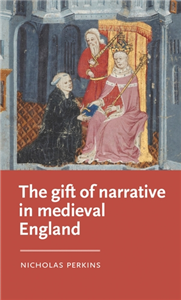
This invigorating study places medieval romance narrative in dialogue with theories and practices of gift and exchange, opening new approaches to questions of storytelling, agency, gender and materiality in some of the most engaging literature from the Middle Ages. It argues that the dynamics of the gift are powerfully at work in romances: through exchanges of objects and people; repeated patterns of love, loyalty and revenge; promises made or broken; and the complex effects that time works on such objects, exchanges and promises. Ranging from the twelfth century to the fifteenth, and including close discussions of poetry by Chaucer, the Gawain-Poet and romances in the Auchinleck Manuscript, this book will prompt new ideas and debate amongst students and scholars of medieval literature, as well as anyone curious about the pleasures that romance narratives bring.
Trusted Partner


— An exciting and entertaining explanation of neuroscience — In the diverting and humorous style for which the author is known – learning has never been this much fun What processes in the brain are responsible for intelligence, free will, empathy or reason? Can memories be falsified? And what does actually happen in the brain when we reach puberty? Monika Niehaus and Martin Osterloh answer these and many other neuroscientific questions in their book – a fundamental work on brain research, and easy to understand, exciting and entertaining.
Trusted Partner
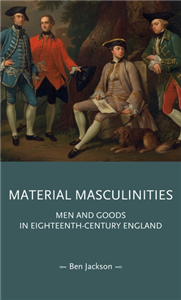
Material Masculinities examines the material and consumer practices of over 1000 men from the middling and upper ranks of eighteenth-century society, c.1650-1850. It draws upon evidence from over 35 archives and museum collections to detail how material objects were integral for men in forming identities and shaping experiences. For men of all social ranks, ages, and geographic locations, material knowledge was imperative for masculine social identities to operate in a commercial society. Before the centralised factory and widespread mass-produced goods, men personalised and repaired their goods; products were shaped by men's attitudes and concerns. Objects were tools in men's identity formation and the exercise of social and gendered power. There was a reciprocal relationship between men and goods in this period; men were active agents of material and commercial change driving product and aesthetic innovation.
Trusted Partner
 Trusted Partner

In this bold and exhilarating mix of memoir and writing guide, Melissa Febos tackles the emotional, psychological, and physical work of writing intimately while offering an utterly fresh examination of the storyteller's life and the challenges it presents. How do we write about the relationships that have formed us? How do we describe our bodies, their desires and traumas? What does it mean to have your writing, or living, dismissed as "navel-gazing"-or else hailed as "so brave, so raw"? And to whom, in the end, do our most intimate stories belong? Drawing on her journey from aspiring writer to acclaimed author and writing professor-via addiction and recovery, sex work and academia-Melissa Febos has created a captivating guide to the writing life, and a brilliantly unusual exploration of subjectivity, privacy, and the power of divulgence. Candid and inspiring, Body Work will empower readers and writers alike, offering ideas-and occasional notes of caution-to anyone who has ever hoped to see their true self reflecting back from the open page.
Trusted Partner

In this bold and exhilarating mix of memoir and writing guide, Melissa Febos tackles the emotional, psychological, and physical work of writing intimately while offering an utterly fresh examination of the storyteller's life and the challenges it presents. How do we write about the relationships that have formed us? How do we describe our bodies, their desires and traumas? What does it mean to have your writing, or living, dismissed as "navel-gazing"-or else hailed as "so brave, so raw"? And to whom, in the end, do our most intimate stories belong? Drawing on her journey from aspiring writer to acclaimed author and writing professor-via addiction and recovery, sex work and academia-Melissa Febos has created a captivating guide to the writing life, and a brilliantly unusual exploration of subjectivity, privacy, and the power of divulgence. Candid and inspiring, Body Work will empower readers and writers alike, offering ideas-and occasional notes of caution-to anyone who has ever hoped to see their true self reflecting back from the open page.
Trusted Partner

In this bold and exhilarating mix of memoir and writing guide, Melissa Febos tackles the emotional, psychological, and physical work of writing intimately while offering an utterly fresh examination of the storyteller's life and the challenges it presents. How do we write about the relationships that have formed us? How do we describe our bodies, their desires and traumas? What does it mean to have your writing, or living, dismissed as "navel-gazing"-or else hailed as "so brave, so raw"? And to whom, in the end, do our most intimate stories belong? Drawing on her journey from aspiring writer to acclaimed author and writing professor-via addiction and recovery, sex work and academia-Melissa Febos has created a captivating guide to the writing life, and a brilliantly unusual exploration of subjectivity, privacy, and the power of divulgence. Candid and inspiring, Body Work will empower readers and writers alike, offering ideas-and occasional notes of caution-to anyone who has ever hoped to see their true self reflecting back from the open page.
Trusted Partner

John Lyly's Euphues: The Anatomy of Wit and Euphues and his England, created a literary sensation in their own age, and had a profound influence on Elizabethan prose. This modern-spelling edition of the two works, the first for nearly a century, is designed to allow the twenty-first century reader access to this culturally significant text and to explore the fascination that it exerted. Attuned to the needs of both students and specialists, the text is edited from the earliest complete witnesses, is richly annotated, and facilitates an understanding of Lyly's narrative technique by distinguishing typographically between narrative levels. The introduction explores the relationship between the dramatic and non-dramatic work, locating Lyly's highly influential plays in a wider context and Euphues' Latin poem in praise of Elizabeth I, translated for the first time, is discussed in an Appendix. A work of primary importance for students of Renaissance prose, this edition complements the on-going publication of Lyly's dramatic works in The Revels Plays. ;
Trusted Partner

Heresy and inquisition in France, 1200-1300 is an invaluable collection of primary sources in translation, aimed at students and academics alike. It provides a wide array of materials on both heresy (Cathars and Waldensians) and the persecution of heresy in medieval France. The book is divided into eight sections, each devoted to a different genre of source material. It contains substantial material pertaining to the setting up and practice of inquisitions into heretical wickedness, and a large number of translations from the registers of inquisition trials. Each source is introduced fully and is accompanied by references to useful modern commentaries. The study of heresy and inquisition has always aroused considerable scholarly debate; with this book, students and scholars can form their own interpretations of the key issues, from the texts written in the period itself.
Trusted Partner
This study examines Exeter riddles, Anglo-Saxon biblical poems (Exodus, Andreas, Judith) and Beowulf in order to uncover the poetics of spolia, an imaginative use of recycled fictional artefacts to create sites of metatextual reflection. Old English poetry famously lacks an explicit ars poetica. This book argues that attention to particularly charged moments within texts - especially those concerned with translation, transformation and the layering of various pasts - yields a previously unrecognised means for theorising Anglo-Saxon poetic creativity. Borrowed objects and the art of poetry works at the intersections of materiality and poetics, balancing insights from thing theory and related approaches with close readings of passages from Old English texts.
Trusted Partner
Soviet materialities explores how material transforms our understanding of Soviet culture, from the textures of domestic space in 1960s apartment blocks to Gulag labour on the Moscow canal, and from avant-garde literary theory in the 1920s to conceptual art under perestroika. It starts from the ethos that the material world shapes people and society. Taking a material approach-or a range of material approaches-can therefore illuminate aspects of the cultural production and lived experiences of Soviet socialism that are not reflected in other kinds of historical records. This edited volume brings cutting-edge research by emerging scholars together with the established voices who have broken the ground in this sub-field over the last twenty years and promises to make a major intervention in the study of Soviet history and culture.
Trusted Partner
Trusted Partner

Speculative endeavours contributes to an emerging field of scholarship that focuses on alternative forms of knowledge production and speculation in nineteenth century US-American society. It sheds light on unofficial knowledges such as insider information, rumour, gossip, slander, emphasising how knowledges excluded by institutional discourses and authorities form a core part of the developing market economy. Ranging from the Early Republic to the Gilded Age, contributions analyse entanglements of financial, cultural, and social capital. They focus on social actors who differ from the newly minted ideal of the (free, white, male) entrepreneurial individual. The speculative endeavours discussed include illicit communications located in slave quarters and domestic spaces, communal interventions into a commercialised print market, debates on immigrant fiduciary and legal competency, and disciplinary techniques of pecuniary pedagogy. Taken together they offer unprecedented interdisciplinary insights into an emerging age of capital.
Trusted Partner

This book explores the emergence of a new architecture of corporate enforcement in Ireland. It is demonstrated that the State has transitioned from one contradictory model of corporate enforcement to another. Traditionally, the State invoked its most powerful weapon of state censure, the criminal law, but was remarkably lenient in practice because the law was not enforced. The contemporary model is much more reliant on cooperative measures and civil orders, but also contains remarkably punitive and instrumental measures to surmount the difficulties of proving guilt in criminal cases. Though corporate and financial regulation has become an area of significant interest for academics, researchers and those with an interest in corporate affairs, this sudden surge of interest lacks a tradition of scholarship or any deep empirical and contextual analysis in Ireland. This book provides that foundation. It is likely to stimulate an extensive conversation on corporate regulation and governance in Ireland. It is also likely to provide a platform for researchers further afield with an interest in comparative study with Ireland. ;
Trusted Partner
 Trusted Partner

This book is our principal source for the history of the Kingdom of Sicily in the troubled years between the death of its founder, King Roger, in February 1154 and the spring of 1169. It covers the reign of Roger's son, King William I, known to later centuries as 'the Bad', and the minority of the latter's son, William II 'the Good'. The book illustrates the revival of classical learning during the twelfth-century renaissance. It presents a vivid and compelling picture of royal tyranny, rebellion and factional dispute at court. Sicily had historically been ruled by tyrants, and that the rule of the new Norman kings could be seen, for a variety of reasons, as a revival of that classical tyranny. A more balanced view of Sicilian history of the period 1153-1169 has been provided as an appendix to the translation in the section of the contemporary world chronicle ascribed to Archbishop Romuald II of Salerno, who died in April 1181. In particular the chronicle of Romuald enables us to see how the papal schism of 1159 and the simultaneous dispute between the German Emperor Frederick Barbarossa and the north Italian cities affected the destiny of the kingdom of Sicily. In contrast to the shadowy figure of Hugo Falcandus, the putative author of the principal narrative of mid-twelfth-century Sicilian history, Romuald II, Archbishop of Salerno 1153-1181, is well-documented.


