
Hotel de las Ideas
Hotel de las ideas is a cooperative, with 10 co-founders.
View Rights Portal

Edizioni Mediterranee founded in 1953, together with Hermes, Arkeios and Studio Tesi is a publishing group. Amongst Italian and foreign authors the catalogue includes more than 2.500 titles. Main subjects are: yoga, body-mind-spirit, alternative healing, alchemy, astrology, magic, sport, martial arts.
View Rights Portal

The films of Bigas Luna is the first comprehensive English-language study of the complete filmography of Spanish filmmaker Bigas Luna, spanning from Tatuaje (1976) to DiDi Hollywood (2010). Engaging with theoretical frameworks such as haptic cinema, erotic cinema, auteur theory, and studies of gender, sexuality, and national identity, the book situates close readings of Bigas Luna's films within broader discussions of production and marketing. Fouz Hernández draws on extensive archival research-including original screenplays, press materials, and interviews with industry professionals-while engaging with previous scholarship in multiple languages. Structured into five thematic chapters, the book explores key concerns in Bigas Luna's work, including genre, gender representation, Iberian and Mediterranean identities, and meta-cinematic narratives. It can be read as a cohesive study of his oeuvre or as a reference for specific films.

This volume on Norman Italy (southern Italy and Sicily, c. 1000-1200) honours and reflects the pioneering scholarship of Graham A. Loud. An international group of scholars reassesses and recasts the paradigm by which Norman Italy has been conventionally understood, addressing varied subjects across four key themes: historiographies, identities and communities, religion and Church, and conquest. The chapters revise and refine our understanding of Norman Italy in the eleventh and twelfth centuries, demonstrating that it was not just a parochial Norman or Mediterranean entity but also an integral player in the medieval mainstream.
 Trusted Partner

For the first time, this volume explores the identities of leprosy sufferers and other people affected by the disease in medieval Europe. The chapters, including contributions by leading voices such as Luke Demaitre, Carole Rawcliffe and Charlotte Roberts, challenge the view that people with leprosy were uniformly excluded and stigmatised. Instead, they reveal the complexity of responses to this disease and the fine line between segregation and integration. Ranging across disciplines, from history to bioarchaeology, Leprosy and identity in the Middle Ages encompasses post-medieval perspectives as well as the attitudes and responses of contemporaries. Subjects include hospital care, diet, sanctity, miraculous healing, diagnosis, iconography and public health regulation. This richly illustrated collection presents previously unpublished archival and material sources from England to the Mediterranean.
Trusted Partner
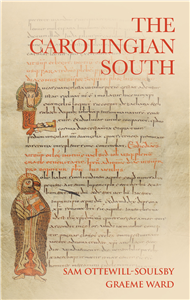
The Carolingian South turns the Frankish world upside down by taking as its subject the lands of the Carolingian empire south of the Loire and the Alps. It assembles an international group of scholars from different disciplines to examine how the Carolingians defined and were defined by this region. This book asks how Carolingian power was created and negotiated in the south. It views the Frankish empire from the perspective of the Christian and Muslim polities of the Mediterranean, while also following the movement of people and ideas through the endlessly fascinating world that they made.
Trusted Partner
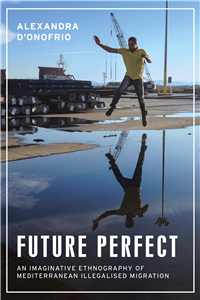
The present volume emerges from a practice-based research that focuses on experiences of migration and border crossing during what are perceived as existential 'turning points' by the protagonists themselves. It recognizes the fundamental role that imagination plays in people's perceptions of reality, in their decisions and actions, and finally in the way they narrate their experiences. As a consequence, it makes a stance for ethnographic practice to include more creative and collaborative methodologies in order to explore such intangible and unstructured realms of existence. In particular, this ethnography developed theoretically and methodologically in close collaboration with a group of Egyptian men who crossed the Mediterranean Sea in search of better living opportunities in Italy, by engaging them through a range of the co-creative processes such as theatre improvisations, storytelling practices, collaborative filmmaking and participatory animation.
Trusted Partner
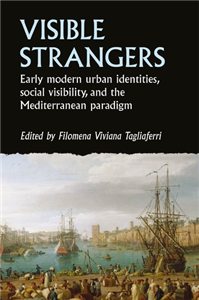
Visible strangers is a collection of essays on the nature of cultural pluralism in the Mediterranean and the different ways in which this was managed in various cities during the early modern period. The book's nine chapters considers new case studies, where authors offer a diachronic view of the nature of the co-presence of minorities in different urban spaces, investigated through the lens of the fascinating relationship between visibility and identity. The considered case studies cover different areas of the Mediterranean space: the Adriatic, the Ottoman empire between Asia and Africa, the Italian and Iberian peninsulas, the island of Malta, at the centre of the Mare Nostrum and host to many of its influences. The analysis of the way cultural pluralism expressed itself wishes to overcome the bias induced by 'Mediterraneanism', that has led to the Mediterranean as an area of study hardening into a conceptual category.
Trusted Partner
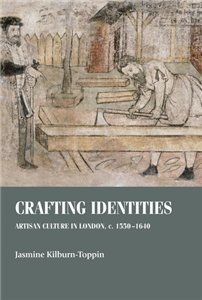
Crafting identities explores artisanal identity and culture in early modern London. It demonstrates that the social, intellectual and political status of London's crafts and craftsmen were embedded in particular material and spatial contexts. Through examination of a wide range of manuscript, visual and material culture sources, the book investigates for the first time how London's artisans physically shaped the built environment of the city and how the experience of negotiating urban spaces impacted directly on their distinctive individual and collective identities. Applying an innovative and interdisciplinary methodology to the examination of artisanal cultures, the book engages with the fields of social and cultural history and the histories of art, design and architecture. It will appeal to scholars of early modern social, cultural and urban history, as well as those interested in design and architectural history.
Trusted Partner
 Trusted Partner
 Trusted Partner
 Trusted Partner
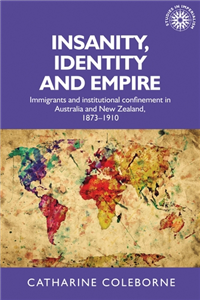
Insanity, identity and empire examines the formation of colonial social identities inside the institutions for the insane in Australia and New Zealand. Taking a large sample of patient records, it pays particular attention to gender, ethnicity and class as categories of analysis, reminding us of the varied journeys of immigrants to the colonies and of how and where they stopped, for different reasons, inside the social institutions of the period. It is about their stories of mobility, how these were told and produced inside institutions for the insane, and how, in the telling, colonial identities were asserted and formed. Having engaged with the structural imperatives of empire and with the varied imperial meanings of gender, sexuality and medicine, historians have considered the movements of travellers, migrants, military bodies and medical personnel, and 'transnational lives'. This book examines an empire-wide discourse of 'madness' as part of this inquiry.
Trusted Partner
Trusted Partner

Considers how notions of Britishness were constructed and promoted through architecture, landscape, painting, sculpture and literature. Maps important moments in the self-conscious evolution of the idea of 'nation' against a broad cultural historical framework. An important addition to the field of postcolonial studies as it looks at how British identity creation affected those living in England - most study in this area has thus far focused on the effect of such identity creation upon the colonial subject. Broad appeal due to wide subject matter covered. Examines just how 'constructed' a national identity is - past and present.
Trusted Partner
 Trusted Partner

This book of essays on British social and cultural history since the eighteenth century draws attention to relatively neglected topics including personal and collective identities, the meanings of place, especially locality, and the significance of cultures of association. Themes range from rural England in the eighteenth century to the urbanizing society of the nineteenth century; from the Home Front in the First World War to voluntary action in the welfare state; from post 1945 civic culture to the advice columns of teenage magazines and the national press. Various aspects of civil society connect these themes notably: the different identities of place, locality and association that emerged with the growth of an urban environment during the nineteenth century and the shifting landscape of twentieth-century public discourse on social welfare and personal morality. It is of interest that several of the essays take Manchester or Lancashire as their focus.
Trusted Partner

This book examines the distinctive aspects that insiders and outsiders perceived as characteristic of Irish and Scottish ethnic identities in New Zealand. When, how, and why did Irish and Scots identify themselves and others in ethnic terms? What characteristics did the Irish and the Scots attribute to themselves and what traits did others assign to them? Did these traits change over time and if so how? Contemporary interest surrounding issues of ethnic identities is vibrant. In countries such as New Zealand, descendants of European settlers are seeking their ethnic origins, spurred on in part by factors such as an ongoing interest in indigenous genealogies, the burgeoning appeal of family history societies, and the booming financial benefits of marketing ethnicities abroad. This fascinating book will appeal to scholars and students of the history of empire and the construction of identity in settler communities, as well as those interested in the history of New Zealand.
Trusted Partner
This interdisciplinary volume explores the role of images and narratives in different borderscapes. Written by experienced scholars in the field, Border images, border narratives provides fresh insight into how borders, borderscapes, and migration are imagined and narrated in public and private spheres. Offering new ways to approach the political aesthetics of the border and its ambiguities, this volume makes a valuable contribution to the methodological renewal of border studies and presents ways of discussing cultural representations of borders and related processes. Influenced by the thinking of philosopher Jacques Rancière, this timely volume argues that narrated and mediated images of borders and borderscapes are central to the political process, as they contribute to the public negotiation of borders and address issues such as the in/visiblity of migrants and the formation of alternative borderscapes. The contributions analyse narratives and images in literary texts, political and popular imagery, surveillance data, border art, and documentaries, as well as problems related to borderland identities, migration, and trauma. The case studies provide a highly comparative range of geographical contexts ranging from Northern Europe and Britain, via Mediterranean and Mexican-USA borderlands, to Chinese borderlands from the perspectives of critical theory, literary studies, social anthropology, media studies, and political geography.
Trusted Partner
Trusted Partner
Trusted Partner



