
All Things Women
Find your focus and strengths in times of crisis.
View Rights Portal

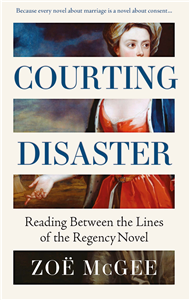
What do #MeToo and Jane Austen have in common? More than you might think. Ever since the novel was invented, women have used it as a platform for sharing ideas about sexual consent. Zoë McGee reveals how Jane Austen, Frances Burney and their now-overlooked contemporaries used their stories to try to change society's mind about rape culture - and to reassure survivors they were not alone. Courting Disaster takes a timely deep-dive into a series of classic novels, comparing them with both historic court records and current events to show that our arguments about consent are not a new phenomenon. With the wit and wryness of a courtship novel, McGee reads between the lines to unveil a quiet feminist movement that still resonates today. Because every novel about marriage is also a novel about consent. In an era that's clamouring for a return to the values of the past, Courting disaster asks what that would really mean, and whether anyone actually liked it back then anyway.


This volume in the book series Nutritional Practice sheds light on gender-specific aspects of the prevention and treatment of dietary deficiencies in women and men. Part I presents the principles, with an overview of the sociocultural influences on nutritional behaviour and differences in dietary practice between women and men, which lead to relevant consequences for gender-specific communication about nutrition. Part II explains in practical detail the wide range of topics concerning nutrition in pregnancy and lactation. Part III focusses on aspects of nutrition in life situations and on diseases that exclusively or predominantly occur in women. In addition to the menopause, these include various psychogenic eating disorders, breast cancer and polycystic ovary syndrome (PCOS).
 Trusted Partner

Women before the court offers an innovative, comparative approach to the study of women's legal rights during a formative period of Anglo-American history. It traces how colonists transplanted English legal institutions to America, examines the remarkable depth of women's legal knowledge and shows how the law increasingly undermined patriarchal relationships between parents and children, masters and servants, husbands and wives. The book will be of interest to scholars of Britain and colonial America, and to laypeople interested in how women in the past navigated and negotiated the structures of authority that governed them. It is packed with fascinating stories that women related to the courts in cases ranging from murder and abuse to debt and estate litigation. Ultimately, it makes a remarkable contribution to our understandings of law, power and gender in the early modern world.
Trusted Partner

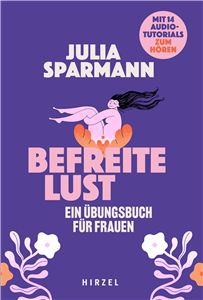
Far too often, everyday stress, pressure to perform or inner blockages spoil our enjoyment of the most beautiful thing in the world: our female sexuality. How can we free ourselves from firmly internalized taboos? What little tricks can we use to get our sex life back on track and keep the imagination in our head running successfully?Experienced sex therapist Julia Sparmann not only offers surprising solutions to typical problems such as loss of libido, communication difficulties or orgasm problems. She also encourages women to deal confidently with their sexuality and develop a positive body image.
Trusted Partner

"A wide ranging, challenging and constantly surprising collection ... focusing on the divisions the war created between men and women." Pat Barker This is an anthology of short stories of World War I from 25 classic writers. Gertrude Stein, Virginia Woolf and Katherine Mansfield are among the women writers whose works account for half the volume. The stories are by turn poignant, violent, harsh, tender and desolating. ;
Trusted Partner

Providing fresh insights from the archival record, Who governs Britain? revisits the 1970-74 Conservative government to explain why the Party tried - and failed - to reform the system of industrial relations. Designed to tackle Britain's strike problem and perceived disorder in collective bargaining, the Industrial Relations Act 1971 established a formal legal framework to counteract trade union power. As the state attempted to disengage from and 'depoliticise' collective bargaining practices, trade union leaders and employers were instructed to discipline industry. In just three-and-a-half years, the Act contributed to a crisis of the British state as industrial unrest engulfed industry and risked undermining the rule of law. Warner explores the power dynamics, strategic errors and industrial battles that destroyed this attempt to tame trade unions and ultimately brought down a government, and that shape Conservative attitudes towards trade unions to this day.
Trusted Partner
 Trusted Partner


Little Women "has been read as a romance or as a quest, or both. It has been read as a family drama that validates virtue over wealth", but also "as a means of escaping that life by women who knew its gender constraints only too well".[6]:34 According to Sarah Elbert, Alcott created a new form of literature, one that took elements from Romantic children's fiction and combined it with others from sentimental novels, resulting in a totally new format. Elbert argued that within Little Women can be found the first vision of the "All-American girl" and that her multiple aspects are embodied in the differing March sisters.
Trusted Partner


Mit schönem Farbschnitt in der Erstauflage – Lieferung je nach Verfügbarkeit Der schmale Grat zwischen Herzflattern und Abscheu Katerina und Christopher haben sich als Kinder einen Hinterhof geteilt, aber als Erwachsene teilen sie nicht einmal die gleiche Hemisphäre. Bis Kate zu einem seltenen Besuch nach Hause kommt und die beiden wieder einmal aneinandergeraten. Trotz der Bitten ihrer Familien um Frieden ist Christopher nicht davon überzeugt, dass Kate bereit ist, ihre Fehde hinter sich zu lassen. Doch dann gesteht Kate ihm betrunken, warum sie immer so feindselig war. Daraufhin schwört Christopher sich, ein für alle Mal Frieden mit Kate zu schließen. So verlockend es auch ist, sich von ihren Gefühlen mitreißen zu lassen, so unsicher ist Kate sich, ob sie seinem charmanten Auftreten als guter Kerl trauen kann … Better Hate than Never: Wenn aus Feindschaft Liebe wird Ein Muss für alle RomCom-Liebhaber*innen: Band 2 der erfolgreichen Wilmot-Sisters-Serie von Chloe Liese. Lieben oder hassen: Tiefgründige Liebesgeschichte für New Adult Fans ab 16 Jahren mit dembeliebten Trope „Childhood Enemies”. Mitreißende Story: Eine moderne Neuinterpretation von Shakespeares „Der Widerspenstigen Zähmung“ mit einer Prise Spice. Aufregend: New Adult Romance über die komplexe Welt des Erwachsenwerdens mit all ihren emotionalen Turbulenzen. Toll ausgestattet in der Erstauflage: Softcover mit Klappen, farbig illustrierter Buchschnitt und coolem Lesezeichen zum Abtrennen.
Trusted Partner
This book offers the first extended study of Queen Henrietta's Men, one of Caroline London's most important professional playing companies. The drama that the company performed at the Cockpit between 1626 and 1636 includes many underexplored and neglected plays from the period alongside more celebrated works by dramatists including James Shirley and John Ford, and a number of Elizabethan and Jacobean revivals. Queen Henrietta's Men and the Cockpit Repertory explores the material and cultural conditions under which the company operated, and offers an account of the dynamics that held between new drama written for the company and the revivals staged alongside that fare. In doing so, this account illuminates the ways in which an appreciation of the work of Queen Henrietta's Men can offer new perspectives on theatre history and the categories of company and repertory that have shaped it.
Trusted Partner
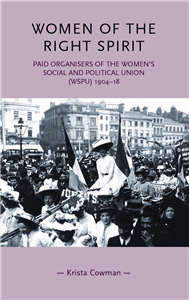
This book is the first investigation on how official organizers built and sustained the national militant campaign of the Women's Social and Political Union between 1903 and 1918. Whilst the overall policy of the Union was devised by an ever-decreasing circle of women, centred around the mother-daughter team of Emmeline and Christabel Pankhurst, much of its actual activity, including its more extreme militant actions such as arson, was devised and implemented by these organizers who worked in the provinces and in London. Women of the right spirit reveals organizers to be a diverse bunch of women, whose class backgrounds ranged from the aristocratic to the extremely impoverished. It describes the ways in which they were recruited and deployed, and the work they undertook throughout Britain. The exhausting pace of their itinerant life is revealed as well as the occasions when organizers fell out with their employers or their own branches. Taking the story of the WSPU's workers up to the end of the First World War, it considers what directions they took when votes for women became a reality. The book will appeal to academics, postgraduates and undergraduates with an interest in women's history, as well as a more general readership wishing to understand the extent of support for the votes for women campaign and the mechanisms through which it organized. ;
Trusted Partner

The increasing hostility that Jews experience can no longer be explained away with fine rhetoric. Antisemitism is taking hold in a menacing way at the heart of society. Sigmund Gottlieb addresses his wake-up call to the population at large: stand up – not only against right-wing extremist violence and radical Islamism, but also against hatred in the social media, against unfair criticism of the state of Israel, against anti-Jewish abusive language in the school playground, against trivializing reports in the media and day-to-day indifference. The resurgent talk of ‘packed suitcases’ in Jewish communities is a moral indictment. And it is intolerable.
Trusted Partner

The human brain is a wondrous thing, highly complex and highly functional. However, the control centre of our feelings, thoughts and actions can sometimes go out of sync. Some reasons for this are known, such as genetic factors, hormonal effects or trauma. In other cases, we are still in the dark. In an extreme case scenario, the brain may create bizarre delusions – masterful narrations that the people affected fi nd completely conclusive and reasonable. Monika Niehaus has compiled 36 such disorders ranging from love madness and the gourmand syndrome – where gourmet food becomes the purpose of life – to people who desire nothing more than to have their limbs amputated. She tells gripping tales of famous and not so famous cases. With sensitivity and a considerable dose of humour she takes us into the history of art and literature, and presents scientifi c explanations. This fascinating book shows that our brain is a genius – and madness is quite often NOT inexplicable.
Trusted Partner

This is the first book to consider the difference women MPs make for women constituents in Britain by comparing women parliamentarians' activities, priorities and perceptions to those of their male colleagues. It uncovers complicated gender dynamics that have been neglected in other works because of an exclusive focus on the activities of women MPs, and mounts a systematic challenge to the idea that a critical mass of women is necessary for women's presence to matter. By comparing the representation received by women from a parliament with few women to that received from a parliament with many women, Anna Dionne leads the reader to understand why numbers are not magic. Her empirical research includes interviews with over eighty parliamentarians in London, Scotland, Wales and Northern Ireland, and the amassing of an unprecedented and comprehensive database of representatives' legislative activities. She compares how men and women and different political parties introduce and support bills and motions, ask parliamentary questions, participate in committee and floor debates, and work behind the scenes for cross-party consensus and on constituency casework. The analysis considers gender similarities and differences throughout the policy process and explains the gender dynamics with a new sensitivity to their fluctuation. ;
Trusted Partner

The imperatives of public health shaped our understanding of the cities of the global north in the first industrial revolutions of the nineteenth and twentieth centuries. They are doing so again today, reflecting new geographies of the urban age of the twenty-first. Emergent cities in parts of the globe experiencing most profound urban growth face major problems of economic, ecological and social sustainability when making sense of new health challenges and designing policy frameworks for public health infrastructures. The rapid evolution of complex 'systems of systems' in today's cities continually reconfigure the urban commons, reshaping how we understand urban public health, defining new problems and drawing on new data tools for analysis that work from the historical legacies and geographical variations that structure public health systems.
Trusted Partner

In this bold and exhilarating mix of memoir and writing guide, Melissa Febos tackles the emotional, psychological, and physical work of writing intimately while offering an utterly fresh examination of the storyteller's life and the challenges it presents. How do we write about the relationships that have formed us? How do we describe our bodies, their desires and traumas? What does it mean to have your writing, or living, dismissed as "navel-gazing"-or else hailed as "so brave, so raw"? And to whom, in the end, do our most intimate stories belong? Drawing on her journey from aspiring writer to acclaimed author and writing professor-via addiction and recovery, sex work and academia-Melissa Febos has created a captivating guide to the writing life, and a brilliantly unusual exploration of subjectivity, privacy, and the power of divulgence. Candid and inspiring, Body Work will empower readers and writers alike, offering ideas-and occasional notes of caution-to anyone who has ever hoped to see their true self reflecting back from the open page.
Trusted Partner

In this bold and exhilarating mix of memoir and writing guide, Melissa Febos tackles the emotional, psychological, and physical work of writing intimately while offering an utterly fresh examination of the storyteller's life and the challenges it presents. How do we write about the relationships that have formed us? How do we describe our bodies, their desires and traumas? What does it mean to have your writing, or living, dismissed as "navel-gazing"-or else hailed as "so brave, so raw"? And to whom, in the end, do our most intimate stories belong? Drawing on her journey from aspiring writer to acclaimed author and writing professor-via addiction and recovery, sex work and academia-Melissa Febos has created a captivating guide to the writing life, and a brilliantly unusual exploration of subjectivity, privacy, and the power of divulgence. Candid and inspiring, Body Work will empower readers and writers alike, offering ideas-and occasional notes of caution-to anyone who has ever hoped to see their true self reflecting back from the open page.
Trusted Partner
In this bold and exhilarating mix of memoir and writing guide, Melissa Febos tackles the emotional, psychological, and physical work of writing intimately while offering an utterly fresh examination of the storyteller's life and the challenges it presents. How do we write about the relationships that have formed us? How do we describe our bodies, their desires and traumas? What does it mean to have your writing, or living, dismissed as "navel-gazing"-or else hailed as "so brave, so raw"? And to whom, in the end, do our most intimate stories belong? Drawing on her journey from aspiring writer to acclaimed author and writing professor-via addiction and recovery, sex work and academia-Melissa Febos has created a captivating guide to the writing life, and a brilliantly unusual exploration of subjectivity, privacy, and the power of divulgence. Candid and inspiring, Body Work will empower readers and writers alike, offering ideas-and occasional notes of caution-to anyone who has ever hoped to see their true self reflecting back from the open page.
Trusted Partner
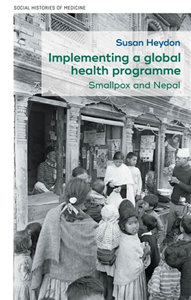
Worldwide eradication of the devastating viral disease of smallpox was devised as a distant global policy, but success depended on implementing a global vaccination programme within nation states. How this was achieved remains relevant and topical for responding to today's global communicable disease challenges. The small and poor Himalayan kingdom of Nepal faced enormous geographical and infrastructure challenges if it was going to succeed in a nationwide vaccination programme. This book acknowledges the key role of the WHO but disrupts the top-down, centre-led standard narrative. Against a background of widespread internal political and social change, Nepal's programme was expanded, effectively decentralised and a vaccination strategy introduced that aligned with people's beliefs. Few foreign personnel were involved.



