
Your Search Results
-

-

Modjaji Books
Modjaji Books is a small, independent, feminist publishing company, that started in 2007 in Cape Town.
View Rights Portal
-
Promoted Content

 Business, Economics & LawJune 2024
The labour movement in Lebanon
Power on hold
by Lea Bou Khater
The labour movement in Lebanon: Power on hold narrates the history of the Lebanese labour movement from the early twentieth century to today. Bou Khater demonstrates that trade unionism in the country has largely been a failure, for reasons including state interference, tactical co-optation, and the strategic use of sectarianism by an oligarchic elite, together with the structural weakness of a service-based laissez-faire economy. Drawing on a vast body of Arabic-language primary sources and difficult-to-access archives, the book's conclusions are significant not only for trade unionism, but also for new forms of workers' organisations and social movements in Lebanon and beyond. The Lebanese case study presented here holds significant implications for the wider Arab world and for comparative studies of labour. This authoritative history of the labour movement in Lebanon is vital reading for scholars of trade unionism, Lebanese politics, and political economy.
-
Promoted Content
 Humanities & Social SciencesMay 2009
Consumerism and the Co-operative movement in modern British history
Taking stock
by Lawrence Black, Nicole Robertson
Despite the abundance and quality of recent historical writing on consumerism, it cannot be said that the modern Co-operative movement (Co-op) has been well served. It has also been by-passed in studies that locate Britons' identity in their consumption. The reasons for this can be found in the widely perceived decline of the Co-op since the 1950s, but also in various historiographical agendas that have resulted in its relative invisibility in modern British history. This book, by demonstrating the variety of broader issues that can be addressed through the Co-op and the vibrancy of new historical research into consumption, seeks to remedy this. Taking stock, both of the Co-op in a broader context and of new approaches to the history of consumption, combines the work of leading authorities on the Co-op with recent scholarly research. It explores the Co-op's distinctive interface between everyday issues and grander idealistic concerns. The chapters intersect to examine a broad range of themes, notably: the politics of consumerism including consumer protection, ethical and fair trading and alternatives to corporate commerce; design and advertising; the Co-op's relations with other components of the labour movement; and its ideology, image and memory. The collection looks at the Co-operative movement locally (through specific case studies), nationally and also in comparison to the European movement. This collection will appeal to academics, researchers, teachers and students of the economic, cultural and political history of twentieth-century Britain. It will also be of interest to academics and students of business studies, and co-operative members themselves. ;
-
 Trusted Partner
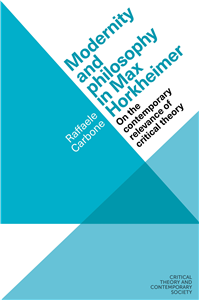 Humanities & Social SciencesJuly 2026
Modernity and philosophy in Max Horkheimer
On the contemporary relevance of critical theory
by Raffaele Carbone
This book shows that Max Horkheimer's program of critical theory and his research throughout his career as a university professor and thinker are rooted in the cogency of philosophical questions and an in-depth knowledge of the historical development of philosophical problems in their close correlation with the socio-economic framework which shaped the 'bourgeois society' and the Modern Era. Indeed, his analyses of modern philosophers allows us to understand how the bourgeoisie seeks legitimisation and consolidation of its position, partly through the voices of its thinkers. In this way, in his investigation of early modern philosophy problems, and through constant dialogue with his colleagues Adorno, Marcuse, Pollock and Fromm, Horkheimer expresses a profound awareness of the critical force inherent in thought which, admittedly, is ever vulnerable to crisis and weakening, but which can always be reactivated.
-
Trusted Partner
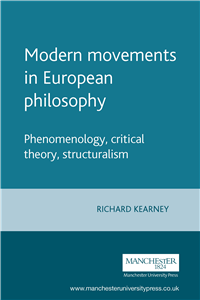 Humanities & Social SciencesNovember 1994
Modern movements in European philosophy
Phenomenology, critical theory, structuralism
by Richard Kearney
In this now classic textbook, Richard Kearney surveys the work of nineteen of this century's most influential European thinkers, and acts as an introduction to three major movements: phenomenology, critical theory and structuralism. This edition includes a chapter devoted to Julia Kristeva, whose work in the fields of semiotics and psychoanalytic theory has made a significant contribution to recent continental thought. ;
-
Trusted Partner
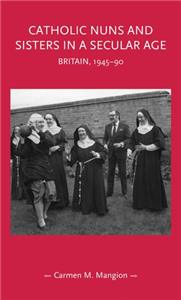 Humanities & Social SciencesApril 2021
Catholic nuns and sisters in a secular age
Britain, 1945–90
by Carmen M. Mangion
This is the first in-depth study of post-war female religious life. It draws on archival materials and a remarkable set of eighty interviews to place Catholic sisters and nuns at the heart of the turbulent 1960s, integrating their story of social change into a larger British and international one. Shedding new light on how religious bodies engaged in modernisation, it addresses themes such as the Modern Girl and youth culture, '1968', generational discourse, post-war modernity, the voluntary sector and the women's movement. Women religious were at the forefront of the Roman Catholic Church's movement of adaptation and renewal towards the world. This volume tells their stories in their own words.
-
Trusted Partner
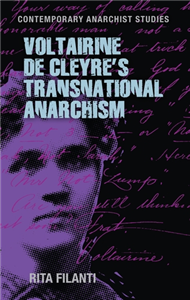 Humanities & Social SciencesMay 2026
Voltairine de Cleyre’s transnational anarchism
by Rita Filanti
Despite a growing interest in her life and work, Voltairine de Cleyre's contribution to anarchist studies, women studies, and American literature is still mostly unacknowledged. Described by Emma Goldman as 'the most gifted and brilliant anarchist woman America ever produced', de Cleyre authored poems, prose sketches, lectures and translations which radiate with her vision of the world, meticulous use of language, and iconoclastic vigor. Drawing on her copious correspondence with family members, friends and comrades, this monograph provides novel insight into the most significant events of her life while investigating the aesthetic concern characterizing all of her writing. Constantly shifting across languages, she established cosmopolitan networks within immigrant communities at home and beyond the ocean, always believing, until her untimely death, in universal solidarity and the ultimate non-existence of national, ethnic and linguistic barriers.
-
Trusted Partner
 Humanities & Social SciencesFebruary 2022
Women art workers and the Arts and Crafts movement
by Zoë Thomas, Lynn Abrams
-
Trusted Partner
 Business, Economics & LawFebruary 2022
The labour movement in Lebanon
by Lea Bou Khater, Simon Mabon
-
Trusted Partner


Does Movement Really Make Us Smart?
by Petra Jansen, Stefanie Richter
Media reports often praise movement as a cure-all. But apart from its undisputed positive effect on health, does movement really make us smarter? Consider a national football team, for example – are these excessively sports-driven players automatically the smartest people? Should we simply replace all school subjects with sports? The authors provide a detailed summary of the latest scientific findings on the influence of movement on cognitive ability. They describe the effects of movement, on old age, embodiment, emotion, school as well as other factors that influence cognition. Target Group: teachers, lecturers, psychologists, psychiatrists, neurologists, psychotherapists, movement therapists.
-
Trusted Partner
 Social issues (Children's/YA)June 2014
Youth policy, civil society and the modern Irish state
by Fred Powell, Martin Geoghegan, Margaret Scanlon, Katharina Swirak
This book, now available in paperback, explores the development of youth policy and youth work in Ireland from the mid-nineeenth century to the present day. Based on original research, funded by the Irish Research Council for the Humanities and Social Sciences (IRCHSS), it looks at the social construction of youth, the emergence of the early youth movements and the nature and scope of contemporary youth work. Key issues include: the shift from mainstream to targeted provision, the professionalisation of the sector and the increased partnership between the state and voluntary sector. A second major theme is the treatment of young people in industrial and reformatory schools, with particular reference to the findings of the Ryan Report on child abuse (2009). This is the only book which combines an exploration of the history and current scope of youth work and youth policy, and which is based on comprehensive original research. It will be essential reading for lecturers and students in youth work, social sciences, social history and related fields.
-
Trusted Partner
 Humanities & Social SciencesMarch 2017
Silk and empire
by Brenda King
In this book, Brenda M. King challenges the notion that Britain always exploited its empire. Creativity, innovation and entrepreneurship were all part of the Anglo-Indian silk trade and were nurtured in the era of empire through mutually beneficial collaboration. The trade operated within and without the empire, according to its own dictates and prospered in the face of increasing competition from China and Japan. King presents a new picture of the trade, where the strong links between Indian designs, the English silk industry and prominent members of the English the arts and crafts movement led to the production of beautiful and luxurious textiles. Lavishly illustrated, this book will be of interest to those interested in the relationship between the British Empire and the Indian subcontinent, as well as by historians of textiles and fashion.
-
Trusted Partner
 The ArtsJune 2021
Contemporary French cinema
An introduction (revised edition)
by Guy Austin
Contemporary French cinema is an essential introduction to popular French film of the last 35 years. It charts recent developments in all genres of French cinema with analyses of over 120 movies, from Les Valseuses to Caché. Reflecting the diversity of French film production since the New Wave, this clear and perceptive study includes chapters on the heritage film, the thriller and the war movie, alongside the 'cinéma du look', representations of sexuality, comedies, the work of women film makers and le jeune cinéma. Each chapter introduces the public reception and critical debates surrounding a given genre, interwoven with detailed accounts of relevant films. Confirmed as a major contribution to both Film Studies and French Studies, this book is a fascinating volume for students and fans of French film alike.
-
Trusted Partner
 The ArtsJanuary 2019
Contemporary French cinema
An introduction (revised edition)
by Guy Austin
Contemporary French cinema is an essential introduction to popular French film of the last 35 years. It charts recent developments in all genres of French cinema with analyses of over 120 movies, from Les Valseuses to Caché. Reflecting the diversity of French film production since the New Wave, this clear and perceptive study includes chapters on the heritage film, the thriller and the war movie, alongside the 'cinéma du look', representations of sexuality, comedies, the work of women film makers and le jeune cinéma. Each chapter introduces the public reception and critical debates surrounding a given genre, interwoven with detailed accounts of relevant films. Confirmed as a major contribution to both Film Studies and French Studies, this book is a fascinating volume for students and fans of French film alike.
-
Trusted Partner
 The ArtsJanuary 2019
Realist film theory and cinema
The nineteenth-century Lukácsian and intuitionist realist traditions
by Ian Aitken
'Realist film theory and cinema' embraces studies of cinematic realism and 19th century tradition, the realist film theories of Lukács, Grierson, Bazin and Kracauer, and the relationship of realist film theory to the general field of film theory and philosophy. This is the first book to attempt a rigorous and systematic application of realist film theory to the analysis of particular films. The book suggests new ways forward for a new series of studies in cinematic realism, and for a new form of film theory based on realism. It stresses the importance of the question of realism both in film studies and in contemporary life. Aitken's work will be of interest to scholars and advanced students of film studies, literary studies, media studies, cultural studies and philosophy.
-
Trusted Partner
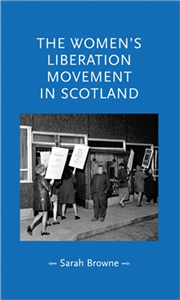 Humanities & Social SciencesAugust 2014
The women's liberation movement in Scotland
by Sarah Browne, Pamela Sharpe, Penny Summerfield, Lynn Abrams, Cordelia Beattie
This is the first book-length account of the women's liberation movement in Scotland, which, using documentary evidence and oral testimony, charts the origins and development of this important social movement of the post-1945 period. In doing so, it reveals the inventiveness and fearlessness of feminist activism, while also pointing towards the importance of considering the movement from the local and grassroots perspectives, presenting a more optimistic account of the enduring legacy of women's liberation. Not only does this book uncover the reach of the WLM but it also considers what case studies of women's liberation can tell us about the ways in which the development of the movement has been portrayed. Previous accounts have tended to equate the fragmentation of the movement with weakness and decline. This book challenges this conclusion, arguing that fragmentation led to a diffusion of feminist ideas into wider society. In the Scottish context, it led to a lively and flourishing feminist culture where activists highlighted important issues such as abortion and violence against women. ;
-
Trusted Partner
 Humanities & Social SciencesJuly 2021
Critical theory and feeling
The affective politics of the early Frankfurt School
by Simon Mussell
This book offers a unique and timely reading of the early Frankfurt School in response to the recent 'affective turn' within the arts and humanities. Resisting the overly rationalist tendencies of political philosophy, it argues that critical theory actively cultivates a powerful connection between thinking and feeling, and rediscovers a range of often neglected concepts that were of vital importance to the first generation of critical theorists, including melancholia, hope, (un)happiness, objects and mimesis. In doing so, it brings the dynamic work of Walter Benjamin, Theodor Adorno, Ernst Bloch and Siegfried Kracauer into conversation with more recent debates around politics and affect. An important intervention in the fields of affect studies and social and political thought, Critical theory and feeling shows that sensuous experience is at the heart of the Frankfurt School's affective politics.
-
Trusted Partner
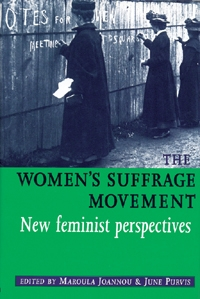 Humanities & Social SciencesMay 2009
The Women's Suffrage movement
*New feminist perspectives*
by Maroula Joannou, June Purvis
Available in paperback for the first time, this important collection of essays illustrates the complexity, richness and diversity of the suffrage movement. Combining historical reappraisal with lively accounts of the culture of the women's suffrage movement, this volume offers a unique focus. It includes studies of the fascinating, but neglected groups that participated in the campaign: the Women's Franchise League; the Women's Freedom League; the Women's Tax Resistance League and the United Suffragists. This is accompanied by feminist research on the poetry, fiction and drama that emerged from women's struggle for the vote. In addition there are reappraisals of two leading figures in the Pankhursts' Women's Social and Political Union, an illuminating analysis of the relationship between suffrage and sexuality, and a discussion of what happened away from the metropolis, as well as of the little known campaign to extend the vote after 1918. ;
-
Trusted Partner
 The ArtsJune 2021
The new pornographies
Explicit sex in recent French fiction and film
by Victoria Best, Martin Crowley
The turn of the twenty-first century has witnessed the striking advance of pornography into the Western cultural mainstream. Symptomatic of this development has been the use by writers, artists, and film-makers of the imagery and aesthetics of pornography, in works which have, often on this basis, achieved considerable international success. Amongst these artists are a number of French authors and directors - such as Michel Houellebecq, Catherine Breillat, Virginie Despentes, or Catherine Millet - whose work has often been dismissed as trashy or exploitative, but whose use of pornographic material may in fact be indicative of important contemporary concerns. In this study of a very significant trend, the authors explore how the reference to pornography encodes diverse political, cultural, and existential questions, including relations between the sexes, the collapse of avant-garde politics, gay sexualities in the time of AIDS, the anti-feminist backlash, the relation to the body and illness, the place of fantasy, and the sexualisation of children. It will be of interest to undergraduates, graduates, and researchers in the fields of French culture, gender, film and media studies.
-
Trusted Partner
 The ArtsJanuary 2019
The new pornographies
Explicit sex in recent French fiction and film
by Victoria Best, Martin Crowley
The turn of the twenty-first century has witnessed the striking advance of pornography into the Western cultural mainstream. Symptomatic of this development has been the use by writers, artists, and film-makers of the imagery and aesthetics of pornography, in works which have, often on this basis, achieved considerable international success. Amongst these artists are a number of French authors and directors - such as Michel Houellebecq, Catherine Breillat, Virginie Despentes, or Catherine Millet - whose work has often been dismissed as trashy or exploitative, but whose use of pornographic material may in fact be indicative of important contemporary concerns. In this, the first study of this significant trend, the authors explore how the reference to pornography encodes diverse political, cultural, and existential questions, including relations between the sexes, the collapse of avant-garde politics, gay sexualities in the time of AIDS, the anti-feminist backlash, the relation to the body and illness, the place of fantasy, and the sexualisation of children. It will be of interest to undergraduates, graduates, and researchers in the fields of French culture, gender, film and media studies.
-
Trusted Partner
 The ArtsJune 2017
Contemporary Australian cinema
An introduction
by Jonathan Rayner
Provides an introduction to the products and context of the new Australian film industry which arose toward the end of the 1960s. Traces the development of Australian film, in terms of prominent directors and stars, consistent themes, styles and evolving genres. The evolution of the film genres peculiar to Australia, and the adaptation of conventional Hollywood forms (such as the musical and the road movie) are examined in detail through textual readings of landmark films. Films and trends discussed include: the period film and Picnic at Hanging Rock; the Gothic film and the Mad Max trilogy; camp and kitsch comedy and the Adventures of Pricilla, Queen of the Desert. The key issue of the revival (the definition, representation and propagation of a national image) is woven through analysis of the new Australian cinema.

