
Folklore Publishing
Livres Canada Books
View Rights Portal


Popular television drama: critical perspectives' is a collection of essays examining landmark programmes of the last forty years, from 'Doctor Who' to 'The Office', and from 'The Demon Headmaster' to 'Queer As Folk'. Contributions from prominent academics focus on the full range of popular genres, from sitcoms to science fiction, gothic horror and children's drama, and challenge received wisdom by reconsidering how British television drama can be analysed. Each section is preceded by an introduction in which the editors discuss how the essays address existing problems in the field and also suggest new directions for study. The book is split into three sections, addressing the enduring appeal of popular genres, the notion of 'quality' in television drama, and analysing a range of programmes past and present. Popular television drama: critical perspectives will be of interest to students and researchers in many academic disciplines that study television drama. Its breadth and focus on popular programmes will also appeal to those interested in the shows themselves.
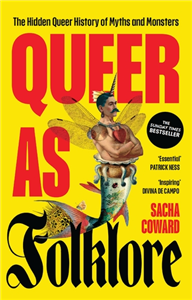
A celebration of queer history like you've never seen it before. Queer as folklore travels across centuries and continents to reveal the unsung heroes and villains of storytelling, magic and fantasy. Featuring images from archives, galleries and museums around the world, each chapter investigates the queer history of different mythic and folkloric characters, both old and new. Leaving no headstone unturned, Sacha Coward takes you on a wild ride through the night from ancient Greece to the main stage of RuPaul's Drag Race, visiting cross-dressing pirates, radical fairies and the graves of the 'queerly departed' along the way. Queer communities have often sought refuge in the shadows and created safe spaces in underworlds. But these forgotten narratives tell stories of resilience that deserve to be heard. Join any Pride march and you will see a glorious display of papier-mâché unicorn heads, drag queens in mermaid tails and more fairy wings than you can shake a trident at. These are not just accessories: they are queer symbols with historic roots. To truly understand who queer people are today, we must confront the twisted tales of the past.
 Trusted Partner
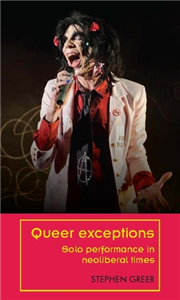
Queer exceptions is a study of contemporary solo performance in the UK and Western Europe that explores the contentious relationship between identity, individuality and neoliberalism. With diverse case studies featuring the work of La Ribot, David Hoyle, Oreet Ashery, Bridget Christie, Tanja Ostojic, Adrian Howells and Nassim Soleimanpour, the book examines the role of singular or 'exceptional' subjects in constructing and challenging assumed notions of communal sociability and togetherness, while drawing fresh insight from the fields of sociology, gender studies and political philosophy to reconsider theatre's attachment to singular lives and experiences. Framed by a detailed exploration of arts festivals as encapsulating the material, entrepreneurial circumstances of contemporary performance-making, this is the first major critical study of solo work since the millennium.
Trusted Partner

Jacques Martineau, Olivier Ducastel, Alain Guiraudie, Sébastien Lifshitz and Céline Sciamma. The films of these five major French directors exemplify queer cinema in the twenty-first century. Comprehensive in scope, Queer cinema in contemporary France traces the development of the meaning of queer across these directors' careers, from their earliest, often unknown films to their later, major films with wide international release. Whether having sex on the beach or kissing in the high school swimming pool, these cinematic characters create or embody forward-looking, open-ended and optimistic forms of queerness and modes of living, loving and desiring. Whether they are white, beur or black, whether they are lesbian, gay, trans* or queer, they open up hetero- and cisnormativity to new ways of being a gendered subject.
Trusted Partner
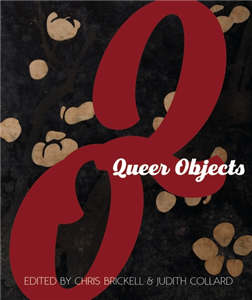
Queer lives give rise to a vast array of objects: the things we fill our houses with, the gifts we share with our friends, the commodities we consume at work and at play, the clothes and accessories we wear, and the analogue and digital technologies we use to communicate with one another. But what makes an object queer? The sixty-three chapters in Queer Objects consider this question in relation to lesbian, gay and transgender communities across time, cultures and space. In this unique international collaboration, well-known and newer writers traverse world history to write about items ranging from ancient Egyptian tomb paintings and Roman artefacts to political placards, snapshots, sex toys and the smartphone. Fabulous, captivating, transgressive.
Trusted Partner

De-centering queer theory seeks to reorient queer theory to a different conception of bodies and sexuality derived from Eastern European Marxism. The book articulates a contrast between the concept of the productive body, which draws its epistemology from Soviet and avant-garde theorists, and Cold War gender, which is defined as the social construction of the body. The first part of the book concentrates on the theoretical and visual production of Eastern European Marxism, which proposed an alternative version of sexuality to that of western liberalism. In doing so it offers a historical angle to understand the emergence not only of an alternative epistemology, but also of queer theory's vocabulary. The second part of the book provides a Marxist, anti-capitalist archive for queer studies, which often neglects to engage critically with its liberal and Cold War underpinnings.
Trusted Partner
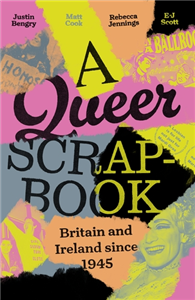
A beautifully illustrated compendium of LGBTIQ+ life. A queer scrapbook offers a treasure trove of LGBTIQ+ histories from across Britain and Ireland. Packed with materials, from interviews and newspaper articles to photographs and flyers, the book explores urban, rural and regional queer life since 1945. Commentaries and short essays introduce a changing queer landscape, spotlighting four broad themes: home and family, sex and socialising, arts and culture and politics and activism. The book delves into the meaning and experiences of domesticity and parenting and explores the sometimes unexpected places LGBTIQ+ people met to have fun. It examines the importance of creative work in forming community and identity and shows how people fought injustice and advocated for equal rights. Collecting has been a way for the marginalised to explore and assert identity and community. A queer scrapbook vividly illustrates the diversity of queer and trans lives across the British and Irish isles since the Second World War.
Trusted Partner
Trusted Partner
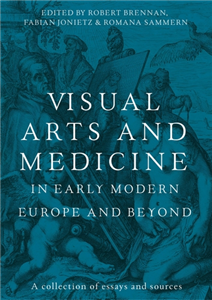
This book opens up new perspectives on the relationship between art, medicine, and science in late-medieval and early modern Europe. Looking beyond the traditional nexus of art, anatomy, and optics, the volume sheds light on a broader array of connections between artists and physicians: collaborations between painters and doctors on colour charts, handwork skills common to sculptors and surgeons, the transmission of art theory through medical texts long before the emergence of art writing itself as an independent genre, and the kinship of medical diagnosis with early modes of connoisseurship. Reconfiguring the histories of art, medicine, and science, the book also traverses conventional boundaries between physical and mental health, religious and medical modes of healing, menial and exalted forms of knowledge and labour, as well as vernacular and scientific understandings of human difference, including gender, race, and neurodiversity.
Trusted Partner
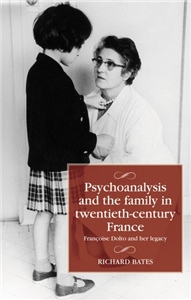
In the last quarter of the twentieth century, if French people had a parenting problem or dilemma there was one person they consulted above all: Françoise Dolto (1908-88). But who was Dolto? How did she achieve a position of such influence? What ideas did she communicate to the French public? This book connects the story of Dolto's rise to two broader histories: the dramatic growth of psychoanalysis in postwar France and the long-running debate over the family and the proper role of women in society. It shows that Dolto's continued reputation in France as a liberal and enlightened educational thinker is at best only partially deserved and that conservative and anti-feminist ideas often underpinned her prominent public interventions. While Dolto retains the status of a national treasure, her career has had far-reaching and sometimes harmful repercussions for French society, particularly in the treatment of autism.
Trusted Partner
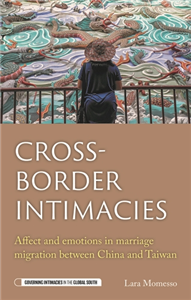
Since the early 1990s, economic exchanges between China and Taiwan have paved the way to migration across a previously closed border and to social and cultural interactions between the two populations. Despite these broader changes, the unresolved issue of Taiwan sovereignty has tainted not only the relations between the two governments but also the everyday life of those who move across the Taiwan Strait. In this politicised environment, intimate and affective practices linked to cross-border marriage and family formation are never just private. Instead, they are deeply entangled with the emotional and affective processes generated at the macro and meso level of political and social life and revolving around national interests. Tracing the intimate, emotional and affective practices linked to family creation, identity formation and integration with the local and national communities, this ethnographic study offers a subjective, dynamic, and complex picture of what it means to be a mainland spouse in Taiwan.
Trusted Partner
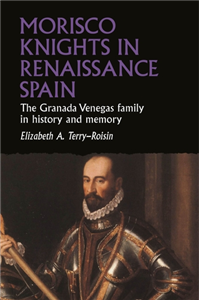
How does a Morisco enter the Spanish nobility? This book reveals the cultural strategies through which a family of converts from Islam to Christianity overcame limpieza de sangre laws, rose in social status, avoided King Philip III's Morisco expulsions of 1609-14, and achieved a noble title. Drawing on archival sources from both Spain and Italy to re-create the original family archive, this book follows the Granada Venegas family from Granada, to Madrid, to the dusty Andalucían town of Campotéjar, of which they became Marquises, and finally to Italy. Their descendants would serve as Doges of Genoa in the eighteenth century.
Trusted Partner
Trusted Partner
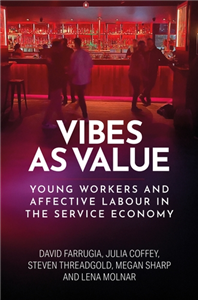
Vibes as value explores the relationship between subjectivity, labour and value in the hospitality industry, and thereby how youth, gender, sexuality, race and social class are embodied and made productive in the service economy. It shows that the key product of hospitality labour is 'vibes', or moments of enjoyment and relationality co-produced through exploitative relationships amongst workers and consumers. In the process, the book theorises hospitality as a form of affective labour organised through the normative and structural relations of precarious service work. It shows how identity construction produces value within the highly unequal social terrain of the service economy, and how hospitality labour enacts hierarchies of value extending far beyond the limits of the industry itself.
Trusted Partner
Trusted Partner


Seit drei Jahrzehnten untersuchen Queer Studies die Macht geschlechtlicher und sexueller Normen – und wie diese infrage gestellt werden. Sie erforschen die komplexen Zusammenhänge von Sexualität, Geschlecht, Rassismus, Klasse und Nation. Dieser Band versammelt klassische und neuere Schlüsseltexte der anglophonen Queer Studies in deutscher Sprache, von Judith Butler und Eve Kosofsky Sedgwick bis Cathy Cohen und José Esteban Muñoz. Er führt in die wichtigsten theoretischen Positionen ein, macht mit den zentralen Entwicklungslinien des Diskurses vertraut und präsentiert wegweisende queere Analysen zu Kapitalismus, Migration, Geopolitik, Behinderung, Aktivismus, Kultur und Subkultur.
Trusted Partner

Seit drei Jahrzehnten untersuchen Queer Studies die Macht geschlechtlicher und sexueller Normen – und wie diese infrage gestellt werden. Sie erforschen die komplexen Zusammenhänge von Sexualität, Geschlecht, Rassismus, Klasse und Nation. Dieser Band versammelt erstmals klassische und neuere Schlüsseltexte der anglophonen Queer Studies in deutscher Sprache, von Judith Butler und Eve Kosofsky Sedgwick bis Jack Halberstam, Cathy Cohen und José Esteban Muñoz. Er führt in die wichtigsten theoretischen Positionen ein, macht mit den zentralen Entwicklungslinien des Diskurses vertraut und präsentiert wegweisende queere Analysen zu Kapitalismus, Migration, Geopolitik, Behinderung, Aktivismus, Kultur und Subkultur.
Trusted Partner
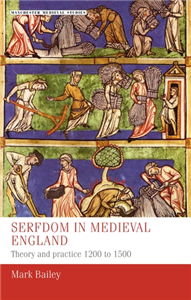
Serfdom was a coercive relationship between a landowner and peasant, which was widespread across medieval and early modern Europe. Itfeatures prominently in major historical debates, such as the origins of capitalism and the divergent pathways of western and eastern Europe to modernity. Scholars have paid particular attention to English serfdom, which is usually portrayed as highly oppressive and a major cause of the Peasants' Revolt in 1381. This comprehensive survey draws on a vast scholarship and new research to show how, in reality, English serfdom was weak, casting new light on the nature of its society and economy when the Black Death struck in 1348-9. The pandemicnow assumesa central role in the rapid decline of serfdom, as illustrated in a case study of the estate of one of England's harshest landowners, St Albans abbey.
Trusted Partner

The French empire at war draws on original research in France and Britain to investigate the history of the divided French empire - the Vichy and the Free French empires - during the Second World War. What emerges is a fascinating story. While it is clear that both the Vichy and Free French colonial authorities were only rarely masters of their own destiny during the war, preservation of limited imperial control served them both in different ways. The Vichy government exploited the empire in an effort to withstand German-Italian pressure for concessions in metropolitan France and it was key to its claim to be more than the mouthpiece of a defeated nation. For Free France too, the empire acquired a political and symbolic importance which far outweighed its material significance to the Gaullist war effort. As the war progressed, the Vichy empire lost ground to that of the Free French, something which has often been attributed to the attraction of the Gaullist mystique and the spirit of resistance in the colonies. In this radical new interpretation, Thomas argues that it was neither of these. The course of the war itself, and the initiatives of the major combatant powers, played the greatest part in the rise of the Gaullist empire and the demise of Vichy colonial control.
Trusted Partner



