
Humanities & Social Sciences
Description
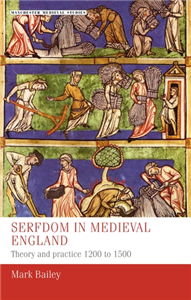
Serfdom was a coercive relationship between a landowner and peasant, which was widespread across medieval and early modern Europe. Itfeatures prominently in major historical debates, such as the origins of capitalism and the divergent pathways of western and eastern Europe to modernity. Scholars have paid particular attention to English serfdom, which is usually portrayed as highly oppressive and a major cause of the Peasants' Revolt in 1381.
This comprehensive survey draws on a vast scholarship and new research to show how, in reality, English serfdom was weak, casting new light on the nature of its society and economy when the Black Death struck in 1348-9. The pandemicnow assumesa central role in the rapid decline of serfdom, as illustrated in a case study of the estate of one of England's harshest landowners, St Albans abbey.
More Information
Rights Information
Albania, Algeria, Angola, Argentina, Armenia, Australia, Austria, Bahrain, Belgium, Belize, Benin, Bolivia, Bosnia and Herzegovina, Botswana, Brazil, Bulgaria, Burkina Faso, Burundi, Cameroon, Canada, Cape Verde, Central African Republic, Chad, Chile, China, Colombia, Comoros, Congo [DRC], Congo, Republic of the, Costa Rica, Ivory Coast, Croatia, Czech Republic, Denmark, Djibouti, Ecuador, Egypt, El Salvador, Equatorial Guinea, Eritrea, Estonia, Ethiopia, Faroe Islands, Finland, France, French Guiana, Gabon, Gambia, Georgia, Germany, Ghana, Greece, Guatemala, Guinea, Guinea-Bissau, Guyana, Honduras, Hongkong, Hungary, Iceland, India, Indonesia, Iran, Iraq, Ireland, Israel, Italy, Japan, Jordan, Kazakhstan, Kenya, Kuwait, Latvia, Lebanon, Lesotho, Liberia, Libya, Lithuania, Luxembourg, Macau, China, Macedonia [FYROM], Madagascar, Malawi, Malaysia, Mali, Malta, Mauritania, Mauritius, Mayotte, Mexico, Mongolia, Montenegro, Morocco, Mozambique, Namibia, Netherlands, New Zealand, Nicaragua, Niger, Nigeria, Norway, Oman, Pakistan, Panama, Paraguay, Peru, Philippines, Poland, Portugal, Puerto Rico, Qatar, Reunion, Romania, Russia, Rwanda, Saint Helena, Sao Tome and Principe, Saudi Arabia, Senegal, Serbia, Seychelles, Sierra Leone, Singapore, Slovakia, Slovenia, Somalia, South Africa, South Korea, Spain, Sri Lanka, Sudan, Suriname, Swaziland, Sweden, Switzerland, Syria, Taiwan, Tanzania, Thailand, Timor-Leste, Togo, Tokelau, Tunisia, Turkey, Uganda, Ukraine, United Arab Emirates, United Kingdom, United States, Uruguay, Venezuela, Vietnam, Western Sahara, Yemen, Zambia, Zimbabwe, South Sudan, Cyprus, Palestine, Bangladesh, Cambodia, Liechtenstein, Azerbaijan, Jamaica, Kyrgyzstan, Dominican Republic, Myanmar, Monaco
Endorsements
Serfdom was a common form of legal and socio-economic exclusion in medieval Europe.; reconstructing how it operated enhances our understanding of diversity and its significance in the human past. Furthermore, its operation and decline in medieval England feature prominently in four major debates in economic and social history: the causes of the crisis of the early fourteenth century, the role of the Black Death of 1348-9 in triggering fundamental socio-economic change, the role of class struggle in determining particular pathways of economic development, and the origins of capitalism. English serfdom is traditionally portrayed as pervasive and oppressive and, as such, a fundamental cause of the pre-plague crisis and the Peasants' Revolt of 1381. This major survey draws on a vast scholarship and original research to show that, in reality, English serfdom was weak in this crucial period. The reasons for its weakness and the implications for our understanding of economic change are explored. As a result, the Black Death dealt serfdom a mortal blow long before the revolt, as revealed through three case studies documenting its rapid decline on the estate of St Albans abbey, one of England's harshest landowners and a key target in 1381. The book offers insights into the use of theory and evidence in history, and the sizeable gap that could exist between legal norms and actual practice on the ground, and provides the definitive reference point for comparisons with European systems of serfdom.
Reviews
Serfdom was a common form of legal and socio-economic exclusion in medieval Europe.; reconstructing how it operated enhances our understanding of diversity and its significance in the human past. Furthermore, its operation and decline in medieval England feature prominently in four major debates in economic and social history: the causes of the crisis of the early fourteenth century, the role of the Black Death of 1348-9 in triggering fundamental socio-economic change, the role of class struggle in determining particular pathways of economic development, and the origins of capitalism. English serfdom is traditionally portrayed as pervasive and oppressive and, as such, a fundamental cause of the pre-plague crisis and the Peasants' Revolt of 1381. This major survey draws on a vast scholarship and original research to show that, in reality, English serfdom was weak in this crucial period. The reasons for its weakness and the implications for our understanding of economic change are explored. As a result, the Black Death dealt serfdom a mortal blow long before the revolt, as revealed through three case studies documenting its rapid decline on the estate of St Albans abbey, one of England's harshest landowners and a key target in 1381. The book offers insights into the use of theory and evidence in history, and the sizeable gap that could exist between legal norms and actual practice on the ground, and provides the definitive reference point for comparisons with European systems of serfdom.
Author Biography
Mark Bailey is Headmaster of Leeds Grammar School and a Senior Visiting Lecturer at the University of Leeds
 Trusted Partner

Manchester University Press
Manchester University Press is a leading UK publisher known for excellent research in the humanities and social sciences.
View all titlesBibliographic Information
- Publisher Manchester University Press
- Publication Date November 2025
- Orginal LanguageEnglish
- ISBN/Identifier 9781526172976 / 1526172976
- Publication Country or regionUnited Kingdom
- FormatPrint PDF
- Pages432
- ReadershipGeneral/trade; College/higher education; Professional and scholarly
- Publish StatusPublished
- Dimensions216 X 138 mm
- Biblio NotesDerived from Proprietary 5891
- SeriesManchester Medieval Studies
- Reference Code15703
Thank you for proceeding with this offer.
Manchester University Press has chosen to review this offer before it proceeds.
You will receive an email update that will bring you back to complete the process.
You can also check the status in the My Offers area
Manchester University Press has chosen to review this offer before it proceeds.
You will receive an email update that will bring you back to complete the process.
You can also check the status in the My Offers area

Please wait while the payment is being prepared.
Do not close this window.

(c) Copyright 2026 - Frankfurter Buchmesse GmbH. All Right Reserved