
Your Search Results

-
Promoted Content

 Literature & Literary StudiesJune 2017
Victorian demons
Medicine, masculinity, and the Gothic at the fin-de-siècle
by Andrew Smith
Victorian demons provides the first extensive exploration of largely middle-class masculinities in crisis at the fin de siècle. It analyses how ostensibly controlling models of masculinity became demonised in a variety of literary and medical contexts, revealing the period to be much more ideologically complex than has hitherto been understood, and makes a significant contribution to Gothic scholarship. Andrew Smith demonstrates how a Gothic language of monstrosity, drawn from narratives such as 'The Strange Case of Dr Jekyll and Mr Hyde' and 'Dracula', increasingly influenced a range of medical and cultural contexts, destabilising these apparently dominant masculine scripts. He provides a coherent analysis of a range of examples relating to masculinity drawn from literary, medical, legal and sociological contexts, including Joseph Merrick ('The Elephant Man'), the Whitechapel murders of 1888, Sherlock Holmes's London, the writings and trials of Oscar Wilde, theories of degeneration and medical textbooks on syphilis.
-
Promoted Content

 June 2014
Total Recall Revisited
Die besten Stories
by Dick, Philip K. / Nachwort von Steinaecker, Thomas von
-
 Trusted Partner
 Central government policiesDecember 2009
Candide en Dannemarc, ou l’optimisme des honnêtes gens
Voltaire
by Mike Thompson, Edouard Langille
Published in Rouen in 1767 and reprinted two years later, Voltaire's Candide en Dannemarc, ou l'optimisme des honnêtes gens wraps up the adventures of Candide. Turning his back on both Voltairean satire and scepticism, the novelist proposes a moralistic fable - the focal point of which is a rehabilitation of Leibniz's Theory of Optimism. The main body of the novel tells the story of Candide and his new wife, the noble Zénoïde, in their sumptuous Copenhagen townhouse. Before achieving this happy state, however, the couple endures various trials and tribulations reminiscent of the newly minted gothic genre. Candide en Dannemarc also features a satirical portrait of Jean-Jacques Rousseau. ;
-
Trusted Partner
 Literature & Literary StudiesJune 2017
Candide en Dannemarc, ou l’optimisme des honnêtes gens
Voltaire
by Edouard Langille
Published in Rouen in 1767 and reprinted two years later, Voltaire's Candide en Dannemarc, ou l'optimisme des honnêtes gens wraps up the adventures of Candide. Turning his back on both Voltairean satire and scepticism, the novelist proposes a moralistic fable - the focal point of which is a rehabilitation of Leibniz's Theory of Optimism. The main body of the novel tells the story of Candide and his new wife, the noble Zénoïde, in their sumptuous Copenhagen townhouse. Before achieving this happy state, however, the couple endures various trials and tribulations reminiscent of the newly minted gothic genre. Candide en Dannemarc also features a satirical portrait of Jean-Jacques Rousseau.
-
Trusted Partner

 June 2024
At the Very Bottom of the System
How migrant workers ensure prosperity for us
by Sascha Lübbe
The author reveals structural problems and offers solutions – an urgently necessary book, not least with a view to the acute shortage of skilled workers 450,000 migrant workers toll on German construction sites, work in sometimes inhumane conditions in meat factories or as truck drivers, and let’s not forget the hordes of cleaners in German hotels and companies. They are systematically exploited and cheated out of their wages. Sascha Lübbe exposes the octopus-like network of partly criminal companies in a shadowy world where the boundary between the legal and the illegal is blurred. In his evocative book with interviews with those aff ected, he reveals how a parallel system has established itself in the German working world, but also how those affected resist.
-
Trusted Partner
 February 2023
Tobias Mayer
or measuring the earth, sea and sky
by Thomas Knubben
—300th birthday of Tobias Mayer in February 2023 — The rediscovery of a great scientist — A chapter in the fascinating history of science The story of Tobias Mayer's life (1723 to 1762) is that of a child prodigy and orphan who became a pioneer of the Enlightenment as a cartographer, mathematician, physicist and astronomer. Having never been to university, at the age of 28 he was appointed a professor in Göttingen by the Elector of Hanover and King of England. He revolutionised cartography with his zeal and skill, helping sailors to find the right path across the seas and providing people with the firstever clear view of the moon. 17th February 2023 marks the 300th anniversary of the birth of Tobias Mayer. High time to recall this prototype of a scientist.
-
Trusted Partner
 Humanities & Social SciencesFebruary 2015
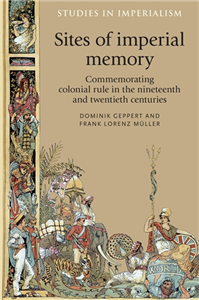
Sites of imperial memory
Commemorating colonial rule in the nineteenth and twentieth centuries
by Andrew Thompson, John Mackenzie
Europe's great colonial empires have long been a thing of the past, but the memories they generated are still all around us. They have left deep imprints on the different memory communities that were affected by the processes of establishing, running and dismantling these systems of imperial rule, and they are still vibrant and evocative today. This volume brings together a collection of innovative and fresh studies exploring different sites of imperial memory - those conceptual and real places where the memories of former colonial rulers and of former colonial subjects have crystallised into a lasting form. The volume explores how memory was built up, re-shaped and preserved across different empires, continents and centuries. It shows how it found concrete expression in stone and bronze, how it adhered to the stories that were told and retold about great individuals and how it was suppressed, denied and neglected. ;
-
Trusted Partner
 Humanities & Social SciencesSeptember 2020
Death and the crown
Ritual and politics in France before the Revolution
by Anne Byrne
Looking at royal ritual in pre-revolutionary France, Death and the crown examines the deathbed and funeral of Louis XV in 1774, the lit de justice of November 1774, and the coronation of Louis XVI, including the ceremony of the royal healing touch for scrofula. It reviews the state of the field in ritual studies and appraises the status of the monarchy in the 1770s, including the recall of the parlements and the many ways people engaged with royal ritual. It answers questions such as whether Louis XV died in fear of damnation, why Marie Antoinette was not crowned in 1775 and why Louis XVI's coronation was not held in Paris. This lively, accessible text is a useful tool for under- and post-graduate teaching which will also be of interest to specialists on this under-researched period.
-
Trusted Partner
 History of Art / Art & Design StylesOctober 2016
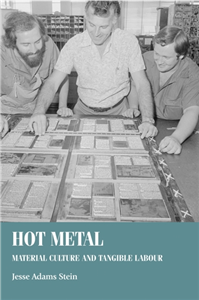
Hot metal
Material culture and tangible labour
by Jesse Stein. Series edited by Bill Sherman, Christopher Breward
The world of work is tightly entwined with the world of things. Hot metal illuminates connections between design, material culture and labour between the 1960s and the 1980s, when the traditional crafts of hot-metal typesetting and letterpress were finally made obsolete with the introduction of computerised technologies. This multidisciplinary history provides an evocative rendering of design culture by exploring an intriguing case: a doggedly traditional Government Printing Office in Australia. It explores the struggles experienced by printers as they engaged in technological retraining, shortly before facing factory closure. Topics explored include spatial memory within oral history, gender-labour tensions, the rise of neoliberalism and the secret making of objects 'on the side'. This book will appeal to researchers in design and social history, labour history, material culture and gender studies. It is an accessible, richly argued text that will benefit students seeking to learn about the nature and erosion of blue-collar work and the history of printing as a craft.
-
Trusted Partner
 Humanities & Social SciencesMay 2026
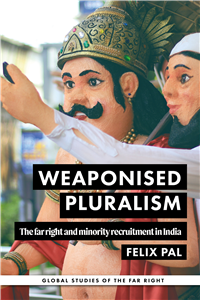
Weaponised pluralism
The far right and minority recruitment in India
by Felix Pal
Weaponised pluralism takes a fine-grained lens to understand why far-right organisations recruit from the very minorities they oppose. Why do these organisations seek to appear like pluralists? Building on his time with the Muslim wing of the Hindu far-right in India, Felix Pal proposes that bigots can strategically use what he calls weaponised pluralism. This political strategy counterintuitively uses progressive political performances to bolster bigoted political agendas. Basing his analysis in an Indian context, Weaponised pluralism nonetheless reveals much about contexts as varied as Palestinian soldiers in the Israeli army, Indigenous Australians on far-right television, and Black congressional candidates in the American Republican Party. Drawing on rare access to the Hindu far-right and its Muslim wing, Pal paints an evocative picture of the complexities of how far-right organising extends far beyond the pointy end of traditional bigotry.
-
Trusted Partner

 Children's & YA
Silver Flood (1). The Mystery of Ray´s Rock
by Alex Falkner/ Torben Weit
The seven children are completely cut off from civilisation, mobile phones don’t work anymore and there’s no sign of help. Strange things happen on the island. Plants and animals grow unnaturally fast, their supplies are raided ... And as other groups of school children emerge, a life and death race begins for Eddie, Milla and their classmates to be rescued from the island. The first instalment of the ‘Silver Flood’ duology: a dangerous adventure with exciting plot twists and scare-factor. For all readers of survival and adventure stories aged 10+. Fast-paced reading for boys and girls, for outdoor kids and all those on their way! The final volume 2, GONE MISSING ON RAY’S ROCK, will be published on 7th April 2020!
-
Trusted Partner
 Film theory & criticismFebruary 2014
The Encyclopedia of British Film
Fourth edition
by Edited by Brian McFarlane
With well over 6,300 articles, including over 500 new entries, this fourth edition of The Encyclopedia of British Film is a fully updated invaluable reference guide to the British film industry. It is the most authoritative volume yet, stretching from the inception of the industry to the present day, with detailed listings of the producers, directors, actors and studios behind a century or so of great British cinema. Brian McFarlane's meticulously researched guide is the definitive companion for anyone interested in the world of film. Previous editions have sold many thousands of copies and this fourth edition will be an essential work of reference for enthusiasts interested in the history of British cinema, and for universities and libraries.
-
Trusted Partner
 May 2024
Fish in Distress
On the careful management of an endangered resource
by Manfred Kriener, Stefan Linzmaier
Consumers stand perplexed at the fish counter. Cod or salmon; mackerel or sea bass? Or perhaps rather carp and trout? How about flounder and dab? Dab what? A terrific flatfish, but sadly hardly anyone has heard of it. And what was it again about organic, aquaculture, wild-caught, and that little blue sustainability certificate? Is catching your own a way out? Before you start thinking it’s time to opt for a chop and fried potatoes instead, read this book. It provides readers with deep blue facts from the world’s waters and analyses the global and local habitat of the finned creature.
-
Trusted Partner
 April 2024
Fact-Immune
Why science denial is so dangerous and how we can protect ourselves against it
by Holm Gero Hümmler
The phenomenon of anti-scientific disinformation has been discussed in the recent past under the acronym FLICC (Fake experts, Logical fallacies, Impossible expectations, Cherry-picking and Conspiracy theories), especially as it pertains to the topic of climate change. What is generally missing however is a more comprehensive consideration of science denial in diff erent disciplines with a critical examination of the central arguments and a comparison of the parallels. Holm Gero Hümmler dedicates himself to this task in this readable and fact-orientated book on topics such as genetic engineering, mobile phone networks, radioactivity, and chips that are implanted under the skin for medical reasons.
-
Trusted Partner
 FictionSeptember 2017
A Vision of Battlements
by Anthony Burgess
by Andrew Biswell, Paul Wake
A Vision of Battlements is the first novel by the writer and composer Anthony Burgess, who was born in Manchester in 1917. Set in Gibraltar during the Second World War, the book follows the fortunes of Richard Ennis, an army sergeant and incipient composer who dreams of composing great music and building a new cultural world after the end of the war. Following the example of his literary hero, James Joyce, Burgess takes the structure of his book from Virgil's Aeneid. The result is, like Joyce's Ulysses, a comic rewriting of a classical epic, whose critique of the Army and the postwar settlement is sharp and assured. The Irwell Edition is the first publication of Burgess's forgotten masterpiece since 1965. This new edition includes an introduction and notes by Andrew Biswell, author of a prize-winning biography of Anthony Burgess.
-
Trusted Partner
 The ArtsMarch 2006
Art history
A critical introduction to its methods
by Michael Hatt, Charlotte Klonk
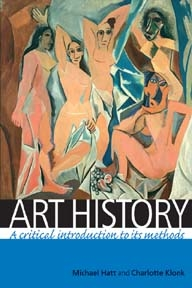
Art History: A critical introduction to its methods provides a lively and stimulating introduction to methodological debates within art history. Offering a lucid account of approaches from Hegel to post-colonialism, the book provides a sense of art history's own history as a discipline from its emergence in the late-eighteenth century to contemporary debates. By explaining the underlying philosophical and political assumptions behind each method, along with clear examples of how these are brought to bear on visual and historical analysis, the authors show that an adherence to a certain method is, in effect, a commitment to a set of beliefs and values. The book makes a strong case for the vitality of the discipline and its methodological centrality to new fields such as visual culture. This book will be of enormous value to undergraduate and graduate students, and also makes its own contributions to ongoing scholarly debates about theory and method. ;
-
Trusted Partner
 Humanities & Social SciencesJanuary 2007
Religion in Revolutionary England
by Christopher Durston, Judith Maltby
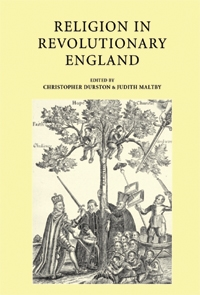
This book offers a collection of essays tightly focused around the issue of religion in England between 1640 and 1660, a time of upheaval and civil war in England. Edited by well-known scholars of the subject, topics include the toleration controversy, women's theological writing, observance of the Lord's Day and prayer books. To aid understanding, the essays are divided into three sections examining theology in revolutionary England, inside and outside the revolutionary National Church and local impacts of religious revolution. Carefully and thoughtfully presented, this book will be of great use for those seeking to better understand the practices and patterns of religious life in England in this important and fascinating period. ;

