
Your Search Results


-
Promoted Content

 Gender studies: menNovember 2007
Representing Renaissance art, c.1500–c.1600
by Catherine E. King
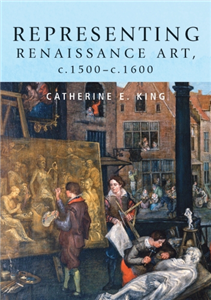
Representing Renaissance art, c.1500-c.1600 is a study of change and continuity in the iconographies of art and the visual representation of artists during the sixteenth century, especially in Italy and the Netherlands. The issue of how, and how far, artists obtained higher status for their profession during the Renaissance is a key question for the study of the early modern period. This book considers the maintenance of well-established traditions for the visual representation of artists, and also examines the new iconographies that emerged in the sixteenth century. By highlighting art and architecture that artists designed for their personal use, including the decoration of their houses, this study provides insight into the tastes and 'ways of looking' specific to artists. By examining the visual evidence we see the opinions both of artists who expressed their views in literary texts, and additionally those of artists who did not publish their ideas in written form.
-
Promoted Content
 Humanities & Social SciencesJuly 2025
Empirical art
Filmmaking for fieldwork in practice
by Andy Lawrence, Martha-Cecilia Dietrich
Empirical art: Filmmaking for fieldwork in practice is an insightful exploration of what the craft of filmmaking brings to social science research. Providing creative avenues on how to narrate encounters, relationships, and experiences during fieldwork, this comprehensive volume offers a rich tapestry of theoretical explorations and explorative methodologies. Skilfully connecting the worlds of ethnography, art and cinema, the contributors in this book act as a compass for filmmakers and researchers venturing to use a camera and microphone to relate and narrate their research collaborations and fieldsites. Drawing from the authors' extensive experience in disciplines like social anthropology, environmental humanities, and political science, "Empirical Art" breaks down the intricate process of crafting ethnographic films that departs from the researcher's subjectivity. Covering aspects of filmmaking from conceptualisation to production and distribution, readers are equipped with a treasure trove of collaborative techniques, innovative approaches, and ethical considerations necessary to generate and examine storytelling practices in contemporary fields of study. The authors discuss the significance of the multiple roles that technologies of filmmaking play in reflecting on cultural practices, social dynamics, and (beyond) human storytelling and their transformative potentials. Whether a seasoned filmmaker, an aspiring ethnographer, or an academic seeking new dimensions for their research, Empirical Art serves as a guide to integrating visual storytelling, cinema craft and empirical research.
-
 Trusted Partner
 The ArtsDecember 2007
The art of poverty
Irony and ideal in sixteenth-century beggar imagery
by Tom Nichols
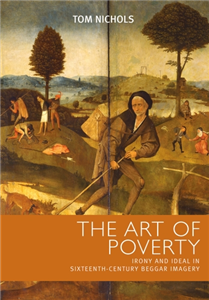
The art of poverty is the first book in English to analyse depictions of beggars in sixteenth-century European art. Featuring works from Germany, the Low Countries, Britain, France and Italy, it discusses a diverse body of imagery in many different media, from crude woodcuts to monumental church altarpieces. It develops a striking thesis, arguing that these works largely conformed to two paradoxical, though mutually supportive, representational approaches. The earlier chapters follow the emergence of a trenchantly negative approach in Northern art, in which beggars are shown as vagabonds, whose idleness and thievery threatened the values of sixteenth-century society (especially its growing emphasis on the need to work). In the other predominant visual mode, beggars are exalted as examples of sacred purity. In many Italian religious paintings, beggars are morally exalted with reference to sacred texts, and made formally beautiful with reference to revered artistic models. Though these approaches reflect the impact of religious reform, it is shown that, by the end of the century, they happily co-existed within Protestant and Catholic cultures. The final part of the book is concerned with the issue of artistic style and with the growing tendency of the beggar image to mediate and dissolve the didactic traditions through which it had originally been defined. The art of poverty will be of special interest to scholars and students of Renaissance art history, and its progressive approach and cross-disciplinary theme and perspective will also make it vital reading for those concerned with the development of early modern European culture. ;
-
Trusted Partner
 Humanities & Social SciencesJune 2010
The Material Renaissance
None
by Michelle O'Malley, Christopher Breward, Evelyn Welch, Bill Sherman
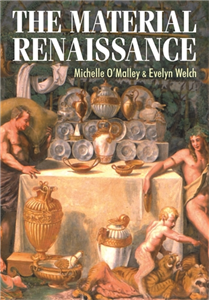
Despite the recent interests of economic and art historians in the workings of the market, we still know remarkably little about the everyday context for the exchange of objects and the meaning of demand in the lives of individuals in the Renaissance. Nor do we have much sense of the relationship between the creation and purchase of works of art and the production, buying and selling of other types of objects in Italy in the period. The material Renaissance addresses these issues of economic and social life. It develops the analysis of demand, supply and exchange first proposed by Richard Goldthwaite in his ground-breaking Wealth and the demand for art in Renaissance Italy, and expands our understanding of the particularities of exchange in this consumer-led period. Considering food, clothing and every-day furnishings, as well as books, goldsmiths' work, altarpieces and other luxury goods, the book draws on contemporary archival material to explore pricing, to investigate production from the point of view of demand, and to look at networks of exchange that relied not only on money but also on credit, payment in kind and gift giving. The material Renaissance establishes the dynamic social character of exchange. It demonstrates that the cost of goods, including the price of the most basic items, was largely contingent upon on the relationship between buyer and seller, shows that communities actively sought new goods and novel means of production long before Colbert encouraged such industrial enterprise in France and reveals the wide ownership of objects, even among the economically disadvantaged. ;
-
Trusted Partner
 Literature & Literary StudiesMarch 2013
The Renaissance text
Theory, editing, textuality
by Andrew Murphy
This collection of essays focuses attention on the broad issue of Renaissance textuality. It explores such topics as the position of the reader relative to the text; the impact of editorial strategies and modes of presentation on our understanding of the text; the complexities of extended textual histories; and the relevance of gender to the process of textual retrieval and preservation. The essays, whilst informed by contemporary theory, are not dominated by a single programmatic viewpoint. Reflecting the multiplicitous nature of Renaissance textuality, the collection provides space for a variety of different positions and lines of analysis and enquiry. The Renaissance text will be of interest to those with specialist concerns in editing, textuality and bibliography, and will also be of interest to those more generally concerned with Renaissance literature or with textual or literary history. ;
-
Trusted Partner
 The ArtsMay 2016
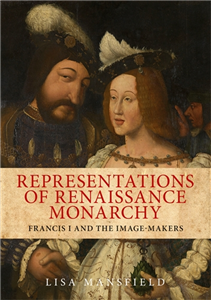
Representations of Renaissance monarchy
Francis I and the image-makers
by Lisa Mansfield
Representations of Renaissance monarchy analyses the portraits and personal imagery of Francis I, one of the most frequently portrayed rulers of sixteenth-century Europe. The distinctive likeness of the Valois king was widely disseminated and perceived by his French subjects, and Tudor and Habsburg rivals abroad. Complementing studies on the representation of Henry VIII, this book makes a dynamic contribution to scholarship on the enterprise of royal image-making in early-modern Europe. The discussion not only highlights the inventiveness of the visual arts in Renaissance France but also alludes to the enduring politics of physical appearance and seductive power of the face and body in modern visual culture. Coinciding with the five hundredth anniversary of Francis I's accession, this book will appeal to scholars and students of medieval and Renaissance art, the history of portraiture or anyone interested in images of monarchy and the history of France. ;
-
Trusted Partner
 The ArtsMarch 2026
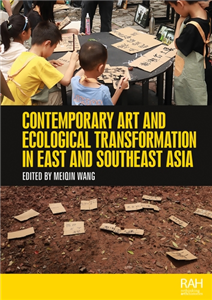
Contemporary art and ecological transformation in East and Southeast Asia
by Meiqin Wang
This anthology, presenting new research from fourteen scholars, delves into the interplay between contemporary art and ecological concerns in East and Southeast Asia. Focused on the concept of artistic remediation, the book unravels the diverse capacities of art to combat systemic anthropogenic destruction to the environment and ecology. At its core, the book articulates the ongoing ecological transformation in art and art history that embraces a paradigm shift in human-nature relationships, emphasizing interconnectedness of all life forms of the Earth. Bridging art studies, activism, and environmental studies, the book examines how artistic practices in the region have engaged with ecocritical reflection, biodiversity advocacy, sustainable practices, and environmental justice, among others. Providing a platform for critical and timely analysis of artistic interventions in the face of existential crises, the book acknowledges diverse voices of scholars who have situated their scholarship in the cultural and artistic specificities of various societies, locales, and communities in the region.
-
Trusted Partner
 Literature & Literary StudiesJanuary 2019
The art of The Faerie Queene
by J. B. Lethbridge, Richard Brown
The Art of The Faerie Queene is the first book centrally focused on the forms and poetic techniques employed by Spenser. It offers a sharp new perspective on Spenser by rereading The Faerie Queene as poetry which is at once absorbing, demanding and experimental. Instead of the traditional conservative model of Spenser as poet, this book presents the poem as radical, edgy and unconventional, thus proposing new ways of understanding the Elizabethan poetic Renaissance. The book moves from the individual words of the poem to metre, rhyme and stanza form onto its larger structures of canto and book. It will be of particular relevance to undergraduates studying Elizabethan poetry, graduate students and scholars of Renaissance poetry, for whom the formal aspect of the poetry has been a topic of growing relevance in recent years.
-

 The ArtsMarch 1905
Concerning the Spiritual in Art
by Wassily Kandinsky
A pioneering work in the movement to free art from its traditional bonds to material reality, this book is one of the most important documents in the history of modern art. Written by the famous nonobjective painter Wassily Kandinsky (1866–1944), it explains Kandinsky's own theory of painting and crystallizes the ideas that were influencing many other modern artists of the period. Along with his own groundbreaking paintings, this book had a tremendous impact on the development of modern art. Kandinsky's ideas are presented in two parts. The first part, called "About General Aesthetic," issues a call for a spiritual revolution in painting that will let artists express their own inner lives in abstract, non-material terms. Just as musicians do not depend upon the material world for their music, so artists should not have to depend upon the material world for their art. In the second part, "About Painting," Kandinsky discusses the psychology of colors, the language of form and color, and the responsibilities of the artist. An Introduction by the translator, Michael T. H. Sadler, offers additional explanation of Kandinsky's art and theories, while a new Preface by Richard Stratton discusses Kandinsky's career as a whole and the impact of the book. Making the book even more valuable are nine woodcuts by Kandinsky himself that appear at the chapter headings. This English translation of Über das Geistige in der Kunst was a significant contribution to the understanding of nonobjectivism in art. It continues to be a stimulating and necessary reading experience for every artist, art student, and art patron concerned with the direction of 20th-century painting.
-
Trusted Partner
 The ArtsJune 2026
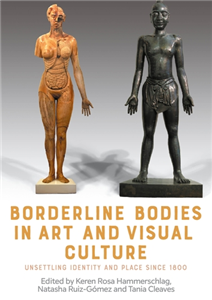
Borderline bodies in art and visual culture
Unsettling identity and place since 1800
by Keren Hammerschlag, Natasha Ruiz-Gómez, Tania Anne Cleaves
Borderline bodies offers original interpretations of visual representations of human bodies as bounded and unbounded, fortified and permeable, mobile and static-subject to borders and able to traverse and challenge them. It also takes as its focus images and objects that might be considered 'borderline' because they sit at the intersection of disciplines or sit outside accepted notions of what constitutes serious 'art.' By mapping the ways human bodies traverse borders and straddle-even dismantle-categories, this volume's essays approach afresh the relationship of bodies to traditional modes of representation, especially in art and medicine, and encourage us to think anew about how we understand the relationship between human corporeality, identity and place. Critical transdisciplinary and transnational analyses of objects and images from a range of geographies shed new light on the themes of: bodies and identity; typologies of the body; racialised bodies; 'normal' and 'abnormal' bodies; encounters between bodies; bodies in transition; bodies and mobility; and the bounded and unbounded human body. The outcome is a fresh approach to depictions of the human body produced for the purposes of artistic and medical education, aesthetic edification, and scientific and professional advancement, which disrupts assumptions about the normative human body perpetuated through Western image-making traditions.
-
Trusted Partner
 Literature & Literary StudiesSeptember 2020
The art of The Faerie Queene
by Richard Danson Brown, Joshua Samuel Reid
The Art of The Faerie Queene is the first book centrally focused on the forms and poetic techniques employed by Spenser. It offers a sharp new perspective on Spenser by rereading The Faerie Queene as poetry which is at once absorbing, demanding and experimental. Instead of the traditional conservative model of Spenser as poet, this book presents the poem as radical, edgy and unconventional, thus proposing new ways of understanding the Elizabethan poetic Renaissance. The book moves from the individual words of the poem to metre, rhyme and stanza form onto its larger structures of canto and book. It will be of particular relevance to undergraduates studying Elizabethan poetry, graduate students and scholars of Renaissance poetry, for whom the formal aspect of the poetry has been a topic of growing relevance in recent years.
-
Trusted Partner
 Literature & Literary StudiesJanuary 2021
The art of The Faerie Queene
by Richard Danson Brown
The Art of The Faerie Queene is the first book centrally focused on the forms and poetic techniques employed by Spenser. It offers a sharp new perspective on Spenser by rereading The Faerie Queene as poetry which is at once absorbing, demanding and experimental. Instead of the traditional conservative model of Spenser as poet, this book presents the poem as radical, edgy and unconventional, thus proposing new ways of understanding the Elizabethan poetic Renaissance. The book moves from the individual words of the poem to metre, rhyme and stanza form onto its larger structures of canto and book. It will be of particular relevance to undergraduates studying Elizabethan poetry, graduate students and scholars of Renaissance poetry, for whom the formal aspect of the poetry has been a topic of growing relevance in recent years.
-
Trusted Partner
 Humanities & Social SciencesJuly 1997
Picturing women in late medieval and renaissance art
by Christa Grossinger
This extensively illustrated book discusses the representation of women in the art of the late Middle Ages in Northern Europe. Drawing on a wide range of different media, but making particular use of the rich plethora of woodcuts, the author charts how the images of women changed during the period and proposes two basic categories - the Virgin and Eve, good and evil. Within these, however, we discover attitudes to sinful, foolish, married and unmarried women and the style and use of these images exposes the full extent of the misogyny entrenched in medieval society. ;
-
Trusted Partner
-
Trusted Partner
-
Trusted Partner
-
Trusted Partner
-
Trusted Partner
 Literature & Literary StudiesMay 1999
Introduction to English Renaissance comedy
by Alexander Leggatt
Introduction to English Renaissance comedy provides a comprehensive introduction to Elizabethan, Jacobean and Caroline comedy, covering both public and private theatres, emphasising the eclectic, experimental nature of this comedy: its departures from the mainstream New Comedy tradition, its searching, witty analysis of social and personal relations in court, city and country. This book makes a close analysis of some of the richest comedies of the period, making unexpected connections between them: Shakespeare's A Midsummer Night's Dream and The Tempest, Lyly's Endymion, Greene's Friar Bacon and Friar Bungay, Marston's The Malcontent, Middleton's Michaelmas Term, Jonson's Bartholomew Fair, Shirley's The Lady of Pleasure and Brome's A Jovial Crew. Through these plays the reader is given a comprehensive picture of English comedy in one of its most creative periods. ;
-
Trusted Partner
-
Trusted Partner
 Literature & Literary StudiesJanuary 2019
Pastoral poetry of the English Renaissance
An anthology
by J. B. Lethbridge, Sukanta Chaudhuri
Renaissance pastoral poetry is gaining new interest for its distinctive imaginative vein, its varied allusive content, and the theoretical implications of the genre. This is by far the biggest ever anthology of English Renaissance pastoral poetry, with 277 pieces spanning two centuries. Spenser, Sidney, Jonson and Drayton are amply represented alongside their many contemporaries. There is a wide range of pastoral lyrics, weightier allusive pieces, and translations from classical and vernacular pastoral poetry; also, more unusually, pastoral ballads and poems set in all kinds of prose works. Each piece has been freshly edited from the original sources, with full apparatus and commentary. This book will be complemented by a second volume, to be published in 2017, which includes a book-length introduction, textual notes and analytic indices.





