
Self-Counsel Press
Livres Canada Books
View Rights Portal

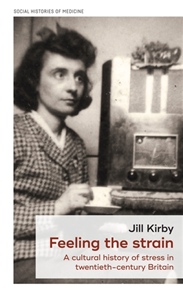
Examining the popular discourse of nerves and stress, this book provides a historical account of how ordinary Britons understood, explained and coped with the pressures and strains of daily life during the twentieth century. It traces the popular, vernacular discourse of stress, illuminating not just how stress was known, but the ways in which that knowledge was produced. Taking a cultural approach, the book focuses on contemporary popular understandings, revealing continuity of ideas about work, mental health, status, gender and individual weakness, as well as the changing socio-economic contexts that enabled stress to become a ubiquitous condition of everyday life by the end of the century. With accounts from sufferers, families and colleagues it also offers insight into self-help literature, the meanings of work and changing dynamics of domestic life, delivering a complementary perspective to medical histories of stress.
Critical theory and Independent Living explores intersections between contemporary critical theory and disabled people's struggle for self-determination. The book highlights the affinities between the Independent Living movement and studies of epistemic injustice, biopower, and psychopower. It discusses in depth the activists' critical engagement with welfare-state paternalism, neoliberal marketisation, and familialism. This helps develop a pioneering comparison between various welfare regimes grounded in Independent Living advocacy. The book draws on the activism of disabled people from the European Network on Independent Living (ENIL) by developing case studies of the ENIL's campaigning for deinstitutionalisation and personal assistance. It is argued that this work helps rethink independence as a form of interdependence, and that this reframing is pivotal for critical theorising in the twenty-first century.
 Trusted Partner

 Trusted Partner


People with dementia experience their condition as a big change in which, for example, new events are not linked to existing experiences and wishes, thoughts, and actions can no longer be connected to each other. This kind of experience of the self, due to the intergative function of the brainbeing temporarily or permanently lost, is called dissociative self-experience. Based on this understanding of dementia, the author develops an approach to effectively understand and support people with dementia in everyday activities. Typical everyday situations and behaviours are presented and reflected on in a practical context.
Trusted Partner


Minor illness or a serious disease ? Through systematic questioning, pharmacists or pharmaceutical technicians can establish the possibilities and limits of self-medication. Each monograph on the over 100 indications for self-medication includes: - A flow chart: basis for the structured consultation - A brief description: additional information about the symptoms - Recommended medications/groups of medications: the treatment options - Additional advice: individual supportive and alternative treatment options - Specific knowledge for advising particular patient groups: e.g. pregnant women, children and senior citizens New for the 7th edition: Monographs that explore the possibilities of supportive self-medication for indications such as hypertension and diabetes. Information about what to do in the case of poisoning, scabies or inflammation of the nail bed (paronychia) is also provided! The details about active substances, products and additional tips have been updated. The pocket guide has long been the standard for providing advice on self-medication – a “must-have”!
Trusted Partner
Trusted Partner

The basis for successful advice is having a sound knowledge of the effect and application of medicines, but also an instinct for the individual needs and characteristics of the person asking for your help. This skill can be trained! Entertaining explanations and numerous case examples taken from everyday pharmacy practice help with this. They show how pharmacy staff can react empathetically, avoid misunderstandings, and manage delicate situations with confidence. The 5th edition has become more colourful! This applies not only to the illustrations, but also to the team and customers of our model pharmacy. A personality model with distinctive colours representing the different characters promises exciting insights. Good communication creates satisfied customers who want to come back again and again!
Trusted Partner
Trusted Partner
Trusted Partner
Trusted Partner

This title helps people with autism to effectively cope with anger, frustration, and injustice. This practical book offers a training-program which can be completed alone, based on scientifically examined treatment methods. It is especially suited to be used together with a caretaker. The first part of the book clearly describes the connection between autism and self-control issues. The second part offers practical exercises which explain how to recognize anger in time and how strong emotions such as anger and frustration. Numerous tips, exercises and relatable examples help the reader to experience more direction and control. Target Group: Adults with autism and involved caretakers
Trusted Partner

Cough, hay fever or herpes are at least as troublesome during pregnancy and breast-feeding as under normal “conditions” - and yet everything is different. Physiological changes to the body in pregnancy and lactation, together with the vulnerability of the unborn baby or infant, set particular requirements when selecting the correct, safe medication. Especially in the area of self-medication, the needs of pregnant and breast-feeding women for information are great and call for competent advice! This comprehensive handbook is the key: General information about pharmacotherapy, supplementary measures, vaccinations, questions about diet and infections in pregnancy and lactation creates a broad knowledge base. The core feature of the book are the traffic light tables, with precise recommendations for medicinal products for all types of treatment. All the important indications for selfmedication in pregnancy and lactation are listed and the tables are supported by detailed explanations of the individual assessments. The sections “Advice from medical specialists” are particularly useful, with additional tips from gynaecologists and “Footnotes” with relevant information on the use of prescription- only medicines – and as the ultimate practical tool: the enclosed sales counter leaflets with all traffic light tables to enable quick reference for first-class advice!
Trusted Partner
Trusted Partner
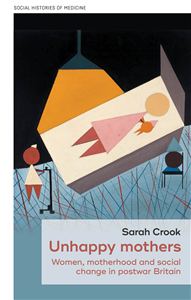
In the decades following the Second World War, mothers' experiences of loneliness, boredom and unhappiness were increasingly widely acknowledged. The language of postnatal depression came to be attached to this, but mothers organised around their own discontent in ways that challenged the medical model. Unhappy mothers draws attention to the social, political, and professional contexts within which knowledge about unhappy mothering developed. Drawing upon an extensive range of archival material, the book addresses themes around expertise, feminism, and the value given to lived experience.
Trusted Partner

A compelling account of the project to transform post-war Manchester, revealing the clash between utopian vision and compromised reality. Urban renewal in Britain was thrilling in its vision, yet partial and incomplete in its implementation. For the first time, this deep study of a renewal city reveals the complex networks of actors behind physical change and stagnation in post-war Britain. Using the nested scales of region, city and case-study sites, the book explores the relationships between Whitehall legislation, its interpretation by local government planning officers and the on-the-ground impact through urban architectural projects. Each chapter highlights the connections between policy goals, global narratives and the design and construction of cities. The Cold War, decolonialisation, rising consumerism and the oil crisis all feature in a richly illustrated account of architecture and planning in post-war Manchester.
Trusted Partner

Psychotherapists face many challenges in their day-to-day work.The close contact with patients, which makes the profession attractive on the other hand, is also stressful on the other hand. Caring for patients while protecting oneself requires different techniques which this book seeks to introduce. The title describes typical situations which can be challenging for psychotherapists, e.g. dealing with strong emotions during a session or the inability to separate oneself afterwards, a patient who has fallen in love with his/her therapist, or the death of a patient. This book offers therapists a variety of self-cate measures that can not only reduce everyday stress and workload, but also helpful strategies to enable therapists to be less reactive in stressful situations. Target Group: psychotherapists, specialists for psychiatry and psychotherapy, specialists for psychosomatic medicine, clinical psychologists, coaches, students and teachers of psychology
Trusted Partner
 Trusted Partner

From A for allergic rhinitis to Z for zoster, providing guidance on self-medication is a key responsibility in pharmacy – and one that spans a wide range of topics. The 8th edition of this compact, practical standard work delivers both pharma- ceutical knowledge and counselling competence. Over 100 indications, presented in a proven, systematic format: • Flowcharts provide a structured foundation for each consultation • Concise descriptions summarise the key aspects of each condition • Recommended active ingredients and substance classes present treatment options at a glance • Supplementary information offers additional recom- mendations, alternative approaches and practical tips • Guidance for special patient groups supports tailored coun- selling during pregnancy, in childhood and for senior patients This practical pocket guide is a must-have companion for pharmacy consultations. Target group: Pharmacists, pharmaceutical technicians, pharmacy interns, pharmaceutical technician students, pharmaceutical technician trainees, returnees
Trusted Partner
Trusted Partner

The moral problem of authority is the challenge of reconciling legitimate authority (the right to rule) with the demands of freedom and rationality. In this book, I argue that authority can have legitimacy, but when it does it generates a moral dilemma, where the obligation to obey comes at some cost to freedom and reason. Hence, not only do I depart from the views of those who insist that authority can never have legitimacy, but also those who maintain that insofar as authority is legitimate it simply satisfies the demands of freedom or rationality. My focus here will be on both what it is that justifies authority (in particular focusing on membership, and the goods of membership) as well what type of reason an authoritative directive is, how it can come into conflict with others reasons, and how those conflicts are resolved.



