Your Search Results

      • China Social Sciences Press

        Established in June, 1978, China Social Sciences Press is sponsored by Chinese Academy of Social Sciences. CSSP is a national level publishing house focusing on academic publications mainly in the field of humanities and social sciences. In 1993, CSSP won the honorary title of “national outstanding press” granted by Propaganda Department of CPC and General Administration of Press and Publication.The missions and the publication targets of CSSP are: first, editing and publishing the most outstanding academic results of CASS and great achievements from the fields of social sciences and culture circle in China, including academic works, text books, reference books and popular books; second, translating Chinese versions of significant humanities and social sciences books written by western authors.

        View Rights Portal
      • Strange Days Books, Social Cooperative Enterprise

        Strange Days Books is a social cooperative publishing firm based in Crete, Greece. Since 2012 we have published almost 100 books. Every year we organize Sand Festival, an online Writers’ Workshop and - in cooperation with www.eyelands.gr literary magazine - the one and only international short story competition based in Greece, plus our International Book Awards. In 2019 SDB was the only publishing house in Greece to receive approval by the European Union’s Creative Europe translation funding program for its project "Strange Days in Europe”. Strange Days Books is an entirely independent publisher, primarily interested in showcasing the wealth of new writing voices in Greece. We work closely with our authors to create books that will appeal to booklovers, books about the present, books that strive to push the art of literature forward, books written with talent and passion, books that challenge the way we see the world, books bursting with new ideas and intriguing perspectives.

        View Rights Portal
      • Trusted Partner
        Humanities & Social Sciences
        September 2018

        Race and the Yugoslav region

        Postsocialist, post-conflict, postcolonial?

        by Catherine Baker, Gurminder Bhambra

        This is the first book to situate the territories and collective identities of former Yugoslavia within the politics of race - not just ethnicity - and the history of how ideas of racialised difference have been translated globally. The book connects critical race scholarship, global historical sociologies of 'race in translation' and south-east European cultural critique to show that the Yugoslav region is deeply embedded in global formations of race. In doing this, it considers the everyday geopolitical imagination of popular culture; the history of ethnicity, nationhood and migration; transnational formations of race before and during state socialism, including the Non-Aligned Movement; and post-Yugoslav discourses of security, migration, terrorism and international intervention, including the War on Terror and the present refugee crisis.

      • Trusted Partner
        October 2023

        From India to Germany:What My Father's Journey Tells Usabout Migration and the Kindness ofStrangers

        by Sunita Sukhana

        — An extraordinary story of migration — Contemporary history of the 70s and backgrounds to India, Afghanistan, Iran, Turkey, Bulgaria, the former Yugoslavia, the GDR and the Federal Republic of Germany He was the son of the Sikh priest, a successful 400-meter runner and, eventually, a migrant. In 1979, Bagicha Singh turned his back on his homeland and set off with a head full of dreams on the long, turbulent overland journey from India to Germany. It was the year the Soviet Union invaded Afghanistan and the Islamic Revolution raged in Iran. A year whose aftermath continues to shape the world to this day. More than 40 years later, his daughter tells the story of Bagicha's adventurous journey. The result is a touching document on origin, contemporary history, and the meaning of migration.

      • Trusted Partner
      • Trusted Partner
        Humanities & Social Sciences
        June 2025

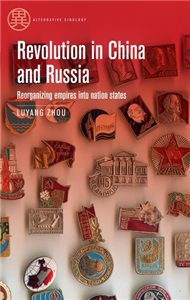
        Revolution in China and Russia

        Reorganizing empires into nation states

        by Luyang Zhou

        Most scholars believe that China's nationality policy, like that of other socialist states, imitated the Soviet nationality model, a system which has been termed an "affirmative action empire." This book offers two contributions to the literature which run counter to this convention. First, it argues that the People's Republic of China (PRC) and the Soviet Union (USSR) were different; while the PRC was aimed to build an ideal-typical nation-state, the USSR was an open union of nation-states that was only temporarily confined to a physical territory. Second, while scholars who have noted this difference attribute it to contextual factors, such as ethnic structure, geopolitical status, and Russia's intervention into the Chinese Revolution, this book contends that context shaped the Sino-Soviet difference, yet it did not determine it. Rather, there was significant leeway between the implications of the contextual factors, and what the policy-designers ultimately established. This book probes who held agency, and how these individuals bridged this gap.

      • Trusted Partner
        2024

        Where is Russia Heading?

        by Jens Siegert

        Vladimir Putin has been ruling Russia for 25 years. There is no end in sight to his dictatorship. He relies on repression at home and is waging a war of destruction against a neighbouring country. The conflict with the West has long become a systemic conflict between an illiberal-autocratic ideology and liberal-democratic principles. Nothing will change as long as Putin remains in power. Nevertheless, as far as can be ascertained under unfree conditions, the majority of the population seems to be supporting Putin. Does this mean that too many people in Russia do not want democracy or peace? Will everything remain the same after Putin? Or is there a chance that Russia will eventually take a different, more democratic path? Whatever the outcome of the war in Ukraine, Russia is not going to disappear. We will still have to deal with our big neighbour in the east. This makes it all the more important to focus on longer-term developments. As a recognised expert on Russian history and society, the author outlines what the post-Putin era might look like. His in-depth analysis makes it clear that Russia is partly Putin, but Putin is not everything about Russia.

      • Trusted Partner
        Humanities & Social Sciences
        October 2022

        Germany's Russia problem

        The struggle for balance in Europe

        by John Lough

        The relationship between Germany and Russia is Europe's most important link with the largest country on the continent. But despite Germany's unparalleled knowledge and historical experience, its policymakers struggle to accept that Moscow's efforts to rebalance Europe at the cost of the cohesion of the EU and NATO are an attack on Germany's core interests. This book explains the scale of the challenge facing Germany in managing relations with a changing Russia. It analyses how successive German governments from 1991 to 2014 misread Russian intentions, until Angela Merkel sharply recalibrated German and EU policy towards Moscow. The book also examines what lies behind efforts to revise Merkel's bold policy shift, including attitudes inherited from the GDR and the role of Russian influence channels in Germany.

      • Trusted Partner
        Humanities & Social Sciences
        February 2026

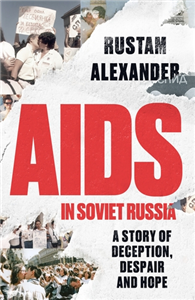
        AIDS in Soviet Russia

        A story of deception, despair and hope

        by Rustam Alexander

        The first book to tell the shocking story of the AIDS crisis in Soviet Russia. Throughout the 1980s, as the world was grappling with the escalating crisis of AIDS, Soviet Russia continued to deny there was a problem. Arguing that the disease was limited to foreigners and 'immoral' groups, the government failed to take meaningful action, long past the point other countries had begun to recognise the full scale of the threat. In this ground-breaking book, Rustam Alexander tells the story of AIDS in Soviet Russia. Fixated on disinformation, censorship and the persecution of marginalised communities, the Soviet authorities wasted precious time, allowing the epidemic to strike at the very heart of the nation: its children. Yet, despite the government's failure, a number of brave journalists, doctors and nascent gay groups decided to take matters into their own hands and engage in full-fledged AIDS activism. Tracing the political and social response to AIDS in the final years of the Soviet era, Alexander sheds light on the devastating consequences of government inaction. He draws on personal stories, media reports and archival materials to provide a riveting account of the Russian people's fight against AIDS amid the tumultuous transformations of Gorbachev's perestroika.

      • Trusted Partner
        Humanities & Social Sciences
        July 2025

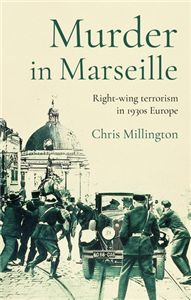
        Murder in Marseille

        Right-wing terrorism in 1930s Europe

        by Christopher Millington

        On 9 October 1934, terrorists murdered King Alexander I of Yugoslavia in a Marseille street. The Croatian ultranationalist Ustashe was behind the attack. The Ustashe hoped that the king's death would cause the collapse of Yugoslavia and the liberation of the Croat people. This book examines the circumstances, processes, and trajectories that shaped the Ustashe terrorists and their attack in Marseille. It brings questions about contemporary terrorism to bear on a historical attack: what prompts people to join terrorist organisations? How are these people 'radicalised' to commit violence? What roles do women play in terrorism? Murder in Marseille bridges the scholarly gap between historical and contemporary terrorism, paying attention to, and often guided by, current concerns, ideas, theories, and notions about terrorist violence.

      • Trusted Partner
        Humanities & Social Sciences
        August 2003

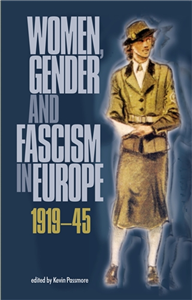
        Women, gender and fascism in Europe, 1919–45

        by Kevin Passmore

        What attracts women to far-right movements that appear to denigrate their rights? This question has vexed feminist scholars for decades and has led to many lively debates in the academy. In this context, during the 1980s, the study of women, gender, and fascism in twentieth-century Europe took off, pioneered by historians such as Claudia Koonz and Victoria de Grazia. This volume makes an exciting contribution to the evolving body of work based upon these earlier studies, bringing emerging scholarship on Central and Eastern Europe alongside that of more established Western European historiography on the topic. Women, Gender and Fascism in Europe, 1919-45 features fourteen essays covering Serbia, Croatia, Yugoslavia, Romania, Hungary, Latvia, and Poland in addition to Germany, Italy, France, Spain, and Britain, and a conclusion that pulls together a European-wide perspective. As a whole, the volume provides a compelling comparative examination of this important topic through current research, literature reviews, and dialogue with existing debates. The essays cast new light on questions such as women's responsibility for the collapse of democracy in interwar Europe, the interaction between the women's movement and the extreme right, and the relationships between conceptions of national identity and gender. ;

      • Trusted Partner
        Humanities & Social Sciences
        March 2023

        Socialist republic

        Remaking the British left in 1980s Sheffield

        by Daisy Payling

        Socialist republic is a timely account of 1980s left-wing politics in South Yorkshire. It explores how Sheffield City Council set out to renew the British Left. Through careful analysis of the Council's agenda and how it interacted with trade unions, women's groups, lesbian and gay rights groups and acted on issues such as peace, environmentalism, anti-apartheid and anti-racism, the book draws out the complexities involved in building a broad-based politics which aimed unite class and identity politics. Running counter to 1980s narratives dominated by Thatcherism, the book examines the persistence of social democracy locally, demonstrating how grassroots local histories can enrich our understanding of political developments on a national and international level. The book is essential reading for students, scholars, and activists with an interest in left-wing politics and history.

      • Trusted Partner
        The Arts
        May 2004

        The memory of catastrophe

        by Peter Gray, Kendrick Oliver

        Investigates the dynamic relationship between experiences of profound social and cultural disruption, and human memory. Critical comparisons are made across a wide variety of catastrophic experiences and memories; not just of war, but also of massacre, genocide, rebellion, famine, partition, shipwreck and fire. The book is an accessible showcase for a wide range of methodological approaches to the study of memory, including literary studies, cultural studies, participant-observation and historical studies, and uses a variety of oral, visual and written sources. Offers a diverse chronological and geographical range of catastrophic cases, from seventeenth-century England to the recent conflicts in the former Yugoslavia, from Ireland to the Indian sub-continent, from Mexico to wartime Leningrad. Well-written and accessible - a fascinating read. ;

      • Trusted Partner
        Humanities & Social Sciences
        April 2024

        The new politics of Russia

        by Andrew Monaghan

      • Trusted Partner
        Humanities & Social Sciences
        June 2021

        Germany's Russia problem

        by John Lough, Andrew Monaghan

      • Trusted Partner
        Business, Economics & Law
        May 2008

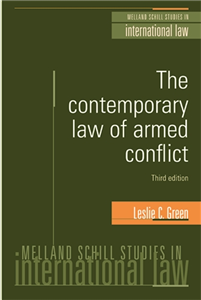
        The contemporary law of armed conflict

        by Leslie C. Green, Iain Scobbie, Jean D'Aspremont, Dominic McGoldrick

        Green's The contemporary law of armed conflict has been acclaimed as one of the most significant works on the law of armed conflict to appear in recent years. The first edition was adopted as a basic text by military institutions and educational establishments throughout the world and is among the most comprehensive and readable works on the subject. This new edition brings the work up to date, examining the significance of the World Court's Opinion on the legality of the nuclear weapon. It also considers the importance of such matters as the laser weapon agreement, the mines treaty and the jurisprudence of the two war crimes tribunals, that for the former Yugoslavia as well as for Rwanda, and assesses the role of the proposed International Criminal Court as it may affect the law of armed conflict. The book applies a practical as well as a theoretical approach, and draws on an extensive range of national and international practice. It is thus an indispensable reference for the armed forces and government defence organizations, as well as academics and students interested in the modern law of war. ;

      • Trusted Partner
        Business, Economics & Law
        July 2018

        The contemporary law of armed conflict (3rd edn)

        by Leslie C. Green, Iain Scobbie, Jean D'Aspremont, Dominic McGoldrick

        Green's The contemporary law of armed conflict has been acclaimed as one of the most significant works on the law of armed conflict to appear in recent years. The first edition was adopted as a basic text by military institutions and educational establishments throughout the world and is among the most comprehensive and readable works on the subject. This new edition brings the work up to date, examining the significance of the World Court's Opinion on the legality of the nuclear weapon. It also considers the importance of such matters as the laser weapon agreement, the mines treaty and the jurisprudence of the two war crimes tribunals, that for the former Yugoslavia as well as for Rwanda, and assesses the role of the proposed International Criminal Court as it may affect the law of armed conflict. The book applies a practical as well as a theoretical approach, and draws on an extensive range of national and international practice. It is thus an indispensable reference for the armed forces and government defence organizations, as well as academics and students interested in the modern law of war.

      • Trusted Partner
        The Arts
        February 2022

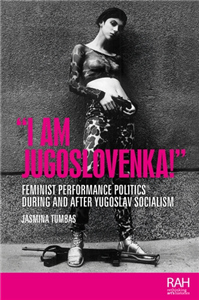
        "I am Jugoslovenka!"

        Feminist performance politics during and after Yugoslav Socialism

        by Jasmina Tumbas, Amelia Jones, Marsha Meskimmon

        "I am Jugoslovenka" argues that queer-feminist artistic and political resistance were paradoxically enabled by socialist Yugoslavia's unique history of patriarchy and women's emancipation. Spanning performance and conceptual art, video works, film and pop music, lesbian activism and press photos of female snipers in the Yugoslav wars, the book analyses feminist resistance in a range of performative actions that manifest the radical embodiment of Yugoslavia's anti-fascist, transnational and feminist legacies. It covers celebrated and lesser-known artists from the 1970s to today, including Marina Abramovic, Sanja Ivekovic, Vlasta Delimar, Tanja Ostojic, Selma Selman and Helena Janecic, along with music legends Lepa Brena and Esma Redzepova. "I am Jugoslovenka" tells a unique story of women's resistance through the intersection of feminism, socialism and nationalism in East European visual culture.

      • Trusted Partner
        Humanities & Social Sciences
        October 2020

        The European Union and its eastern neighbourhood

        Europeanisation and its twenty-first-century contradictions

        by Mike Mannin, Paul Flenley

        This volume is timely in that it explores key issues which are currently at the forefront of the EU's relations with its eastern neighbours. It considers the impact of a more assertive Russia, the significance of Turkey, the limitations of the Eastern Partnership with Belarus and Moldova, the position of a Ukraine in crisis and pulled between Russia and the EU, security and democracy in the South Caucasus. It looks at the contested nature of European identity in areas such as the Balkans. In addition it looks at ways in which the EU's interests and values can be tested in sectors such as trade and migration. The interplay between values, identity and interests and their effect on the interpretation of europeanisation between the EU and its neighbours is a core theme of the volume.

      • Trusted Partner
        Humanities & Social Sciences
        October 2006

        Securitising Russia

        The domestic politics of Vladimir Putin

        by Bettina Renz, Edwin Bacon, Julian Cooper

        Securitising Russia shows the impact of twenty-first-century security concerns on the way Russia is ruled. It demonstrates how President Putin has wrestled with terrorism, immigration, media freedom, religious pluralism, and economic globalism, and argues that fears of a return to old-style authoritarianism oversimplify the complex context of contemporary Russia. The book focuses on the internal security issues common to many states in the early twenty-first-century, and places them in the particular context of Russia. Detailed analysis of the place of security in Russia's political discourse and policy-making reveals nuances often missing from overarching assessments of Russia today. To characterise the Putin regime as the 'KGB-resurgent' is to miss vital continuities, contexts, and on-going political conflicts which make up the contemporary Russian scene. Securitising Russia draws together current debates about whether Russia is a 'normal' country developing its own democratic and market structures, or a nascent authoritarian regime returning to the past. ;

      Subscribe to our

      newsletter