
The Endocrine Society
The Endocrine Society is a global organization of 18,000 researchers, educators, and clinicians advancing breakthroughs in hormone science and improving public health.
View Rights Portal
The Endocrine Society is a global organization of 18,000 researchers, educators, and clinicians advancing breakthroughs in hormone science and improving public health.
View Rights Portal
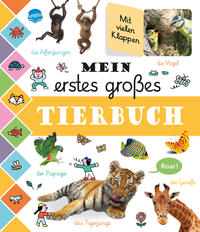
Willkommen in der Welt der Tiere! Wie heißen die Jungtiere? Wer lebt in einem Nest? Welche Tiere haben ein Fell? Das und vieles mehr lernen Kinder ab zwei Jahren spielend mit einfachsten Fragen und Rätseln, vielen Klappen, lustigen Illustrationen und Fotos. • Vermittelt erstes Sachwissen • Erweitert den Wortschatz • Spielspaß mit 60 Klappen und 200 Fotos


 Trusted Partner

 Trusted Partner
 Trusted Partner


Als die Elektronische Musik um 1950 mit der Verheißung antrat, alle physischen Begrenzungen des Musizierens hinter sich zu lassen, war dies – neben vielem anderen – auch eine prometheische Männerphantasie. Doch gebar sie in der Folge alles andere als Entkörperlichung: Über die psychedelischen Trancen der 60er, die Kraftwerk-Robotik der 70er, die Techno-Ekstasen und genderpolitischen Interventionen der 90er bis zur Laptop-Performance oder Versuchen akustischer Kriegsführung – immer neu bleibt zu verhandeln, wie die Elektronik und der Körper von wem in welcher Absicht und in welchen Kontexten verkabelt werden. Mit Beiträgen von Olaf Arndt, Mariola Brillowska, Kurt Dahlke, Diederich Diederichsen, Harald Fricke, Christoph Gurk, Tom Holert, Thomas Meinecke, Genesis P. Orridge, Eckhard Schumacher, Terre Thaemlitz u. v. a.
Trusted Partner
Trusted Partner

 Trusted Partner

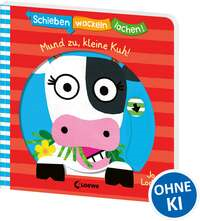
Die kleine Kuh hat leider vergessen, beim Kauen den Mund zu schließen. Und auch die kleine Ente weiß nicht so recht, wie man sich beim Essen benimmt. Hier lernen Kinder spielerisch alles über Tischmanieren und gutes Benehmen. Die farbenfrohen Illustrationen und lustigen Schiebeeffekte laden zum Spielen und Lernen ein und fördern zusätzlich die Motorik.
Trusted Partner
 Trusted Partner
 Trusted Partner


This 1926 survey, written by a distinguished social and economic historian, examines the role of religion in the rise of capitalism. Arguing that material acquisitiveness is morally wrong and a corrupting social influence, the author draws upon his profound knowledge of labor and politics to show how concentrated wealth distorts economic policies. Colorful but credible, this study offers a timeless vision of alternative means toward a just economic, social, and intellectual order.
Trusted Partner


Sooner or later everything is thrown away. In the consumer society, however, usable and serviceable products that may be as good as new are also thrown away. Such behaviour is the result of a long-term process that has developed over a period of one-and-a-half centuries. The change was led by the USA, and the Federal Republic of Germany followed. It started at the turn of the last century with personal hygiene: articles such as toilet paper, sanitary towels, nappies and paper handkerchiefs. After the Second World War, a large number of other disposable articles were soon added, such as paper cups and plastic dishes, nylon stockings and pens, razor blades, beverage cans and much more besides. Wolfgang König shows how business and consumers have together made throwing things away perfectly normal – and discusses how the throwaway society may be overcome.
Trusted Partner

This book provides an accessible collection of translated legal sources through which the exploits of criminals and developments in the English criminal justice system (c.1215-1485) can be studied. Drawing on the wealth of archival material and an array of contemporary literary texts, it guides readers towards an understanding of prevailing notions of law and justice and expectations of the law and legal institutions. Tensions are shown emerging between theoretical ideals of justice and the practical realities of administering the law during an era profoundly affected by periodic bouts of war, political in-fighting, social dislocation and economic disaster. Introductions and notes provide both the specific and wider legal, social and political contexts in addition to offering an overview of the existing secondary literature and historiographical trends. This collection affords a valuable insight into the character of medieval governance as well as revealing the complex nexus of interests, attitudes and relationships prevailing in society during the later Middle Ages.
Trusted Partner
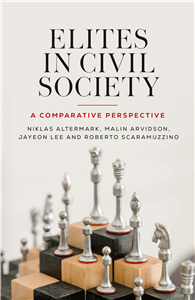
Where civil society is often seen as a driving force for equality, this book addresses a challenging topic: civil society elites. Drawing on a comprehensive study of Italy, Poland, Sweden, and the UK, this ground-breaking research investigates the often-overlooked power structures within civil society. By combining elite studies with civil society research, the book uncovers how a distinct civil society elite emerges and how it interacts with leaders in politics and business. The findings reveal a fascinating paradox. While this elite may be a powerful engine for social change, its integration into wider power circles risks reproducing the very inequalities it seeks to dismantle. By exploring how this elite can become disconnected from its grassroots, the book provides essential insights into the future of civil society and its democratic promise.
Trusted Partner

This book provides scholars and students alike with a set of texts that can deepen their understanding of the culture and society of the twelfth-century German kingdom. The sources translated here bring to life the activities of five noblemen and noblewomen from Rome to the Baltic coast and from the Rhine River to the Alpine valleys of Austria. To read these five sources together is to appreciate how interconnected political, military, economic, religious and spiritual interests could be for some of the leading members of medieval German society-and for the authors who wrote about them. Whether fighting for the emperor in Italy, bringing Christianity to pagans in what is today northern Poland, or founding, reforming and governing monastic communities in the heartland of the German kingdom, the subjects of these texts call attention to some of the many ways that noble life shaped the world of central medieval Europe.
Trusted Partner
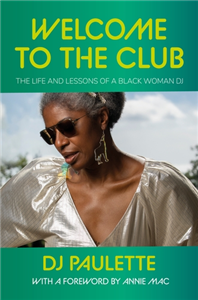
In Welcome to the club, Manchester legend DJ Paulette shares the highs, lows and lessons of a thirty-year music career, with help from some famous friends. One of the Haçienda's first female DJs, Paulette has scaled the heights of the music industry, playing to crowds of thousands all around the world, and descended to the lows of being unceremoniously benched by COVID-19, with no chance of furlough and little support from the government. Here she tells her story, offering a remarkable view of the music industry from a Black woman's perspective. Behind the core values of peace, love, unity and respect, dance music is a world of exclusion, misogyny, racism and classism. But, as Paulette reveals, it is also a space bursting at the seams with powerful women. Part personal account, part call to arms, Welcome to the club exposes the exclusivity of the music industry while seeking to do justice to the often invisible women who keep the beat going.
Trusted Partner

This collection, dealing with case studies drawn from South Africa, Zimbabwe, Mozambique and Mauritius, examines the relationship between scientific claims and practices, and the exercise of colonial power. It challenges conventional views that portray science as a detached mode of reasoning with the capacity to confer benefits in a more or less even-handed manner. That science has the potential to further the collective good is not fundamentally at issue, but science can also be seen as complicit in processes of colonial domination. Not only did science assist in bolstering aspects of colonial power and exploitation, it also possessed a significant ideological component: it offered a means of legitimating colonial authority by counter-poising Western rationality to native superstition and it served to enhance the self-image of colonial or settler elites in important respects. This innovative volume ranges broadly through topics such as statistics, medicine, eugenics, agriculture, entomology and botany.
Trusted Partner

This volume is the first ever attempt to unite and translate some of the key texts which informed Johan Huizinga's famous study of the Burgundian court, The Waning of the Middle Ages, a work which has never gone out of print. It combines these texts with sources that Huizinga did not consider, those that illuminate the wider civic world that the Burgundian court inhabited and the dynamic interaction between court and city. Through these sources, and an introduction offering new perspectives on recent historiography, the book tests whether Huizinga's controversial vision of the period still stands. Covering subjects including ceremonial events, such as the spectacles and gargantuan banquets that made the Burgundian dukes the talk of Europe, the workings of the court, and jousting, archery and rhetoric competitions, the book will appeal to students of late medieval and early modern Europe and to those with wider interests in court culture, ritual and ceremony.
Trusted Partner

This work details traces the origins, development and impact of the proselytizing organization, the Society for Irish Church Missions to the Roman Catholics, from its Protestant foundation during the famine of 1845-47 to the early decades of Irish Free State. It argues that the foundation of this ostensibly religious society was also underpinned by social, political, and economic factors and demonstrates that by the mid 1850s the mission operated on a very substantial scale. Moffitt examines the mission's role in the shifting political realities of the late nineteenth and early twentieth centuries. The impact of this inter-faith power struggle and its legacy to the present day are explored by examining contemporary sources, folklore evidence, and the depiction of proselytizing missions in both Catholic and Protestant denomination literature and fictional writings. ;



