
Your Search Results
-

-

emons Verlag
The Cologne-based publishing house Emons was founded by Hermann-Josef Emons in 1984. We now have over 80 regional crime series, taking place in every part of Germany and since 2009 Emons crime novels also take place abroad (Austria, Switzerland, Spain, Italy etc.). Our books were published in over 13 countries, like Japan, Slowenia and Finland. Since 2009 we also publish our 111places (111 Orte) series. This illustrated guidebook series presents cities, regions and even whole countries from a wonderfully different and personal perspective.
View Rights Portal
-
Promoted Content

 Humanities & Social SciencesJanuary 2026
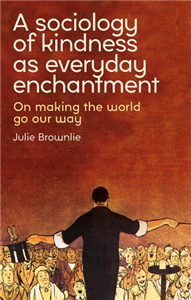
A sociology of kindness as everyday enchantment
On making the world go our way
by Julie Brownlie
This book asks us to consider how and why the notion of random acts of kindness and the idea of kindness more generally have come to take a hold in many contemporary English-speaking societies. By introducing and mapping the contours of an emergent kindness industry, marshalling empirical research on contemporary framings of everyday kindness and theoretical resources from cultural sociology to the sociology of emotions and relationships, Brownlie makes the case for a critical sociological engagement with the idea of kindness. In doing so, she argues for kindness to be seen as a form of everyday enchantment - one that, like all enchantments, is ultimately ambivalent.
-
Promoted Content
 Literature & Literary StudiesJune 2025
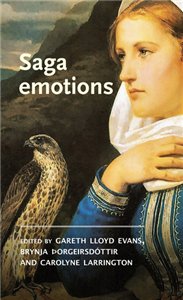
Saga emotions
by Gareth Lloyd Evans, Brynja Þorgeirsdóttir, Carolyne Larrington
Focusing particularly on historically oriented sagas, Saga emotions identifies and examines a range of emotions from across Old Norse-Icelandic saga literature. Each chapter begins with a discrete emotion term, such as reiði (anger), gleði (joy), or the peculiarly Old Norse víghugr (killing-mood), exploring its usages within the broad saga corpus, and focusing on its contextual meanings and narrative purposes. The contributions explore the specifics of the lexical terms used for different emotion states and offer in-depth case studies that consider how various emotions manifest within particular examples of saga literature. The book offers the emotional granularity lacking in current studies of Norse emotion and serves as an essential foundation for future research and study into emotional depiction in Old Norse-Icelandic saga literature.
-
 Trusted Partner
 Literature & Literary StudiesOctober 2025
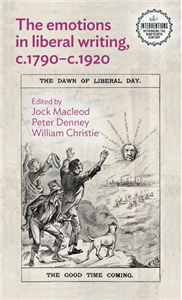
The emotions in liberal writing, c.1790–c.1920
by Jock Macleod, Peter Denney, William Christie
This volume of essays from a selection of distinguished international scholars is the first of its kind to explore in depth the emotional dimensions of liberal writing in Britain over the long nineteenth century. Addressing liberal writing in the public sphere rather than high political or parliamentary liberalism, it comprises a clear, context-setting introduction and eleven substantive chapters. The chapters analyse key texts and figures from the 1790s through to the 1920s and offer several different approaches to the central concern with the emotions and liberalism. These include examining the place of the emotions in the 'good life'; the social and political function of the emotions; emotional rhetoric in liberal writing; and liberal theories of the emotions. Both individually and as a collection, the essays provide an essential foundation for further scholarly work in this emerging field.
-
Trusted Partner
-
Trusted Partner
 Humanities & Social SciencesJune 2021
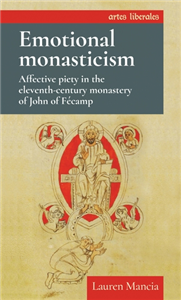
Emotional monasticism
Affective piety in the eleventh-century monastery of John of Fécamp
by Lauren Mancia
Medievalists have long taught that highly emotional Christian devotion, often called 'affective piety', appeared in Europe after the twelfth century and was primarily practiced by communities of mendicants, lay people and women. Emotional monasticism challenges this view. The first study of affective piety in an eleventh-century monastic context, it traces the early history of affective devotion through the life and works of the earliest known writer of emotional prayers, John of Fécamp, abbot of the Norman monastery of Fécamp from 1028-78. Exposing the early medieval monastic roots of later medieval affective piety, the book casts a new light on the devotional life of monks in Europe before the twelfth century and redefines how medievalists should teach the history of Christianity.
-
Trusted Partner
 Literature & Literary StudiesJanuary 2026
Approaches to emotion in Middle English literature
by Carolyne Larrington
-
Trusted Partner
-
Trusted Partner
 Literature & Literary StudiesApril 2021
Positive emotions in early modern literature and culture
by Cora Fox, Bradley J. Irish, Cassie M. Miura
-
Trusted Partner
 Humanities & Social SciencesJune 2022
Affective intimacies
by Marjo Kolehmainen, Kinneret Lahad, Annukka Lahti
This volume provides a novel platform to re-evaluate the notion of open-ended intimacies through the lens of affect theories. Contributors address the embodied, affective and psychic, sensorial and embodied aspects of their ongoing intimate entanglements across various timely phenomena. This fascinating collection asks how the study of affect enables us to rethink intimacies, what affect theories can do to the prevailing notion of intimacy and how do they renew and enrich theories of intimacy in a manner which also considers its normative and violent forms. Lively and thought-provoking, this collection contributes to timely topics across the social sciences, representing multiple disciplines from gender studies, sociology and cultural studies to anthropology and queer studies. By so doing, it advances the value of interdisciplinary perspectives and creative methodologies to understanding affective intimacies.
-
Trusted Partner

 MedicineDecember 2016
Emotion-Focused Therapy
A Practitioner’s Guide
by Lars Auszra/ Imke Herrmann/ Leslie S. Greenberg
This title provides a thorough and practical introduction to Emotions-Focused Therapy (EFT). Emotions, central point in EFT, help the patient identify his/her priorities and can be a good starting point for change. This title provides therapists with an overview over the principles and strategies that enable them to work with patients’ emotions in a therapeutic setting and use them to facilitate the changing of behavior. Readers will also find this title to be a rich resource of different techniques, such as empty-chair dialogues as well as suggestions on how to handle typical problems in therapy. Target Group: psychotherapists, specialists for psychiatry and psychotherapy, specialists for psychosomatic medicine and psychotherapy, clinical psychologists, coaches, students and teachers of psychology
-
Trusted Partner
-
Trusted Partner
 Humanities & Social SciencesJune 2019
Emotional monasticism
by Lauren Mancia, T. J. H. McCarthy, Stephen Mossman, Carrie Beneš, Jochen Schenk
-
Trusted Partner
 Sociology: work & labourJuly 2015
The sociology of unemployment
by Edited by Tom Boland and Ray Griffin
The sociology of unemployment is an analysis of the experience and governance of unemployment. By considering unemployment as more than just the absence of work; the book explores unemployment as a distinctive experience created by the welfare state. Each chapter explores an aspect of the experience or governance of unemployment; beginning with how people talk about their experience of being unemployed individually and collectively, to the places of unemployment, and on to the processes, policies and forms of the social welfare system. Clear explanations of classic theories are explored and extended, all against the backdrop of new primary research. Chapter by chapter, The sociology of unemployment challenges the 'deprivation theory of unemployment' which dominates sociology, psychology and social policy, by focusing on how governmental power forms the experience of unemployment. As a result, the book is both an introductory text on the sociology of unemployment and a fresh, critical perspective.
-
Trusted Partner
 Humanities & Social SciencesJuly 2015
The sociology of unemployment
by Tom Boland, Ray Griffin
The sociology of unemployment is an analysis of the experience and governance of unemployment. By considering unemployment as more than just the absence of work; the book explores unemployment as a distinctive experience created by the welfare state. Each chapter explores an aspect of the experience or governance of unemployment; beginning with how people talk about their experience of being unemployed individually and collectively, to the places of unemployment, and on to the processes, policies and forms of the social welfare system. Clear explanations of classic theories are explored and extended, all against the backdrop of new primary research. Chapter by chapter, The sociology of unemployment challenges the 'deprivation theory of unemployment' which dominates sociology, psychology and social policy, by focusing on how governmental power forms the experience of unemployment. As a result, the book is both an introductory text on the sociology of unemployment and a fresh, critical perspective. ;
-
Trusted Partner
The ArtsDecember 2024
Beyond the Happening
Performance art and the politics of communication
by Catherine Spencer
Beyond the Happening uncovers the heterogeneous, uniquely interdisciplinary performance-based works that emerged in the aftermath of the early Happenings. By the mid-1960s Happenings were widely declared outmoded or even 'dead', but this book reveals how many practitioners continued to work with the form during the late 1960s and 1970s, developing it into a vehicle for studying interpersonal communication that simultaneously deployed and questioned contemporary sociology and psychology. Focussing on the artists Allan Kaprow, Marta Minujín, Carolee Schneemann and Lea Lublin, it charts how they revised and retooled the premises of the Happening within a wider network of dynamic international activity. The resulting performances directly intervened in the wider discourse of communication studies, as it manifested in the politics of countercultural dropout, soft power and cultural diplomacy, alternative pedagogies, sociological art and feminist consciousness-raising.
-
Trusted Partner
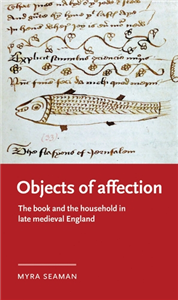 Literature & Literary StudiesJanuary 2023
Objects of affection
The book and the household in late medieval England
by Myra Seaman
Objects of affection recovers the emotional attraction of the medieval book through an engagement with a fifteenth-century literary collection known as Oxford, Bodleian Library Manuscript Ashmole 61. Exploring how the inhabitants of the book's pages - human and nonhuman, tangible and intangible - collaborate with its readers then and now, this book addresses the manuscript's material appeal in the ways it binds itself to different cultural, historical and material environments. In doing so it traces the affective literacy training that the manuscript provided its late-medieval English household, whose diverse inhabitants are incorporated into the ecology of the book itself as it fashions spiritually generous and socially mindful household members.
-
Trusted Partner
 Shakespeare studies & criticismMay 2017
The Renaissance of emotion
Understanding affect in Shakespeare and his contemporaries
by Edited by Richard Meek, Erin Sullivan
This collection of essays offers a major reassessment of the meaning and significance of emotional experience in the work of Shakespeare and his contemporaries. Recent scholarship on early modern emotion has relied on a medical-historical approach, resulting in a picture of emotional experience that stresses the dominance of the material, humoral body. The Renaissance of emotion seeks to redress this balance by examining the ways in which early modern texts explore emotional experience from perspectives other than humoral medicine. The chapters in the book seek to demonstrate how open, creative and agency-ridden the experience and interpretation of emotion could be. Taken individually, the chapters offer much-needed investigations into previously overlooked areas of emotional experience and signification; taken together, they offer a thorough re-evaluation of the cultural priorities and phenomenological principles that shaped the understanding of the emotive self in this period.
-
Trusted Partner
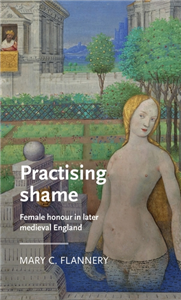 Literature & Literary StudiesNovember 2021
Practising shame
Female honour in later medieval England
by Mary C. Flannery, Anke Bernau, David Matthews
Practicing shame investigates how the literature of medieval England encouraged women to safeguard their honour by cultivating hypervigilance against the possibility of sexual shame. A combination of inward reflection and outward comportment, this practice of 'shamefastness' was believed to reinforce women's chastity of mind and body, and to communicate that chastity to others by means of conventional gestures. The book uncovers the paradoxes and complications that emerged from these emotional practices, as well as the ways in which they were satirised and reappropriated by male authors. Working at the intersection of literary studies, gender studies and the history of emotions, it transforms our understanding of the ethical construction of femininity in the past and provides a new framework for thinking about honourable womanhood now and in the years to come.
-
Trusted Partner
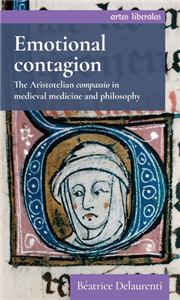 Humanities & Social SciencesMarch 2025
Emotional contagion
The Aristotelian compassio in medieval medicine and philosophy
by Béatrice Delaurenti, Graham Robert Edwards
Yawning makes one yawn, crying makes one cry. In the same way, a shiver, appetite, sexual desire and confidence are transmitted from one person to another. These examples capture the contagion-like dimension of emotion, spreading rapidly among people with tangible behavioural manifestations. Emotional contagion still challenges scientific explanation, and philosophical, scientific and anthropological topics converge around this issue. In Medieval Latin, there is a specific name for this contagion: compassio ('compassion'). Etymologically, 'compassion' means the co-experience of a 'passion', involving an involuntary reaction of the soul or the body imitating the reactions of others. The book investigates how these topics were treated in medieval learned texts, and illuminates the twofold enigma, that of the trajectory of the term compassio, and that of explaining the phenomenon it denoted.
-
Trusted Partner
Literature & Literary StudiesMarch 2023
Sleep and its spaces in Middle English literature
Emotions, ethics, dreams
by Megan Leitch
Middle English literature is intimately concerned with sleep and the spaces in which it takes place. In the medieval English imagination, sleep is an embodied and culturally determined act. It is both performed and interpreted by characters and contemporaries, subject to a particular habitus and understood through particular hermeneutic lenses. While illuminating the intersecting medical and moral discourses by which it is shaped, sleep also sheds light on subjects in favour of which it has hitherto been overlooked: what sleep can enable (dreams and dream poetry) or what it can stand in for or supersede (desire and sex). This book argues that sleep mediates thematic concerns and questions in ways that have ethical, affective and oneiric implications. At the same time, it offers important contributions to understanding different Middle English genres: romance, dream vision, drama and fabliau.



