
La Pollera Ediciones
La Pollera's catalog includes narrative, essay, and chronicle of contemporary and classic authors.
View Rights Portal
La Pollera's catalog includes narrative, essay, and chronicle of contemporary and classic authors.
View Rights Portal
Polperro Heritage Press is an independent British publisher, established in 1995. Recent titles from Polperro Press have included biographies, guides and a growing list of Cornish local history titles.
View Rights Portal

This is a study of Britain's presence in China both at its peak, and during its inter-war dissolution in the face of assertive Chinese nationalism and declining British diplomatic support. Using archival materials from China and records in Britain and the United States, the author paints a portrait of the traders, missionaries, businessmen, diplomats and settlers who constituted "Britain-in-China", challenging our understanding of British imperialism there. Bickers argues that the British presence in China was dominated by urban settlers whose primary allegiance lay not with any grand imperial design, but with their own communities and precarious livelihoods. This brought them into conflict not only with the Chinese population, but with the British imperial government. The book also analyzes the formation and maintenance of settler identities, and then investigates how the British state and its allies brought an end to the reign of freelance, settler imperialism on the China coast. At the same time, other British sectors, missionary and business, renegotiated their own relationship with their Chinese markets and the Chinese state and distanced themselves from the settler British.

 Trusted Partner

What does it mean to say that modern politics is personalised? To what extent is it more personalised than in the past, what is distinctive about contemporary forms of personalisation and are these changes enduring? This book addresses these questions. It re-thinks the concept of personalisation and develops an analytical framework for its study, in the process challenging current theorisation and bridging the political science and media studies approaches to the subject. Moreover, it presents new, rich and rigorous empirical data about how personalisation has developed over time in the UK, from 1945 to 2009. Its conceptual depth and empirical range makes the book a must-read for anyone researching the phenomenon of personalisation internationally, and a benchmark for future studies. It is also highly accessible to undergraduate and graduate students in political communication, British politics and media studies. ;
Trusted Partner
Local government in the UK is in crisis. It is now neither local in terms of the geography and populations of its principle units, nor does it truly govern in these areas. As this book reveals, over the previous 200 years local government has moved from a system in which local interests held governance over localities to one in which central government and national and multi-national agencies such as corporate businesses hold governance over local and community decision-making. These changes seriously undermine the important role that local government can play in liberal democracy in the UK. The book explains the nature of local government today and asks if there is any possibility of change.
Trusted Partner
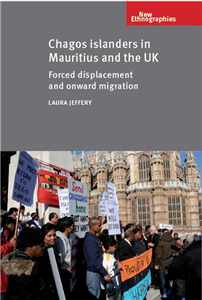
The Chagos islanders were forcibly uprooted from the Chagos Archipelago in the Indian Ocean between 1965 and 1973. This is the first book to compare the experiences of displaced Chagos islanders in Mauritius with the experiences of those Chagossians who have moved to the UK since 2002. It thus provides a unique ethnographic comparative study of forced displacement and onward migration within the living memory of one community. Based on in-depth ethnographic fieldwork in Mauritius and Crawley (West Sussex), the six chapters explore Chagossians' challenging lives in Mauritius, the mobilisation of the community, reformulations of the homeland, the politics of culture in exile, onward migration to Crawley, and attempts to make a home in successive locations. Jeffery illuminates how displaced people romanticise their homeland through an exploration of changing representations of the Chagos Archipelago in song lyrics. Offering further ethnographic insights into the politics of culture, she shows how Chagossians in exile engage with contrasting conceptions of culture ranging from expectations of continuity and authenticity to enactments of change, loss and revival. The book will appeal particularly to social scientists specialising in the fields of migration studies, the anthropology of displacement, political and legal anthropology, African studies, Indian Ocean studies, and the anthropology of Britain, as well as to readers interested in the Chagossian case study. ;
Trusted Partner

This book explains devolution today in terms of the evolution of past structures of government in the component parts of the United Kingdom. It highlights the importance of the English dimension and the role that England's territorial politics played in constitutional debates. Similarities and differences between how the components of the UK were governed are described. It argues that the UK should be understood now, even more than pre-devolution, as a state of distinct unions, each with its own deeply rooted past and trajectory. Using previously unpublished primary material, as well as a wealth of secondary work, the book offers a comprehensive account of the territorial constitution of the UK from the early twentieth century through to the operation of the new devolved system of government. ;
Trusted Partner
Where civil society is often seen as a driving force for equality, this book addresses a challenging topic: civil society elites. Drawing on a comprehensive study of Italy, Poland, Sweden, and the UK, this ground-breaking research investigates the often-overlooked power structures within civil society. By combining elite studies with civil society research, the book uncovers how a distinct civil society elite emerges and how it interacts with leaders in politics and business. The findings reveal a fascinating paradox. While this elite may be a powerful engine for social change, its integration into wider power circles risks reproducing the very inequalities it seeks to dismantle. By exploring how this elite can become disconnected from its grassroots, the book provides essential insights into the future of civil society and its democratic promise.
Trusted Partner
Trusted Partner
Trusted Partner

Amid the global migration crisis, the UK has created and increasingly hostile policy environment for asylum seekers that has pushed many into unnecessary hardship and homelessness. This volume is an ethnographic study alongside refused asylum seekers and refugees living destitute in Manchester, UK. Based on over three years of research in emergency night shelters and on the streets of the city, it draws on the stories and experiences of those who have been driven into destitution by an antagonistic immigration system. The book not only explores how legal and temporal uncertainty shapes the daily lives of those who have had their asylum claims refused, but also attends to the experiences of volunteers and activists working on the frontline of the crisis. While the work is rich in detail, it also extends outwards and offers new insights into our understanding of borders and the need to rethink the grand notions of justice and hospitality.
Trusted Partner

Substantially revised and updated, this fourth edition of The UK financial system presents a comprehensive explanation of the workings of the institutions and markets which make up the UK financial system, and discusses the issues affecting them. It presents key theoretical developments such as asymmetric information, the efficient markets hypothesis, behavioural economics and the term structure of interest rates, thus providing an analytical framework to aid understanding of the institutional structure. Several case studies are provided throughout the book looking at the failure of various financial firms and the lessons that can be learned from these. Examples include Equitable Life, Barings Bank, the Bank of International Credit and Commerce (BCCI) and Long Term Capital Management. ;
Trusted Partner

This study compares the making and remaking of the political identities of the miners' movements in Britain and Germany. Taking the south Wales and Ruhr coalfields as case studies, it focuses on the public discourse of the trade unions and political parties as it was disseminated in local newspapers, trade union publications, pamphlets and election leaflets. It reveals how the miners' movements used ideas such as class, religion, the 'people' or Volk, socialization and nationalization to construct organizational identities during the turbulent period between 1890 and 1926. These concepts were crucial not only in the formation and self-identity of the miners' trade unions, but also in the way they interacted with employers and the state. They adapted and changed over time as the miners' movements reacted to war, economic depression and increasing industrial conflict. The book contends that these identities were not simply the result of structural factors, but were formed at the juncture where cultural, political and sociological forces intersect. Examining this intersection through discourse analysis and the concept of the 'lifeworld', the book brings together the social world of the miners and the realm of organized politics to advance historical understanding of two of the most important elements in the most powerful labour movements in Europe. ;
Trusted Partner
 Trusted Partner
 Trusted Partner
Devolution in Britain today provides a comprehensive analysis of both the historical development and the current state of devolved government. Devolution is now a key element in A-level syllabuses and on most undergraduate politics courses. This book is written in a clear and accessible style for students either encountering devolution for the first time or for those who need to explore the subject area in greater detail. All of the devolved bodies in England, Northern Ireland, Scotland and Wales are examined. This book is a thorough update of the first edition, written by Colin Pilkington and published by MUP in 2002. The book explains the concept and background of devolution, and indicates the constitutional implications of political devolution in the United Kingdom before providing a full and considered historical background to devolution, including an explanation of how the United Kingdom came to be united. It then examines the historical and political events that surrounded the preparation of devolution across Britain, before addressing each country in turn, assessing the relative success of devolution in that country. ;
Trusted Partner

'Staging the UK' examines some of the most important performance in Britain from the mid-1980s into the new millennium. In a timely new critical approach, it considers contemporary British theatre in relation to national and supranational identities, critical concepts like globalisation and diaspora, and contemporary contexts such as the election of New Labour, devolution and European unification. It makes a significant contribution to the study of contemporary theatre by elucidating the relationships between performance, cultural identities and cultural power, and will be an invaluable textbook for courses on British theatre and culture. 'Staging the UK' takes a de-centred materialist approach. It looks at theatre in a range of institutions, practices and forms such as play texts, musicals, festivals, installation art, site-specific and physical theatre. It examines events such as the Edinburgh festivals, and significant companies, including the Scottish National Theatre, Brith Gof, Tinderbox Theatre Company, Complicite, Tamasha Theatre Company, DV8 Physical Theatre, Artangel, and Sir Andrew Lloyd Webber's Really Useful Group. This book makes a significant contribution to the study of contemporary theatre by elucidating the relationships between performance, cultural identities and cultural power, and will be an invaluable textbook for courses on British theatre and culture. ;
Trusted Partner
 Trusted Partner

Duncan Watts, the author of three previous books on the European Union and Britain's relationship with it, has produced a new account of this 'uneasy partnership'. This edition is based on the original by Colin Pilkington and provides a review of how European Unity has been handled by British governments and politics. The contents has been updated to include all new developments including the proposed new consititution and the euro-elections of 2004. Additional material aslo considers the role of pressure groups within the Union and the approach adopted by British Lobbyists. As an up-to-date edition of a well established text, this book will be essential reading for students and teachers interested in the relationship between Britain and Europe. ;
Trusted Partner
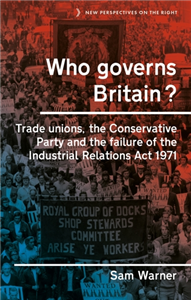
Providing fresh insights from the archival record, Who governs Britain? revisits the 1970-74 Conservative government to explain why the Party tried - and failed - to reform the system of industrial relations. Designed to tackle Britain's strike problem and perceived disorder in collective bargaining, the Industrial Relations Act 1971 established a formal legal framework to counteract trade union power. As the state attempted to disengage from and 'depoliticise' collective bargaining practices, trade union leaders and employers were instructed to discipline industry. In just three-and-a-half years, the Act contributed to a crisis of the British state as industrial unrest engulfed industry and risked undermining the rule of law. Warner explores the power dynamics, strategic errors and industrial battles that destroyed this attempt to tame trade unions and ultimately brought down a government, and that shape Conservative attitudes towards trade unions to this day.
Trusted Partner
This book is a study of mobility, image and identity in colonial India and imperial Britain in the late nineteenth and early twentieth centuries. It is a model for studies of migrant figures like K.S. Ranjitsinhji who emerged during the imperial period. Ranjitsinhji is an important figure in the history of modern India and the British empire because he was recognized as a great athlete and described as such. The book focuses on four aspects of Ranjitsinhji's life as a colonial subject: race, money, loyalty and gender. It touches upon Ranjitsinhji's career as a cricketer in the race section. The issue of money gave Indian critics of Ranjitsinhji's regime the language they needed to condemn his personal and administrative priorities, and to portray him as self-indulgent. Ranjitsinhji lived his life as a player of multiple gender roles: sometimes serially, and on occasion simultaneously. His status as a "prince" - while not entirely fake - was fragile enough to be unreliable, and he worked hard to reinforce it even as he constructed his Englishness. Any Indian attempt to transcend race, culture, climate and political place by imitating an English institution and its product must be an unnatural act of insurgency. The disdain for colonial politics that was manifest in the "small rebellions" at the end of the world war converged with the colonized/Indian identity that was evident at the League of Nations. Between the war and his death, it is clear, Ranjitsinhji moved to maximize his autonomy in Nawanagar.

