
Verlag Kiepenheuer & Witsch GmbH & Co. KG
Publishing House Kiepenheuer & Witsch GmbH & Co. KG with its Imprint Galiani Berlin
View Rights Portal Trusted Partner

Publishing House Kiepenheuer & Witsch GmbH & Co. KG with its Imprint Galiani Berlin
View Rights Portal
 Trusted Partner
Trusted Partner
Trusted Partner


This book takes the reader on a fascinating journey, demonstrating in an understandable and entertaining way how the brain affects our thoughts, actions, and feelings - and that this sometimes only peripherally involves reason. It shows, that the subconscious actually exists and how it affects us, how we arrive at both right and wrong decisions, how our memory works, how fragile it can be, and yet also how robust. Using insightful experiments and the latest research results, including many examples, this book presents the reader what an incredibly impressive thinking organ the brain actually is – even if it is not a purely “rational machine”. Target Group: For people interested in the results of research into the workings of the brain in the areas of decision-making, memory, and consciousness.
Trusted Partner


— An exciting and entertaining explanation of neuroscience — In the diverting and humorous style for which the author is known – learning has never been this much fun What processes in the brain are responsible for intelligence, free will, empathy or reason? Can memories be falsified? And what does actually happen in the brain when we reach puberty? Monika Niehaus and Martin Osterloh answer these and many other neuroscientific questions in their book – a fundamental work on brain research, and easy to understand, exciting and entertaining.
Trusted Partner


John Lyly's Euphues: The Anatomy of Wit and Euphues and his England, created a literary sensation in their own age, and had a profound influence on Elizabethan prose. This modern-spelling edition of the two works, the first for nearly a century, is designed to allow the twenty-first century reader access to this culturally significant text and to explore the fascination that it exerted. Attuned to the needs of both students and specialists, the text is edited from the earliest complete witnesses, is richly annotated, and facilitates an understanding of Lyly's narrative technique by distinguishing typographically between narrative levels. The introduction explores the relationship between the dramatic and non-dramatic work, locating Lyly's highly influential plays in a wider context and Euphues' Latin poem in praise of Elizabeth I, translated for the first time, is discussed in an Appendix. A work of primary importance for students of Renaissance prose, this edition complements the on-going publication of Lyly's dramatic works in The Revels Plays. ;
Trusted Partner
 Trusted Partner
Trusted Partner
Trusted Partner
Trusted Partner
Trusted Partner

The human brain is a wondrous thing, highly complex and highly functional. However, the control centre of our feelings, thoughts and actions can sometimes go out of sync. Some reasons for this are known, such as genetic factors, hormonal effects or trauma. In other cases, we are still in the dark. In an extreme case scenario, the brain may create bizarre delusions – masterful narrations that the people affected fi nd completely conclusive and reasonable. Monika Niehaus has compiled 36 such disorders ranging from love madness and the gourmand syndrome – where gourmet food becomes the purpose of life – to people who desire nothing more than to have their limbs amputated. She tells gripping tales of famous and not so famous cases. With sensitivity and a considerable dose of humour she takes us into the history of art and literature, and presents scientifi c explanations. This fascinating book shows that our brain is a genius – and madness is quite often NOT inexplicable.
Trusted Partner
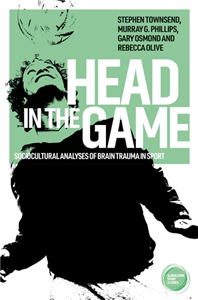
Head in the game brings together international scholars from multiple humanities, social science, and scientific disciplines to critically examine one of the most vexing issues in global sport: concussion. It argues that science and medicine alone cannot solve the concussion crisis: sociocultural factors must also be considered. This edited collection draws attention to the ways that social, cultural, historical, political, literary, philosophical, and legal factors have shaped the concussion crisis in sport. Head in the game is essential reading for those who want to understand how the concussion crisis came to be, and provides guidance for developing ethical and evidence-based solutions in the future.
Trusted Partner

The human brain is a highly complex and highly functional structure consisting of almost 90 billion nerve cells. But it can go out of sync, due to genetic factors, hormonal effects, trauma or other causes. In extreme cases, our control centre then creates bizarre delusions – brilliant narratives that are completely convincing to the person concerned. In her second book on such phenomena, Monika Niehaus has compiled 30 rare psychological disorders – from a conviction to have been abducted by aliens, to being sexually attracted to criminals, to the hyperthymestical syndrome where people can remember every detail of their past life. Narrated in an interesting, humorous and sensitive way, the author relates a variety of cases, some of them famous, others less so, while introducing us to the history of art and literature and presenting scientific explanations. This fascinating book shows the genius that resides in our brain – and how madness can often be explained.
Trusted Partner
Writing power radically rethinks the place of the canon and canonicity as objects and concepts in contemporary academia and the everyday intellectual practices of academics. It is distinctive in its demonstration of how academics' engagements with canons shape their writing practices but also how scholars' writing practices, spaces, proclivities, and desires shape the canon and changing ideas of value in canonicity. The book thinks through frequently discussed problems of legitimacy and knowledge production from fresh perspectives of lived experience and the everyday to offer new insights into the politics of knowledge in contemporary social sciences.
Trusted Partner
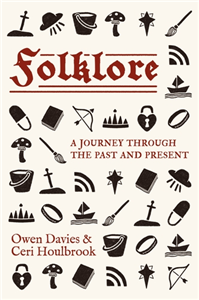
A gripping guide to the weird yet everyday world of British folklore. In this ground-breaking book, two leading experts provide the definitive guide to British folklore past and present. Owen Davies and Ceri Houlbrook explore folklore in all its remarkable variations, from village rituals and fairy tales to UFO legends and internet fanfiction. Travelling through a landscape of witches, wizards and wicker men, they reveal how folklore has been researched and written about in the past and show how it continues to be lived in the present. At the same time, they provide the reader with a valuable toolkit for understanding how to interpret the diverse examples given. The book's key message is that folklore is much more than the fossilised remains of a distant, rural past. Folklore is and always has been ubiquitous, dynamic and political. It is a living tradition that draws from many sources, including migrant communities, and is forever being renewed and updated.
Trusted Partner
 Trusted Partner
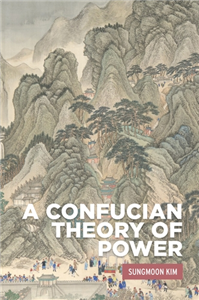
In the book's lead essay, Sungmoon Kim offers a comprehensive analysis of Confucian power. Through a blend of philosophical, political, and historical analysis, Kim challenges the dominant idea that Confucianism is primarily centred on virtue ethics. Instead, he argues that Confucianism perceives power through the prism of responsibility. Kim not only traces this perspective throughout history but also demonstrates its relevance to contemporary society. He contrasts this Confucian perspective with Western political theory's view of power as control. Political theorists and philosophers will offer essay responses to Sungmoon Kim's provocation, offering a dialogue approach to provide a comprehensive analysis of the Confucian conception of power.
Trusted Partner


"Patchwork Power!" von Marita Strubelt ist ein wegweisender Ratgeber für Eltern in Patchworkfamilien, der praktische Lösungen und Strategien für den Umgang mit den Herausforderungen des Patchwork-Lebens bietet. Strubelt, selbst eine erfahrene Patchwork-Familien-Expertin, teilt ihr umfassendes Wissen und persönliche Erfahrungen, um Leserinnen und Lesern zu helfen, die Dynamiken ihrer eigenen Patchworkfamilien besser zu verstehen und positiv zu gestalten. Das Buch legt einen starken Fokus auf die Selbstfürsorge, den Perspektivwechsel und die Wertschätzung aller Familienmitglieder. Es leitet dazu an, aus Problemen Kraft zu schöpfen und die einzigartige Struktur einer Patchworkfamilie als echten Bonus zu begreifen. Durch seine enge Anbindung an das Magazin "Leben & erziehen" und eine aktive Facebook-Gruppe bietet es eine kontinuierliche Unterstützung und Gemeinschaft für Leserinnen und Leser. "Patchwork Power!" richtet sich an Patchwork-Eltern, die nach einem modernen, empathischen und praxisnahen Ansatz suchen, um ihr Familienleben zu bereichern und zu harmonisieren. Modern und praxisnah: Bietet einen zeitgemäßen Ratgeber, der auf den neuesten Erkenntnissen und realen Erfahrungen basiert. Lösungsorientierte Ansätze: Stellt konkrete, umsetzbare Strategien zur Verfügung, die aus dem Alltag einer Patchwork-Coachin stammen. Fokus auf Selbstfürsorge und Empathie: Betont die Bedeutung von Selbstfürsorge und einem empathischen Umgang innerhalb der Familie. Unterstützung durch eine aktive Community: Zugang zu einer hilfreichen Facebook-Gruppe und der Expertise einer Patchwork-Familien-Expertin. Vielseitig einsetzbar: Bietet wertvolle Einsichten und Tipps, die über die Patchwork-Thematik hinaus in vielen Lebensbereichen anwendbar sind. Empathische und wertschätzende Sprache: Spricht Leserinnen und Leser auf eine persönliche und respektvolle Weise an. Bewältigung spezifischer Herausforderungen: Geht gezielt auf typische Fallstricke und Lösungswege in Patchworkfamilien ein. Für verschiedene Familienmodelle geeignet: Das Buch bietet einen soliden Grundstock an Rat und Unterstützung für viele Konstellationen innerhalb der Patchwork-Dynamik.
Trusted Partner

Based on one of the richest surviving diaries of the Dutch Golden Age, Princely Power in the Dutch Republic recaptures the social world of William Frederick of Nassau (1613-1664). As a Stadholder and relative of the Prince of Orange, William Frederick was among the key players in a fragmented republican state system. This study offers a vivid analysis of his political strategies and reveals how unwritten codes of patronage guided his daily contacts and shaped his mental world. As a patron at his court and as a client of the Prince of Orange, William Frederick developed distinctive patronage roles, appropriate to different social spheres. By assessing these different roles, Janssen provides a unique insight into the ways in which a seventeenth-century nobleman negotiated and articulated clientage, friendship and corruption in his life. This study offers an in-depth analysis of political practices in the Dutch Republic and reconsiders the way in which patronage shaped early modern politics, affected religious divisions and framed social identities. ;
Trusted Partner

In this accessible and sophisticated exploration of the nature and workings of social and political power, Haugaard examines the interrelation between domination and empowerment. Building upon the perspectives of Steven Lukes, Michel Foucault, Amy Allen, Hannah Arendt, Anthony Giddens, Pierre Bourdieu and others, he offers a clear theoretical framework, delineating power in four interrelated dimensions. The first and second dimensions of power entail two different types of social conflict. The third dimension concerns tacit knowledge, uses of truth and reification. Drawing upon genealogical theory and accounts of slavery as social death, the fourth dimension of power concerns the power to create social subjects. The book concludes with an original normative pragmatist power-based account of democracy. Offering lucid and entertaining illustrations of complex theoretical perspectives, this book is essential reading for scholars and activists.
Trusted Partner





