
All Things Women
Find your focus and strengths in times of crisis.
View Rights Portal

LIBRA LIBROS PROYECTOS S.A.S es una empresa colombiana, fundada en el año 2015. Su Editorial LIBRA LIBROS cuenta con lineas temáticas en la historia, música y patrimonio del Caribe colombiano. Se presta servicios a otras empresas o entidades privadas y públicas en realizar proyectos editoriales propios.
View Rights Portal

This book provides a vital new history of feminist performance through an ecological lens. It argues that from the 1960s to the present, artists have used performance to challenge the linked oppression of women and nature. Proposing 'composting' as a new method for writing feminist history, the study moves beyond linear narratives to trace regenerative connections between generations of practitioners. It provides sustained analysis of genres from land art to postdramatic theatre, re-evaluating the work of canonical figures while examining how contemporary artists continue to address these urgent themes. By placing ecofeminism in dialogue with feminist new materialism, queer ecology, and transecological thought, this study demonstrates how performance has been a crucial site for imagining more just and sustainable futures in an age of environmental crisis.

How do feminist movements develop and organise in ethno-nationally divided societies? How does this challenge our understandings of contemporary fourth wave feminism? Women's Troubles sets out to answer these questions using rich empirical data and analysis in an examination of feminist activism after the Northern Irish peace agreement. Utilising feminist frameworks and debates on movement building, policymaking, abortion rights, gender-based violence and the UN women, peace and security agenda, Claire Pierson interrogates the opportunities and challenges in articulating a feminist voice and creating feminist spaces in the conflict transformational politics and society. Capturing the complexities of contemporary feminist movement building in a divided society, Women's Troubles contributes to ongoing analysis of contemporary global feminisms.
 Trusted Partner
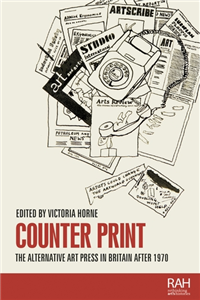
The history of contemporary art is also a history of its newsletters, manifestos, magazines, pamphlets, and journals. Those periodical publications do not simply communicate or record ideas but have worked in exciting ways to shape art's practices, histories and communities. As a new generation of artists, activists and scholars seek to uncover the histories of alternative publishing and artistic networks, this book gathers original archival discoveries while offering methodologies for studying and thinking with those artefacts. As the first essay collection to focus on the periodical art press and the ways we study it, Counter print offers readers an alternative route into the past fifty years of contemporary art, one that is defiantly collaborative, border crossing and disruptive.
Trusted Partner
Trusted Partner
Trusted Partner
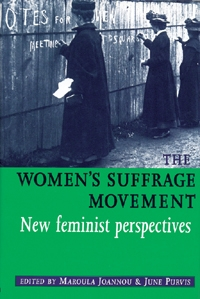
Available in paperback for the first time, this important collection of essays illustrates the complexity, richness and diversity of the suffrage movement. Combining historical reappraisal with lively accounts of the culture of the women's suffrage movement, this volume offers a unique focus. It includes studies of the fascinating, but neglected groups that participated in the campaign: the Women's Franchise League; the Women's Freedom League; the Women's Tax Resistance League and the United Suffragists. This is accompanied by feminist research on the poetry, fiction and drama that emerged from women's struggle for the vote. In addition there are reappraisals of two leading figures in the Pankhursts' Women's Social and Political Union, an illuminating analysis of the relationship between suffrage and sexuality, and a discussion of what happened away from the metropolis, as well as of the little known campaign to extend the vote after 1918. ;
Trusted Partner
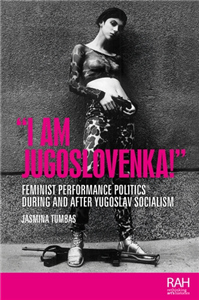
"I am Jugoslovenka" argues that queer-feminist artistic and political resistance were paradoxically enabled by socialist Yugoslavia's unique history of patriarchy and women's emancipation. Spanning performance and conceptual art, video works, film and pop music, lesbian activism and press photos of female snipers in the Yugoslav wars, the book analyses feminist resistance in a range of performative actions that manifest the radical embodiment of Yugoslavia's anti-fascist, transnational and feminist legacies. It covers celebrated and lesser-known artists from the 1970s to today, including Marina Abramovic, Sanja Ivekovic, Vlasta Delimar, Tanja Ostojic, Selma Selman and Helena Janecic, along with music legends Lepa Brena and Esma Redzepova. "I am Jugoslovenka" tells a unique story of women's resistance through the intersection of feminism, socialism and nationalism in East European visual culture.
Trusted Partner
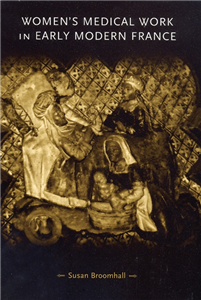
Women have long been crucial to the provision of medical services, both in the treatment of sickness and in maintaining health. In this study, Susan Broomhall situates the practices and perceptions of women's medical work in France in the context of the sixteenth century and its medical evolution and innovations. She argues that early modern understandings of medical practice and authority were highly flexible and subject to change. She furthermore examines how a focus on female practitioners, who cut across most sectors of early modern medical practice, can reveal the multifaceted phenomenon of these negotiations for authority. This new paperback edition of Women's medical work in early modern France skilfully combines detailed research with a clear presentation of the existing literature of women's medical work, making it invaluable to students of gender and medical history.
Trusted Partner
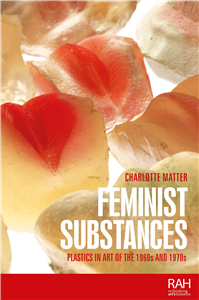
Numerous women artists engaged with industrial materials such as plastics in the 1960s and 1970s, contrary to what the discourse of the time would have us believe. As Feminist substances shows, their works offered unique approaches to plastics in art, introducing new material meanings through a feminist lens. With a focus on Europe and Latin America, the book discusses the practices of Carla Accardi, Lea Lublin and Alina Szapocznikow, combining close readings of selected artworks with broader considerations of their social contexts. It explores their use of Sicofoil, plexiglass, plastic inflatables, polyester resin and polyurethane foam to address key concerns of feminist thought in relation to social reproduction, motherhood, memory, desire and illness. Beyond commonplaces of plastics as generic bad materials, Feminist substances considers more complex ways of engaging with synthetic matter, taking into account our messy relationships with these controversial materials.
Trusted Partner

Counterpractice highlights a generation of women who used art to define a culture of experimental thought and practice during the period of the French women's movement or Mouvement de Libération des Femmes (1970-81). It considers women's art in relation to some of the most exciting thinkers to have emerged from the French literature and philosophy of the 1970s - Hélène Cixous, Luce Irigaray and Julia Kristeva - forcing a timely reconsideration of the full spectrum of revolutionary practices by women in the years following the events of May '68. Lavishly illustrated with over 200 images, the book also features an illuminating foreword by art historian Griselda Pollock.
Trusted Partner
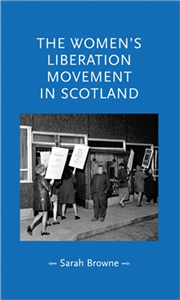
This is the first book-length account of the women's liberation movement in Scotland, which, using documentary evidence and oral testimony, charts the origins and development of this important social movement of the post-1945 period. In doing so, it reveals the inventiveness and fearlessness of feminist activism, while also pointing towards the importance of considering the movement from the local and grassroots perspectives, presenting a more optimistic account of the enduring legacy of women's liberation. Not only does this book uncover the reach of the WLM but it also considers what case studies of women's liberation can tell us about the ways in which the development of the movement has been portrayed. Previous accounts have tended to equate the fragmentation of the movement with weakness and decline. This book challenges this conclusion, arguing that fragmentation led to a diffusion of feminist ideas into wider society. In the Scottish context, it led to a lively and flourishing feminist culture where activists highlighted important issues such as abortion and violence against women. ;
Trusted Partner

Accessible, introductory student guide which identifies key feminist approaches to popular culture from the 1960s to the present.. The only introduction to both feminist cultural studies and feminism and popular culture published in the UK.. Presents its information in a reader friendly series of case studies on: women's film romantic fiction soap opera consumption and material culture fashion and beauty proactices youth culture and popular music. Will appeal to students across a wide range of disciplines as a variety of popular cultural forms are discussed. ;
Trusted Partner

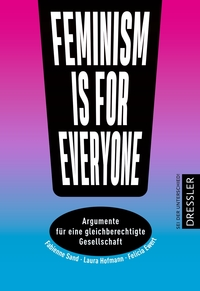
In einer Welt, in der Gleichberechtigung noch immer ein zentrales Thema darstellt, liefern die Autorinnen Laura Hofmann, Felicia Ewert und Fabienne Sand wertvolle Argumente für eine inklusive Gesellschaft. "Feminism is for everyone!" ist eine kraftvolle Anleitung zur Förderung der Gleichstellung aller Menschen, unabhängig von Geschlecht, Herkunft oder Identität. Die Lektüre richtet sich an jene, die sich für die Prinzipien des Feminismus interessieren und an deren Umsetzung mitwirken wollen, indem sie Diskriminierungen erkennen und aktiv gegen sie vorgehen. Vielfältige Themen: Von Sexismus und Rassismus bis hin zu Transfeindlichkeit und Allyship – das Buch behandelt ein breites Spektrum an gesellschaftlich relevanten Themen, die zum Verständnis und zur Bekämpfung von Diskriminierung beitragen. Praktische Tipps: Lesende erhalten nicht nur tiefe Einblicke in verschiedene Formen der Ungleichheit, sondern auch konkrete Handlungsanweisungen, wie sie im Alltag für Gleichberechtigung eintreten können. Expertise der Autorinnen: Mit Laura Hofmann, Felicia Ewert und Fabienne Sand teilen erfahrene Aktivistinnen ihre Erkenntnisse und Erfahrungen, wodurch das Buch eine authentische und fundierte Perspektive bietet. Inspirierende Inhalte: Die motivierenden und direkt umsetzbaren Ratschläge im Buch ermutigen die Leserschaft, sich aktiv für eine gerechtere Gesellschaft einzusetzen und bestehende Strukturen zu hinterfragen. Inklusive Ansätze: Dieses Werk ist für Menschen aller Geschlechter und Hintergründe geeignet, wobei es besonders darauf abzielt, eine umfassende und verständliche Einführung in feministische Praktiken zu bieten.
Trusted Partner


Do we still need feminism in Europe? Equality or difference feminism? A new generation of feminists has now broken away from the feminism of the 1960s. The old white Cis man has been discredited, by the "#MeToo" movement at the latest. Sexualised violence against women has been outlawed, perpetrators taken to court. So everything’s good? No, of course not. Men still dominate public discourse; men are unchallenged in leadership positions in politics, society and business; male power still prevails in the domestic environment as well. The extent to which men fight back when they feel threatened by feminism is also evident in the revival of authoritarian nationalist politicians in Europe and around the world. The seven authors shed light on feminist struggles in different areas of life, and illustrate the range of feminism today.
Trusted Partner

This book marks an important new intervention into a vibrant area of scholarship, creating a dialogue between the histories of imperialism and of women and gender. By engaging critically with both traditional British imperial history and colonial discourse analysis, the essays demonstrate how feminist historians can play a central role in creating new histories of British imperialism. Chronologically, the focus is on the late eighteenth to early twentieth centuries, while geographically the essays range from the Caribbean to Australia and span India, Africa, Ireland and Britain itself. Topics explored include the question of female agency in imperial contexts, the relationships between feminism and nationalism, and questions of sexuality, masculinity and imperial power.
Trusted Partner
This insightful book offers a timely assessment of the complex relationship between women and leisure in England, drawing upon recent feminist theory. Departing from approaches which focus on particular activities or institutions, it places everyday experiences at its centre, presenting a wide-ranging and lively account of changing perceptions, representations and experiences of leisure across the period 1920-60. It addresses the nature of leisure within women's lives, examining shifting understandings of the concept and identifying areas of definitional ambiguity such as the 'family' holiday, shopping and handicrafts. Focusing upon experiences of leisure across the life cycle, it provides a detailed assessment of the particular forms of leisure enjoyed by women at distinct stages of their lives, including cinema-going, dancing, socialising and home-based pursuits. The book demonstrates that experiences and perceptions of leisure were fundamentally structured along life cycle lines: leisure in youth was often characterised by freedom and independence whilst leisure in adulthood became a vehicle for service and duty to others.
Trusted Partner

Bordering intimacy explores the interconnected role of borders and dominant forms of family intimacy in the governance of postcolonial states. Combining a historical investigation with postcolonial, decolonial and black feminist theory, the book reveals how the border policies of the British and other European empires have been reinvented for the twenty-first century through appeals to protect and sustain 'family life' - appeals that serve to justify and obfuscate the continued organisation of racialised violence. The book examines the continuity of colonial rule in numerous areas of contemporary government, including family visa regimes, the policing of 'sham marriages', counterterror strategies, deprivation of citizenship, policing tactics and integration policy.
Trusted Partner
Despite reliance on ingredients like horse dung, Old English remedies for women's medicine speak to contemporary reproductive concerns. Previous translators reduced the remedies to a general category of women's medicine, but sustained examination of language reveals important distinctions: remedies for menstruation indicate social concerns about fertility, where remedies for 'cleansing' do not provide a clear path to conception, but rather foreclose it. Rarest of all are the remedies for childbirth, but their rarity is compounded by the practices of translators who conflate the language for women's reproduction into an amorphous singularity. Through an original method of hysteric philology-the combining of traditional philology with contemporary feminist and medical epistemologies-this book situates itself in the historical treatment of reproductive people as both objects and subjects of medical practice, and gestures forward in time to the contemporary struggle for bodily autonomy.
Trusted Partner

The turn of the twenty-first century has witnessed the striking advance of pornography into the Western cultural mainstream. Symptomatic of this development has been the use by writers, artists, and film-makers of the imagery and aesthetics of pornography, in works which have, often on this basis, achieved considerable international success. Amongst these artists are a number of French authors and directors - such as Michel Houellebecq, Catherine Breillat, Virginie Despentes, or Catherine Millet - whose work has often been dismissed as trashy or exploitative, but whose use of pornographic material may in fact be indicative of important contemporary concerns. In this study of a very significant trend, the authors explore how the reference to pornography encodes diverse political, cultural, and existential questions, including relations between the sexes, the collapse of avant-garde politics, gay sexualities in the time of AIDS, the anti-feminist backlash, the relation to the body and illness, the place of fantasy, and the sexualisation of children. It will be of interest to undergraduates, graduates, and researchers in the fields of French culture, gender, film and media studies.
Trusted Partner

The turn of the twenty-first century has witnessed the striking advance of pornography into the Western cultural mainstream. Symptomatic of this development has been the use by writers, artists, and film-makers of the imagery and aesthetics of pornography, in works which have, often on this basis, achieved considerable international success. Amongst these artists are a number of French authors and directors - such as Michel Houellebecq, Catherine Breillat, Virginie Despentes, or Catherine Millet - whose work has often been dismissed as trashy or exploitative, but whose use of pornographic material may in fact be indicative of important contemporary concerns. In this, the first study of this significant trend, the authors explore how the reference to pornography encodes diverse political, cultural, and existential questions, including relations between the sexes, the collapse of avant-garde politics, gay sexualities in the time of AIDS, the anti-feminist backlash, the relation to the body and illness, the place of fantasy, and the sexualisation of children. It will be of interest to undergraduates, graduates, and researchers in the fields of French culture, gender, film and media studies.


