
Rights2 Small Publisher Showcase
The Small Publisher Rights Showcase contains a carefully curated selection of books being published by small and independent publishers from across the UK.
View Rights Portal
The Small Publisher Rights Showcase contains a carefully curated selection of books being published by small and independent publishers from across the UK.
View Rights Portal
We are an independent publisher, founded at the beginning of 2009 in the city of Montevideo, the southernmost capital of America. Throughout the years, we have been publishing fictional and non-fictional narratives, children’s books, political essays as well as photography books, under the collections named: Us (Nosotros), Stone like You (Piedra como tú), Walter’s Library (Biblioteca de Walter) and About Narratives (De Narrativa). Our titles are issued in printed and digital versions, which can be found at digital stores such as Amazon and Bajalibros, among digital libraries and the main bookstores in Uruguay, Argentina and Chile. In addition, some of our books were translated into Italian and Portuguese. In the last few years, we have applied new technologies to develop products for the publishing sector. We created the webBook Digital Educational Contents (Contenidos educativos digitales) and the appbook Professions’ Factory (Fábrica de oficios), among other projects that are currently underway in this area. All our production is self-managed and strongly independent. The books we make are carefully thought through. In every release, the aesthetic care put in the edition, its narrative, illustrations, and photographs, seek to create an attractive object, aimed to inspire the desire to be included in every library.
View Rights Portal

This book provides an in-depth analysis of the rise and influence of both radical and mainstream right-wing movements across Latin America. Through country-specific case studies, it explores the evolution of these groups and their impact on politics, culture, and governance, highlighting key figures and strategies shaping the political landscape in the region.

A daring investigation that explores how women are targeted and recruited by the far right. As the far right has gained popularity and acceptance around the world, its ranks have swelled with an unlikely category of members: women. Women play significant roles in far-right movements, acting as propagandists, prizes to be won and mother-warriors of the nation. But up to now their activities have been largely overlooked. In Pink-pilled, Lois Shearing provides a cutting-edge account of how the far right has used the internet to recruit women, while shedding light on what life is like for women within these movements, including their experiences of misogyny and violence. Understanding how and why women join movements that explicitly aim to restrict their autonomy is essential if we want to fight back. Pink-pilled offers key insights for countering women's radicalisation and building communities resistant to far-right thought.
 Trusted Partner
Trusted Partner
Trusted Partner

This book offers the first examination of extremist Heathenry and occultism in the UK and how anti-racist Heathens act to counter this discourse. It explores the spectrum of Heathen practice today and the historical origins of racist Heathenry in nineteenth century Germanic romanticism and twentieth century folkish nationalism. Treating each of the three main extremist Heathen organisations, the book extends the analysis to the neo-Nazi occult organization the Order of the Nine Angles (O9A), and the wider racist Heathen cultural scene in Black Metal and Dark Folk music. The authors balance this with discussion of how inclusivist Heathens are countering this discourse, from visible protests at far-right rallies to inter-faith forums and an active presence on social media platforms. The book makes an important contribution to the intersecting fields of new religious movements, nationalist history and racist politics.
Trusted Partner


— How politics are increasingly influencing the rule of law in Germany — Systematic failures of democracy to protect itself — Based on numerous interviews with different members of Germany's legal system Ever since the right-wing party “Alternative for Germany” (AfD) secured representation in the Bundestag and in all state parliaments, Germany’s judiciary is facing a new challenge for which it is unprepared: AfD-affiliated judges and public prosecutors are attracting attention through right-wing biased decisions and investigations. Other members of the legal system cause further damage by ignoring the right-wing extremist and anti-Semitic background of crimes and thus punishing offenders too leniently or not at all. Both the judiciary and policy-makers have so far underestimated the new danger from the right. As a result protection against the appointment of right-wing legal professionals has been insufficient. Joachim Wagner systematically analyses numerous examples from German courts in recent years. He calls on the democratic judiciary to remember the principles of a well-fortified democracy.
Trusted Partner

This book, newly available in paperback, reveals the Conservative Party's relationship with the extreme right between 1945 and 1975. For the first time, this book shows how the Conservative Party, realising that its well known pre-Second World War connections with the extreme right were now embarrassing, used its bureaucracy to implement a policy of investigating extreme right groups and taking action to minimise their chances of success. The book focuses on the Conservative Party's investigation of right-wing groups, and shows how its perception of their nature determined the party bureaucracy's response. The book draws a comparison between the Conservative Party machine's negative attitude towards the extreme right and its support for progressive groups. It concludes that the Conservative Party acted as a persistent block to the external extreme right in a number of ways, and that the Party bureaucracy persistently denied the extreme right within the party assistance access to funds and representation within party organisations. It reaches a climax with the formulation of a 'plan' threatening its own candidate if he failed to remove the extreme right from the Conservative Monday Club.
Trusted Partner

The right and the recession considers the ways in which conservative activists, groupings, parties and interests in the US and Britain responded to the financial crisis and the 'Great Recession' that followed in its wake. The book looks at the tensions and stresses between different ideas, interests and institutions and the ways in which they shaped the character of political outcomes. In Britain, these processes opened the way for leading Conservatives to redefine their commitment to fiscal retrenchment and austerity. Whereas public expenditure reductions had been portrayed as a necessary response to earlier overspending they were increasingly represented as a way of securing a permanently 'leaner' state. The book assesses the character of this shift in thinking as well as the viability of these efforts to shrink the state and the parallel attempts in the US to cut federal government spending through mechanisms such as the budget sequester. ;
Trusted Partner

This book rigorously investigates the contemporary state of children's rights and the multifaceted challenges facing children, uncovering the complexities at their core. In 1989, the United Nations introduced the Convention on the Rights of the Child (CRC), ratified by 196 nations, promising a world where children's rights would reign supreme. In practice, however, realising these rights proves intricate and often precarious. Policies may shine on paper, but their implementation grapples with the challenges posed by global governance structures, national strategies, and local factors. Over three decades since the CRC's inception, this book scrutinises the true efficacy of international commitments, shedding light on underexplored issues and revealing shortcomings in both discourse and actions. With diverse, interdisciplinary perspectives, it recognises the profound influence of global and transnational forces in generating outcomes that impact children's rights and welfare. An electronic edition of this book is freely available under a Creative Commons (CC BY-NC-ND) licence.
Trusted Partner

This book is the first investigation on how official organizers built and sustained the national militant campaign of the Women's Social and Political Union between 1903 and 1918. Whilst the overall policy of the Union was devised by an ever-decreasing circle of women, centred around the mother-daughter team of Emmeline and Christabel Pankhurst, much of its actual activity, including its more extreme militant actions such as arson, was devised and implemented by these organizers who worked in the provinces and in London. Women of the right spirit reveals organizers to be a diverse bunch of women, whose class backgrounds ranged from the aristocratic to the extremely impoverished. It describes the ways in which they were recruited and deployed, and the work they undertook throughout Britain. The exhausting pace of their itinerant life is revealed as well as the occasions when organizers fell out with their employers or their own branches. Taking the story of the WSPU's workers up to the end of the First World War, it considers what directions they took when votes for women became a reality. The book will appeal to academics, postgraduates and undergraduates with an interest in women's history, as well as a more general readership wishing to understand the extent of support for the votes for women campaign and the mechanisms through which it organized. ;
Trusted Partner
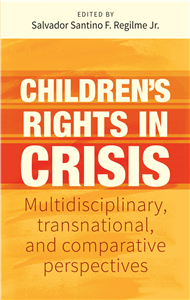
This book rigorously investigates the contemporary state of children's rights and the multifaceted challenges facing children, uncovering the complexities at their core. In 1989, the United Nations introduced the Convention on the Rights of the Child (CRC), ratified by 196 nations, promising a world where children's rights would reign supreme. In practice, however, realising these rights proves intricate and often precarious. Policies may shine on paper, but their implementation grapples with the challenges posed by global governance structures, national strategies, and local factors. Over three decades since the CRC's inception, this book scrutinises the true efficacy of international commitments, shedding light on underexplored issues and revealing shortcomings in both discourse and actions. With diverse, interdisciplinary perspectives, it recognises the profound influence of global and transnational forces in generating outcomes that impact children's rights and welfare.
Trusted Partner
 Trusted Partner
 Trusted Partner
Trusted Partner
Trusted Partner


People are living longer, and people are developing dementia. But our consumer society, which is optimised for working silently, is helpless in the face of those who have gone mad from its midst. The burden of caring for them is borne largely by their dependants and by carers from Eastern Europe. In his extremely stirring book, Professor Thomas Klie argues that we should include people with dementia as part of our lives and recognise that it is possible to live a happy and fulfilled life even with dementia – under the right conditions. Especially in the light of societal conflicts over income distribution fuelled by the corona pandemic, Klie is convinced that the dominant culture is measured by how it treats the subject of dementia.
Trusted Partner
Trusted Partner
 Trusted Partner


Cosy Krimi trifft Buchzauber: Auf den Spuren eines geheimnisvollen Katers, einer Geisterbibliothekarin und eines wendungsreichen Rätsels Eines Morgens taucht ein Schränkchen mit gebrauchten Büchern vor Evans Schule auf – eine kleine Freiluftbibliothek! Bewacht wird sie von einem freundlichen, rot getigerten Kater namens Mortimer. Evan nimmt zwei Bücher mit nach Hause und findet alte Ausleihscheine darin. Gab es früher etwa eine richtige Bibliothek in der Stadt? Warum ist sie nicht mehr da? Evans Vater weicht seinen Fragen aus und auch die anderen Erwachsenen scheinen etwas zu verbergen. Zusammen mit seinem besten Freund Rafi begibt sich Evan auf die Spur der verschwundenen Bibliothek. Dabei kreuzt der geheimnisvolle Kater immer wieder den Weg der beiden. Mortimer scheint auf ganz besondere Weise mit der Geschichte der Bibliothek verbunden zu sein. Was Evan schließlich herausfindet, stellt nicht nur sein eigenes Leben auf den Kopf, es bringt auch eine Wahrheit ans Licht, die ihre Stadt für immer verändern wird. Der New-York-Times-Bestseller und #1 Indie Bestseller erzählt von Büchern und Freundschaften, die uns ein Leben lang begleiten. Eine herzerwärmende Geschichte ab 9 Jahren zum Gemeinsam- und Selberlesen. Kurze Kapitel lassen die Seiten vorbeifliegen und mit jeder neuen Entdeckung steigt die Spannung. Wer vor dem Lesen noch kein Bücherwurm ist, wird es danach garantiert sein. Auszeichnungen für die englische Ausgabe von Mortimers Geheimnis:NEW YORK TIMES BESTSELLER#1 INDIE BESTSELLER!Amazon #1 Best Kids' Book of 2023Amazon Best Book of the Month
Trusted Partner


Wenn man zwanzig ist und nie auf die Idee kommen würde, jeden Tag so zu leben, als wäre es der letzte – wie geht man dann mit dem Tod des Geliebten um? Als Lenes Freund Tim bei einem Autounfall stirbt, bricht die Existenz von Lene und Tonia in Stücke. Berlin, Prüfungen, Partys – nichts in ihrem Leben ist bislang besonders schwerwiegend gewesen. »Nutze den Tag« war nur ein hübscher Spruch in Schönschrift. Als sie plötzlich mit einem schrecklichen Verlust klarkommen müssen, setzen sie sich ins Auto und fahren los, erst mal nur weg, kreuz und quer durchs sommerlich heiße Mecklenburg, Hauptsache nicht zurück, denn zu Hause wird alles anders sein. Doch am Meer geht es nicht mehr weiter, und Tonia, die Erzählerin, begreift: So sehr man glaubt, die Welt bleibt stehen, es geht immer weiter. Für die anderen, die noch da sind. Für die neue Liebe. Und im Zweifel für sich selbst. Elisabeth Ranks literarisches Debüt ist ein Generationenporträt und der Roman eines Lebensgefühls: die Geschichte der ersten echten Krise im Erwachsenenleben, erzählt als Roadstory.
Trusted Partner

This edition of The Honest Man's Fortune, a play co-written by John Fletcher, Nathan Field, and Philip Massinger for the Lady Elizabeth's Men in 1613 and revived for the King's Men in 1625, is the first diplomatic edition of one of the most remarkable dramatic manuscripts of the early modern period. Almost uniquely, the fair-copy manuscript records the entire process of the circular transmission of the text from authors to censor to bookkeeper to actors to playhouse, as well as the types of revision each required. In the hand of Edward Knight, the King's Men's book-keeper, this manuscript's title-page notes that it was '/Plaide In the yeare 1613/' and contains one of the few surviving complete licences by Master of the Revels Sir Henry Herbert who states, 'This Play. Being an olde One and the Originall Lost was reallowd by mee. This: 8 febru. 1624 [i.e., 1625]'. In fact, Herbert accepted as payment for the new licence a printed edition of Sir Philip Sidney's /Arcadia/. More excitingly, the many cuts, deletions, and marginal and interlinear additions and revisions as well as the names of three actors in its stage directions show us two transmissions of this text: the first in 1613, when it was composed and licensed and then adjusted by the authors, and the second in 1625, when it went through almost the same process for revival. With a full discussion of the manuscript's material properties, provenance, transcription history, and the play's composition and performance history, this new edition of /The Honest Man's Fortune/ puts the play where it belongs: at the centre of the canon of Jacobean drama. ;
Trusted Partner



