
House of Anansi Press
Livres Canada Books
View Rights Portal


 Trusted Partner


Der Versuch über Kafka Beschreibung einer Form ist Martin Walsers Dissertation, sie erschien erstmals 1961 und ist eine bemerkenswerte Einführung in das Werk Franz Kafkas, das eine so tiefe und nicht nachlassende Wirkung ausübt.
Trusted Partner


In this bold and exhilarating mix of memoir and writing guide, Melissa Febos tackles the emotional, psychological, and physical work of writing intimately while offering an utterly fresh examination of the storyteller's life and the challenges it presents. How do we write about the relationships that have formed us? How do we describe our bodies, their desires and traumas? What does it mean to have your writing, or living, dismissed as "navel-gazing"-or else hailed as "so brave, so raw"? And to whom, in the end, do our most intimate stories belong? Drawing on her journey from aspiring writer to acclaimed author and writing professor-via addiction and recovery, sex work and academia-Melissa Febos has created a captivating guide to the writing life, and a brilliantly unusual exploration of subjectivity, privacy, and the power of divulgence. Candid and inspiring, Body Work will empower readers and writers alike, offering ideas-and occasional notes of caution-to anyone who has ever hoped to see their true self reflecting back from the open page.
Trusted Partner

In this bold and exhilarating mix of memoir and writing guide, Melissa Febos tackles the emotional, psychological, and physical work of writing intimately while offering an utterly fresh examination of the storyteller's life and the challenges it presents. How do we write about the relationships that have formed us? How do we describe our bodies, their desires and traumas? What does it mean to have your writing, or living, dismissed as "navel-gazing"-or else hailed as "so brave, so raw"? And to whom, in the end, do our most intimate stories belong? Drawing on her journey from aspiring writer to acclaimed author and writing professor-via addiction and recovery, sex work and academia-Melissa Febos has created a captivating guide to the writing life, and a brilliantly unusual exploration of subjectivity, privacy, and the power of divulgence. Candid and inspiring, Body Work will empower readers and writers alike, offering ideas-and occasional notes of caution-to anyone who has ever hoped to see their true self reflecting back from the open page.
Trusted Partner

In this bold and exhilarating mix of memoir and writing guide, Melissa Febos tackles the emotional, psychological, and physical work of writing intimately while offering an utterly fresh examination of the storyteller's life and the challenges it presents. How do we write about the relationships that have formed us? How do we describe our bodies, their desires and traumas? What does it mean to have your writing, or living, dismissed as "navel-gazing"-or else hailed as "so brave, so raw"? And to whom, in the end, do our most intimate stories belong? Drawing on her journey from aspiring writer to acclaimed author and writing professor-via addiction and recovery, sex work and academia-Melissa Febos has created a captivating guide to the writing life, and a brilliantly unusual exploration of subjectivity, privacy, and the power of divulgence. Candid and inspiring, Body Work will empower readers and writers alike, offering ideas-and occasional notes of caution-to anyone who has ever hoped to see their true self reflecting back from the open page.
Trusted Partner
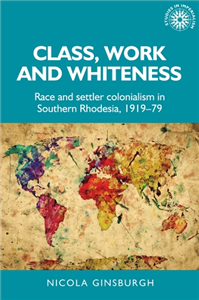
This book offers the first comprehensive history of white workers from the end of the First World War to Zimbabwean independence in 1980. It reveals how white worker identity was constituted, examines the white labouring class as an ethnically and nationally heterogeneous formation comprised of both men and women, and emphasises the active participation of white workers in the ongoing and contested production of race. White wage labourers' experiences, both as exploited workers and as part of the privileged white minority, offer insight into how race and class co-produced one another and how boundaries fundamental to settler colonialism were regulated and policed. Based on original research conducted in Zimbabwe, South Africa and the UK, this book offers a unique theoretical synthesis of work on gender, whiteness studies, labour histories, settler colonialism, Marxism, emotions and the New African Economic History.
Trusted Partner
 Trusted Partner
Trusted Partner
Trusted Partner
Trusted Partner
Trusted Partner
 Trusted Partner
This book describes how human rights have given rise to a vision of benevolent governance that, if fully realised, would be antithetical to individual freedom. It describes human rights' evolution into a grand but nebulous project, rooted in compassion, with the overarching aim of improving universal welfare by defining the conditions of human well-being and imposing obligations on the state and other actors to realise them. This gives rise to a form of managerialism, preoccupied with measuring and improving the 'human rights performance' of the state, businesses and so on. The ultimate result is the 'governmentalisation' of a pastoral form of global human rights governance, in which power is exercised for the general good, moulded by a complex regulatory sphere which shapes the field of action for the individual at every turn. This, unsurprisingly, does not appeal to rights-holders themselves.
Trusted Partner
 Trusted Partner

A smart, incisive toolkit for understanding how the framing of information influences the way we think about it. In today's chaotic media landscape, working out who and what to believe is a daunting task. Lies and misinformation are only part of the problem - often the way a story is presented has just as much effect on us as what the story is. In Framing, sociologist Mikael Klintman offers a cutting-edge toolkit for exposing and analysing the rhetoric that saturates our everyday lives. Combining insights from the social sciences, economics and evolutionary biology, he lays out a four-part approach to understanding how information is 'framed' for us, built around the key elements of texture, temperature, position and size. Demonstrating this approach through an array of real-world examples, from climate change denial to the subtle messaging of caviar ads, Klintman reveals how canny communicators mislead us without relying on overt deception. At the same time, he probes the deeper evolutionary and cultural roots of our susceptibility to frames.
Trusted Partner
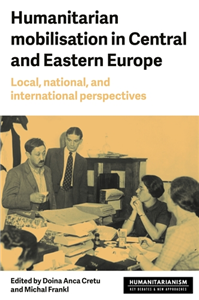
By focusing on aid Central and Eastern Europe, the volume adds to the existent scholarly explorations of modern humanitarianism, its actors and practices. In the twentieth century, aid workers assisted victims of war and earthquakes, delivered food, supported health care, provided childcare, or sheltered refugees. The contributors not only reconstruct these diverse histories and their protagonists, but also bring international, national, and local actors together: from grassroots activists to private associations to state-driven "socialist humanitarians" to large Western aid organizations. In doing so, they challenge the often unidirectional, from West-to-East, and asymmetrical perspective on donor-recipient relationships in humanitarian processes.
Trusted Partner


— Water as a reason for war and a political instrument of power — Unique overview of global water conflicts — Foreword by Wolfgang Ischinger Every year, droughts in African countries cause hundreds of thousands of deaths and much suffering. Europe also experienced drought in 2022's summer of record temperatures. Without water, there can be no life. More and more people are suffering from water shortages. Climate change is fuelling the distribution battles for water; violent conflicts over this precious resource are the order of the day. Whether the protests in Iraq, the war in Syria, in the Himalayas, the Nile conflict and in many other places, water is already a reason for war and is being misused as a political instrument of power. The construction of huge dams, the targeted closure of locks, river diversions, water and land grabbing bring wars over the "blue gold" with them. In a unique overview, journalist Jürgen Rahmig describes the struggle for water in the 21st century. Where do dangers lurk today; where will they be tomorrow, and how can we prevent wars over precious water?
Trusted Partner
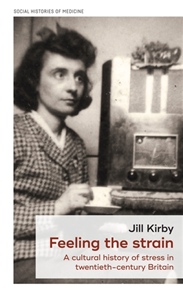
Examining the popular discourse of nerves and stress, this book provides a historical account of how ordinary Britons understood, explained and coped with the pressures and strains of daily life during the twentieth century. It traces the popular, vernacular discourse of stress, illuminating not just how stress was known, but the ways in which that knowledge was produced. Taking a cultural approach, the book focuses on contemporary popular understandings, revealing continuity of ideas about work, mental health, status, gender and individual weakness, as well as the changing socio-economic contexts that enabled stress to become a ubiquitous condition of everyday life by the end of the century. With accounts from sufferers, families and colleagues it also offers insight into self-help literature, the meanings of work and changing dynamics of domestic life, delivering a complementary perspective to medical histories of stress.
Trusted Partner

Child, nation, race and empire is an innovative, inter-disciplinary, cross cultural study that contributes to understandings of both contemporary child welfare practices and the complex dynamics of empire. It analyses the construction and transmission of nineteenth-century British child rescue ideology. Locating the origins of contemporary practice in the publications of the prominent English Child rescuers, Dr Barnardo, Thomas Bowman Stephenson, Benjamin Waugh, Edward de Montjoie Rudolf and their colonial disciples and literature written for children, it shows how the vulnerable body of the child at risk came to be reconstituted as central to the survival of nation, race and empire. Yet, as the shocking testimony before the many official enquiries into the past treatment of children in out-of-home 'care' held in Britain, Ireland, Australia and Canada make clear, there was no guarantee that the rescued child would be protected from further harm.
Trusted Partner

Der oder das Kalkül? Der Titel dieses Buches läßt die Frage bewußt offen. Der Kalkül stellt auf das von der Logik bereitgestellte Instrument zur Durchführung von Berechnungen ab. Das Kalkül meint die Berechnung selbst im Hinblick auf ein anderes, im Kalkül selbst nicht Erfaßtes. In den Beiträgen dieses Bandes geht es um G. Spencer Browns »Gesetze der Form« im doppelten Sinne der Form eines Kalküls, der eingesetzt wird und Berechnungen ermöglicht, in denen er selbst noch einmal vorkommt als das, was er nicht erfaßt. Der Band enthält die allererste Besprechung der »Gesetze der Form«, die Heinz von Foerster für die kalifornische Ökofibel »Whole Earth Catalog« geschrieben hat, sowie Beiträge, die Spencer Brown im Kontext des optionalen Konstruktivismus, der modernen sowohl zwei- wie mehrwertigen Logik und einer Theorie des Paradoxen lesen.
Trusted Partner

Gibt es also doch etwas wie »Gesetze der Form«? Die Interpretation, die G. Spencer Brown seinem Kalkül der Form mit auf den Weg gibt, tut ihr Bestes, um diesen Eindruck zu erwecken. Freilich tut sie auch alles, um diesen Eindruck, kaum ist man bereit, ihm zu folgen, wieder zu dementieren. Beides zusammen macht Spencer Browns Formbegriff für eine Soziologie interessant, die aus der Vermutung, daß noch die Aufhebung der Gesetze Gesetzen folgt, eine Wissenschaft macht. Der Band versammelt Beiträge, die die Möglichkeiten des Formen- und Indikationskalküls zur Beobachtung der Dynamik von Bezeichnungen in Abhängigkeit von Unterscheidungen nutzen. Das reicht von frühen Entdeckungen des Formproblems im Roman und im Drama, in der Logik und in der Sprache über Rekonstruktionen des Zeichen-, Latenz- und Spielverständnisses bis zu Beschreibungen des Geldes, der Universität, des Staates, der sozialen Bewegungen, der Karriere und der Krankheit.



