
Your Search Results


-
Promoted Content

 Film theory & criticismFebruary 2014
The Encyclopedia of British Film
Fourth edition
by Edited by Brian McFarlane
With well over 6,300 articles, including over 500 new entries, this fourth edition of The Encyclopedia of British Film is a fully updated invaluable reference guide to the British film industry. It is the most authoritative volume yet, stretching from the inception of the industry to the present day, with detailed listings of the producers, directors, actors and studios behind a century or so of great British cinema. Brian McFarlane's meticulously researched guide is the definitive companion for anyone interested in the world of film. Previous editions have sold many thousands of copies and this fourth edition will be an essential work of reference for enthusiasts interested in the history of British cinema, and for universities and libraries.
-
Promoted Content

 2020
2020How Animals Hammer, Drill and Strike
Tool Use in the Animal Kingdom
by Peter-René Becker
From insects to fish as well as birds and primates: the use of tools is amazingly widespread in the animal kingdom. It’s a misnomer to presume that humans are distinguished by tool use and conscious capacity. So where is culture initiated? The biologist Peter-René Becker has evaluated numerous studies and cites plenty of evidence for the use of the hammer and anvil, lances, bait or sponges. Animals also use “tools as social implements”. Ultimately, the depth of man’s conscience singles him out from other animals.
-
 Trusted Partner

 November 2016
Coming to Terms with Life
by Matthias Wengenroth
Do you struggle with thoughts and feelings that make life difficult? Have you tried all sorts of ways of dealing with this without getting anywhere? Do you feel that life is passing you by? Acceptance and commitment therapy (ACT), which this book describes in a clear and entertaining way, provides new and very enlightening insights into the causes of human suffering. At the same time, ACT shows how we can improve the way we handle the difficult aspects of being human, while also developing our abilities and strengths. This title shows how using the described simple but effective methods can lead you to a happier, better life. Target Group: people who want to utilize their potential more fully, people interested in acceptance and commitment therapy, people practicing or interested in psychotherapy (psychologists, doctors, coaches, social workers)
-
Trusted Partner

 2020
2020Veterinary Diseases and their Treatment
Dogs, cats, horses, pigs, cattle
by Dr. Wolfgang Daubenmerkl
Flea dermatitis in dogs, runny noses in cats, colic in horses – when our four-legged friends suffer, the owners suffer with them and want to find the best possible treatment. Alongside conventional medicine, natural remedies and homoeopathic treatments also offer opportunities for treating animals – but which of them have proved effective? An experienced veterinarian and alternative practitioner draws on his wealth of knowledge and explains ■ Typical clinical pictures with causes, symptoms and their diagnosis ■ Tried and tested proposed treatments from conventional medicine, homoeopathy, phytotherapy and other procedures ■ Basic principles, such as structure and function of organs, nerve and hormone systems, blood circulation Here the reader can quickly find the most effective method of treatment!
-
Trusted Partner
 2024
2024Why headless males are better lovers
Sex and reproduction in the animal kingdom
by Monika Niehaus / Michael Wink
"Sex sells" also applies to evolution. Without sex, there is no genetic variation, and without genetic variation, there is no natural selection and evolution. When it comes to sex and reproduction, all animals have things in common, but there are also many variations. In this game of the sexes, everything revolves around the conflicts of interest between females and males, the diversity of mating systems, matriarchal and patriarchal communities and the securing of paternity, whether through beauty, song and dance or violence.
-
Trusted Partner
 Humanities & Social SciencesJanuary 2024
Dog politics
Species stories and the animal sciences
by Mariam Motamedi Fraser
Do dogs belong with humans? Scientific accounts of dogs' 'species story,' in which contemporary dog-human relations are naturalised with reference to dogs' evolutionary becoming, suggest that they do. Dog politics dissects this story. This book offers a rich empirical analysis and critique of the development and consolidation of dogs' species story in science, asking what evidence exists to support it, and what practical consequences, for dogs, follow from it. It explores how this story is woven into broader scientific shifts in understandings of species, animals, and animal behaviours, and how such shifts were informed by and informed transformative political events, including slavery and colonialism, the Second World War and its aftermath, and the emergence of anti-racist movements in the twentieth and twenty-first centuries. The book pays particular attention to how species-thinking bears on 'race,' racism, and individuals.
-
Trusted Partner
 Humanities & Social SciencesJanuary 2023
Rural quality of life
by Pia Heike Johansen, Anne Tietjen, Evald Bundgård Iversen, Henrik Lauridsen Lolle, Jens Kaae Fisker
-
Trusted Partner
 Humanities & Social SciencesDecember 2024
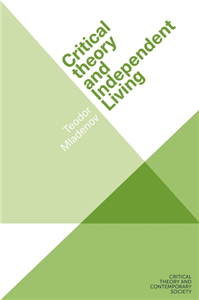
Critical theory and Independent Living
by Teodor Mladenov
Critical theory and Independent Living explores intersections between contemporary critical theory and disabled people's struggle for self-determination. The book highlights the affinities between the Independent Living movement and studies of epistemic injustice, biopower, and psychopower. It discusses in depth the activists' critical engagement with welfare-state paternalism, neoliberal marketisation, and familialism. This helps develop a pioneering comparison between various welfare regimes grounded in Independent Living advocacy. The book draws on the activism of disabled people from the European Network on Independent Living (ENIL) by developing case studies of the ENIL's campaigning for deinstitutionalisation and personal assistance. It is argued that this work helps rethink independence as a form of interdependence, and that this reframing is pivotal for critical theorising in the twenty-first century.
-
Trusted Partner
 Literature & Literary StudiesOctober 2009
Edwin Morgan
Inventions of modernity
by Colin Nicholson
Edwin Morgan is Scotland's major living poet, and Inventions of modernity was the first book-length study of his work. Since the 1940s Morgan's poetry has been carving out an alternative to the conventional evolutions from Modernism to Postmodernism, creating instead a substantial body of writing that ranges from the sublime to the hilarious. Instinctively at odds with the literary politics of the Pound-Eliot axis that remained influential deep into the twentieth century, Morgan develops instead a radical and libertarian poetics in an encyclopaedia of forms; from Anglo-Saxon metre through sonnet-sequences to concrete poems, and including gay poetry, science fiction verse and prize-winning translations into both English and Scots from numerous languages. This authoritative volume is of interest to students, teachers and academic researchers involved with strategies of reading, with cultural studies, with the politics of literary history and with gay and transgressive writing. ;
-
Trusted Partner
 April 2021
On the Purposes of Life and Whether They Exist
A philosophical fitting
by Axel Braig
The musician, doctor and philosopher Axel Braig considers philosophy a little like the weather: he looks for the right clothes for every situation. Braig is primarily concerned with practical, effective things from the two-and-a-half millennia fund of (Western) thinking, such as helpful approaches in existential crises. In this book, he introduces us to philosophical thinkers from Plato to Montaigne to Levinas and Feyerabend. Braig not only shares his own philosophical biography, but above all encourages us to philosophise ourselves.
-
Trusted Partner
 The ArtsNovember 2011
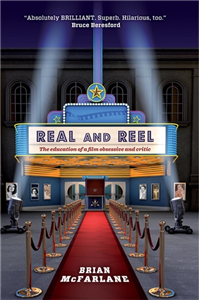
Real and Reel
The education of a film critic
by Brian McFarlane
From a little before ten years of age Brian McFarlane became addicted to stories told on the screen, and the mere fact that he had difficulty in getting to see the films he wanted - or any for that matter - only made them seem more alluring. But it wasn't just seeing the films that mattered: he also wanted, and quite soon needed, to be writing about them and these obsessions have been part of his life for the next sixty-odd years. Real and reel is a light-hearted and but deeply felt account of a lifetime's addiction. It is one particular writer and critic's story, but it will strike sparks among many others. Though many other interests have kept Brian McFarlane's life lively, nothing else has exerted such a long-standing grip on the author's imagination as film. Editor of the Encyclopaedia of British Cinema, co-editor of Manchester University Press's British Film Makers series, and author of over a dozen critical works on film and adaptation, Brian McFarlane's autobiographical Real and reel can also be read as a biography of the subject of Film Studies itself. ;
-
Trusted Partner
 Geography & the EnvironmentJanuary 2024
Researching animal research
by Gail Davies, Beth Greenhough, Pru Hobson-West, Robert G. W. Kirk, Alexandra Palmer, Emma Roe
-
Trusted Partner
 2025
2025Among Neighbours
The strangest relationship of our lives
by Bernd Imgrund
There are many things in life that we are (more or less) free to choose: our circle of friends, our workplace, our place of residence. However, we have to take some communities as they come: We cannot choose our family or our neighbours, for example. Why this does not only lead to the much-vaunted idyllic sense of belonging and what tensions forced social relationships can cause: This is the subject of this fascinating collection of essays by Bernd Imgrund. It sheds light on a piece of social history that we all know from our own experience: who hasn't had an argument with their immediate neighbour or made fun of the residents of the neighbouring district? But it is by no means only negative aspects that characterise neighbourly relations. Pride in one's neighbourhood, help within a village community: the many advantages of a social community, its importance and its representation in art and literature have also found their way into this book.
-
Trusted Partner
 Humanities & Social SciencesJune 2025
Living with water
Everyday encounters and liquid connections
by Charlotte Bates, Kate Moles
Living with water brings together sociologists, geographers, artists, writers and poets to explore the ways in which water binds, immerses and supports us. Drawing from international research on river crossings, boat dwelling, wild swimming, sea fishing, and drought impacts, and navigating urban waters, glacial lagoons, barrier reefs and disappearing tarns, the collection illuminates the ways that we live with and without water, and explores how we can think and write with water on land. Water offers a way of attending to emerging and enduring social and ecological concerns and making sense of them in lively and creative ways. By approaching Living with water from different disciplinary and methodological perspectives, and drawing on research from around the world, this collection opens up discussions that reinvigorate and renew previously landlocked debates. This book is relevant to United Nations Sustainable Development Goal 6, Clean water and sanitation
-
Trusted Partner
 2024
2024The second half of your life - a manual
Tips and strategies for successful ageing
by Dr. Petra Kiedaisch
In the middle of our lives, the cards are reshuffled: marriages are divorced, careers are questioned, friendships are ended, questions of meaning are asked, bodies change - and not just hormonally. At the same time, children leave home and parents become carers. From the age of 45, the majority of our population is at the centre of a second upheaval that affects all facets of our lives and leaves us at a loss in many ways. Not only in our daily lives, but also when it comes to planning for our own old age. This guide is designed to help us find our way. It presents the most important information from all areas relevant to a good life after 45. Leading experts from the fields of medicine, nutrition, philosophy, theology, psychology, care, law and finance give recommendations on what to look out for and what tools are needed to get through these challenging years unscathed. Useful checklists round off the articles. The book shows us the unique opportunity to see these challenges not as a crisis but as a source of strength. Not only can we come through this period of our lives healthy and happy, but we can also shape it so that the next age threshold is no longer frightening. During the second phase of adolescence, we lay the foundations for whether and how we will grow older. Be it in terms of health or living together with family and friends. With contributions from: Prof. Dr. Martin Gessmann (philosophy), Dipl. Psych. Claudia Kühner (psychology), Dr Suso Lederle (medicine), Dr Petra Forster (nutrition), Christian Hald, Anja Heine (law), Prof Dr Philipp Schreiber (finance), Prof Dr Thomas Klie (nursing care insurance), Georg Eberhardt (religion).
-
Trusted Partner
 Literature & Literary StudiesJuly 2023
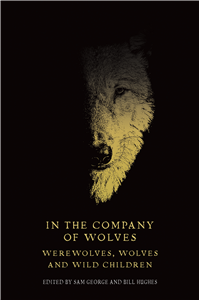
In the company of wolves
Werewolves, wolves and wild children
by Sam George, Bill Hughes
In the company of wolves presents further research from the Open Graves, Open Minds Project. It connects together innovative research from a variety of perspectives on the cultural significance of wolves, wild children and werewolves as portrayed in different media and genres. We begin with the wolf itself as it has been interpreted as a cultural symbol and how it figures in contemporary debates about wilderness and nature. Alongside this, we consider eighteenth-century debates about wild children - often thought to have been raised by wolves and other animals - and their role in key questions about the origins of language and society. The collection continues with essays on werewolves and other shapeshifters as depicted in folk tales, literature, film and TV, concluding with the transition from animal to human in contemporary art, poetry and fashion.
-
Trusted Partner
 May 2023
Homoeopathy for Cats and Dogs
by Dr. Daniela Birkelbach
Alternatives or supplements to conventional medicine for cats and dogs? Yes, homoeopathy provides holistic therapeutic approaches for our four-legged friends too! Whether they are suffering from anxiety, conjunctivitis, or a tick bite, this book describes the appropriate homoeopathic remedies. The author draws on her many years of experience as an animal healer and presents the most important symptoms and their treatment using homoeopathy.This handy paperback fits into a lab coat pocket and provides:- Basic information on homoeopathy for dogs and cats- Symptoms from A to Z- Characteristics of the most important single-remedy homoeopathic preparations
-
Trusted Partner
 Teaching, Language & ReferenceOctober 2018
A research handbook for patient and public involvement researchers
by Penny Bee, Helen Brooks, Patrick Callaghan, Karina Lovell, Kelly Rushton
-
Trusted Partner
 2025
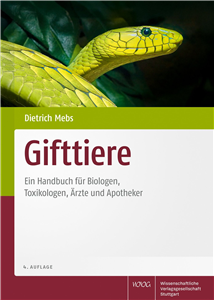
2025Poisonous Animals
A handbook for biologists, toxicologists, physicians and pharmacists
by Dietrich Mebs
From slithering snakes and creepy-crawly spiders to glowing jellyfish – venomous creatures evoke both fear and fascina- tion. Over millions of years, they have evolved remarkable defence mechanisms and lethal cocktails. Their poisons are used to capture and break down their prey. However, due to improper handling or lack of awareness, they can also pose a threat to humans. This book explores the fascinating world of venomous creatures on land and in the sea – and uncovers their secrets: • Where do bites, stings and poisonings pose a risk? • What substances do animal venoms contain and how do they act? • How should first aid be administered and how are poisonings treated? The 4th edition has been expanded to include additional venomous species, along with fascinating new case studies and illustrations. Discover the captivating world of nature’s poisonous creatures – well worth the risk! Target group: Biologists, toxicologists, pharmacists, physicians, travellers (also off the beaten track), scuba divers, nature lovers, interested laymen
-
Trusted Partner
 PsychologyFebruary 2014
Attachment to Pets
by Henri Julius, Andreas Beetz, Kurt Kotrschal, Dennis C. Turner, Kerstin Uvnäs-Moberg
In recent years, the ancient symbiosis between humans and their pets has entered a new phase, marked by the burgeoning clinical specialty of human-animal therapy. This approach uses the relationship between humans and their (mainly) mammalian pets to support the growth of emotion regulation, social skills, and mental health in children, adolescents, and adults. But how are humans and animals able to develop close bonds at all? What makes it possible for animals to have a therapeutic effect on humans? And how can we best use this understanding in animal-assisted therapy? In this unique book, a team of expert biologists and psychologists integrate and combine sophisticated biological and psychological knowledge to answer these questions. Together they have created a comprehensive, scientific foundation for human-animal therapy, a foundation that will facilitate the development, implementation, and evaluation of effective new interventions. Target Group: For Clinical psychiatrists, psychiatrists, mental health counselors, school psychologists, and other professionals interested in using pets and animals in therapy.

