
Deutscher Apotheker Verlag
Specialist books in the fields of pharmacy - drug information - medicine.
View Rights Portal Trusted Partner

Specialist books in the fields of pharmacy - drug information - medicine.
View Rights Portal

Acknowledged by many feminists as the single most important theoretical work of the twentieth century, Simone de Beauvoir's The Second Sex (1949) nevertheless occupies an anomalous place in the feminist 'canon'. Yet it has had an undeniable impact, not only on the development of critiques of sexual politics but on twentieth-century western thinking about the concept of 'woman' in general. This collection of six new essays by scholars from the disciplines of French, English literature, history, cultural criticism, feminist theory and philosophy makes a valuable contribution to the task of re-reading and reassessing this enormously influential text for a new generation of feminist readers, and also for cultural theorists, for whom the question of 'the feminine' is at the centre of key debates in philosophy and postmodernity. The contributors provide a significantly new rethinking of the place of The Second Sex in cultural history and of women and representation, the role of 'fictions' and the problem of ethical agency in the work of the leading intellectual woman of this age. ;

The Toronto New Wave (TNW) comprises a group of avant-garde filmmakers working in Canada from the 1980s and into the new millennium whose innovative film works share significant affinities with anarchist themes and aesthetics. Several of the TNW filmmakers openly identify as anarchists and/or acknowledge a debt to anarchism in their production of highly apocalyptic narratives as part of their cinematic political projects. However, recognition of anarchism's progressive apocalyptic theoretical relevance has yet to be substantially taken up by scholarship in cinema analysis. This analysis introduces an anarchist-inflected analytical methodology to understand the apocalyptic-revelatory political work these films attempt to accomplish in the perceptual space between the filmic texts and both their auteurs and potential viewers, and to re-locate the TNW within cinema history as an ongoing phenomenon with new significance in an apocalyptic era of digital distribution.
Trusted Partner

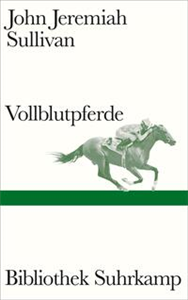
Gegen Ende seines Lebens wird der altgediente Sportreporter Mike Sullivan von seinem Sohn gefragt, was ihm aus drei Jahrzehnten auf nordamerikanischen Pressetribünen am deutlichsten in Erinnerung geblieben sei. Die Antwort überrascht: »Ich habe 73 Secretariat beim Derby rennen sehen. Das war reine … Schönheit, verstehst du?«John Jeremiah Sullivan versteht gar nichts. Also verbringt er die nächsten zwei Jahre damit, der väterlichen Begeisterung nachzugehen – für Secretariat, dieses mythische, geniale Rennpferd, und für Pferde überhaupt. Er reist kreuz und quer durchs Land, kriecht durch prähistorische Höhlen, vergräbt sich in der Kulturgeschichte des Equus caballus, verbringt Wochen auf runtergerockten Pferderennbahnen und besucht Gestüte, wo die Jungtiere auf die Saison vorbereitet und für Millionen Dollar versteigert werden. Und bei alledem versucht er, dem inzwischen verstorbenen Vater nachträglich doch noch nahezukommen. Memoir, Reportage, historische Erkundung: J. J. Sullivan hat ein schillerndes, wunderbar eigensinnig bebildertes Buch geschrieben, über Herkunft, über das Verhältnis zu seinem Vater und über Pferde – in unserer Geschichte, Kultur und kollektiven Fantasie.
Trusted Partner
The John Rylands Library houses one of the finest collections of rare books, manuscripts and archives in the world. The collections span five millennia, have a global reach and cover a wide range of subjects, including art and archaeology; economic, social, political, religious and military history; literature, drama and music; science and medicine; theology and philosophy; travel and exploration. For over a century, the Bulletin of the John Rylands Library has published research that complements the Library's special collections. An electronic edition of this issue is freely available under a Creative Commons (CC BY-NC-ND) licence.
Trusted Partner
Kann man ganz Amerika in ein Buch packen? Geschichte und Gegenwart? Popkultur und Frömmigkeit? Glänzende Oberfläche und enttäuschte Versprechen? Mit »Pulphead« hat John Jeremiah Sullivan bewiesen, dass das möglich ist. In der Tradition von Meistern wie Tom Wolfe und Hunter S. Thompson verwischt er die Grenze zwischen Literatur und Journalismus, Erzählung und Reportage, Hochliteratur und Unterhaltung, Hemingway und Hollywood. Wie in einem Panoptikum entsteht aus Artikeln über Axl Rose, christliche Rockfestivals, Reality TV, die Tea-Party-Bewegung, vergessene Naturforscher und den heruntergekommenen Süden das Panorama eines Landes, das der Rest der Welt immer weniger versteht. Pulphead löste in den USA wahre Jubelstürme aus, und die Begeisterung hat längst auch die alte Welt respektive die Bundesrepublik erreicht: »Noch jeder ungläubige Thomas, der dem konzertierten Entzücken misstrauen wollte, kehrte mit leuchtenden Augen von der Lektüre zurück.« Der Tagesspiegel »Essays aus und über Amerika von einem, der schreiben kann, dass einem der Mund offen stehen bleibt.« Frankfurter Allgemeine Sonntagszeitung »Die besten Geschichten über Amerika, die Popkultur und die Gegenwart seit langem.« Süddeutsche Zeitung »... die besten Geschichten schreibt immer noch das Leben, und das ist Sullivans Stoff.« Tages-Anzeiger »Sehr, sehr gute, wahre, berührende Geschichten darüber, was es heißen kann, heute zu leben« Süddeutsche Zeitung
Trusted Partner
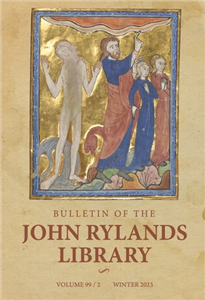
The John Rylands Library houses one of the finest collections of rare books, manuscripts and archives in the world. The collections span five millennia and cover a wide range of subjects, including art and archaeology; economic, social, political, religious and military history; literature, drama and music; science and medicine; theology and philosophy; travel and exploration. For over a century, the Bulletin of the John Rylands Library has published research that complements the Library's special collections. The editors invite the submission of articles in these fields and welcome discussion of in-progress projects.
Trusted Partner
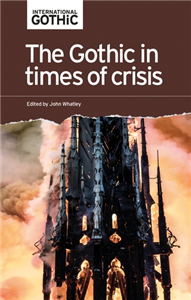
The Gothic in times of crisis reflects contemporary society, showing how the Gothic modes continually resets its own forms to encompass each new reality, each new apocalypse, each new plague or crisis. This collection expands oncurrent scholarship to show how the Gothic challenges our understanding of both older and recent crises and, in turn, disturbs all genre complacencies to expose and confront the problems and contradictions in what our world has been, has become, or is in danger of becoming. This collection explores Gothic's current relevance to the contestations of ideas and the underlying and visible conflicts it dramatizes across a wide range of media. In various ways, it reveals what happens to Gothic modes now they confront the increasingly Gothic realities of our times, sometimesby recalling earlier crises and ideological contestations leading up to them.
Trusted Partner

The John Rylands Library houses one of the finest collections of rare books, manuscripts and archives in the world. The collections span five millennia, have a global reach and cover a wide range of subjects, including art and archaeology; economic, social, political, religious and military history; literature, drama and music; science and medicine; theology and philosophy; travel and exploration. For over a century, the Bulletin of the John Rylands Library has published research that complements the Library's special collections. An electronic edition of this issue is freely available under a Creative Commons (CC BY-NC-ND) licence.
Trusted Partner
 Trusted Partner
 Trusted Partner
 Trusted Partner
Trusted Partner
Trusted Partner
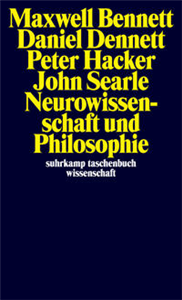
Als der Neurowissenschaftler Maxwell Bennett und der Philosoph Peter Hacker den Klassiker Philosophical Foundations of Neuroscience veröffentlichten, war dies die erste systematische Untersuchung der begrifflichen Grundlagen der Neurowissenschaften und der Startschuss für den bis heute intensiv geführten Kampf um die Deutungsmacht über den menschlichen Geist. Besonders kritisch fiel seinerzeit die Auseinandersetzung mit den einflussreichen Arbeiten von Daniel Dennett und John Searle aus – also mit jenen beiden Denkern, die von der neurowissenschaftlichen Seite gerne als philosophische Gewährsmänner herangezogen werden. In Neurowissenschaft und Philosophie diskutieren die vier kongenialen »Streithähne« miteinander.
Trusted Partner

The John Rylands Library houses one of the finest collections of rare books, manuscripts and archives in the world. The collections span five millennia, have a global reach and cover a wide range of subjects, including art and archaeology; economic, social, political, religious and military history; literature, drama and music; science and medicine; theology and philosophy; travel and exploration. For over a century, the Bulletin of the John Rylands Library has published research that complements the Library's special collections.
Trusted Partner

Nach seinen sprachphilosophischen Arbeiten ('Sprechakte', stw 458; 'Ausdruck und Bedeutung', stw 349) hat John R. Searle mit 'Intentionalität' eine Untersuchung zu einem Kernstück der Philosophie des Geistes vorgelegt, die in einem engen thematischen Zusammenhang mit den früheren Arbeiten steht. Intentionalität ist nach Searles Auffassung die Basis sprachlicher Bedeutung. In seiner Theorie der Intentionalität geht es um die begrifflichen Eigenschaften intentionaler Zustände (auf die Frage nach ihrem ontologischen Status geht er ausführlicher ein in 'Geist, Hirn und Wissenschaft', stw 591). Zwei Aspekte stehen dabei im Vordergrund der Untersuchung: die Logik der Repräsentation und der Kausalität intentionaler Zustände. Doch Searle entwickelt in dieser Arbeit nicht nur eine Theorie der Intentionalität und des Zusammenhangs zwischen sprachlichem und geistigem Inhalt. In einem vornehmlich kritischen Teil setzt er sich ausführlich mit konkurrierenden Auffassungen aus dem Bereich der analytischen Philosophie auseinander, insbesondere mit derzeit sehr einflußreichen 'nicht-deskriptivistischen' Theorien des Bezugs, wie sie von S. Kripke, H. Putnam, K. Donnellan, T. Burge und D. Kaplan vertreten und angeregt wurden.
Trusted Partner

The irresistible story of a one-man cultural phenomenon. Minister for the Counterculture, Mancunian mainstay and alternative national treasure John Robb has lived a life in music. In this book he charts his adventures on the cultural frontline, chronicling the making of a DIY icon. Robb's quest began in his hometown of Blackpool - where punk was a battle against the odds - and went international when he toured the world with his band. The first person to interview Nirvana, he also discovered The Stone Roses for weekly newspaper Sounds and did early interviews with The Jesus and Mary Chain and The Manics, before moving on to legends such as Mark E. Smith, Nick Cave and Patti Smith. Along the way, he became an on-screen commentator and author of bestselling books. Robb's memoir tells of deep friendships with figures from Poly Styrene to Chris Packham. Packed with riotous stories, it provides an alternative account of British musical and cultural history and a triumphant blueprint for a punk rock life.
Trusted Partner
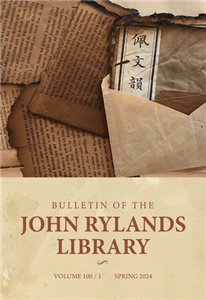
The John Rylands Library houses one of the finest collections of rare books, manuscripts and archives in the world. The collections span five millennia, have a global reach and cover a wide range of subjects, including art and archaeology; economic, social, political, religious and military history; literature, drama and music; science and medicine; theology and philosophy; travel and exploration. For over a century, the Bulletin of the John Rylands Library has published research that complements the Library's special collections.
Trusted Partner
The Arctic region has been the subject of much popular writing. This book considers nineteenth-century representations of the Arctic, and draws upon an extensive range of evidence that will allow the 'widest connections' to emerge from a 'cross-disciplinary analysis' using different methodologies and subject matter. It positions the Arctic alongside more thoroughly investigated theatres of Victorian enterprise. In the nineteenth century, most images were in the form of paintings, travel narratives, lectures given by the explorers themselves and photographs. The book explores key themes in Arctic images which impacted on subsequent representations through text, painting and photography. For much of the nineteenth century, national and regional geographical societies promoted exploration, and rewarded heroic endeavor. The book discusses images of the Arctic which originated in the activities of the geographical societies. The Times provided very low-key reporting of Arctic expeditions, as evidenced by its coverage of the missions of Sir John Franklin and James Clark Ross. However, the illustrated weekly became one of the main sources of popular representations of the Arctic. The book looks at the exhibitions of Arctic peoples, Arctic exploration and Arctic fauna in Britain. Late nineteenth-century exhibitions which featured the Arctic were essentially nostalgic in tone. The Golliwogg's Polar Adventures, published in 1900, drew on adult representations of the Arctic and will have confirmed and reinforced children's perceptions of the region. Text books, board games and novels helped to keep the subject alive among the young.
Trusted Partner
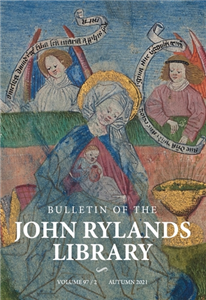
The John Rylands Library houses one of the finest collections of rare books, manuscripts and archives in the world. The collections span five millennia and cover a wide range of subjects, including art and archaeology; economic, social, political, religious and military history; literature, drama and music; science and medicine; theology and philosophy; travel and exploration. For over a century, the Bulletin of the John Rylands Library has published research that complements the Library's special collections. The editors invite the submission of articles in these fields and welcome discussion of in-progress projects.
Trusted Partner


