Your Search Results

      • Artech House Books Horizon House Publications Ltd.

        A leading technical book publisher, Artech House provides today’s professionals and students with cutting-edge books and software from the world’s top authorities. From RF/microwave design, wireless communications, radar engineering, and electronic defense, to GPS/GNSS, power engineering, computer security, and building technology, Artech House publishes the forward-looking titles that engineers and managers need to excel. Artech House is a subsidiary of Horizon House Publications, Inc., publisher of the internationally acclaimed magazine Microwave Journal®.

        View Rights Portal
      • ACC Art Books Ltd

        Publisher and global distributor of beautiful and authoritative books on art, architecture, design, photography, fashion, international travel, and more.

        View Rights Portal
      • Trusted Partner
        Humanities & Social Sciences
        July 2025

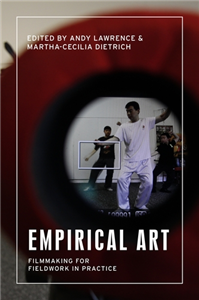
        Empirical art

        Filmmaking for fieldwork in practice

        by Andy Lawrence, Martha-Cecilia Dietrich

        Empirical art: Filmmaking for fieldwork in practice is an insightful exploration of what the craft of filmmaking brings to social science research. Providing creative avenues on how to narrate encounters, relationships, and experiences during fieldwork, this comprehensive volume offers a rich tapestry of theoretical explorations and explorative methodologies. Skilfully connecting the worlds of ethnography, art and cinema, the contributors in this book act as a compass for filmmakers and researchers venturing to use a camera and microphone to relate and narrate their research collaborations and fieldsites. Drawing from the authors' extensive experience in disciplines like social anthropology, environmental humanities, and political science, "Empirical Art" breaks down the intricate process of crafting ethnographic films that departs from the researcher's subjectivity. Covering aspects of filmmaking from conceptualisation to production and distribution, readers are equipped with a treasure trove of collaborative techniques, innovative approaches, and ethical considerations necessary to generate and examine storytelling practices in contemporary fields of study. The authors discuss the significance of the multiple roles that technologies of filmmaking play in reflecting on cultural practices, social dynamics, and (beyond) human storytelling and their transformative potentials. Whether a seasoned filmmaker, an aspiring ethnographer, or an academic seeking new dimensions for their research, Empirical Art serves as a guide to integrating visual storytelling, cinema craft and empirical research.

      • Trusted Partner
      • Trusted Partner
      • Trusted Partner
        The Arts
        March 2026

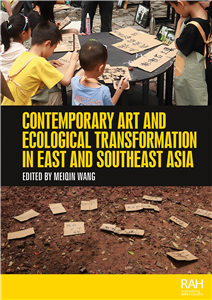
        Contemporary art and ecological transformation in East and Southeast Asia

        by Meiqin Wang

        This anthology, presenting new research from fourteen scholars, delves into the interplay between contemporary art and ecological concerns in East and Southeast Asia. Focused on the concept of artistic remediation, the book unravels the diverse capacities of art to combat systemic anthropogenic destruction to the environment and ecology. At its core, the book articulates the ongoing ecological transformation in art and art history that embraces a paradigm shift in human-nature relationships, emphasizing interconnectedness of all life forms of the Earth. Bridging art studies, activism, and environmental studies, the book examines how artistic practices in the region have engaged with ecocritical reflection, biodiversity advocacy, sustainable practices, and environmental justice, among others. Providing a platform for critical and timely analysis of artistic interventions in the face of existential crises, the book acknowledges diverse voices of scholars who have situated their scholarship in the cultural and artistic specificities of various societies, locales, and communities in the region.

      • Trusted Partner
        Literature & Literary Studies
        September 2020

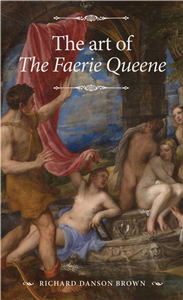
        The art of The Faerie Queene

        by Richard Danson Brown, Joshua Samuel Reid

        The Art of The Faerie Queene is the first book centrally focused on the forms and poetic techniques employed by Spenser. It offers a sharp new perspective on Spenser by rereading The Faerie Queene as poetry which is at once absorbing, demanding and experimental. Instead of the traditional conservative model of Spenser as poet, this book presents the poem as radical, edgy and unconventional, thus proposing new ways of understanding the Elizabethan poetic Renaissance. The book moves from the individual words of the poem to metre, rhyme and stanza form onto its larger structures of canto and book. It will be of particular relevance to undergraduates studying Elizabethan poetry, graduate students and scholars of Renaissance poetry, for whom the formal aspect of the poetry has been a topic of growing relevance in recent years.

      • Trusted Partner
        The Arts
        June 2026

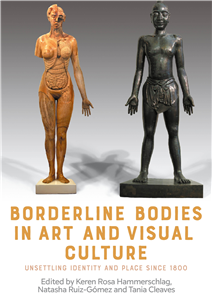
        Borderline bodies in art and visual culture

        Unsettling identity and place since 1800

        by Keren Hammerschlag, Natasha Ruiz-Gómez, Tania Anne Cleaves

        Borderline bodies offers original interpretations of visual representations of human bodies as bounded and unbounded, fortified and permeable, mobile and static-subject to borders and able to traverse and challenge them. It also takes as its focus images and objects that might be considered 'borderline' because they sit at the intersection of disciplines or sit outside accepted notions of what constitutes serious 'art.' By mapping the ways human bodies traverse borders and straddle-even dismantle-categories, this volume's essays approach afresh the relationship of bodies to traditional modes of representation, especially in art and medicine, and encourage us to think anew about how we understand the relationship between human corporeality, identity and place. Critical transdisciplinary and transnational analyses of objects and images from a range of geographies shed new light on the themes of: bodies and identity; typologies of the body; racialised bodies; 'normal' and 'abnormal' bodies; encounters between bodies; bodies in transition; bodies and mobility; and the bounded and unbounded human body. The outcome is a fresh approach to depictions of the human body produced for the purposes of artistic and medical education, aesthetic edification, and scientific and professional advancement, which disrupts assumptions about the normative human body perpetuated through Western image-making traditions.

      • Trusted Partner
        Literature & Literary Studies
        March 2024

        Borrowed objects and the art of poetry

        Spolia in Old English verse

        by Denis Ferhatovic

        This study examines Exeter riddles, Anglo-Saxon biblical poems (Exodus, Andreas, Judith) and Beowulf in order to uncover the poetics of spolia, an imaginative use of recycled fictional artefacts to create sites of metatextual reflection. Old English poetry famously lacks an explicit ars poetica. This book argues that attention to particularly charged moments within texts - especially those concerned with translation, transformation and the layering of various pasts - yields a previously unrecognised means for theorising Anglo-Saxon poetic creativity. Borrowed objects and the art of poetry works at the intersections of materiality and poetics, balancing insights from thing theory and related approaches with close readings of passages from Old English texts.

      • The Arts
        January 1905

        The Elements of Drawing

        by John Ruskin

        Can drawing — sound, honest representation of the world as the eye sees it, not tricks with the pencil or a few "effects" — be learned from a book? One of the most gifted draftsmen, who is also one of the greatest art critics and theorists of all time, answers that question with a decided "Yes." He is John Ruskin, the author of this book, a classic in art education as well as a highly effective text for the student and amateur today. The work is in three parts, cast in the form of letters to a student, successively covering "First Practice," "Sketching from Nature," and "Colour and Composition." Starting with the bare fundamentals (what kind of drawing pen to buy; shading a square evenly), and using the extremely practical method of exercises which the student performs from the very first, Ruskin instructs, advises, guides, counsels, and anticipates problems with sensitivity. The exercises become more difficult, developing greater and greater skills until Ruskin feels his reader is ready for watercolors and finally composition, which he treats in detail as to the laws of principality, repetition, continuity, curvature, radiation, contrast, interchange, consistency, and harmony. All along the way, Ruskin explains, in plain, clear language, the artistic and craftsmanlike reasons behind his practical advice — underlying which, of course, is Ruskin's brilliant philosophy of honest, naturally observed art which has so much affected our aesthetic. Three full-page plates and 48 woodcuts and diagrams (the latter from drawings by the author) show the student what the text describes. An appendix devotes many pages to the art works which may be studied with profit.

      • Trusted Partner
        The Arts
        February 2026

        Visual arts and medicine in early modern Europe and beyond

        A collection of essays and sources

        by Robert Brennan, Fabian Jonietz, Romana Sammern

        This book opens up new perspectives on the relationship between art, medicine, and science in late-medieval and early modern Europe. Looking beyond the traditional nexus of art, anatomy, and optics, the volume sheds light on a broader array of connections between artists and physicians: collaborations between painters and doctors on colour charts, handwork skills common to sculptors and surgeons, the transmission of art theory through medical texts long before the emergence of art writing itself as an independent genre, and the kinship of medical diagnosis with early modes of connoisseurship. Reconfiguring the histories of art, medicine, and science, the book also traverses conventional boundaries between physical and mental health, religious and medical modes of healing, menial and exalted forms of knowledge and labour, as well as vernacular and scientific understandings of human difference, including gender, race, and neurodiversity.

      • Trusted Partner
        The Arts
        March 2006

        Art history

        A critical introduction to its methods

        by Michael Hatt, Charlotte Klonk

        Art History: A critical introduction to its methods provides a lively and stimulating introduction to methodological debates within art history. Offering a lucid account of approaches from Hegel to post-colonialism, the book provides a sense of art history's own history as a discipline from its emergence in the late-eighteenth century to contemporary debates. By explaining the underlying philosophical and political assumptions behind each method, along with clear examples of how these are brought to bear on visual and historical analysis, the authors show that an adherence to a certain method is, in effect, a commitment to a set of beliefs and values. The book makes a strong case for the vitality of the discipline and its methodological centrality to new fields such as visual culture. This book will be of enormous value to undergraduate and graduate students, and also makes its own contributions to ongoing scholarly debates about theory and method. ;

      • Trusted Partner
        Humanities & Social Sciences
        June 2026

        The Official Record

        by Peter Finn, Robert Ledger

      • Trusted Partner
        The Arts
        May 2026

        Feminist substances

        Plastics in art of the 1960s and 1970s

        by Charlotte Matter

        Numerous women artists engaged with industrial materials such as plastics in the 1960s and 1970s, contrary to what the discourse of the time would have us believe. As Feminist substances shows, their works offered unique approaches to plastics in art, introducing new material meanings through a feminist lens. With a focus on Europe and Latin America, the book discusses the practices of Carla Accardi, Lea Lublin and Alina Szapocznikow, combining close readings of selected artworks with broader considerations of their social contexts. It explores their use of Sicofoil, plexiglass, plastic inflatables, polyester resin and polyurethane foam to address key concerns of feminist thought in relation to social reproduction, motherhood, memory, desire and illness. Beyond commonplaces of plastics as generic bad materials, Feminist substances considers more complex ways of engaging with synthetic matter, taking into account our messy relationships with these controversial materials.

      • Trusted Partner
      • Trusted Partner
        November 2019

        Paul Klee

        by Daniel Kupper

      • Trusted Partner
        The Arts
        March 2018

        Art versus industry?

        New perspectives on visual and industrial cultures in nineteenth-century Britain

        by Christopher Breward, Kate Nichols, Bill Sherman, Rebecca Wade, Gabriel Williams

        This book is about encounters between art and industry in nineteenth-century Britain. It looks beyond the oppositions established by later interpretations of the work of John Ruskin, William Morris and the Arts and Crafts movement to reveal surprising examples of collaboration - between artists, craftspeople, designers, inventors, curators, engineers and educators - during a crucial period in the formation of the cultural and commercial identity of Britain and its colonies. Across thirteen chapters by fourteen contributors, Art versus industry? explores such diverse subjects as the production of lace, the mechanical translation of sculpture, the display of stained glass, the use of the kaleidoscope in painting and pattern design, the emergence of domestic electric lighting and the development of art and design education and international exhibitions in India.

      • Trusted Partner
        The Arts
        February 2022

        "I am Jugoslovenka!"

        Feminist performance politics during and after Yugoslav Socialism

        by Jasmina Tumbas, Amelia Jones, Marsha Meskimmon

        "I am Jugoslovenka" argues that queer-feminist artistic and political resistance were paradoxically enabled by socialist Yugoslavia's unique history of patriarchy and women's emancipation. Spanning performance and conceptual art, video works, film and pop music, lesbian activism and press photos of female snipers in the Yugoslav wars, the book analyses feminist resistance in a range of performative actions that manifest the radical embodiment of Yugoslavia's anti-fascist, transnational and feminist legacies. It covers celebrated and lesser-known artists from the 1970s to today, including Marina Abramovic, Sanja Ivekovic, Vlasta Delimar, Tanja Ostojic, Selma Selman and Helena Janecic, along with music legends Lepa Brena and Esma Redzepova. "I am Jugoslovenka" tells a unique story of women's resistance through the intersection of feminism, socialism and nationalism in East European visual culture.

      • Technology, Engineering & Agriculture
        March 1905

        The First Book of Farming

        by Charles L. Goodrich

        This book is a result of the author's search for these facts and truths as a student and farmer and his endeavor as a teacher to present them in a simple manner to others. The object in presenting the book to the general public is the hope that it may be of assistance to farmers, students and teachers, in their search for the fundamental truths and principles of farming.

      • Trusted Partner
        Humanities & Social Sciences
        April 2010

        Arts and Crafts objects

        by Imogen Hart, Christopher Breward, Bill Sherman

        In this groundbreaking reassessment of the conventional understanding of a cohesive 'Arts and Crafts movement' in Britain, Imogen Hart argues that a sophisticated mode of looking at decorative art developed in England during the second half of the nineteenth century. Bringing to light a significant number of little-known visual and textual sources, Arts and Crafts Objects insists that the history of British design between the 1830s and the 1910s is more complex and interwoven than concepts of clearly differentiated 'movements' allow for. Reinvesting the objects with the original importance ascribed to them by their makers and users, this book places furniture, metalwork, tiles, vases, chintzes, carpets, and wallpaper at the centre of a rigorous reassessment of the concept of 'Arts and Crafts'. The book offers radical new interpretations of the Arts and Crafts Exhibition Society and the homes of William Morris, alongside illuminating analyses of less familiar but equally rich contexts. ;

      Subscribe to our

      newsletter