
Your Search Results


-
Promoted Content

 The ArtsSeptember 2021
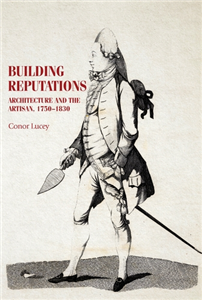
Building reputations
Architecture and the artisan, 1750–1830
by Conor Lucey
Taking a cue from revisionist scholarship on early modern vernacular architectures and their relationship to the classical canon, this book rehabilitates the reputations of a representative if misunderstood building typology - the eighteenth-century brick terraced house - and the artisan communities of bricklayers, carpenters and plasterers responsible for its design and construction. Opening with a cultural history of the building tradesman in terms of his reception within contemporary architectural discourse, chapters consider the design, decoration and marketing of the town house in the principal cities of the eighteenth- and early nineteenth-century British Atlantic world. The book is essential reading for students and scholars of the history of architectural design and interior decoration specifically, and of eighteenth-century society and culture generally.
-
Promoted Content
 Humanities & Social SciencesSeptember 2025
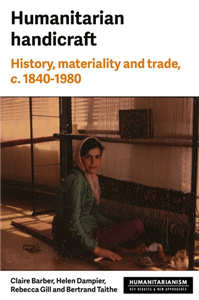
Humanitarian handicraft
History, materiality and trade, c. 1840–1980
by Rebecca Gill, Claire Barber, Helen Dampier, Bertrand Taithe
This book uncovers the overlooked history of artisanal textiles in projects aimed at social uplift and moral reform. The contributors ask what the implications of this form of gendered craft production are for our understanding of the humanitarian imagination, relations of humanitarian production and the generation of meaning and social and artistic value. It also opens a dialogue with contemporary socially-engaged textile artists to engender critical reflection on the socially-situated meaning of textile craft in past and present humanitarian contexts.
-
 Trusted Partner
 The ArtsSeptember 2009
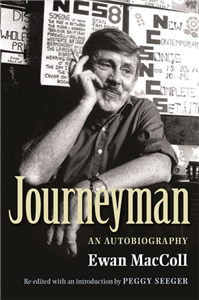
Journeyman
An autobiography
by Ewan Maccoll, Peggy Seeger, Peggy Seeger
This new edition of Journeyman, Ewan MacColl's vivid and entertaining autobiography, has been re-edited from the original manuscript, and includes a new introduction by Peggy Seeger, for whom he wrote the unforgettable 'The First Time Ever I Saw Your Face'. MacColl, a singer, songwriter, actor, playwright and broadcaster, begins this fascinating account with his working class Salford childhood, traces the founding and life of Theatre Workshop, one of Britain's most innovative theatre companies, then moves on to his work with folksingers, the Radio Ballads and his ascent into old age. Ewan MacColl and Peggy Seeger were among the main leaders of the UK folksong revival. Journeyman documents their struggle to secure the integrity of that revival as the popular media appropriated and re-created traditional music for commercial gain. An entertaining and thought-provoking slice of British history, it will appeal to those interested in the histories of folk music, theatre, radio, left-wing politics and the Manchester area. ;
-
Trusted Partner
 The ArtsOctober 2009
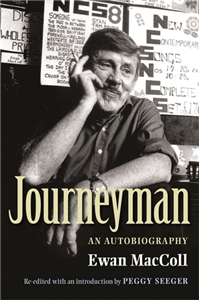
Journeyman
An autobiography
by Ewan Maccoll, Peggy Seeger
This new edition of Journeyman, Ewan MacColl's vivid and entertaining autobiography, has been re-edited from the original manuscript, and includes a new introduction by Peggy Seeger, for whom he wrote the unforgettable 'The First Time Ever I Saw Your Face'. MacColl, a singer, songwriter, actor, playwright and broadcaster, begins this fascinating account with his working class Salford childhood, traces the founding and life of Theatre Workshop, one of Britain's most innovative theatre companies, then moves on to his work with folksingers, the Radio Ballads and his ascent into old age. Ewan MacColl and Peggy Seeger were among the main leaders of the UK folksong revival. Journeyman documents their struggle to secure the integrity of that revival as the popular media appropriated and re-created traditional music for commercial gain. An entertaining and thought-provoking slice of British history, it will appeal to those interested in the histories of folk music, theatre, radio, left-wing politics and the Manchester area. ;
-
Trusted Partner
 Humanities & Social SciencesDecember 2021
Crafting identities
Artisan culture in London, c. 1550–1640
by Jasmine Kilburn-Toppin, Christopher Breward, James Ryan
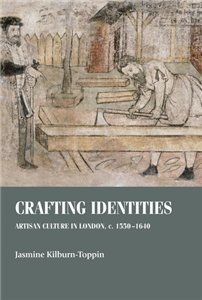
Crafting identities explores artisanal identity and culture in early modern London. It demonstrates that the social, intellectual and political status of London's crafts and craftsmen were embedded in particular material and spatial contexts. Through examination of a wide range of manuscript, visual and material culture sources, the book investigates for the first time how London's artisans physically shaped the built environment of the city and how the experience of negotiating urban spaces impacted directly on their distinctive individual and collective identities. Applying an innovative and interdisciplinary methodology to the examination of artisanal cultures, the book engages with the fields of social and cultural history and the histories of art, design and architecture. It will appeal to scholars of early modern social, cultural and urban history, as well as those interested in design and architectural history.
-
Trusted Partner
 The ArtsJanuary 2025
Refashioning the Renaissance
Everyday dress in Europe, 1500–1650
by Paula Hohti
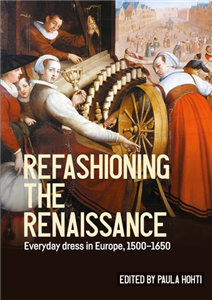
How did ordinary men and women dress in early modern Europe? What fabrics and garments formed the essential elements of fashion for artisans and shopkeepers? Did they rely on affordable alternatives to the silks, jewellery, and decorations favoured by the wealthy elite? Or did those with modest means find innovative ways to express their fashion sense? This book provides new perspectives on early modern clothing and fashion history byinvestigating the consumption and meaning of fashionable clothing and accessories among the 'popular' classes. Through a close examination of the materials, craftsmanship and cultural significance of fashion items owned by and available to a broad group of consumers, it challenges conventional assumptions that the everyday dress of ordinary families was limited to a narrow selection of garments made of coarse textiles, often produced at home and resistant to change.
-
Trusted Partner
-
Trusted Partner
-
Trusted Partner
-
Trusted Partner
-
Trusted Partner
-
Trusted Partner

 May 2013
Inventor 2014
Grundlagen und Methodik in zahlreichen Konstruktionsbeispielen
by Scheuermann, Günter
-
Trusted Partner
-
Trusted Partner
-
Trusted Partner
 Humanities & Social SciencesDecember 2007
Artisans of the body in early modern Italy
by Sandra Cavallo, Tessa Storey, Pamela Sharpe, Penny Summerfield, Lynn Abrams, Cordelia Beattie
-
Trusted Partner
-
Trusted Partner
Humanities & Social SciencesDecember 2007
Artisans of the body in early modern Italy
by Sandra Cavallo, Tessa Storey, Pamela Sharpe, Penny Summerfield, Lynn Abrams, Cordelia Beattie, Rebecca Mortimer
-
Trusted Partner
 The ArtsJanuary 2012
Marcel Pagnol
by Brett Bowles, Diana Holmes, Robert Ingram
Though long ignored or dismissed by film critics and scholars, Marcel Pagnol (1895-1974) was among the most influential auteurs of his era. This comprehensive overview of Pagnol's career, the first ever published in English, highlights his unique place in French cinema as a self-sufficient writer-producer-director and his contribution to the long-term evolution of filmmaking in a broader European context. In addition to reassessing the converted playwright's controversial prioritisation of speech over image, the book juxtaposes Pagnol's sunny rural melodramas with the dark, urban variety of poetic realism practised by influential peers such as Jean Renoir and Marcel Carné. In his penchant for outdoor location shooting and ethnographic authenticity, as well as his stubborn attachment to independent, artisanal production values, Pagnol served as a precursor to the French New Wave and Italian Neo-Realism, inspiring the likes of Jean-Luc Godard, François Truffaut, Vittorio De Sica, and Roberto Rossellini. ;
-
Trusted Partner
 TelevisionSeptember 2004
Terry Nation
by Jonathan Bignell, Andrew O'Day
This is the first in-depth study of the science fiction television devised and written by Terry Nation. Terry Nation was the inventor of the Daleks and wrote other serials for 'Doctor Who'; he also wrote the BBC's 1970s post-apocalyptic drama 'Survivors' and created the space adventure series 'Blake's 7'. Previously television science fiction in Britain has received little critical attention. This book fills that gap and places Nation's work in the context of its production. Using Terry Nation's science fiction work as a case study, the boundaries around the authorship and authority of the television writer are explored in detail. The authors make use of BBC's archival research and specially conducted interviews with television producers and other production staff, to discuss how the programmes that Terry Nation created and wrote were commissioned, produced and brought to the screen. The book makes an important contribution to the study of British television history and will be of interest to enthusiasts of Terry Nation's landmark drama series as well as students of Television Studies.
-
Trusted Partner

 March 2021
Columbus, the Discarded Explorer
Disaster of the legendary sailor
by Wolfgang Wissler
There he stands, the man the whole of Spain cheered, before whom the most catholic regents Isabella and Ferdinand rose to their feet, his eyes on his ship Capitana, devoured by shipworm, stranded off Jamaica. Some of the crew mutiny, the locals can no longer be fobbed off with glass beads, the Spanish on the nearby island of Hispaniola do not help, the world doesn‘t want anything to do with him, the demanding whinger. He, Christopher Columbus, is a John Lackland, a king without land, a conqueror without conquest. Between fiction and historical truth, Wolfgang Wissler recounts the legendary sailor‘s last expedition in an entirely new way – and what a story it is!



