
Humanities & Social Sciences
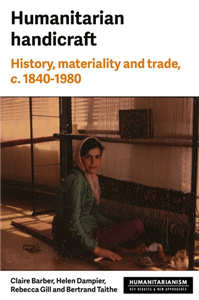
Humanitarian handicraft
History, materiality and trade, c. 1840–1980
by Rebecca Gill, Claire Barber, Helen Dampier, Bertrand Taithe
Description
This book uncovers the overlooked history of artisanal textiles in projects aimed at social uplift and moral reform. The contributors ask what the implications of this form of gendered craft production are for our understanding of the humanitarian imagination, relations of humanitarian production and the generation of meaning and social and artistic value. It also opens a dialogue with contemporary socially-engaged textile artists to engender critical reflection on the socially-situated meaning of textile craft in past and present humanitarian contexts.
More Information
Rights Information
Albania, Algeria, Angola, Argentina, Armenia, Australia, Austria, Bahrain, Belgium, Belize, Benin, Bolivia, Bosnia and Herzegovina, Botswana, Brazil, Bulgaria, Burkina Faso, Burundi, Cameroon, Canada, Cape Verde, Central African Republic, Chad, Chile, China, Colombia, Comoros, Congo [DRC], Congo, Republic of the, Costa Rica, Ivory Coast, Croatia, Czech Republic, Denmark, Djibouti, Ecuador, Egypt, El Salvador, Equatorial Guinea, Eritrea, Estonia, Ethiopia, Faroe Islands, Finland, France, French Guiana, Gabon, Gambia, Georgia, Germany, Ghana, Greece, Guatemala, Guinea, Guinea-Bissau, Guyana, Honduras, Hongkong, Hungary, Iceland, India, Indonesia, Iran, Iraq, Ireland, Israel, Italy, Japan, Jordan, Kazakhstan, Kenya, Kuwait, Latvia, Lebanon, Lesotho, Liberia, Libya, Lithuania, Luxembourg, Macau, China, Macedonia [FYROM], Madagascar, Malawi, Malaysia, Mali, Malta, Mauritania, Mauritius, Mayotte, Mexico, Mongolia, Montenegro, Morocco, Mozambique, Namibia, Netherlands, New Zealand, Nicaragua, Niger, Nigeria, Norway, Oman, Pakistan, Panama, Paraguay, Peru, Philippines, Poland, Portugal, Puerto Rico, Qatar, Reunion, Romania, Russia, Rwanda, Saint Helena, Sao Tome and Principe, Saudi Arabia, Senegal, Serbia, Seychelles, Sierra Leone, Singapore, Slovakia, Slovenia, Somalia, South Africa, South Korea, Spain, Sri Lanka, Sudan, Suriname, Swaziland, Sweden, Switzerland, Syria, Taiwan, Tanzania, Thailand, Timor-Leste, Togo, Tokelau, Tunisia, Turkey, Uganda, Ukraine, United Arab Emirates, United Kingdom, United States, Uruguay, Venezuela, Vietnam, Western Sahara, Yemen, Zambia, Zimbabwe, South Sudan, Cyprus, Palestine, Bangladesh, Cambodia, Liechtenstein, Azerbaijan, Jamaica, Kyrgyzstan, Dominican Republic, Myanmar, Monaco
Endorsements
Handcrafted textiles hold a central place in humanitarian aesthetics, ethics, and campaigning, from Oxfam projects to refugee workshops. These crafts evoke images of creativity and resilience but also stand as symbols of labour exploitation. Textile production, particularly in piecework and 'sweated industries,' has long been a site of protest against poor pay, exploitation, and the erosion of traditional skills. Despite this dual significance, the history of philanthropic interventions in textile craft remains underexplored. This book delves into the intricate connections between craft, labour, and humanitarianism, examining the historical role of textiles in European and imperial humanitarian efforts. Through a series of case studies, it explores how philanthropic organisations and individuals have engaged with handicrafts to address social and economic challenges. Crucially, the book interrogates the complexities of humanitarian craftwork, balancing narratives of empowerment with critical analyses of control, agency, and commodification. Engaging with contemporary socially-engaged textile artists, the contributors reflect on how knowledge of craft practice can reshape historical understandings of humanitarianism. In doing so, it bridges past and present, showing how historical processes become materialised in modern craftwork. This is an essential contribution to the history of labour, material culture, and humanitarian practice, offering fresh perspectives on the intersections of craft and care.
Reviews
Handcrafted textiles hold a central place in humanitarian aesthetics, ethics, and campaigning, from Oxfam projects to refugee workshops. These crafts evoke images of creativity and resilience but also stand as symbols of labour exploitation. Textile production, particularly in piecework and 'sweated industries,' has long been a site of protest against poor pay, exploitation, and the erosion of traditional skills. Despite this dual significance, the history of philanthropic interventions in textile craft remains underexplored. This book delves into the intricate connections between craft, labour, and humanitarianism, examining the historical role of textiles in European and imperial humanitarian efforts. Through a series of case studies, it explores how philanthropic organisations and individuals have engaged with handicrafts to address social and economic challenges. Crucially, the book interrogates the complexities of humanitarian craftwork, balancing narratives of empowerment with critical analyses of control, agency, and commodification. Engaging with contemporary socially-engaged textile artists, the contributors reflect on how knowledge of craft practice can reshape historical understandings of humanitarianism. In doing so, it bridges past and present, showing how historical processes become materialised in modern craftwork. This is an essential contribution to the history of labour, material culture, and humanitarian practice, offering fresh perspectives on the intersections of craft and care.
Author Biography
Rebecca Gill is Lecturer in Modern History at the University of Huddersfield; ; ; Bertrand Taithe is Professor of Cultural History at The University of Manchester
 Trusted Partner

Manchester University Press
Manchester University Press is a leading UK publisher known for excellent research in the humanities and social sciences.
View all titlesBibliographic Information
- Publisher Manchester University Press
- Publication Date September 2025
- Orginal LanguageEnglish
- ISBN/Identifier 9781526188021 / 1526188023
- Publication Country or regionUnited Kingdom
- FormatPrint PDF
- Pages320
- ReadershipGeneral/trade; College/higher education; Professional and scholarly
- Publish StatusPublished
- Dimensions234 X 156 mm
- Biblio NotesDerived from Proprietary 5605
- SeriesHumanitarianism: Key Debates and New Approaches
- Reference Code14654
Thank you for proceeding with this offer.
Manchester University Press has chosen to review this offer before it proceeds.
You will receive an email update that will bring you back to complete the process.
You can also check the status in the My Offers area
Manchester University Press has chosen to review this offer before it proceeds.
You will receive an email update that will bring you back to complete the process.
You can also check the status in the My Offers area

Please wait while the payment is being prepared.
Do not close this window.

(c) Copyright 2026 - Frankfurter Buchmesse GmbH. All Right Reserved