
Your Search Results
-

-

Organisation for Researching and Composing University Textbooks in the Humanities (SAMT)
Over 140 titles of books in cooperation with universities and research centers in countries in Asia and Europe
View Rights Portal
-
Promoted Content

 Business, Economics & LawMay 2025
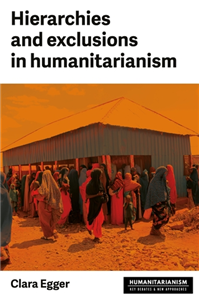
Hierarchies and exclusion in humanitarianism
by Clara Egger, Andrea Schneiker
While humanitarians generally present themselves as 'do-gooders' and use this image to gather support and funding, this edited volume addresses hierarchies and exclusions in humanitarianism - an issue that has gained increased attention. Contributions analyse how hierarchies, power asymmetries and exclusion emerge, are maintained and can ultimately be challenged in humanitarian governance. Leading scholars on humanitarianism coming from a variety of disciplinary fields such as international relations, philosophy, organisational science and management, and sociology analyse exclusion dynamics at the individual, organisational and structural levels. Authors thereby combine data from a diverse range of methods, including ethnography, survey and statistical analysis. The volume informs current efforts to increase inclusiveness and equity in humanitarian practice.
-
Promoted Content
 Humanities & Social SciencesMay 2020
A history of humanitarianism, 1755–1989
In the name of others
by Silvia Salvatici
The book traces the history of international humanitarianism from the anti-slavery movement to the end of the cold war. It is based on an extensive survey of the international literature and is retold in an original narrative that relies on a close examination of the sources. The reconstruction of humanitarianism's long history unfolds around some crucial moments and events: the colonial expansion of European countries, the two world wars and their aftermaths, the emergence of a new postcolonial order. In terms of its contents, narrative style, interpretative approach the book is aimed at a large and diverse public including: scholars who are studying and teaching humanitarianism; students who need to learn about humanitarianism as part of their training or research; operators and volunteers who are engaged in the field; non-specialist readers who are interested in the topic because of its relevance to current events.
-
 Trusted Partner
 Business, Economics & LawMarch 2026
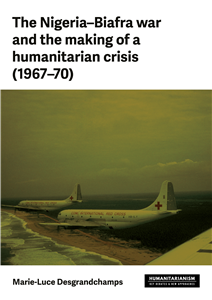
Humanitarianism in Civil War
The Biafra crisis, 1967-1970
by Marie-Luce Desgrandchamps
May 1967, in Nigeria, the Republic of Biafra declared its independence. Soon, civil war and famine ravaged the region and gradually entered the European and American media. Photographs of the conflict arouse considerable emotion in the West. The secessionist enclave and the areas taken over by the Nigerian army then became the scene of major relief operations, developed and financed by multiple organizations and governments. Part of a historiography of humanitarianism in full renewal, this book tells the story of the war, its metamorphosis into an international crisis and the responses that were provided. Based on a large body of sources from French, British, Swiss, Nigerian and American archives, it offers an insight into the world of humanitarian work at the end of the 1960s. It shows the reconfigurations taking place there. in the postcolonial era by proposing complementary scales of observation - international, national and local. The work also revisits some of the controversies which developed around the conflict regarding the instrumentalization of aid, its links with politics, the reception of relief operations on the ground or even the birth of borderlessness and testimony. It thus returns to the place occupied by the Biafran crisis in the history of humanitarian aid.
-
Trusted Partner
 Business, Economics & LawJuly 2025
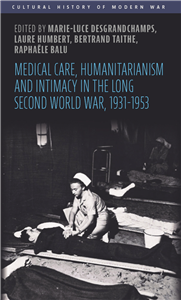
Medical care, humanitarianism and intimacy in the long Second World War, 1931-1953
by Marie-Luce Desgrandchamps, Laure Humbert, Bertrand Taithe, Raphaële Balu
This book offers a micro-global history of humanitarianism and medical care during the 'long' Second World War, which challenges the traditional and Eurocentric chronological boundaries of 1939/1945. It takes as its starting point the Japanese invasion of Manchuria in 1931, which led to the progressive dislocation of the League of Nations, with the Japanese, German and Soviet departures in the 1930s. It ends with the termination of the Korean War in 1953, and the subsequent dismantlement of the first United Coalition and UN Peace enforcement operation. It considers the slow, messy and ambivalent transformation of humanitarian actors' relations to the suffering of distant others through a study of humanitarian encounters, practices, spaces and affects. Paying close attention to a variety of actors, such as French colonial doctors, Swiss ICRC delegates, Egyptian relief workers, Chinese-style physicians, Peruvian and Ecuadorian nurses or American member of the Unitarian Service Committee, the book provides a more holistic story of humanitarianism.
-
Trusted Partner

 June 1993
Die Ideologie des Ästhetischen
by Paul Man, Karl Heinz Bohrer, Christoph Menke, Jürgen Blasius, Christoph Menke
Als Paul de Man 1983 starb, war er der wohl bekannteste und einflußreichste Vertreter einer Richtung der Literaturkritik und ihrer Theore, die allgemein als »dekonstruktiv« bezeichnet wird. Kennzeichnend für diese Richtung ist eine erneute Konzentration auf die innere Verfaßtheit der literarischen Texte. Eine erste Auswahl dieser methodisch vorbildlich wie brillant geschriebenen Texte ist 1988 unter dem Titel »Allegorien des Lesens« in der edition suhrkamp erschienen. Die vorliegende Auswahl konzentriert sich auf die methodologischen und theoretischen Prämissen dieses Vorhabens, wie sie die Abhandlungen über die Zeitlichkeit der Literatur, über Shelley und über die Autobiographie deutlich machen. Sich auf die immanente Verfaßtheit und Bewegung von Texten einzulassen ist nach de Man kein selbstzweckhaftes, folgenloses Unternehmen. De Man beansprucht vielmehr für seine »Rückkehr zur Philologie« eine allgemeine Bedeutung; die Literaturkritik ist zugleich philosophische und politische Kritik. Damit ist der zweite Schwerpunkt dieser Auswahl bezeichnet. De Man erläutert diese These zum einen in kritischer Auseinandersetzung mit der Philosophie Jacques Derridas. Zum anderen zeigt er an zentralen Texten der ästhetischen Tradition, an Kant und Hegel, daß ihr falsches – »ideologisches« – Verständnis literarischer Texte unter der Kategorie des »Ästhetischen« ebenso weitreichende philosophische wie politische Konsequenzen hat.
-
Trusted Partner
 Humanities & Social SciencesOctober 2024
Humanitarianism, empire and transnationalism, 1760-1995
Selective humanity in the Anglophone world
by Joy Damousi, Trevor Burnard, Alan Lester
This is the first book to examine the shifting relationship between humanitarianism and the expansion, consolidation and postcolonial transformation of the Anglophone world across three centuries, from the antislavery campaign of the late eighteenth century to the role of NGOs balancing humanitarianism and human rights in the late twentieth century. Contributors explore the trade-offs between humane concern and the altered context of colonial and postcolonial realpolitik. They also showcase an array of methodologies and sources with which to explore the relationship between humanitarianism and colonialism. These range from the biography of material objects to interviews as well as more conventional archival enquiry. They also include work with and for Indigenous people whose family histories have been defined in large part by 'humanitarian' interventions.
-
Trusted Partner
-
Trusted Partner

 June 2010
Kinder in Deutschland 2010
2. World Vision Kinderstudie
by Herausgegeben von World Vision Deutschland e.V., World
-
Trusted Partner
 Teaching, Language & ReferenceJanuary 2019
Global humanitarianism and media culture
by Michael Lawrence, Rachel Tavernor, Bertrand Taithe
-
Trusted Partner
 December 1987
Allegorien des Lesens
by Paul Man, Werner Hamacher, Peter Krumme, Werner Hamacher
Im Falle Paul de Mans ist die begriffliche Charakterisierung seines Vorgehens zusätzlich erschwert dadurch, daß die Theorie nie losgelöst von den Texten, an denen sie gewonnen wird, betrachtet werden kann.
-
Trusted Partner

 June 2017
Frauen der 1920er Jahre
Glamour, Stil und Avantgarde
by Thomas Bleitner, Man Ray, Edward Steichen, Claude Cahun, Dora Kallmus
In den 1920er Jahren war vieles wagemutiger, unkonventioneller und exzessiver als heute. Keine Zeit hat so viel Glamour, Stil und Avantgarde hervorgebracht, und eine nie gekannte Experimentierlust erobert Bühnen, Kunstateliers, den Sport und so manches Schlafzimmer. Frauen machen den Flug- und Führerschein, sie greifen zur Filmkamera, sie designen eine neue Mode, sie rauchen und trinken und tanzen fröhlich am Abgrund. Thomas Bleitner stellt in diesem opulent bebilderten Band legendäre und unvergleichliche Frauen aus Film, Fotografie, Sport, Mode und Kunst vor, die in den 1920er Jahren in Berlin, Paris und New York alte Rollenmuster auf den Kopf stellten und damit für Furore sorgten. »Als die Frauen begannen, ihre Röcke zu kürzen und ihre Haare zu stutzen, war dies der größte Umbruch in der Geschichte der Mode der letzten hundert Jahre.« New York Vogue vom 1. Juli 1928
-
Trusted Partner

 April 2003
Crazy New York
Die Frauen von Harlem und Greenwich Village
by Barnet, Andrea / Illustriert von Abbott, Berenice; Illustriert von Ray, Man; Deutsch Stromberg, Kyra
-
Trusted Partner
 November 2007
Kinder in Deutschland 2007
1. World Vision Kinderstudie
by Herausgegeben von World Vision Deutschland e.V.
-
Trusted Partner
 March 2008
Kleine Entdecker – Bleibt die Zeit auch manchmal stehen?
Über unseren Zeitbegriff
by Kang, Seong-Eun / Koreanisch Zaborowski, Hans-Jürgen; Illustriert von Oh, Seung-Man
-
Trusted Partner
January 1983
Der Naturgarten
Mehr Platz für einheimische Pflanzen und Tiere
by Schwarz, Urs / Vorwort von Stern, Horst; Herausgegeben von World Wildlife Fund
-
Trusted Partner
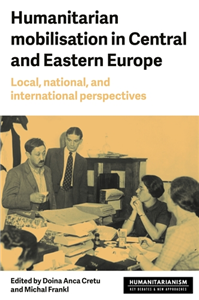 Humanities & Social SciencesNovember 2025
Humanitarian mobilisation in Central and Eastern Europe
Local, national, and international perspectives
by Doina Anca Cretu, Michal Frankl
By focusing on aid Central and Eastern Europe, the volume adds to the existent scholarly explorations of modern humanitarianism, its actors and practices. In the twentieth century, aid workers assisted victims of war and earthquakes, delivered food, supported health care, provided childcare, or sheltered refugees. The contributors not only reconstruct these diverse histories and their protagonists, but also bring international, national, and local actors together: from grassroots activists to private associations to state-driven "socialist humanitarians" to large Western aid organizations. In doing so, they challenge the often unidirectional, from West-to-East, and asymmetrical perspective on donor-recipient relationships in humanitarian processes.
-
Trusted Partner

 January 2017
Der Deutsch-Russische Handels- und Schiffahrtsvertrag vom 20. März 1894.
(Staats- und socialwissenschaftliche Forschungen XVII.3).
by Human, Arthur
-
Trusted Partner
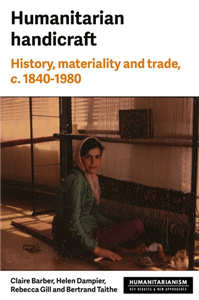 Humanities & Social SciencesSeptember 2025
Humanitarian handicraft
History, materiality and trade, c. 1840–1980
by Rebecca Gill, Claire Barber, Helen Dampier, Bertrand Taithe
This book uncovers the overlooked history of artisanal textiles in projects aimed at social uplift and moral reform. The contributors ask what the implications of this form of gendered craft production are for our understanding of the humanitarian imagination, relations of humanitarian production and the generation of meaning and social and artistic value. It also opens a dialogue with contemporary socially-engaged textile artists to engender critical reflection on the socially-situated meaning of textile craft in past and present humanitarian contexts.
-
Trusted Partner
Teaching, Language & ReferenceAugust 2024
Aid to Armenia
Humanitarianism and intervention from the 1890s to the present
by Joanne Laycock, Francesca Piana
Interventions on behalf of Armenia and Armenians have come to be identified by scholars and practitioners alike as defining moments in the history of humanitarianism. This book reassesses these claims, critically examining a range of interventions by governments, international and diasporic organizations, and individuals that aimed to 'save Armenians'. Drawing on multidisciplinary perspectives, it traces the evolution of these interventions from the late-nineteenth century to the present day, paying particular attention to the aftermaths of the genocide and the upheavals of the post-Soviet period. The contributions connect diverse places (the Caucasus, Russia, the Middle East, Europe, North America, South America, and Australia) to reveal shifting transnational networks of aid and intervention. Aid to Armenia explores this history, and engages critically with contemporary humanitarian questions facing Armenia, the South Caucasus region and the wider diaspora.
-
Trusted Partner


