
American Diabetes Association
The American Diabetes Association is the world’s largest publisher of titles on diabetes care and treatment, setting the standards of patient care based on the latest research.
View Rights Portal
The American Diabetes Association is the world’s largest publisher of titles on diabetes care and treatment, setting the standards of patient care based on the latest research.
View Rights Portal
https://www.jbpa.or.jp/fbf/japanFBF2020.html JAPAN Booth is a National Collective Stand consisted with 20 Japanese Publishers organized by JAPAN BOOK PUBLISHERS ASSOCIATION. We are happy to help you with various kinds of Publishing Contents from JAPAN. Please visit our Exhibitors Site and information from the list below. We wish that you will find good stories here!
View Rights Portal

By considering the distinctiveness of the inter-war years as a discrete period of colonial change, this book addresses several larger issues, such as tracing the origins of decolonization in the rise of colonial nationalism, and a re-assessment of the impact of inter-war colonial rebellions in Africa, Syria and Indochina. The book also connects French theories of colonial governance to the lived experience of colonial rule in a period scarred by war and economic dislocation.
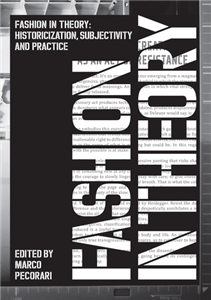
For Spring Summer 2020, Gucci showed a collection questioning identity politics and capitalism. Rather than the usual explanation of the material, shapes or inspirations behind the collection, the press release handed out at the show quoted the philosopher Michel Foucault and questioned the very nature of fashion itself. Gucci's press release reflects the popularization of critical theory in public discourse and fashion in particular. Philosophers, activists and academics are increasingly recruited to collaborate with luxury brands, and main-stream fashion brands have begun to adopt a discourse about politics and critical thinking using, in their communication, concepts such as "resistance", "gender fluidity", "national identity" or "cultural heritage" without accompanying these discourses with any form of political engagement or activism. Based on this intellectualization of the fashion industry and the recent proliferation of critical theory in fashion education, this book stresses the importance of rethinking the relationship between fashion and theory. Drawing together eleven chapters and four conversations by and with philosophers, cultural theorists, historians, anthropologists, activists, performers and designers, the book investigates both the theorization of fashion and the ways in which fashion offers a useful landscape in understanding the current state of critical theory today.
 Trusted Partner

This book contributes to a welcome new wave focusing on the importance of female filmmakers, providing a reappraisal of Ida Lupino, a cinematic figure of significant importance. Given her ability to move between popular and independent cinemas and her status as both a Hollywood star and director/writer/producer of socially relevant films overlooked by the mainstream, Lupino is a particularly interesting case study. Employing a range of critical approaches, including feminist theory, auteur theory and critical theory, this book investigates key themes and motifs that developed across Lupino's unusual and unique career as one of the most significant female players in film history. Investigating her oeuvre as actress, director, writer and producer, it discusses Lupino as a complex and important filmmaker whose career, on both sides of the camera, requires substantially more critical attention than it has been awarded thus far.
Trusted Partner

Kritische Theorie ist ein scharfsinniger Unsinn. Kritik – das bedeutet Prüfen, Unterscheiden, Urteilen. Theorie – das bedeutet eine Erkenntnisstruktur. Laut Kant bildet die Kritik darum eine »Propädeutik« zur Theorie. Wer beides zusammenschließt, verwickelt sich in einen Widerspruch. Von diesem scharfsinnigen Unsinn der kritischen Theorie handeln Gunnar Hindrichs’ Studien, die sich gegen die Meinung richten, kritische Theorie bilde ein sinnvolles Element im Gefüge der Wissenschaften. Ihr Geschäft, so Hindrichs, besteht vielmehr darin, die Krise des Sinns durchzuführen. In der vielfältigen Krise unserer Gegenwart aber wird ein Denken, das die Form der Krise in sich aufgenommen hat, auf neue Weise bedeutsam.
Trusted Partner

De-centering queer theory seeks to reorient queer theory to a different conception of bodies and sexuality derived from Eastern European Marxism. The book articulates a contrast between the concept of the productive body, which draws its epistemology from Soviet and avant-garde theorists, and Cold War gender, which is defined as the social construction of the body. The first part of the book concentrates on the theoretical and visual production of Eastern European Marxism, which proposed an alternative version of sexuality to that of western liberalism. In doing so it offers a historical angle to understand the emergence not only of an alternative epistemology, but also of queer theory's vocabulary. The second part of the book provides a Marxist, anti-capitalist archive for queer studies, which often neglects to engage critically with its liberal and Cold War underpinnings.
Trusted Partner

This book offers a unique and timely reading of the early Frankfurt School in response to the recent 'affective turn' within the arts and humanities. Resisting the overly rationalist tendencies of political philosophy, it argues that critical theory actively cultivates a powerful connection between thinking and feeling, and rediscovers a range of often neglected concepts that were of vital importance to the first generation of critical theorists, including melancholia, hope, (un)happiness, objects and mimesis. In doing so, it brings the dynamic work of Walter Benjamin, Theodor Adorno, Ernst Bloch and Siegfried Kracauer into conversation with more recent debates around politics and affect. An important intervention in the fields of affect studies and social and political thought, Critical theory and feeling shows that sensuous experience is at the heart of the Frankfurt School's affective politics.
Trusted Partner

'Realist film theory and cinema' embraces studies of cinematic realism and 19th century tradition, the realist film theories of Lukács, Grierson, Bazin and Kracauer, and the relationship of realist film theory to the general field of film theory and philosophy. This is the first book to attempt a rigorous and systematic application of realist film theory to the analysis of particular films. The book suggests new ways forward for a new series of studies in cinematic realism, and for a new form of film theory based on realism. It stresses the importance of the question of realism both in film studies and in contemporary life. Aitken's work will be of interest to scholars and advanced students of film studies, literary studies, media studies, cultural studies and philosophy.
Trusted Partner


How will physiotherapy adapt to developments and challenges in the 21st century? New thinking while keeping the tried-and-tested: This is the motto adopted by eight physiotherapy researchers and practitioners in this handbook. Their contributions advance the theory for their discipline. They have met regularly at the so-called Berlin Salon since 2015: they analyze, discuss, and incorporate existing models and adopt a theory. They are all professionally qualified physiotherapists with further training in fields such as health science, education, and therapy management. They all suffer from the lack of theory in professional practice, and they have all experienced the diverse, often unconscious discourses in the field. Theoretical understanding and theory development require theory-driven reflection, the results of which have long since left the Berlin Salon and been adopted internationally. Target Group: Physiotherapists, healthcare scientists, university instructors
Trusted Partner

Die überwiegend historisch gerichteten Untersuchungen, die in diesem Band gesammelt sind, sollen die Idee einer in praktischer Absicht entworfenen Theorie der Gesellschaft entfalten und deren Status gegenüber Theorien anderer Herkunft abgrenzen.
Trusted Partner

Populism is a powerful force today, but its full scope has eluded the analytical tools of both orthodox and heterodox 'populism studies'. This book provides a valuable alternative perspective. It reconstructs in detail for the first time the sociological analyses of US demagogues by members of the Frankfurt School and compares these with contemporary approaches. Modern demagogy emerges as a key under-researched feature of populism, since populist movements, whether 'left' or 'right', are highly susceptible to 'demagogic capture'. The book also details the culture industry's populist contradictions - including its role as an incubator of modern demagogues - from the 1930s through to today's social media and 'Trumpian psychotechnics'. Featuring a previously unpublished text by Adorno on modern demagogy as an appendix, it will be of interest to researchers and students in critical theory, sociology, politics, German studies, philosophy and history of ideas, as well as all those concerned about the rise of demagogic populism today.
Trusted Partner
The book addresses what is political in critical theory and which aspects, arguments or notions of critical theory maintain political significance for the 20th and the 21st centuries. The collection of essays comprises itself of a series of clear and critical perspectives that analyze the extent to which critical theory relates political argument to modern societies and, thereby, exerts a critique of the multiple social and political phenomena of late modernity. The contributors focus on a multiplicity of universal phenomena such as globalization, multiple crises, late capitalism and the social role of the sciences, and posit some novel criticism of the contemporary social sphere, as it is situated within the wider system of global capitalism. They also present a plurivalent critique that links arguments in Marxism and Freud to all three generations of critical theory.
Trusted Partner

Lukácsian film theory and cinema explores Georg Lukács' writings on film. The Hungarian Marxist critic Georg Lukács is primarily known as a literary theorist, but he also wrote extensively on the cinema. These writings have remained little known in the English-speaking world because the great majority of them have never actually been translated into English - until now. Aitken has gathered together the most important essays and the translations appear here, often for the first time. This book thus makes a decisive contribution to understandings of Lukács within the field of film studies, and, in doing so, also challenges many existing preconceptions concerning his theoretical position. For example, whilst Lukács' literary theory is well known for its repudiation of naturalism, in his writings on film Lukács appears to advance a theory and practice of film that can best be described as naturalist. Lukácsian film theory and cinema is divided into two parts. In part one, Lukács' writings on film are explored, and placed within relevant historical and intellectual contexts, whilst part two consists of the essays themselves. This book will be of considerable interest to scholars and students working within the fields of film studies, literary studies, intellectual history, media and cultural studies. It is also intended to be the final volume in a trilogy of works on cinematic realism, which includes the author's earlier European film theory and cinema (2001), and Realist film theory and cinema (2006).
Trusted Partner

This volume presents the first systematic account of Japanese international legal theory; edited by Japanese scholars, the volume traces thirteen influential scholars and spans over a century. It examines how theorists positioned outside international law's Western centre developed sophisticated frameworks to address tensions between Western modernity and their own experiences. The book's central contribution proposes 'conversation'-continuous engagement that respects differences between legal traditions-as an alternative to 'dialogue', which often reproduces existing hierarchies by assuming all perspectives can be reconciled. Through detailed intellectual biographies across six historical periods, contributors reveal how Japanese scholars strategically employed legal positivism, articulated transcivilizational perspectives, and developed concepts of normative multilateralism. Addressed at scholars of international law, legal theory, and comparative legal traditions, this volume demonstrates that the discipline's future requires genuinely reciprocal exchange where diverse perspectives can coexist productively.
Trusted Partner
Trusted Partner

Diese Seiten gehören zu Kafkas ausführlichsten und schmerzlichsten autobiographischen Dokumenten. Als literarisches Werk wurde es berühmt als die selbsterzählte Leidensgeschichte eines Franz K.
Trusted Partner

Populism is a powerful force today, but its full scope has eluded the analytical tools of both orthodox and heterodox 'populism studies'. This book provides a valuable alternative perspective. It reconstructs in detail for the first time the sociological analyses of US demagogues by members of the Frankfurt School and compares these with contemporary approaches. Modern demagogy emerges as a key under-researched feature of populism, since populist movements, whether 'left' or 'right', are highly susceptible to 'demagogic capture'. The book also details the culture industry's populist contradictions - including its role as an incubator of modern demagogues - from the 1930s through to today's social media and 'Trumpian psychotechnics'. Featuring a previously unpublished text by Adorno on modern demagogy as an appendix, it will be of interest to everyone concerned about the rise of demagogic populism today.
Trusted Partner
 Trusted Partner
Trusted Partner
Trusted Partner
Trusted Partner
Trusted Partner

Film theory: an introduction offers a highly readable account of film theory and is an indispensable resource for students. The discussion ranges from the late 1960s to the present, a period in which a number of conceptual strands, notably politics, semiotics and psychoanalysis were woven together in an ambitious synthesis. In this book, the authors chart the construction of this synthesis and its subsequent fragmentation, and clearly explain the various intellectual currents which have contributed to it. Divided into two parts, the first covers the conceptual background of film theory, dealing with historical materialism, semiotics and psychoanalysis, whilst in the second the authors concentrate on particular topics such as authorship, narrative, realism, the avant-garde and postmodernism. For this new edition, the authors have added a new foreword, a fully updated and expanded bibliography, and a 60-page Retrospect outlining developments within film theory since the book's original publication in 1988. This Retrospect identifies a number of broad readings of Theory, each with a different perspective on the main content of the book. As such, it provides a new and original mapping of the 'post-theory' moment in this complex and often fractured terrain. Accessible and authoritative, this book is essential reading for students of film theory, or indeed anyone seeking a deeper understanding of modern cinema. ;



