
Your Search Results
-

-

City University of Hong Kong Press
City University of Hong Kong Press was founded in 1996 as the publishing arm of the City University of Hong Kong. Overseen by the University Press Committee, the continuing mission of the Press is, by way of publishing high quality titles, to promote scholarship; to enhance knowledge transfer; and to disseminate knowledge and creative works to society at large.The Press publishes mainly three types of publication: academic works, professional books and books of general interest and social concern. These cover a wide range of fields including business, history, cultural studies, education, law, political science, social sciences, sciences and engineering, with a focus on China studies, Hong Kong studies, Asian studies, politics and public policy. The Press endeavours to produce works of social impact, regional and international significance, and lasting value.
View Rights Portal
-
Promoted Content

 2024
2024Brave new city
Smart Cities - a survaillance-nightmare?
by Peter Schaar
The dream of the ideal city is as old as the city itself. Since real cities often develop chaotically, the idea of perfecting them, even tearing them down if necessary, and rebuilding them according to the prevailing patterns of thought is an obvious one. The latest manifestation of this utopia is the smart city - the intelligent city, packed with the latest technology and extensively digitised. But will air taxis and hyperloops, ubiquitous sensors, access control systems and data-driven management really make the city of the future a better place to live? Are they the answer to the enormous challenges facing today's fast-growing metropolises? Or will the supposed administrative paradise ultimately mutate into a digital juggernaut?
-
Promoted Content

 Humanities & Social SciencesMarch 2017
The empire in one city?
Liverpool's inconvenient imperial past
by Sheryllynne Haggerty, Andrew Thompson, Anthony Webster, John M. MacKenzie, Nicholas J. White
From the late eighteenth century to the early twentieth century, Liverpool was frequently referred to as the 'second city of the empire'. Yet, the role of Liverpool within the British imperial system and the impact on the city of its colonial connections remain underplayed in recent writing on both Liverpool and the empire. However, 'inconvenient' this may prove, this specially-commissioned collection of essays demonstrates that the imperial dimension deserves more prevalence in both academic and popular representations of Liverpool's past. Indeed, if Liverpool does represent the 'World in One City' - the slogan for Liverpool's status as European Capital of Culture in 2008 - it could be argued that this is largely down to Merseyside's long-term interactions with the colonial world, and the legacies of that imperial history. In the context of Capital of Culture year and growing interest in the relationship between British provincial cities and the British empire, this book will find a wide audience amongst academics, students and history enthusiasts generally.
-
 Trusted Partner
Humanities & Social SciencesAugust 2024
Trusted Partner
Humanities & Social SciencesAugust 2024The machinic city
Media, performance and participation
by Marcos P. Dias
As human and machine agency become increasingly intermingled and digital media is overlaid onto the urban landscape, The machinic city argues that performance art can help us to understand contemporary urban living. Dias analyses interventions from performance artists such as Blast Theory, Rafael Lozano-Hemmer and Rimini Protokoll, which draw from a rich history of avant-garde art movements to create spaces for deliberation and reflection on urban life, and speculation on its future. While cities are increasingly controlled by autonomous processes mediated by technical machines, Dias analyses the performative potential of the aesthetic machine, as it assembles with media, capitalist, human and urban machines. The aesthetic machine of performance art in urban space is examined through its different components - design, city and technology actants. This unveils the unpredictable nature and emerging potential of performance art as it unfolds in the machinic city.
-
Trusted Partner
 Humanities & Social SciencesJuly 2022
Jacopo da Varagine's Chronicle of the city of Genoa
by C. E. Beneš
This book offers the first English translation of the Chronicle of the city of Genoa by the thirteenth-century Dominican Jacopo da Varagine, an author best known for his monumental book of saints' lives, the Golden legend. Jacopo's Chronicle presents a coherent vision of Genoa's place in history, the cosmos and Creation as written by the city's own archbishop - mixing eyewitness accounts with scholarly research about the city's origins and didactic reflections on the proper conduct of public and private life. Accompanied by an extensive introduction, this complete translation provides a unique perspective on a dynamic medieval city-state from one of its most important officials, broadening the available literature in English on medieval Italian urban life.
-
Trusted Partner
 Humanities & Social SciencesNovember 2019
Jacopo da Varagine's Chronicle of the city of Genoa
by C. E. Beneš, Rosemary Horrox
This book offers the first English translation of the Chronicle of the city of Genoa by the thirteenth-century Dominican Jacopo da Varagine, an author best known for his monumental book of saints' lives, the Golden legend. Jacopo's Chronicle presents a coherent vision of Genoa's place in history, the cosmos and Creation as written by the city's own archbishop - mixing eyewitness accounts with scholarly research about the city's origins and didactic reflections on the proper conduct of public and private life. Accompanied by an extensive introduction, this complete translation provides a unique perspective on a dynamic medieval city-state from one of its most important officials, broadening the available literature in English on medieval Italian urban life.
-
Trusted Partner
 Humanities & Social SciencesNovember 2019
Jacopo da Varagine's Chronicle of the city of Genoa
by Carrie Beneš, Rosemary Horrox
This book offers the first English translation of the Chronicle of the city of Genoa by the thirteenth-century Dominican Jacopo da Varagine, an author best known for his monumental book of saints' lives, the Golden legend. Jacopo's Chronicle presents a coherent vision of Genoa's place in history, the cosmos and Creation as written by the city's own archbishop - mixing eyewitness accounts with scholarly research about the city's origins and didactic reflections on the proper conduct of public and private life. Accompanied by an extensive introduction, this complete translation provides a unique perspective on a dynamic medieval city-state from one of its most important officials, broadening the available literature in English on medieval Italian urban life.
-
Trusted Partner
 The ArtsOctober 2008
The encompassing city
Streetscapes in early modern art and culture
by Stuart Blumin
The streetscape - the closely observed, faithfully rendered view of the city's streets, squares, canals, buildings and people - was a new artistic genre of the early modern era, a period in which the city itself was assuming new forms and taking on new roles in Europe and America. This unique book reopens the window of the early city view makers by tracing earlier forms of urban representation in European art into the sudden coalescence of the new genre in Italy and the Low Countries during the middle years of the seventeenth century. It explores the rapid expansion and diffusion of the genre through the eighteenth century, its appeal to such artists as Canaletto, Bernardo Bellotto, Francesco Guardi, and Giovanni Battista Piranesi, and its embrace of a culture of secular improvement more commonly understood through the writings of Enlightenment philosophes. To examine the long history of the genre is to learn much about the early modern city, and to rediscover many beautiful and long-forgotten works of art. ;
-
Trusted Partner
 2024
2024The second half of your life - a manual
Tips and strategies for successful ageing
by Dr. Petra Kiedaisch
In the middle of our lives, the cards are reshuffled: marriages are divorced, careers are questioned, friendships are ended, questions of meaning are asked, bodies change - and not just hormonally. At the same time, children leave home and parents become carers. From the age of 45, the majority of our population is at the centre of a second upheaval that affects all facets of our lives and leaves us at a loss in many ways. Not only in our daily lives, but also when it comes to planning for our own old age. This guide is designed to help us find our way. It presents the most important information from all areas relevant to a good life after 45. Leading experts from the fields of medicine, nutrition, philosophy, theology, psychology, care, law and finance give recommendations on what to look out for and what tools are needed to get through these challenging years unscathed. Useful checklists round off the articles. The book shows us the unique opportunity to see these challenges not as a crisis but as a source of strength. Not only can we come through this period of our lives healthy and happy, but we can also shape it so that the next age threshold is no longer frightening. During the second phase of adolescence, we lay the foundations for whether and how we will grow older. Be it in terms of health or living together with family and friends. With contributions from: Prof. Dr. Martin Gessmann (philosophy), Dipl. Psych. Claudia Kühner (psychology), Dr Suso Lederle (medicine), Dr Petra Forster (nutrition), Christian Hald, Anja Heine (law), Prof Dr Philipp Schreiber (finance), Prof Dr Thomas Klie (nursing care insurance), Georg Eberhardt (religion).
-
Trusted Partner
 Humanities & Social SciencesJune 2026
Celebrating the city
Making festivals in early modern London and Paris
by Elaine Tierney
Celebrating the city goes behind the scenes of early modern celebrations. Moving from splendid coronations to courtyard bonfires, it offers the first comparative, interdisciplinary study of festivals in London and Paris. In a major departure from existing scholarship, it uses the widest range of textual, visual and material evidence to demonstrate the importance of designing, making and organising to how and why festivals were meaningful. Mining evidence of the active processes by which events were made, it argues that urban festival politics cannot be understood without incorporating its material world into our analysis. The book's unique methodology, combining the tools of design history and the concerns of political history, will shed new light on how political publics were formed in early modern European cities. In showing how cities made festivals - and festivals made cities - this wide-ranging study makes a significant contribution to histories of festivals, political culture and urban life.
-
Trusted Partner
 Humanities & Social SciencesJuly 2022
Performing the jumbled city
by Olivia Casagrande, Faye Ginsburg, Andrew Irving, Sarah Pink, Paul Henley
-
Trusted Partner
 Humanities & Social SciencesJanuary 2023
Rural quality of life
by Pia Heike Johansen, Anne Tietjen, Evald Bundgård Iversen, Henrik Lauridsen Lolle, Jens Kaae Fisker
-
Trusted Partner
Humanities & Social SciencesJune 2025
Living with water
Everyday encounters and liquid connections
by Charlotte Bates, Kate Moles
Living with water brings together sociologists, geographers, artists, writers and poets to explore the ways in which water binds, immerses and supports us. Drawing from international research on river crossings, boat dwelling, wild swimming, sea fishing, and drought impacts, and navigating urban waters, glacial lagoons, barrier reefs and disappearing tarns, the collection illuminates the ways that we live with and without water, and explores how we can think and write with water on land. Water offers a way of attending to emerging and enduring social and ecological concerns and making sense of them in lively and creative ways. By approaching Living with water from different disciplinary and methodological perspectives, and drawing on research from around the world, this collection opens up discussions that reinvigorate and renew previously landlocked debates. This book is relevant to United Nations Sustainable Development Goal 6, Clean water and sanitation
-
Trusted Partner
 Humanities & Social SciencesApril 2010
The flâneur and his city
Patterns of daily life in Paris 1815–1851
by Richard D. E. Burton, Mike Thompson
The book provides a 'flâneur's eye view' of Parisian life in the first half of the nineteenth century: dress, cafés and restaurants, but also shops and passages, the omnibus, bals publics and carnival. The author provides general conclusions about the private and public spheres in 'le vieux Paris'. Like the flâneur, the author concentrates less on factual information for its own sake - which may be found in the secondary works cited in the text and footnotes - than on the 'semiological' or anthropological significance of the cultural forms in question. Links are drawn between cultural institutions and class relations in pre-1850 Paris, with particular emphasis on cultural inequality, on the persistence of cross-class contacts, and the growing differences between classes as reflected in behaviour and attitudes. ;
-
Trusted Partner
-
Trusted Partner
The ArtsJanuary 2026
David Simon's American City
by Mikkel Jensen
This book examines the television serials created by influential showrunner David Simon. The book argues that Simon's main theme is the state of the contemporary American city and that all of his serials (barring one about the Iraq War) explore different facets of the metropolis. Each series offers distinctly different visions of the American city, but taken together they represent a sustained and intricate exploration of urban problems in modern America. From deindustrialisation in The Wire and residential segregation in Show Me a Hero to post-Katrina New Orleans in Treme and the transformation of the urban core in The Deuce, David Simon's American city traces the urban through-line in Simon's body of work. Based on sustained analysis of these serials and their engagement with contemporary politics and culture, David Simon's American city offers a compelling examination of one of television's most arresting voices.
-
Trusted Partner
-
Trusted Partner
 April 2021
On the Purposes of Life and Whether They Exist
A philosophical fitting
by Axel Braig
The musician, doctor and philosopher Axel Braig considers philosophy a little like the weather: he looks for the right clothes for every situation. Braig is primarily concerned with practical, effective things from the two-and-a-half millennia fund of (Western) thinking, such as helpful approaches in existential crises. In this book, he introduces us to philosophical thinkers from Plato to Montaigne to Levinas and Feyerabend. Braig not only shares his own philosophical biography, but above all encourages us to philosophise ourselves.
-
Trusted Partner
-
Trusted Partner
 October 2025
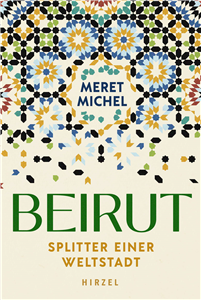
Beirut. Fragments of a metropolis
by Meret Michel
The tragic history of a cosmopolitan city: Beirut and the fate of LebanonOn August 4, 2020, the port of Beirut is shaken by a massive explosion that was to have an impact on the entire city: Hundreds of thousands of houses are destroyed, more than 200 people killed and thousands injured. This was not to be the first and last catastrophe for a country shaken by multiple crises. In this book, ten people tell their stories from their city - a city that has been the hub of the Middle East region for many decades. They live in the once glamorous district of Hamra or in the south of the city, which is controlled by Hezbollah. They are devout Muslims or atheists, come from the upper classes or have been struggling to survive for a long time.
-
Trusted Partner
 Humanities & Social SciencesJuly 2010
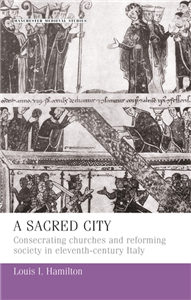
A sacred city
Consecrating churches and reforming society in eleventh-century Italy
by Louis Hamilton, Steve Rigby
The so-called Investiture Conflict was a watershed moment in the political life of the Latin West and the history of the papacy. Occurring at a time of rapid social change and political expansion, the eleventh-century reform movement became a debate centered on a ritual: the investment of bishops with the signs of their sacred and secular authority. The consecration of bishops, however, was only one of several contemporaneous conflicts over the significance of consecrations. Less well known is that which occurred over the dedication of churches. This book provides an examination of the consecration, placing the fundamental questions of the Gregorian Reform and Investiture Conflict back into their original liturgical framework. This context allows us to consider the symbolic richness of the liturgy that attracted large numbers of people. ;


