
Phileas Fogg Agency
Agency representing picture books projects, Foreign rights for publishers of picture books, representation of portfolios, contract consultancies.
View Rights Portal
Agency representing picture books projects, Foreign rights for publishers of picture books, representation of portfolios, contract consultancies.
View Rights Portal
The University of the Philippines Press (or the U.P. Press) is the official publishing house for all constituent units of the U.P. system, and is the first university press in the country. It is mandated to encourage, publish, and disseminate scholarly, creative, and scientific works that represent distinct contributions to knowledge in various academic disciplines, which commercial publishers would not ordinarily undertake to publish.
View Rights Portal
This book shows that Max Horkheimer's program of critical theory and his research throughout his career as a university professor and thinker are rooted in the cogency of philosophical questions and an in-depth knowledge of the historical development of philosophical problems in their close correlation with the socio-economic framework which shaped the 'bourgeois society' and the Modern Era. Indeed, his analyses of modern philosophers allows us to understand how the bourgeoisie seeks legitimisation and consolidation of its position, partly through the voices of its thinkers. In this way, in his investigation of early modern philosophy problems, and through constant dialogue with his colleagues Adorno, Marcuse, Pollock and Fromm, Horkheimer expresses a profound awareness of the critical force inherent in thought which, admittedly, is ever vulnerable to crisis and weakening, but which can always be reactivated.


— Philosophy for beginners — For philosophy enthusiasts — A pleasant read This truly brilliant book tells of the sometimes sublime, sometimes exhilarating efforts of philosophers to maintain their attitude in everyday life without forgetting the meaning of their own words – and how they ultimately failed to do so. The minor, sometimes bizarre events in the lives of the great philosophers fit so aptly in the picture of the respective philosophy that one has to assume they could have been conceived to keep the associated intellectual giant in a strange and memorable mood. A book of cheerful science, full of wit, narrative and linguistic eloquence.
 Trusted Partner
 Trusted Partner

Digital technologies promise efficiency and comfort, but the smoothness of platform services relies on the hidden social labour of those who keep the gig economy running. This book presents a comparative ethnography of young men making a living through digital technologies: selling mobile airtime in Abidjan, Côte d'Ivoire, and app-based delivery riders in Berlin, Germany. These case studies explore the significance of symbolic capital in urban youth's social existence and organisation of livelihood in the digital economy, and the technological mechanisms producing a new form of urban precarity. Globalized urban precarity in Berlin and Abidjan puts forward an original comparative approach to develop a global urban sociology for the digital era. It provides an innovative analytical toolbox that decentres discussions of precarity from the standard of a normal employment contract. With its focus on symbolic capital, the ethnography shows the consequences of the proliferating gig economy for status struggles among urban youth, and carefully embeds the densification of software and services into the socio-material relations on which these new urban infrastructures are built.
Trusted Partner

The musician, doctor and philosopher Axel Braig considers philosophy a little like the weather: he looks for the right clothes for every situation. Braig is primarily concerned with practical, effective things from the two-and-a-half millennia fund of (Western) thinking, such as helpful approaches in existential crises. In this book, he introduces us to philosophical thinkers from Plato to Montaigne to Levinas and Feyerabend. Braig not only shares his own philosophical biography, but above all encourages us to philosophise ourselves.
Trusted Partner
In this now classic textbook, Richard Kearney surveys the work of nineteen of this century's most influential European thinkers, and acts as an introduction to three major movements: phenomenology, critical theory and structuralism. This edition includes a chapter devoted to Julia Kristeva, whose work in the fields of semiotics and psychoanalytic theory has made a significant contribution to recent continental thought. ;
Trusted Partner
In fresh readings of Theodor W. Adorno, Giorgio Agamben, Hannah Arendt, Judith Butler, Barbara Cassin, Michel Foucault, Werner Hamacher, Martin Heidegger, and many more, Gotman rearticulates the foundations of broadly western philosophical thinking to carve out a shadowy space of recalcitrant thought 'in dark times'. At once indebted to the legacy of critique and enmeshed in affective and performative approaches to language, anti-theatricality, critical race theory and gender studies, she weaves a poetic mesh of intimate fragments, reflections on what it means to think and to write, as she puts it, after spectacle. Almost but not quite a straight work of philosophy, distinctly literary and performative in its anti-genre, this book twists and turns, swerves and cuts, to show the work of thinking as an intimate act - a theatre of angles and openings, adjacencies and reverberations.
Trusted Partner
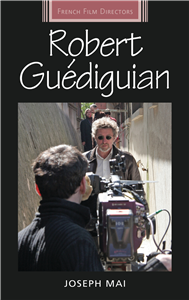
Intervening at the crossroads of philosophy, politics, and cinema, this book argues that the career of Robert Guédiguian is the result of one of the most original and coherent projects in contemporary French cinema: to make a committed, historically-conscious cinema, in a local space, over a long period of time, but most especially with friends. The account starts with in-depth consideration of friendship and its relation to philosophy, politics, time, and space. The book chronologically traces this project as it begins in Guédiguian's hometown, the Communist-leaning Marseille. It further unfolds through the political transformations of the 1980s Left and the local activism and utopias of the 1990s, and spreads into Guédiguian's varied explorations of genre and register. Close analysis is accompanied with historical and social contextualization, but also with a consistent return to the underlying, radical and philosophically rich project.
Trusted Partner


■ How many omega-3 fatty acids does salmon contain? ■ Which dairy product contains the most calcium? ■ How iron-rich is spinach, really? Whether calories, vitamins or amino acids – whether in field beans, bananas, eggs, chicken, parmesan cheese or onion – it is all here. The compact edition of the time-tested „large SFK [Souci/Fachmann/Kraut]“ offers tested data on over 70 ingredients in more than 360 foods, systematically structured according to food groups. This edition with thousands of values has been completely revised and updated by the Leibniz Institute of Food Systems Biology at the Technical University of Munich. Extra: 32 summary tables cover more than 300 other, less common foods and allow for targeted, clear comparisons. 16 orientation tables provide information about foods with particularly high or low amounts of ingredients. Nutritional values, energy content, main components and ingredients displayed in uniform systematics and a practical format – just look it up!
Trusted Partner

The Derby Philosophers focuses upon the activities of a group of Midland intellectuals that included the evolutionist and physician Erasmus Darwin, Rev. Thomas Gisborne the evangelical philosopher and poet, Robert Bage the novelist, Charles Sylvester the chemist and engineer, William George and his son Herbert Spencer, the internationally renowned evolutionist philosopher who coined the phrase 'survival of the fittest', and members of the Wedgwood and Strutt families. The book explores how, inspired by science and through educational activities, publications and institutions including the famous Derbyshire General Infirmary (1810) and Derby Arboretum (1840), the Derby philosophers strove to promote social, political and urban improvements with national and international consequences. Much more than a parochial history of one intellectual group or town, this book examines science, politics and culture during one of the most turbulent periods of British history.
Trusted Partner
Trusted Partner
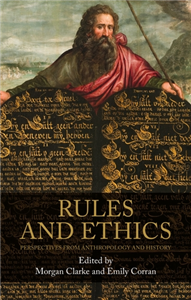
This book investigates the pronounced enthusiasm that many traditions display for codes of ethics characterised by a multitude of rules. Recent anthropological interest in ethics and historical explorations of 'self-fashioning' have led to extensive study of the virtuous self, but existing scholarship tends to pass over the kind of morality that involves legalistic reasoning. Rules and ethics corrects that omission by demonstrating the importance of rules in everyday moral life in a variety of contexts. In a nutshell, it argues that legalistic moral rules are not necessarily an obstruction to a rounded ethical self, but can be an integral part of it. An extended introduction first sets out the theoretical basis for studies of ethical systems that are characterised by detailed rules. This is followed by a series of empirical studies of rule-oriented moral traditions in a comparative perspective.
Trusted Partner

The revival of recognition theory has brought new energy to critical theory. In general terms, recognition theory aims to critically evaluate social structures against a standard of social freedom identified with norms of interaction which are freely recognised by all parties. Until now, attention has primarily focused on the categories and forms of recognition theory. However, the influence of contemporary French theory upon the development of theories of recognition has not yet received the consideration it merits. This collection outlines the current state of recognition theory, studies the impact of French theory, and uses French thought to identity aspects of the recognitive process which are often overlooked. Exploring French accounts of agonistic identity construction, vulnerability, power, ethical obligation and reflexive theory construction, this book supports the intentions of critical theory with heightened attentiveness to oppression in all of its forms.
Trusted Partner

The revival of recognition theory has brought new energy to critical theory. In general terms, recognition theory aims to critically evaluate social structures against a standard of social freedom identified with norms of interaction which are freely recognised by all parties. Until now, attention has primarily focused on the categories and forms of recognition theory. However, the influence of contemporary French theory upon the development of theories of recognition has not yet received the consideration it merits. The book takes up this task. With chapters by internationally recognised authors, the collection outlines the current state of recognition theory, studies the impact of French theory, and uses French thought to identity aspects of the recognitive process which are often overlooked. Exploring French accounts of agonistic identity construction, vulnerability, power, ethical obligation and reflexive theory construction, this book supports the intentions of critical theory with heightened attentiveness to oppression in all of its forms. ;
Trusted Partner


Welche Art von Realität hat race? Welche Rolle spielen Wahrnehmungs- und Wissensformen bei ihrer Konstruktion? Was ist und wie funktioniert Rassismus? Das sind die zentralen Fragen, denen sich seit zwei Jahrzehnten das Forschungsfeld der Critical Philosophy of Race widmet, welches insbesondere in den USA wirkmächtige akademische und außerakademische Debatten angestoßen hat. Aber auch hierzulande ist die philosophische Beschäftigung mit race und Rassismus wichtig geworden, wie aktuelle Ereignisse und Diskussionen zeigen. Der Band stellt die noch junge Disziplin vor und präsentiert – zum Teil in deutscher Erstübersetzung – die einschlägigen Texte, u. a. von Kimberlé Crenshaw, Kwame Anthony Appiah, Tommie Shelby, Linda Martín Alcoff und Sally Haslanger.
Trusted Partner

 Trusted Partner
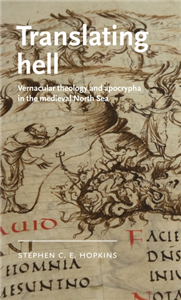
In the Middle Ages, hell was useful because it was vaguely defined. Canonical scriptures scarcely mention hell, leaving much to the imaginations of early Christians, who used it to sort out who belonged within the faith. This book explores how hell became a place for literary experiments with local challenges in theology and identity. Following the reception and transformations of two popular hell apocrypha, it argues that they served as this role because of their liminal textual authority. As noncanonical scriptures, apocrypha afforded medieval writers space to revise their hells (since they were not actually scripture), while also encouraging readers to revere those experiments as valid (since they seemed like scripture). The book brings together adaptations from early medieval England, Iceland, Ireland, and Wales, placing the early vernacular theologies of the North Sea in comparative conversation.
Trusted Partner

As artificial intelligence continues to transform modern warfare, the rapid development of AI-driven weaponry presents profound ethical, legal, and security challenges. Artificial Intelligence and International Security: Redefining Arms Races and Contemporary Warfare offers a critical examination of this emerging arms race, exploring issues of arms control, international law, diplomacy, and long-term security. Bringing together expert perspectives, this volume assesses the risks and implications of autonomous weapon systems while proposing solutions to ensure ethical AI deployment. Through a comprehensive analysis of this urgent issue, it seeks to contribute to global debates and inform policies that foster peace, stability, and the responsible use of AI in warfare.
Trusted Partner

It is said that all the ladies in Königsberg had a crush on Kant. How one coifs one’s intellectual giants, one’s occidental luminaries. Although at the time, Kant employed a Huguenot wigmaker to style his hair. Of whom not much is known. Except that he would have liked to get rid of the wigs and replace them with a short back and sides. And that he tried to comply practically with the idea of enlightenment. But with Kant’s sentences the great philosopher only ever addressed the enlightenment-driven rulers of Europe, and never the people of Africa, whose diff erent skin colour alone proved to Kant that they could not reach a higher level of civilisation on their own. But he and Kant only really fell out seriously over Esther, the pleasing and seductive maid...
Trusted Partner



