
Thekla Verlag
We are a publisher from Germany with a selected list of children's and young adult books.
View Rights Portal
We are a publisher from Germany with a selected list of children's and young adult books.
View Rights Portal
Theart Press is a South African publisher specialisingin inspirational books - including poetry, children's books and biography.
View Rights Portal

The twin towers of the World Trade Center were blown up on behalf of the US government. Vapour trails in the sky contain chemicals that cause disease. The moon landing never took place; it was staged in a studio. Many people believe in conspiracy theories: supporting evidence can seem plausible, until you look closely. To refute conspiracy theories often requires scientific and technical knowledge. Dr. Holm Gero Hümmler has precisely this sort of knowledge, and he is able to communicate it clearly for laypeople. In his book “Conspiracy Myths” he provides guidelines on how to deal with questionable facts. He gives valuable tips for personal research and shows how to deconstruct well-known conspiracy theories – from 9-11 to the “earthquake machine” HAARP, to chemtrails and “Nazi UFOs”. Sometimes, refutation is easy: you only need a sand pit and game pieces ...

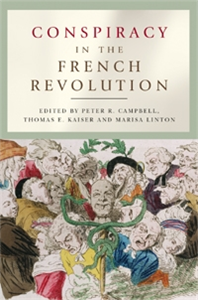
Conspiratorial views of events abound even in our modern, rational world. Often such theories serve to explain the inexplicable. Sometimes they are developed for motives of political expediency: it is simpler to see political opponents as conspirators and terrorists, putting them into one convenient basket, than to seek to understand and disentangle the complex motivations of opponents. So it is not surprising to see that just when the French Revolution was creating the modern political world, a constant obsession with conspiracies lay at the heart of the revolutionary conception of politics. The book considers the nature and development of the conspiracy obsession from the end of the old regime to the Directory. Chapters focus on conspiracy and fears of conspiracy in the old regime; in the Constituent Assembly; by the king and Marie Antoinette; amongst the people of Paris; on attitudes towards the peasantry and conspiracy; on Jacobin politics of the Year II and the 'foreign plot'; on counter-revolutionary plots and imaginary plots; on Babeuf and the 'conspiracy of equals'; and finally on fear of conspiracy as an intellectual impasse in the revolutionary mentality. Inspired by recent debates, this book is a comprehensive survey of the nature of conspiracy in the French Revolution, with each chapter written by a leading historian on the question. Each chapter is an original contribution to the topic, written however to include the wider issues for the area concerned. There is an emphasis throughout on clarity and accessibility, making the volume suitable for a wide readership as well as undergraduates and advanced researchers ;
 Trusted Partner

This book introduces a new framework for understanding how the radical right reimagines demographic change as an existential threat. Across Europe and the Americas, low birth rates, immigration, and gender equality are reframed as signs of civilisational decline. This volume explores how radical right actors mobilise fears around fertility, migration, race, family, and sexuality through narratives of crisis, ethnic purity, and control over borders, reproduction, and social norms. It examines conspiracy thinking fuelled by demographic anxiety to justify attacks on gender and sexual rights and reinforce exclusionary ideas of national belonging. Grounded in empirical case studies and interdisciplinary approaches, this book reveals how these narratives converge to reinforce dominance of a native, heteronormative, Christian population. In linking domains often treated separately, it provides a timely and critical perspective on the evolving logic of radical right politics worldwide.
Trusted Partner
Trusted Partner

'Realist film theory and cinema' embraces studies of cinematic realism and 19th century tradition, the realist film theories of Lukács, Grierson, Bazin and Kracauer, and the relationship of realist film theory to the general field of film theory and philosophy. This is the first book to attempt a rigorous and systematic application of realist film theory to the analysis of particular films. The book suggests new ways forward for a new series of studies in cinematic realism, and for a new form of film theory based on realism. It stresses the importance of the question of realism both in film studies and in contemporary life. Aitken's work will be of interest to scholars and advanced students of film studies, literary studies, media studies, cultural studies and philosophy.
Trusted Partner

This volume presents the first systematic account of Japanese international legal theory; edited by Japanese scholars, the volume traces thirteen influential scholars and spans over a century. It examines how theorists positioned outside international law's Western centre developed sophisticated frameworks to address tensions between Western modernity and their own experiences. The book's central contribution proposes 'conversation'-continuous engagement that respects differences between legal traditions-as an alternative to 'dialogue', which often reproduces existing hierarchies by assuming all perspectives can be reconciled. Through detailed intellectual biographies across six historical periods, contributors reveal how Japanese scholars strategically employed legal positivism, articulated transcivilizational perspectives, and developed concepts of normative multilateralism. Addressed at scholars of international law, legal theory, and comparative legal traditions, this volume demonstrates that the discipline's future requires genuinely reciprocal exchange where diverse perspectives can coexist productively.
Trusted Partner

Robert Louis Stevenson and theories of reading is both an exceptionally well researched study of the novelist, and well as an intriguing exploration of 'literary consumption'. Glenda Norquay presents fresh interpretations of Stevenson's literary essays, of major works including The Master of Ballantrae, and some of his more neglected fiction such as St Ives and The Wrecker, as well as illuminating our understanding of his role within debates over popular fiction, romance and reading pleasure. She offers an unusual combination of literary history and reception theory and argues that Stevenson both exemplified tensions within the literary market of his time and anticipated later developments in reading theory. By combining the study of nineteenth-century cultural politics with detailed analysis of his Scottish Calvinism, Stevenson is reassessed as both a Victorian and Scottish writer. The book is aimed at scholars, postgraduates and undergraduates with an interest in the nineteenth-century literary marketplace, in Scottish culture, and in reading /reception theory as well as Stevenson enthusiasts. ;
Trusted Partner

The market is growing for homeopathic remedies, diets and all kinds of miracle cures. Although homeopathic practitioners in Germany are largely unregulated, their supporters are growing in number. An industry has sprung up around alternative medicine that draws on the mistrust towards the pharmaceutical industry, medicine and the media. Many products are as harmless as they are ineffective – but some are dangerous or even lethal. Beate Frenkel investigates: where is the source of this boom? What role do conspiracy theories play as well as the influence of the internet? Why do politicians and the German Medical Association take so few preventive steps? Powerful examples are backed up with statements from doctors, patients and alternative medicine practitioners.
Trusted Partner
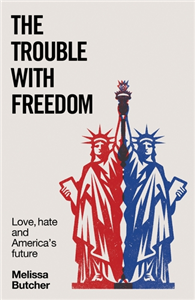
An illuminating account of how Americans have been divided by the very value that unites them. America today is being torn apart by the struggle over a single concept, deeply rooted in the country's sense of self: freedom. Battered by wave after wave of crises, ordinary people of all political persuasions have come to feel that their freedom is under threat - and with it, nothing less than the soul of the nation. In The trouble with freedom, journalist and researcher Melissa Butcher takes a trip into the ferociously polarised world of American politics, hoping to find out what's going on beneath the surface. Criss-crossing the country, she talks to a wide range of people: Democrat and Republican, gay and straight, urban and rural, immigrants, First Nations, Black, white, the incarcerated. What she discovers is that political conflict is often the outcome of very personal experiences of managing cultural change. Exploring the different ways freedom has been used to define what it means to be American, Butcher encounters anger and distrust, but also untapped possibilities for empathy and care.
Trusted Partner


What if you created your own conspiracy theory - and suddenly, everyone believed in it?What happens when a party gets so out of hand that some hungover students come up with a crazy idea? On a whim, Benny and his friends invent a harebrained story about the visit of aliens. They make up a secret symbol that they spray all over town and post them under fake social media accounts. Benny, Nando, Till, Darya and Liv are mostly curious to see what will happen and if people will believe their conspiracy theory - Liv is also excited to have a topic for her bachelor's thesis in psychology. But to their own surprise, more and more people believe in the story, especially when an anonymous user called "Octavio" starts dropping mysterious hints. Benny’s attempt to clear everything up soon puts his life in danger.Bestselling author (#1 for German YA) Ursula Poznanski's new thriller is a vigilant analysis of the mechanisms of modern superstition and a shocking thriller about a prank that becomes confusing reality.
Trusted Partner

The phenomenon of anti-scientific disinformation has been discussed in the recent past under the acronym FLICC (Fake experts, Logical fallacies, Impossible expectations, Cherry-picking and Conspiracy theories), especially as it pertains to the topic of climate change. What is generally missing however is a more comprehensive consideration of science denial in diff erent disciplines with a critical examination of the central arguments and a comparison of the parallels. Holm Gero Hümmler dedicates himself to this task in this readable and fact-orientated book on topics such as genetic engineering, mobile phone networks, radioactivity, and chips that are implanted under the skin for medical reasons.
Trusted Partner
 Trusted Partner
 Trusted Partner
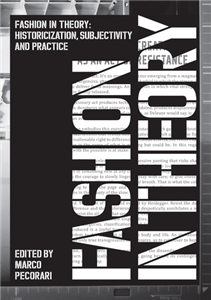
For Spring Summer 2020, Gucci showed a collection questioning identity politics and capitalism. Rather than the usual explanation of the material, shapes or inspirations behind the collection, the press release handed out at the show quoted the philosopher Michel Foucault and questioned the very nature of fashion itself. Gucci's press release reflects the popularization of critical theory in public discourse and fashion in particular. Philosophers, activists and academics are increasingly recruited to collaborate with luxury brands, and main-stream fashion brands have begun to adopt a discourse about politics and critical thinking using, in their communication, concepts such as "resistance", "gender fluidity", "national identity" or "cultural heritage" without accompanying these discourses with any form of political engagement or activism. Based on this intellectualization of the fashion industry and the recent proliferation of critical theory in fashion education, this book stresses the importance of rethinking the relationship between fashion and theory. Drawing together eleven chapters and four conversations by and with philosophers, cultural theorists, historians, anthropologists, activists, performers and designers, the book investigates both the theorization of fashion and the ways in which fashion offers a useful landscape in understanding the current state of critical theory today.
Trusted Partner


Kritische Theorie ist ein scharfsinniger Unsinn. Kritik – das bedeutet Prüfen, Unterscheiden, Urteilen. Theorie – das bedeutet eine Erkenntnisstruktur. Laut Kant bildet die Kritik darum eine »Propädeutik« zur Theorie. Wer beides zusammenschließt, verwickelt sich in einen Widerspruch. Von diesem scharfsinnigen Unsinn der kritischen Theorie handeln Gunnar Hindrichs’ Studien, die sich gegen die Meinung richten, kritische Theorie bilde ein sinnvolles Element im Gefüge der Wissenschaften. Ihr Geschäft, so Hindrichs, besteht vielmehr darin, die Krise des Sinns durchzuführen. In der vielfältigen Krise unserer Gegenwart aber wird ein Denken, das die Form der Krise in sich aufgenommen hat, auf neue Weise bedeutsam.
Trusted Partner
Trusted Partner


How will physiotherapy adapt to developments and challenges in the 21st century? New thinking while keeping the tried-and-tested: This is the motto adopted by eight physiotherapy researchers and practitioners in this handbook. Their contributions advance the theory for their discipline. They have met regularly at the so-called Berlin Salon since 2015: they analyze, discuss, and incorporate existing models and adopt a theory. They are all professionally qualified physiotherapists with further training in fields such as health science, education, and therapy management. They all suffer from the lack of theory in professional practice, and they have all experienced the diverse, often unconscious discourses in the field. Theoretical understanding and theory development require theory-driven reflection, the results of which have long since left the Berlin Salon and been adopted internationally. Target Group: Physiotherapists, healthcare scientists, university instructors
Trusted Partner
Trusted Partner

Die überwiegend historisch gerichteten Untersuchungen, die in diesem Band gesammelt sind, sollen die Idee einer in praktischer Absicht entworfenen Theorie der Gesellschaft entfalten und deren Status gegenüber Theorien anderer Herkunft abgrenzen.
Trusted Partner



