
Self-Counsel Press
Livres Canada Books
View Rights Portal

GAPSK and YLPSK are the standardized test of Chinese language for children from 3 to 15. From the world- renowned Peking University, GAPSK and YLPSK are certified and approved by the Chinese Ministry of Education as language proficiency measuring tool for children . GAPSK, YLPSK could be conducted on site or completely online. Come join over 100,000 students who taken the tests, contact us at info@gapsk.org. Find out more at www.ylpsk.org
View Rights Portal

The unimagined community proposes a reexamination of the Vietnam War from a perspective that has been largely excluded from historical accounts of the conflict, that of the South Vietnamese. Challenging the conventional view that the war was a struggle between the Vietnamese people and US imperialism, the study presents a wide-ranging investigation of South Vietnamese culture, from political philosophy and psychological warfare to popular culture and film. Beginning with a genealogy of the concept of a Vietnamese "culture," as the latter emerged during the colonial period, the book concludes with a reflection on the rise of popular culture during the American intervention. Reexamining the war from the South Vietnamese perspective, The unimagined community pursues the provocative thesis that the conflict, in this early stage, was not an anti-communist crusade, but a struggle between two competing versions of anticolonial communism.

Building a neighborly community, available for the first time in paperback, explores the political economy of post-cold war East Asian co-operation by examining the history of intra-regional co-operation, against the background of China's rise and Japan's relative decline, both real and perceived. The book in particular examines how East Asian states have dealt with the South China Sea as a region-wide security challenge and the imperative for self-help after the 1997 economic crisis. The book builds on the explanatory strength of analytical eclecticism, and ultimately concludes that China, South Korea, Japan, and ASEAN states have aimed for constructing a neighborly community. The fundamental differences between a neighborly community and the kind of community that has emerged in Europe and North America are that qualification for membership is not conditional, the process of routine interactions is itself one of reassurance, the aim of inter-state interactions is to foster acceptance of each other, and changes in a member's foreign policy behaviour are accepted. ;
 Trusted Partner

Blair's community is an exciting and timely book which challenges the accepted wisdom about the role of communitarian thought in the development of New Labour under Tony Blair. From the mid-1990s there has been a widespread view that Labour policies have reflected, or even been influenced by, the work of communitarian writers like Amitai Etzioni and John Macmurray, and philosophers such as Alasdair MacIntyre and Michael Sandel. The book begins by establishing that such a view was widely, and frequently unquestioningly, held, in both popular and academic forums. It then identifies reasons for the persistence of this impression, the evidence on which it was based, and the understandings of communitarianism used by commentators. The book argues that existing accounts of 'New Labour's communitarianism' fail to present an accurate picture because they are - in some cases explicitly - working with a generic or composite conception of communitarianism which bears little relation to the work of the communitarian writers whose names have been associated with the party. ;
Trusted Partner

This book offers an original interpretation of Britain's relationship with Europe over a 25 year period: 1959-84 and advances the argument that the current problems over EU membership resulted from much earlier political machinations. This evidence based account of the seminal period analyses the applications for EEC membership, the 1975 referendum, and the role of the press. Was the British public misled over the true aims of the European project? How significant was the role of the press in changing public opinion from anti, to pro Common Market membership? Why, after over 40 years since Britain became a member of the European community, does the issue continue to deeply divide not only the political elite, but also the British public? These, and other pertinent questions are answered in this timely book on a subject that remains topical and highly controversial.
Trusted Partner


There are many things in life that we are (more or less) free to choose: our circle of friends, our workplace, our place of residence. However, we have to take some communities as they come: We cannot choose our family or our neighbours, for example. Why this does not only lead to the much-vaunted idyllic sense of belonging and what tensions forced social relationships can cause: This is the subject of this fascinating collection of essays by Bernd Imgrund. It sheds light on a piece of social history that we all know from our own experience: who hasn't had an argument with their immediate neighbour or made fun of the residents of the neighbouring district? But it is by no means only negative aspects that characterise neighbourly relations. Pride in one's neighbourhood, help within a village community: the many advantages of a social community, its importance and its representation in art and literature have also found their way into this book.
Trusted Partner

A compilation of case studies illustrating the use of arts, culture and other community assets individuals and communities used to cope and develop resilience during the Covid-19 pandemic, demonstrating valuable lessons that might help us develop resilience in similar future crises.
Trusted Partner
 Trusted Partner
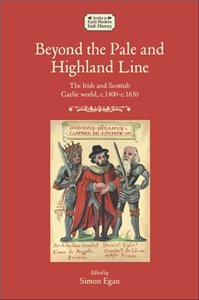
This book offers important new insights into the history and culture of the Gaelic-speaking world from the mid-fifteenth century through to the reign of James VI and I. Throughout this period, the reach of the English and Scottish crowns within these western regions was limited. The initiative lay with local communities and royal power was contingent upon negotiating with well-established and largely autonomous aristocratic lineages. Moreover, events within this western world could exert a powerful, often unpredictable, influence upon the affairs of the wider archipelago. Using a series of case studies, this collection examines the evolving relationship between Ireland and Scotland in rich detail. It demonstrates how this world interacted with the encroaching English and Scottish states and underlines the importance of paying closer attention to this neglected area of Irish and British history.
Trusted Partner

This volume is timely in that it explores key issues which are currently at the forefront of the EU's relations with its eastern neighbours. It considers the impact of a more assertive Russia, the significance of Turkey, the limitations of the Eastern Partnership with Belarus and Moldova, the position of a Ukraine in crisis and pulled between Russia and the EU, security and democracy in the South Caucasus. It looks at the contested nature of European identity in areas such as the Balkans. In addition it looks at ways in which the EU's interests and values can be tested in sectors such as trade and migration. The interplay between values, identity and interests and their effect on the interpretation of europeanisation between the EU and its neighbours is a core theme of the volume.
Trusted Partner
Trusted Partner
Trusted Partner
 Trusted Partner
 Trusted Partner
Trusted Partner
Trusted Partner
The first book-length analysis of EU health policy since the COVID-19 pandemic, encompassing the creation of the European Health Union and the Recovery and Resilience Facility, this volume offers a timely and accessible analysis of the EU's health policy, institutions and governance. Focusing on the EU's health objectives and how they are pursued, it offers a detailed overview of the development of EU health policy, and five in-depth case studies of specific policy fields. The book will appeal to academic and policy audiences interested in the EU's health objectives and how it pursues them.
Trusted Partner
 Trusted Partner
 Trusted Partner
This highly original book constitutes one of the first attempts to examine the problem of distributive justice in the European Union in a systematic manner. João Labareda argues that the set of shared political institutions at EU level, including the European Parliament and the Court of Justice of the EU, generate democratic duties of redistribution among EU citizens. Furthermore, the economic structure of the EU, comprising a common market, a common currency and a free-movement area, triggers duties of reciprocity among member states. The responsibilities to fulfil these duties, Labareda argues, should be shared by the local, national and supranational levels of government. Not only should the EU act as a safety net to the national welfare systems, applying the principle of subsidiarity, but common market and Eurozone regulations should balance their efficiency targets with fair cooperation terms. The concrete policy proposals presented in this book include a threshold of basic goods for all EU citizens, an EU labour code, a minimum EU corporate tax rate and an EU fund for competitiveness. Labarada argues that his proposals match the political culture of the member states, are economically feasible, can be translated into functioning institutions and policies and are consistent with the limited degree of social solidarity in Europe. This book is a major contribution to the understanding of what a just Europe would look like and what it might take to get us there. This book is relevant to United Nations Sustainable Development Goal 10, Reduced inequalities
Trusted Partner

This book offers a fresh look at some of the most challenging dilemmas of European integration and proposes innovative solutions to them by building on perspectives and insights from twelve classical authors in the history of political thought. The book simultaneously offers an original introduction to critical debates in EU studies and makes key political thinkers more accessible to contemporary readers by presenting present-day policy applications of their doctrines. While each chapter discusses a specific challenge for the EU, five key themes appear recurrently throughout the book: (i) the prospects for peace in Europe; (ii) the conditions for an inclusive EU democracy; (iii) socioeconomic inequalities in the EU; (iv) strategies to promote political change in Europe; and (v) the requisites for a fully-fledged EU citizenship. The authors discussed are Plato, Aristotle, Augustine, Machiavelli, Hobbes, Rousseau, Kant, Wollstonecraft, Marx, Arendt, Rawls and hooks.
Trusted Partner

Charting a collaborative art-based project using carpet-making skills and the industrial heritage of the region, the book investigates how a cleaved ex-industrial community used arts methodologies as a cohesion strategy. Drawing on images from the company's archives, the book mines the history of Firths Carpets Limited, a firm that carpeted interiors across the globe from the mid-1800s. Women's labour and tastes were business critical to the production and sale of Firths carpets. Drawing on the author's personal connection to the village, an ethnographic sensibility and novel research techniques, ex-worker responses to a village radically altered by ruination are explored. Ex-workers felt nostalgia for the dignity of work and a sense of homesickness in a village ghosted by industrial spectres of the past. Threads of Labour argues that left-behind deindustrialised places require acts of social re-making if their communities are to survive.



