
Your Search Results

-
Promoted Content

 Business, Economics & LawApril 2026
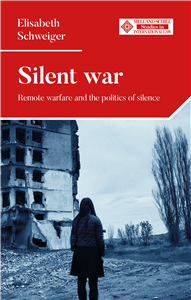
Silent war
Remote warfare and the politics of silence
by Elisabeth Schweiger
Silent war reveals how silence functions as a crucial but often overlooked force in enabling and sustaining military violence. While war propaganda and discursive justifications have received significant attention, this book argues that military operations also depend on a hidden infrastructure of silence - through omission, secrecy, and tacit consent. Focusing on drone warfare and colonial counterinsurgency, it explores how regimes of (not) listening shape what can and cannot be heard. Drawing on a multidisciplinary framework and extensive empirical research - including analysis of Western parliamentary debates, UN documents, media coverage, and archival records - Silent war traces the enduring role of silence in legitimising imperial violence. It reframes silence not as absence but as a constitutive force in global power relations, offering critical tools for interrogating dominant frameworks of military violence and opening space for listening otherwise.
-
Promoted Content
 Humanities & Social SciencesMay 2026
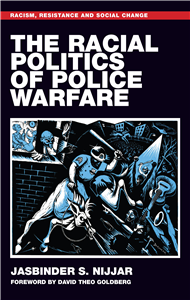
The racial politics of police warfare
by Jasbinder S. Nijjar
Amid renewed anti-racist resistance to violent policing, The racial politics of police warfare unpacks the racisms that rationalise militarised policing in contemporary Britain. Jasbinder S. Nijjar shatters prevailing myths about British police as an impartial public service, by revealing it as an institution where racism and war reinforce one another. In examining flagship anti-gang and counter-terrorism policies and practices, the book offers a unique analysis of the relationship between anti-black and anti-Muslim racisms, to demonstrate how racialised populations are institutionalised as common enemies of modernity. Combining perspectives from sociology, history, criminology and social policy, Nijjar illustrates how British policing defends law and order and national security from the perceived threat of race through hyper-intrusive, pre-emptive and deathly measures. Accordingly, he gives a fresh take on resisting racial police warfare, calling for strategies that are at once political, collective, anti-militaristic and abolitionist.
-
 Trusted Partner
 Humanities & Social SciencesApril 2026
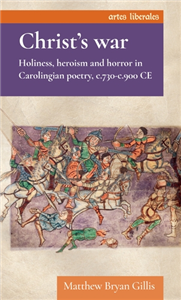
Christ’s war
Holiness, heroism and horror in Carolingian poetry, c.730-c.900 CE
by Matthew Bryan Gillis
Christ's war examines Carolingian holy war from the forging of their empire in the eighth century to its dissolution in the late ninth century during the Northmen's attacks. It argues that the Franks understood their wars to be holy when their soldiers were without sin and, therefore, were holy themselves. God heard their prayers as they begged for divine aid, and he helped them overcome and slaughter their foes. Therefore, the Carolingian vision of holy war differed from the pious, apocalyptic military pilgrimages of the subsequent Crusades. Latin poetry serves as an important source in this study for understanding holy war, including how poets dramatized glorious victories or horrifying defeats for their audiences. The book offers important insights into the religious nature of Frankish warfare, while also contributing a fresh and innovative perspective on medieval holy war overall.
-
Trusted Partner
 Humanities & Social SciencesDecember 2016
The role of terrorism in twenty-first-century warfare
by Susanne Martin, Max Taylor, Mark Currie, John Hogan, Leonard Weinberg
-
Trusted Partner
 Literature & Literary StudiesOctober 2025
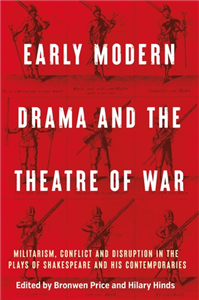
Early modern drama and the theatre of war
Militarism, conflict and disruption in the plays of Shakespeare and his contemporaries
by Bronwen Price, Hilary Hinds
This volume explores the disruptive effects of militarism, war and social unrest in early modern drama. Engaging with Simon Barker's seminal work on dramatic representations of war and militarism, contributors highlight what often lies hidden beneath the surface of martial narratives, treating them as formative interventions in contemporary discourses, whether in justifying war, excluding dissident voices or shaping cultural identities. Discussions include new examinations of militarism, the figure of the soldier and early modern theories of war in Shakespearean tragedy, history and comedy, alongside antimasque and dramatic satire by lesser-known playwrights. The essays investigate how ideas of war underpin emerging concepts of gender, leadership, marriage and the family, as well as the continuing mobilisation of Shakespearean drama in the context of modern armed conflict. Together, they offer rich new contributions to the current lively critical debates on this topic.
-
Trusted Partner
 June 2025
Proxy war in Afghanistan
The politics of state-wrecking
by Abbas Farasoo
This book provides a compelling analysis of proxy warfare and its far-reaching implications for statehood, focusing on the conflict in Afghanistan. Introducing the innovative concept of "state-wrecking," it bridges theory and practice to unravel how external support for insurgent actors fuels violence, undermines territorial control and sovereignty, intensifies violence, and dismantles political legitimacy. The work shifts the discourse on proxy wars from the strategies of global powers to the procedural and structural impacts within target states. Grounded in rigorous empirical research, including interviews, archival data, and conflict analysis, the book critically examines the Pakistan-Taliban nexus and the limitations of US-led interventions. By blending a robust theoretical framework with in-depth case studies, it reveals how proxy dynamics shape conflicts, disrupt governance, and challenge international security. This is an essential resource for those seeking to understand the entanglements of modern warfare and the fragility of states under external influence.
-
Trusted Partner
 Business, Economics & LawMarch 2008
Cultural warfare and trust
Fighting the Mafia in Palermo
by Carina Gunnarson, Kim Stringer
Cultural warfare and trust: fighting the Mafia in Palermo concentrates on a central issue in research on democratic processes: the development of generalised trust. The existence of generalised trust and confidence in a society is decisive for economic development and an effective democracy. Is it possible to fight persistent values of distrust and non-cooperation? Is it possible to support the development of generalised trust through public action and education? The book addresses these questions by examining political efforts to combat Palermo's Mafia-controlled heritage and to turn a tradition of non-cooperation and distrust into cooperation and trust. In particular, it focuses on the school program launched in Palermo during the mid-1990s, which was designed to break the Mafia's territorial and mental control. Combining theories on social capital and civic education, the author presents and analyses new quantitative and qualitative research carried out in seven public schools in Palermo. This book will be valuable to students, academics and researchers interested in social capital and trust, Italian politics, civic education, organised crime, local government and democratic practice. ;
-
Trusted Partner
 Humanities & Social SciencesMarch 2017
Popular imperialism and the military, 1850-1950
by John M. MacKenzie
Colonial war played a vital part in transforming the reputation of the military and placing it on a standing equal to that of the navy. The book is concerned with the interactive culture of colonial warfare, with the representation of the military in popular media at home, and how these images affected attitudes towards war itself and wider intellectual and institutional forces. It sets out to relate the changing image of the military to these fundamental facts. For the dominant people they were an atavistic form of war, shorn of guilt by Social Darwinian and racial ideas, and rendered less dangerous by the increasing technological gap between Europe and the world. Attempts to justify and understand war were naturally important to dominant people, for the extension of imperial power was seldom a peaceful process. The entertainment value of war in the British imperial experience does seem to have taken new and more intensive forms from roughly the middle of the nineteenth century. Themes such as the delusive seduction of martial music, the sketch of the music hall song, powerful mythic texts of popular imperialism, and heroic myths of empire are discussed extensively. The first important British war correspondent was William Howard Russell (1820-1907) of The Times, in the Crimea. The 1870s saw a dramatic change in the representation of the officer in British battle painting. Up to that point it was the officer's courage, tactical wisdom and social prestige that were put on display.
-
Trusted Partner
 Business, Economics & LawJuly 2025
Medical care, humanitarianism and intimacy in the long Second World War, 1931-1953
by Marie-Luce Desgrandchamps, Laure Humbert, Bertrand Taithe, Raphaële Balu
This book offers a micro-global history of humanitarianism and medical care during the 'long' Second World War, which challenges the traditional and Eurocentric chronological boundaries of 1939/1945. It takes as its starting point the Japanese invasion of Manchuria in 1931, which led to the progressive dislocation of the League of Nations, with the Japanese, German and Soviet departures in the 1930s. It ends with the termination of the Korean War in 1953, and the subsequent dismantlement of the first United Coalition and UN Peace enforcement operation. It considers the slow, messy and ambivalent transformation of humanitarian actors' relations to the suffering of distant others through a study of humanitarian encounters, practices, spaces and affects. Paying close attention to a variety of actors, such as French colonial doctors, Swiss ICRC delegates, Egyptian relief workers, Chinese-style physicians, Peruvian and Ecuadorian nurses or American member of the Unitarian Service Committee, the book provides a more holistic story of humanitarianism.
-
Trusted Partner
-
Trusted Partner
-
Trusted Partner
 Humanities & Social SciencesMarch 2026
Artificial Intelligence and international security
Redefining arms races and contemporary warfare
by Arshin Adib-Moghaddam, Alena Vieira, Mohammad Eslami
As artificial intelligence continues to transform modern warfare, the rapid development of AI-driven weaponry presents profound ethical, legal, and security challenges. Artificial Intelligence and International Security: Redefining Arms Races and Contemporary Warfare offers a critical examination of this emerging arms race, exploring issues of arms control, international law, diplomacy, and long-term security. Bringing together expert perspectives, this volume assesses the risks and implications of autonomous weapon systems while proposing solutions to ensure ethical AI deployment. Through a comprehensive analysis of this urgent issue, it seeks to contribute to global debates and inform policies that foster peace, stability, and the responsible use of AI in warfare.
-
Trusted Partner
Humanities & Social SciencesJune 2025
Humanitarianism and the Greater War, 1914–24
by Elisabeth Piller, Neville Wylie
-
Trusted Partner
 Humanities & Social SciencesJanuary 2022
Exiting war
The British Empire and the 1918–20 moment
by Romain Fathi, Margaret Hutchison, Andrekos Varnava, Michael Walsh, Alan Lester
Exiting war explores a particular 1918-20 'moment' in the British Empire's history, between the First World War's armistices of 1918, and the peace treaties of 1919 and 1920. That moment, we argue, was a challenging and transformative time for the Empire. While British authorities successfully answered some of the post-war tests they faced, such as demobilisation, repatriation, and fighting the widespread effects of the Spanish flu, the racial, social, political and economic hallmarks of their imperialism set the scene for a wide range of expressions of loyalties and disloyalties, and anticolonial movements. The book documents and conceptualises this 1918-20 'moment' and its characteristics as a crucial three-year period of transformation for and within the Empire, examining these years for the significant shifts in the imperial relationship that occurred and as laying the foundation for later change in the imperial system.
-
Trusted Partner
 Humanities & Social SciencesJuly 2025
Joining up in the Second World War
Enlistment, masculinity and the memory of the Great War
by Joel Morley
This book connects the First and Second World Wars. It uses oral histories and Mass Observation material to explore men's attitudes to Second World War enlistment and the relationship they perceived between military service and masculinity, and how these were influenced by understandings of the First World War. Locating the cultural legacy of First World War in the subjectivities of men who participated in the Second World War demonstrates the breadth of sources that informed men's understandings of the First World War in interwar Britain. Its cultural legacy was omnipresent and diverse, and informed young men's attitudes and service preferences, but it reinforced Edwardian conceptions of wartime masculinity as often as it undermined them. Two decades after the First World War ended, they remained resilient in the subjective understandings of men who grew up in the Great War's shadow.
-
Trusted Partner
 Humanities & Social SciencesFebruary 2025
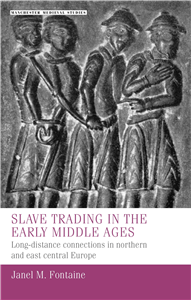
Slave trading in the Early Middle Ages
Long-distance connections in northern and east central Europe
by Janel M. Fontaine
This book examines slave trading in northern and eastern central Europe from the seventh century through the eleventh century, tracing its growth, climax, and decline. Demand from the Islamic world in the ninth and tenth centuries prompted changes in warfare, trade logistics, and administrative responses to slavery in the slaving zones centred on the British Isles and the Czech lands. This study establishes slave trading as a core driver of connectivity and presents a model for this practice in politically fragmented areas of Europe.
-
Trusted Partner
 Humanities & Social SciencesMarch 2007
The naval war film
Genre, history and national cinema
by Jonathan Rayner
This book undertakes a unique, coherent and comprehensive consideration of the depiction of naval warfare in the cinema. The films under discussion encompass all areas of naval operations in war, and highlight varying institutional and aesthetic responses to navies and the sea in popular culture. The examination of these films centres on their similarities to and differences from the conventions of the war genre and seeks to determine whether the distinctive characteristics of naval film narratives justify their categorisation as a separate genre or sub-genre in popular cinema. The explicit factual bases and drama-documentary style of many key naval films, such as In Which We Serve, They Were Expendable and Das Boot, also requires the consideration of these films as texts for popular historical transmission. Their frequent reinforcement of establishment views of the past, which derives from their conservative ideological position towards national and naval culture, makes these films key texts for the consideration of national cinemas as purveyors of contemporary history as popularly conceived by filmmakers and received by audiences. ;
-
Trusted Partner
-
Trusted Partner

 May 2022
In the Shadow of War
Diary notes from Ukraine
by Christoph Brumme
"What can you learn in war? Do you become numb, do you get used to it at some point? Does war make you "hard", uncaring, above pain? No. These are just clichés. Every day brings new horrors. At best, one learns for some time to suppress strong feelings, because to give in to them would weaken one's life instinct." In a very stirring and shocking, but sometimes humorous language, Christoph Brumme tells of the situation in Ukraine, the everyday life of his family and friends, of fears, longings and political assessments. The diary entries of the war and the resistance of the Ukrainians, starting from the first signs of the impending war in mid-January 2022 until the printing of this book, 1st May 2022, impressively bear witness to the brutality of these events.
-
Trusted Partner



