
S&P Literary - Publishing Division of Sosia & Pistoia SRL
Chiara Melloni Irene Pepiciello
View Rights Portal
Chiara Melloni Irene Pepiciello
View Rights Portal
Crimson Dragon Publishing carries books that encourage readers of all ages by sparking the imagination. While we focus on the fantasy and science fiction genres, we also carry illustrated books for young readers that focus on social-emotional skills development and fictionalized non-fiction.
View Rights Portal
Critical theory and Independent Living explores intersections between contemporary critical theory and disabled people's struggle for self-determination. The book highlights the affinities between the Independent Living movement and studies of epistemic injustice, biopower, and psychopower. It discusses in depth the activists' critical engagement with welfare-state paternalism, neoliberal marketisation, and familialism. This helps develop a pioneering comparison between various welfare regimes grounded in Independent Living advocacy. The book draws on the activism of disabled people from the European Network on Independent Living (ENIL) by developing case studies of the ENIL's campaigning for deinstitutionalisation and personal assistance. It is argued that this work helps rethink independence as a form of interdependence, and that this reframing is pivotal for critical theorising in the twenty-first century.

In the wake of 9/11, the Asian crisis and the 2004 tsunami, traditional analytical frameworks are increasingly unable to explain how individuals and communities are rendered insecure, or advance individual, global or environmental security. In the Asia-Pacific, the accepted wisdom of realism has meant that analyses rarely move beyond the statist, militarist and exclusionary assumptions that underpin traditional realpolitik. This innovative new book challenges these limitations and addresses the missing problems, people and vulnerabilities of the Asia-Pacific region. It also turns a critical eye on traditional interstate strategic dynamics. Critical security in the Asia-Pacific applies both a critical theoretical approach that interrogates the deeper assumptions underpinning security discourses, and a human-centred policy approach that focuses on the security, welfare and emancipation of individuals and communities. Leading Asia-Pacific researchers combine to apply these frameworks to the most pressing issues in the region, from the Korean peninsula to environmental change, Indonesian conflict, the 'war on terror' and the plight of refugees. The result is a sophisticated and accessible account of often-neglected realities of marginalization in the region, and a compelling argument for the empowerment and security of the most vulnerable.
 Trusted Partner
 Trusted Partner


Culture and diversity are both challenge and opportunity. This volume looks at what psychologists are and can be doing to help society meet the challenges and grasp the opportunities in education, at work, and in clinical practice. The increasingly international and globalized nature of modern societies means that psychologists in particular face new challenges and have new opportunities in all areas of practice and research. The contributions from leading European experts cover relevant intercultural issues and topics in areas as diverse as personality, education and training, work and organizational psychology, clinical and counselling psychology, migration and international youth exchanges. As well as looking at the new challenges and opportunities that psychologists face in dealing with people from increasingly varied cultural backgrounds, perhaps more importantly they also explain and discuss how psychologists can deepen and acquire the intercultural competencies that are now needed in our professional lives. Target Group: psychotherapists / clinical psychologists / mental health professionals
Trusted Partner
The book addresses what is political in critical theory and which aspects, arguments or notions of critical theory maintain political significance for the 20th and the 21st centuries. The collection of essays comprises itself of a series of clear and critical perspectives that analyze the extent to which critical theory relates political argument to modern societies and, thereby, exerts a critique of the multiple social and political phenomena of late modernity. The contributors focus on a multiplicity of universal phenomena such as globalization, multiple crises, late capitalism and the social role of the sciences, and posit some novel criticism of the contemporary social sphere, as it is situated within the wider system of global capitalism. They also present a plurivalent critique that links arguments in Marxism and Freud to all three generations of critical theory.
Trusted Partner
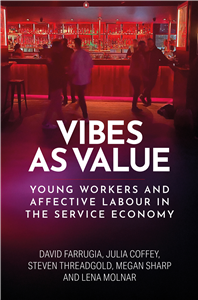
Vibes as value explores the relationship between subjectivity, labour and value in the hospitality industry, and thereby how youth, gender, sexuality, race and social class are embodied and made productive in the service economy. It shows that the key product of hospitality labour is 'vibes', or moments of enjoyment and relationality co-produced through exploitative relationships amongst workers and consumers. In the process, the book theorises hospitality as a form of affective labour organised through the normative and structural relations of precarious service work. It shows how identity construction produces value within the highly unequal social terrain of the service economy, and how hospitality labour enacts hierarchies of value extending far beyond the limits of the industry itself.
Trusted Partner

This book offers a unique and timely reading of the early Frankfurt School in response to the recent 'affective turn' within the arts and humanities. Resisting the overly rationalist tendencies of political philosophy, it argues that critical theory actively cultivates a powerful connection between thinking and feeling, and rediscovers a range of often neglected concepts that were of vital importance to the first generation of critical theorists, including melancholia, hope, (un)happiness, objects and mimesis. In doing so, it brings the dynamic work of Walter Benjamin, Theodor Adorno, Ernst Bloch and Siegfried Kracauer into conversation with more recent debates around politics and affect. An important intervention in the fields of affect studies and social and political thought, Critical theory and feeling shows that sensuous experience is at the heart of the Frankfurt School's affective politics.
Trusted Partner

Populism is a powerful force today, but its full scope has eluded the analytical tools of both orthodox and heterodox 'populism studies'. This book provides a valuable alternative perspective. It reconstructs in detail for the first time the sociological analyses of US demagogues by members of the Frankfurt School and compares these with contemporary approaches. Modern demagogy emerges as a key under-researched feature of populism, since populist movements, whether 'left' or 'right', are highly susceptible to 'demagogic capture'. The book also details the culture industry's populist contradictions - including its role as an incubator of modern demagogues - from the 1930s through to today's social media and 'Trumpian psychotechnics'. Featuring a previously unpublished text by Adorno on modern demagogy as an appendix, it will be of interest to researchers and students in critical theory, sociology, politics, German studies, philosophy and history of ideas, as well as all those concerned about the rise of demagogic populism today.
Trusted Partner
Critical theory and dystopia offers a uniquely rich study of dystopian fiction, drawing on the insights of critical theory. Asking what ideological work these dark imaginings perform, the book reconstructs the historical emergence, consolidation and transformation of the genre across the twentieth century and into our own, ranging from Yevgeny Zamayatin's We (1924) and Aldous Huxley's Brave New World (1932) to Anthony Burgess's A Clockwork Orange (1963) and Suzanne Collins's Hunger Games series (2000s and 2010s). In doing so, it reveals the political logics opened up or neutered by the successive moments of this dystopian history.
Trusted Partner


Make or break? Advertisements repeatedly praise „plant-based“ products or promise new mobility through ointments and dietary supplements. The tools of evidence-based pharmacy help to answer the question „Does this really help?“ This practical guide offers tips and explanations on how to be confident of finding the relevant scientific literature, critically evaluate clinical studies, and interpret therapeutic results. The book provides guidance on how to classify the quality of reviews and meta-analyses and assess the reliability of guidelines in everyday healthcare practice. Practical examples help to avoid pitfalls in evaluation and to understand the statistical details. An extensive appendix with technical terms, checklists, important institutions of evidence-based medicine and further sources completes the book.
Trusted Partner
 Trusted Partner

This volume in the Critical Theory and Contemporary Society series explores the arguments between critical theory and epistemology in the twentieth and twenty-first centuries. Focusing on the first and second generations of critical theorists and Luhmann's systems theory, the book examines how each approaches epistemology. It opens by looking at twentieth-century epistemology, particularly the concept of lifeworld (Lebenswelt). It then moves on to discuss structuralism, poststructuralism, critical realism, the epistemological problematics of Foucault's writings and the dialectics of systems theory. This unique work takes a comparative look at structuralism and post-structuralism's epistemological theory with special reference to scientific reason. It also investigates Luhmann's works in epistemology. The aim is to explore whether the focal point for epistemology and the sciences remain that social and political interests actually form a concrete point of concern for the sciences as well.
Trusted Partner
This book explores radical dissent from orthodox mainstream economics, and sets out a theoretically grounded vision for the emerging paradigm of social ecological economics. At the heart of this paradigmatic shift lies an acknowledgement of the inextricable embeddedness of economies in biophysical reality and social structure. The struggle for this transformative vision unfolds through a critical examination of mainstream environmental thought, followed by a nuanced evaluation of contributions from Marxists, socialists, critical institutionalists, feminists and Post-Keynesians grappling with the urgent environmental crisis. Synthesising insights from these diverse and heterodox schools, the book navigates the philosophical underpinnings of science, embracing a critical realist approach that challenges not only mainstream economic thought but also eclectic pluralism, relativism and strong constructionism. The question of what constitutes revolutionary science is explored in light of works by Kuhn, Schumpeter and Neurath, emphasising the pivotal role of values and ideology in works from Marx to Gramsci. Building on these radical and philosophical foundations, the book articulates a preanalytic vision of social ecological economics, dismantling entrenched notions of growth and efficiency in favour of a framework centered on social provisioning and needs embedded in ethics. In a thought-provoking conclusion, the book applies its analytical lens to the multiple crises of modernity within industrialised capital-accumulating economies. An agenda for social ecological transformation toward diverse alternative economies emerges, providing a compelling call to action in the face of contemporary challenges.
Trusted Partner

This book tells the story of critical avant-garde design in Japan, which emerged during the 1960s and continues to inspire designers today. The practice communicates a form of visual and material protest drawing on the ideologies and critical theories of the 1960s and 1970s, notably feminism, body politics, the politics of identity, and ecological, anti-consumerist and anti-institutional critiques, as well as the concept of otherness. It also presents an encounter between two seemingly contradictory concepts: luxury and the avant-garde. The book challenges the definition of design as the production of unnecessary decorative and conceptual objects, and the characterisation of Japanese design in particular as beautiful, sublime or a product of 'Japanese culture'. In doing so it reveals the ways in which material and visual culture serve to voice protest and formulate a social critique.
Trusted Partner

In the current European dilemma as to whether to increase diversity policies or move towards an assimilationist policy, it is difficult to know what the Spanish approach is. This book argues that Spain represents a context of "multiple diversity", where two frameworks interact: an old, unresolved one, arising from democratic transition, and a new one due to immigration. This explains the Spanish practical approach, where the recent past plays the role of an iron cage, limiting institutional innovation and change. The author proposes a heuristic model, to better understand the "Spanish laboratory of diversities". In order to go through these steps, the author analyses three case studies, coming from the political/social agenda: education, workplace, and political rights. At the end, the reader will have an empirically informed and theoretically founded overview on how Spain is managing diversity. This book is timely for a wide range of academic and professional readers. ;
Trusted Partner
Trusted Partner
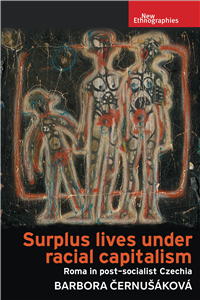
Surplus lives under racial capitalism is a critical contribution to the study of racial capitalism. It theorises the link between political economy, anti-Roma racism and modern forms of white supremacy in East Central Europe. The book shows how the introduction of capitalism in the 1990s overlapped with the rise of racialised disposability of Roma workers. Since then, their surplusing recurrently comes into sharp relief during the time of crisis. Surplus lives under racial capitalism is built on an investigation of how race and class structure the Czech labour regime and how they form a single site of struggle. One which binds workers across racialised divisions as surplusing continuously expands.
Trusted Partner
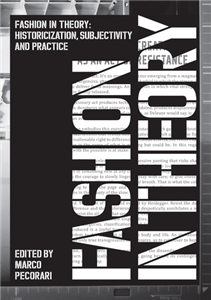
For Spring Summer 2020, Gucci showed a collection questioning identity politics and capitalism. Rather than the usual explanation of the material, shapes or inspirations behind the collection, the press release handed out at the show quoted the philosopher Michel Foucault and questioned the very nature of fashion itself. Gucci's press release reflects the popularization of critical theory in public discourse and fashion in particular. Philosophers, activists and academics are increasingly recruited to collaborate with luxury brands, and main-stream fashion brands have begun to adopt a discourse about politics and critical thinking using, in their communication, concepts such as "resistance", "gender fluidity", "national identity" or "cultural heritage" without accompanying these discourses with any form of political engagement or activism. Based on this intellectualization of the fashion industry and the recent proliferation of critical theory in fashion education, this book stresses the importance of rethinking the relationship between fashion and theory. Drawing together eleven chapters and four conversations by and with philosophers, cultural theorists, historians, anthropologists, activists, performers and designers, the book investigates both the theorization of fashion and the ways in which fashion offers a useful landscape in understanding the current state of critical theory today.
Trusted Partner
Is deafness a disability to be prevented or the uniting trait of a cultural community to be preserved? Combining the history of eugenics and genetics with deaf and disability history, this book traces how American heredity researchers moved from trying to eradicate deafness to embracing it as a valuable cultural diversity. It looks at how deafness came to be seen as a hereditary phenomenon at all, how eugenics became part of progressive reform at schools for the deaf, and how, from the 1950s on, more sociocultural approaches to disability and minority led to new cooperative projects between professionals and local signing deaf communities. Analysing the transformative effects of exchange between researchers and objects of research, this book offers new insight to changing ideas about medical ethics, reproductive rights, the meaning of scientific progress and cultural diversity.
Trusted Partner

Critical Games is about the games we play (whether we know it or not), the ways we play them (for fun, but also to win, and to gain approval from others), and what happens when they get out of hand. The book interrogates the theory of play and gaming, with a particular focus on the games played by literary authors and literary critics. Drawing on (often self-critical) autobiography, as well as readings in texts across a range of languages, Tim Beasley-Murray plays with academic conventions to highlight what is at stake in them, turning to the Game of Literature, from Kafka to Carrère, to seek models and warnings of the outcomes of taking games too seriously, or not taking them seriously enough.


